



What Is a Rotary Hanging Shot Blaster and How Does It Work?
When you hang parts from spinning hooks or hangers, a rotary hanging shot blaster hits them with steel shot or grit from centrifugal blast wheels. It is a closed shot blasting machine. The abrasive stream moves through each piece while it is being turned. This lets the blast reach many faces, recesses, and curved surfaces without having to turn the piece over. An air cleaner clears the air while the used abrasive is sent back to the system for recovery. This guide was made to show you how the machine works, where to buy it, what to look for, and how to make sure the math is right.
What Is a Rotary Hanging Shot Blaster?
Core Design of a Rotary Hanging Shot Blaster
Inside a locked blast chamber, each piece of work is hung from a hook or hanger. Centrifugal blast wheels hit the part with steel shot, steel grit, or another approved abrasive while it spins. In wheel blasting, a mechanical impeller is used instead of compressed air. This method can be used over and over to clean metal castings. Parts with thin walls don't press too hard against each other. This includes valve bodies, pump housings, impellers, and valve bodies that hang instead of sitting in a drum. For parts that can't take a beating, it's what I call a proper but gentle choice.
Main Components Inside the Machine
A lot of different parts work together. Inside the chamber are wear-resistant liners made of manganese steel to protect it from hard hits. Blast wheels made the news. A lift, a conveyor, and a divider bring back the used abrasive and clean it. There are controls and safety interlocks that make the cycle go. A dust collector takes the dust out of the chamber. Some units have been given the ability to automatically load and unload. When I look over a specification, I make sure that each subsystem fits the part size and production plan. This is because one weak link can stop the whole machine.
How It Differs from Overhead Conveyor Machines
"Hook-type" refers to how a machine holds parts, not how work gets done. You put clothes in a rotary hanging machine, close the door, run the cycle, and then take the clothes out. An overhead conveyor line moves the parts that are hanging in the room all the time. This is a good way to do steady, high-volume work. When it comes to making parts that are all the same, continuous lines are better than batch machines. Batch machines can handle changing products often with less retooling. First, I ask buyers what kind of parts they want and how big of a batch they wish to make.
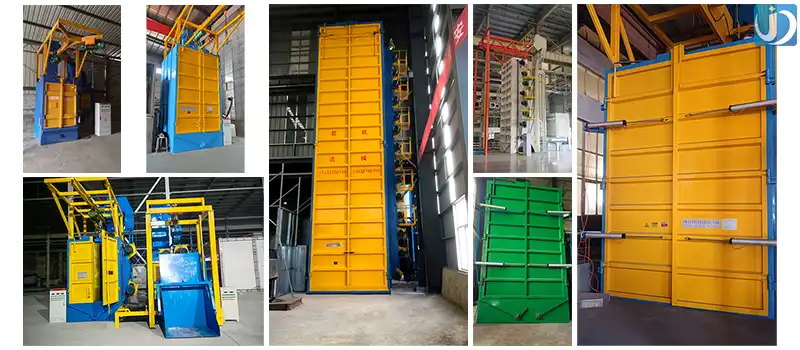

How Does a Rotary Hanging Shot Blaster Work?Step 1: Loading and Rotation
The cycle begins when the balanced pieces of work are put on the rotary hanging shot blaster's rotating hangers by a person or a machine. Different loads put stress on the drive and bearings, so it's important to keep the balance. As soon as the door shuts and the interlocks go off, the hanger starts to turn. As the machine turns, each part moves through the stream of rough materials. This means that a lot of hollows, faces, and other odd shapes are hit directly. I always check the spacing first because it's a common reason why the results aren't even.
Step 2: Blasting and Abrasive Recovery
The abrasive goes faster with the help of blast wheels that control the flow rate. The impact gets rid of sand, scale, rust, and oxide. It also makes the surface rougher so that it can be later machined, coated, or put together. When the abrasive is utilized it falls to the floor of the chamber and is carried to an air-wash separator by a recovery conveyor and an elevator. The divider separates dust, broken media and other impurities and returns the reusable abrasive to the hopper. This loop ensures consistency of blast stream from batch to batch and minimizes media waste. The result depends on the cycle time, the speed of the wheel, the type of abrasive, the speed of rotation and the distance between the pieces.
Step 3: Dust Collection and Inspection
As the wheels spin, it pulls air through the chamber, filtering it with the dust collector. This protects the work space and allows others to view what is within. OSHA's rule 29 CFR 1910.94 requires that sufficient air flow must be provided in abrasive blasting activities, so dust management is always a main concern. The operator takes the parts from the belt while the machine is running and examines for any scale, rust or uneven spots that may still be present. It gives everybody a common language to be talking — the people that buy things, the people that work on machining and coating.
Benefits, Applications, and Comparisons
Benefits for Complex and Fragile Parts
The suspension rotation reduces direct part to part contact and provides superior abrasive coverage. That helps protect easily broken parts or parts with thin walls over several batches. Enclosed blasting, interlocked doors and dust extractor, when professionally designed and maintained, all contribute to a safer workplace. Recovering abrasives cuts operating expenses and media waste. Buyers can add extra hooks, programmable recipes, robotic loading or conveyors for higher volume applications. This allows a factory to start off simple and add automation later.
Applications by Workpiece
This gear is used in foundries, forging plants, auto factories, and fabrication shops. Cast iron and steel are cleaned after they have been shaken out. Controlling the amount of abrasive needed to keep aluminum castings from wearing away or changing shape is important. After being heated, forged parts can be descaled using the right media and linings that don't wear down easily. Because they are hard to reach by hand, valve bodies, pump housings, and impellers work better when they are rotated. I first look at the hook capacity, chamber clearance, balance, and ergonomics of loading for structural fittings, brackets, weldments, and flanges.
Comparison with Other Shot Blasting Machines
Every kind of machine does a different job. For small, tough parts that can handle being hit, tumble machines can be a cheaper option. Stable, high-volume production works best with continuous conveyor systems. For low volumes and frequent changes, manual equipment works. Automatic systems, on the other hand, cut down on work and make it easier to repeat. For parts that are fragile, big, irregular, or easy to tangle, hanging systems are often the best option. I tell buyers not to just look at price, but also throughput, layout, handling needs, automation, and the total cost of ownership.
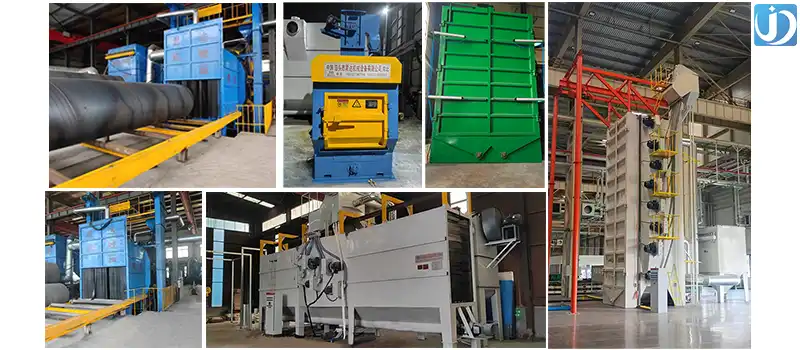
Key Technical Parameters and How to ChooseParameters to Check Before You Buy
The size of the chamber itself doesn't tell the whole story for a rotary hanging shot blaster. Check the hook spacing, part dimensions, clearance, and fixture needs, as well as the maximum weight of a single piece and the total weight of the batch. Cleaning speed and area covered are affected by the blast wheel's diameter, motor power, abrasive flow, throwing distance, and how the wheels are arranged. The quality of the surface is affected by the abrasive grade and particle size. Metallic blast-cleaning abrasives are classified by ISO 11124, so ask your supplier what type they plan to use. Check the dust collector's capacity and how well it recovers dust as well. The controls should work with alarms, maintenance records, and recipes.
Matching the Machine to Your Production Plan
Sort the parts into groups based on their shape, size, weight, material, and the process they will go through next, such as machining, assembly, or coating. Then, use current and expected demand to figure out batch capacity and cycles per hour. Include the time it takes to load, blast, and unload, since loading sets the real pace a lot of the time. Give yourself room to change the product and automate it later. As a last step, compare the total cost of everything: media, energy, filters, wear parts, labor, downtime, installation, support, and so on.
Choosing a Supplier You Can Work With
A good supplier has experience with the application, tests samples, and offers technical drawings, export documents, commissioning, and training. There are 20 years of experience and ISO 9001, ISO 14001, and ISO 45001 certifications for Junda Machinery, which is based in Botou, Hebei. We can change the size of the machine, how it collects dust, how it paints, how it is controlled automatically, how it is branded, and we can even match local voltage standards. We can also help with CE certification and give you English manuals and videos on how to do maintenance. Depending on the machine, standard customized equipment can be sent out in about 15 days.

Maintenance and Performance VerificationDaily and Periodic Maintenance
In daily checks, things like hooks, fixtures, seals, doors, interlocks, abrasive level, dust extraction, vibration, and strange noises are looked at. Blast wheel blades, chamber liners, conveyors, elevators, separators, bearings, belts, chains, filters, sensors, and emergency stops should all be checked once a week or once a month. A written schedule for preventive maintenance cuts down on unplanned downtime. Because trained operators also stop many mistakes, I suggest that every shift be trained before the first production run.
Wear Parts and Troubleshooting
Blades, manganese liners, hook assemblies, seals, filters, bearings, and drive parts are all common wear parts. Poor loading, misaligned wheels, or the wrong flow of abrasives are often to blame for cleaning that isn't even. Signal leakage or a separator problem can be caused by a lot of media use. If something goes wrong with the rotation of the hook, production stops. That's why I recommend keeping extra hook assemblies and bearings on hand. Original spare parts are always available from Junda Machinery, so replacements are always the same.
Verifying Performance Before Full Production
Do a test with standard pieces of work and agreed-upon standards for acceptance. Check surfaces, recesses, weld zones, and contact points that can be reached in even lighting, and make sure the inspection is in line with a clear specification, like an ISO 8501-1 grade or SSPC-SP 10/NACE No. 2. To make sure that the real throughput is the same as the theoretical capacity, write down the batch size, cycle time, abrasive flow, and energy use. Track the restocking of abrasives and guess how much each batch will cost. Then, measurements, functions, safety features, controls, and paperwork are checked at the factory and on the job site.
Conclusion
Parts are put through a centrifugal abrasive stream while being held in place on rotating hangers by a rotary hanging shot blaster. This design works well for castings and forgings that are complicated, fragile, or not round, which tumble machines can damage. There is one controlled cycle that includes loading, rotating, blasting, recovering abrasives, collecting dust, and inspecting. The results depend on the cycle time, wheel settings, abrasive choice, and number of parts spaced apart. Buyers should compare it to tumble, conveyor, manual, and automatic machines. They should also look at the maximum weight, batch size, wheel arrangement, dust control, and total cost of ownership. The machine gives the needed surface condition thanks to planned maintenance and trial checks against standards like ISO 8501-1.
FAQ
What does a rotary hanging shot blaster clean?
By spinning metal parts through a controlled abrasive stream, it cleans, descales, derusts, deburrs, and gets them ready to use.
Can it process aluminum castings?
Yes. To stop erosion or deformation, you need to keep an eye on the media, blast intensity, fixtures, and cycle time.
How does it differ from a tumble machine?
Since the parts hang instead of rolling, they don't touch each other as much. So it works better for complicated or fragile pieces of work.
What information do I need for a quotation?
Send pictures or drawings of the product, along with the material, size, weight, surface condition, production volume, automation needs, final destination, and any standards that apply.
Contact Junda Machinery for a Rotary Hanging Shot Blaster Recommendation
From Botou, Hebei, Junda Machinery makes rotary hanging shot blasters and has been making shot blasting equipment for 20 years. To junda001@jundablast.com, send your drawings or photos along with the material, size, weight, surface condition, production volume, and where the product will be sent. Our engineers will tell you what kind of chamber, hook layout, blast wheels, and dust collector to use. For more information, go to jundablast.com.
References
1. ISO 8501-1: Preparation of Steel Substrates Before Application of Paints and Related Products – Visual Assessment of Surface Cleanliness (2007)
2. ISO 8504-2: Preparation of Steel Substrates Before Application of Paints and Related Products – Surface Preparation Methods, Abrasive Blast Cleaning (2019)
3. ISO 11124-1: Preparation of Steel Substrates Before Application of Paints and Related Products – Specifications for Metallic Blast-Cleaning Abrasives (2018)
4. SSPC-SP 10/NACE No. 2: Near-White Metal Blast Cleaning (2007)
5. ASM Handbook, Volume 5: Surface Engineering (1994)
6. Code of Federal Regulations, Title 29, Section 1910.94: Ventilation (2023)

USER EVALUATE
Real feedback and practical experience shared by worldwide partners who purchased our machinery and environmental treatment devices.
YOU MAY LIKE
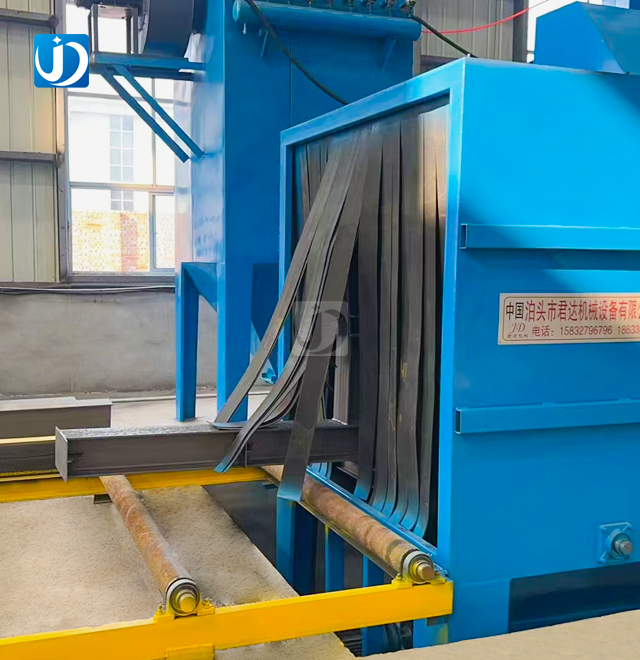 VIEW MORERoller Conveyor Blaster
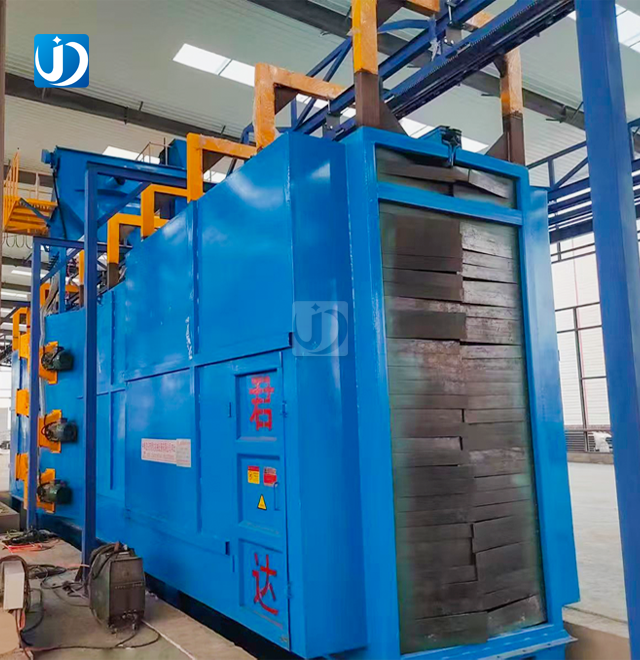 VIEW MOREspinner hanger shot blasting machine
 VIEW MOREsteel grit media
 VIEW MOREsteel shot abrasive blasting media
 VIEW MOREbest abrasive for sandblasting metal
 VIEW MOREcast steel shot and grit
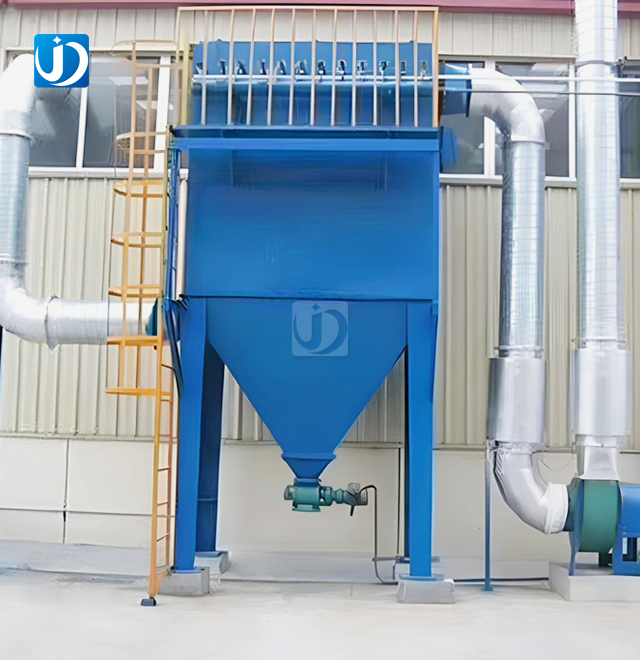 VIEW MOREindustrial dust extraction
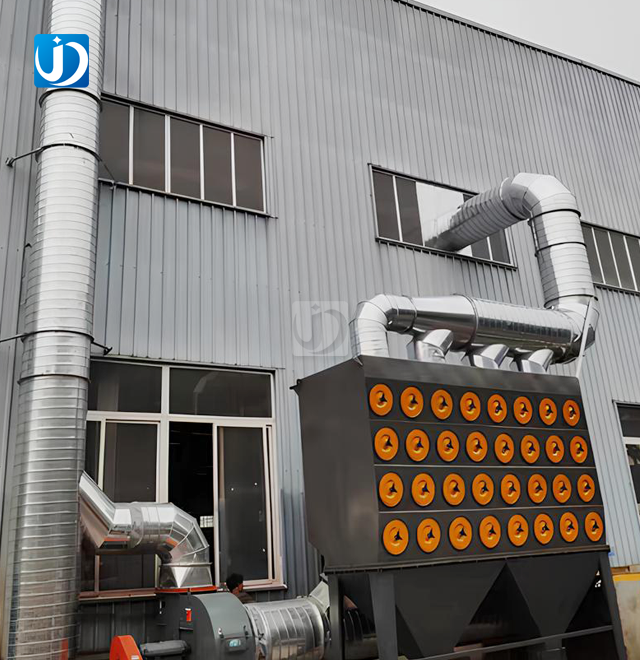 VIEW MOREindustrial cyclone dust collector