_1786959752558.webp)
What Is Stainless Steel Shot? Types, Standards & Applications
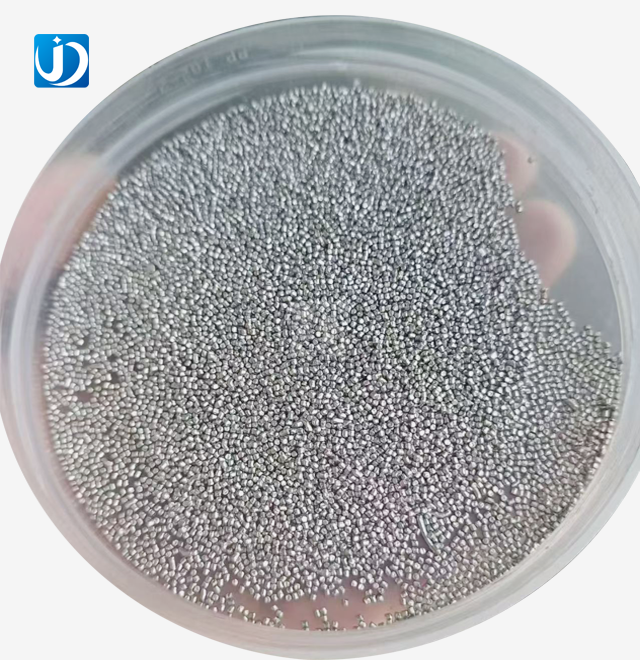
Stainless Steel Shot is a spherical abrasive media manufactured from high-grade stainless steel alloys through controlled atomization and heat treatment processes. Unlike traditional carbon steel shot, it delivers superior corrosion resistance, extended service life, and consistent surface finishing results across demanding industrial applications. This media maintains a balanced hardness range typically between HRC 40 and 62, enabling effective rust removal, surface texturing, and shot peening without contaminating workpieces. Its spherical geometry ensures uniform impact distribution and efficient recyclability, making it a cost-effective solution for foundries, aerospace manufacturers, and automotive parts producers seeking reliable surface preparation media that meet stringent quality standards.
Understanding Stainless Steel Shot: Definition and Core Characteristics
Stainless Steel Shot is a high-quality type of metallic abrasive media that was made to work best on industrial surfaces where cleanliness and durability are very important. The process of making them starts with carefully chosen stainless steel scrap or a brand-new metal. This is melted using induction and then atomized with water or air to make perfectly round particles. This controlled solidification creates a thick metallographic structure that is very tough. This makes sure that the media keeps its form and kinetic energy even after being hit thousands of times.
Material Composition and Microstructure
Quality Stainless Steel Shot usually has between 11% and 18% chromium inside of it, which makes a passive oxide layer that stops corrosion caused by wetness. This quality is very useful in humid production areas or when working with stainless steel, aluminum, or titanium parts that can't handle ferrous contamination from carbon steel alternatives. The tempered martensitic microstructure strikes a balance between hardness and flexibility, which keeps the metal from breaking too soon during high-velocity blasts.
Physical Properties That Drive Performance
Density values always go above 7.2 g/cm³, which gives the material the mass it needs to transfer impact energy effectively during shot blasting. When compared to angled abrasives, the round shape of the particles makes them interact with blasting wheel parts and cabinet surfaces more smoothly, which lowers equipment wear. For general-purpose uses, hardness requirements are usually between HRC40 and HRC50. For shot peening processes that need deeper compressive stress layers, specialized high-hardness versions can reach HRC 55 to 62.
Corrosion Resistance and Environmental Advantages
The passive chromium oxide layer forms naturally on particle surfaces, which keeps rust from forming even when the particles are stored for a long time or are exposed to water during operations. This feature gets rid of the problems with carbon Steel Shot contaminating the surface, which can leave ferrous dust on final parts. The environmental benefit also includes the ability to recycle Stainless Steel Shot, which keeps its shape through 3000–5000 impact cycles, greatly lowering the need for new consumables and the costs involved with their disposal.
Types of Stainless Steel Shot Media and Industry Standards
Steel grit, glass beads, clay media, and natural materials like crushed walnut shells are just a few of the many choices available in the abrasive media market, in addition to Stainless Steel Shot . Despite the fact that each group plays a different role in surface treatment, Stainless Steel Shot holds a special place because it can clean aggressively while also processing without contamination. When procurement professionals know these differences, they can choose media that meet both technical needs and operational costs.
Comparing Stainless Steel Shot with Alternative Media
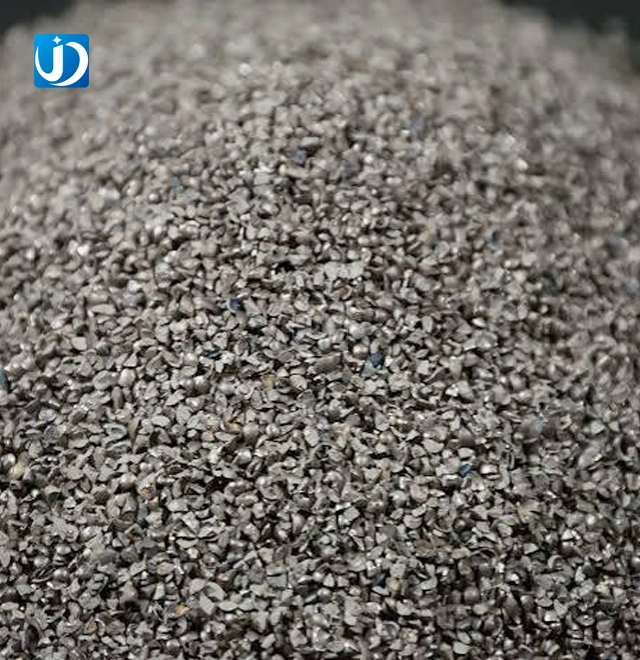
Steel grit has an angular shape that makes it ideal for quickly and aggressively removing material. This means it can be used to remove heavy mill scale from structural steel. But compared to spherical Stainless Steel Shot, its sharp edges make the surface rougher, and equipment wears out faster. Glass beads make finishes that are very smooth and shiny, but they don't have the impact energy to get rid of heavy rust and break easily, so they don't last as long. Ceramic media is very dense and hard, but it's also very expensive, so it's usually only used in aerospace applications that need the most intense peening.
Stainless Steel Shot fills in these performance gaps by being able to clean surfaces in a mild to aggressive way while still keeping the surface's structure. The circular impact makes the surface smooth enough for coatings to stick to without being too rough, like angled grit does. Because it doesn't rust, the corrosion-resistant mix doesn't need to be cleaned after the blasting process like carbon Steel Shot does. This speeds up production and cuts down on labor needs.
Key Industry Standards Governing Quality
The main standard framework for cast Steel Shot used in North America is established by SAE J444, which also specifies accepted defect limits, size distribution tolerances, and hardness ranges. This standard makes sure that consistency from batch to batch is maintained, which is very important for automated shot blasting operations where process parameters depend on predictable media properties. ISO 11124-3 is the international standard that makes sure that specifications are the same all along the world's supply chains. This lets multinational companies treat surfaces the same way in all of their facilities.
As an addition to these specs, ASTM guidelines spell out how to test for hardness, particle size, and microstructural integrity. Compliance paperwork from reputable suppliers should include certification that meets these standards as well as a metallurgical analysis that proves the alloy's composition. Teams in charge of buying things should make sure that suppliers can give them test reports and material safety data sheets in English. This is especially important for exports that need customs paperwork.
Size Grades and Application Matching
S110, S170, S280, S330, S390, and S550 are examples of the uniform sizing names used for Stainless Steel Shot. Smaller grades, like S110 (0.28mm nominal), are great for finishing the surface of precision castings and getting rid of light flash. They provide high coverage density with little surface disruption. Medium grades, like S280 and S330, are the most useful for general rust cleaning and surface preparation because they have a good mix of impact energy and coverage area. Larger sizes, like the S550 and S660, offer the most kinetic energy for removing heavy mill scale and deep peening on thick-section parts.
There are twelve different grades in the whole range, from 0.2mm to 3.0mm, so it can be perfectly matched to the shape of the workpiece, the level of contamination, and the desired surface profile. Choosing the right size grades that flow easily through media delivery systems without bridging or breaking down too much is important for compatibility with different types of equipment, such as centrifugal wheel blast machines, air blast cabinets, and tumble blast systems.
Applications of Stainless Steel Shot in Industrial Surface Preparation
Stainless Steel Shot is used by factories in the automotive, aerospace, foundry, and heavy equipment industries to solve surface treatment problems that affect the quality and efficiency of production. The media's unique mix of impact resistance, rust resistance, and recycling ability solves problems that cheaper alternatives to abrasives can't.
Foundry and Casting Operations
Abrasive media are used in large amounts by iron and steel foundries to remove sand, scale, and rust from casts right after shakeout. Stainless Steel Shot works great in these situations because it keeps its hardness and shape over long periods of time. This lowers the cost of each piece even though the initial material price is higher. The spherical impact successfully loosens stuck-on sand without taking away too much of the base metal. This keeps the precision molds' dimensions accurate.
Foundries that work with aluminum and magnesium gain the most from the fact that the Steel Shot is free of pollution. This is because the ferrous waste from carbon Steel Shot can cause galvanic corrosion on the final parts. In order to ensure proper surface preparation for future machining or coating processes, Stainless Steel Shot avoids this risk while providing the impact energy required to remove the oxide layer.
Automotive Component Manufacturing
Manufacturers of cars use shot blasting to clean and strengthen important parts of the drivetrain, like the crankshaft, connecting rods, transmission gears, and suspension arms. Compressive residual stress is created in the surface layers during the shot peening process using controlled-size Stainless Steel Shot, which prevents fatigue cracks from starting and, based on the loading conditions, increases the component's service life by 50% to 200%.
To prepare the surfaces of brake rotors, calipers, and chassis parts, mill scale and rust must be removed without adding metal contamination that could speed up rusting. This is the perfect combination of cleaning power and material compatibility for Stainless Steel Shot. It meets the high standards for quality in the automotive industry, which require consistent surface cleanliness standards.
Aerospace and Defense Applications
Stainless Steel Shot is the best material for finishing turbine blades, cleaning landing gear, and preparing structural components because aerospace component manufacturing requires total contamination control and tracking. Material certification paperwork and lot tracking that can be obtained from approved sources meet the strict standards of aerospace quality management systems, such as AS9100.
When you use exactly sized Stainless Steel Shot to peen turbine blades, you create compressive stress layers that make them last longer even after being subjected to extremely high heat and mechanical cycling. To get the right stress profiles, the process parameters—media size, speed, and coverage density—must stay within very small ranges. This requires consistent media from batch to batch, which can only be provided by premium Stainless Steel Shot.
Heavy Equipment and Structural Steel
Getting rid of heavy rust, mill scale, and weld rusting from thick-section steel parts is always hard for companies that make building equipment, mining equipment, and farm tools. The impact energy needed for effective material removal is delivered by larger grades of Stainless Steel Shot (S390 and S550), while the spherical geometry keeps equipment from wearing out too quickly.
The consistent surface profile generation helps bridge the gap between fabricators and structural steel shops, getting parts ready for protective coating application. This makes sure that the coating adheres well and meets SSPC-SP10 or NACE standards. The longer service life of the media means that it doesn't need to be replaced or thrown away as often. This supports lean production efforts that aim to cut down on waste and keep costs low.
How to Choose the Right Stainless Steel Shot for Procurement
To choose the best abrasive media, you have to weigh a lot of technical and business factors that have a direct effect on both the quality of the surface treatment and the total cost of running the business. Professionals in charge of buying supplies for shot blasting operations should compare the specs of the media to the needs of the application and look at the supplier's abilities to make sure the supply chain stays stable in the long run.
Technical Specification Alignment
The most important selection factor is to match the hardness of the media to the material of the workpiece. Aluminum, brass, copper, and other soft metals need lower hardness ranges (HRC 40–45) to keep the surface from getting damaged and to prevent too much attached media from showing. Medium carbon steels and cast iron can handle normal hardness ranges (HRC45–50) that balance how well they clean with how long the media lasts. For hardened steels, tool steels, and shot peening, high-hardness versions (HRC55–62) that can apply the needed compression stress without breaking down too quickly are needed.
The choice of particle size depends on the shape of the workpiece, the type of contamination, and the surface profile that is wanted. For complicated castings with internal passages and recessed features, smaller grades are needed so they can get into tight spaces. On the other hand, coarser media can be used on large flat surfaces to speed up production. When it comes to coating adhesion, surface profile requirements usually list angular measurements (2–4 mils) that match up with specific media size ranges listed in the technical data sheets from coating manufacturers.
Consumption Rate and Cost-Per-Part Analysis
To get a better idea of the real running cost, you need to figure out how much media is used per square meter of treated area instead of just looking at the purchase price. Depending on the application intensity, high-quality Stainless Steel Shot uses between 0.1 and 0.3 kg per square meter, while low-quality products may use 0.5 kg or more because they break easily. When compared to lower-quality options, premium media's longer service life of 3000–5000 impact cycles lowers the amount of media used each year by 40%–60%.
A full cost analysis should look at not only the price of the media but also the costs of getting rid of it, keeping the equipment in good shape, and the time it takes to change the media. Because high-quality Stainless Steel Shot doesn't break down as often, it's possible to clean and maintain media separators and magnetic separators more frequently, which increases the availability of equipment and improves production quality.
Supplier Evaluation and Qualification
For media supply to be reliable, companies that make it must be able to show that they have consistent quality processes, production capacity, and expert support. At the very least, suppliers should be checked for ISO 9001 certification. ISO 14001 and ISO 45001 standards show a commitment to safety at work and protecting the environment. Ask for proof of the metallurgical analysis tools, hardness testing gear, and particle size analysis systems that make sure the requirements are met.
If suppliers can meet pressing delivery needs when equipment breaks down, or production spikes cause unexpected demand, it depends on how much they can produce and how well they can handle their inventory. Manufacturers who keep a large collection of finished goods in a variety of sizes show that they have the infrastructure needed for long-term relationships that work. Different types of operations can use different types of packaging, such as 25 kg woven bags for manual handling and 1000 kg bulk bags for automated feeding systems.
International Logistics and Compliance Considerations
Global manufacturing companies that need to offer media consistently across various sites need to look at how well their suppliers can distribute their products around the world. Having established relationships with freight forwarders, experience shipping containers, and knowledge of the necessary export paperwork all make cross-border logistics easier and faster. Customs problems that can stop supply can be avoided if suppliers know about the country's import rules, duty classifications, and compliance certifications.
To help with following the rules and running safety programs at work, material safety data sheets, product design papers, and quality certificates should all be available in English. Suppliers who give expert advice on how to make processes more efficient, make sure equipment works with each other, and fix problems show that they are willing to work with buyers to achieve long-term success in buying.
Conclusion
Stainless Steel Shot is the most versatile way to prepare industrial surfaces because it is resistant to rust, lasts a long time, and doesn't cost much to run. When you know the technical specs, industry standards, and performance specs for a certain application, you can make smart buying choices that improve both the quality of the surface treatment and the total cost of ownership. To choose the right media, you need to look at more than just the product specs. You also need to look at the supplier's quality systems, production capacity, and expert support infrastructure. When you buy high-quality Stainless Steel Shot from reputable makers, you save money because you use less of it, your equipment lasts longer, and your surface treatment results are always reliable and up to par.
FAQ
1. How does stainless steel shot differ from carbon steel shot?
The main difference is in the alloy's make-up and its ability to prevent rust. Carbon Steel Shot quickly oxidizes when it comes into contact with water, but Stainless Steel Shot has a lot of chromium (11% to 18%), which forms a passive oxide layer that stops rusting. Due to the galvanic corrosion caused by iron contamination, stainless steel, aluminum, and other non-ferrous metals must be processed using Stainless Steel Shot. Stainless steel versions usually cost 40% to 70% more than carbon steel versions, but they last 50% to 100% longer, which means that in some cases, they cost less to run.
2. What size grade should I specify for rust removal on castings?
For general rust and scale cleaning on iron and steel castings, medium types like S280 (0.7 mm nominal diameter) and S330 (0.85 mm nominal diameter) are the best options. These sizes have enough impact energy to get rid of contamination effectively while still having enough coverage density to treat the whole surface evenly. For higher kinetic energy, S390 or S550 may be needed for heavier oxidation or mill scale. On the other hand, S170 or S230 grades work well for light surface rust on thin-section parts because they reduce the risk of damaging the base.
3. Can the same media be used for both cleaning and shot peening?
It is technically possible, but for the best results, each process usually needs to be set up in a certain way. While cleaning focuses on how quickly and easily the material is removed and can handle a wider range of hardness levels, shot peening needs exact hardness control and a narrow size distribution to meet specific compression stress profiles. For peening, smaller grades (S110–S280) with tight size limits and higher hardness ranges (HRC55–62) are usually needed than for cleaning. Using separate media inventories for each process makes sure that the products are always the same and makes quality control paperwork easier.
Partner with Junda Machinery for Reliable Steel Shot Supply Solutions
Finding good abrasive media from experienced Steel Shot makers who know how to handle the technical needs of industrial blast cleaning processes is the first step to getting consistent surface treatment results. Junda Machinery has been selling shot blasting equipment and supplies for more than 20 years. They are certified by ISO 9001, ISO 14001, and ISO 45001, which means they are responsible for quality management, the environment, and worker safety.
Our standard cast Steel Shot models S280 and S330 meet all of SAE J444's requirements, giving your operations the moderate hardness and great impact performance they need. We keep a large stock of twelve different particle sizes, ranging from 0.2 mm to 3.0 mm. We also have general hardness options (HRC40–50) and high-hardness options (HRC55–62) to meet the needs of any application. Flexible packaging comes in 25 kg woven bags and 1000 kg bulk bags, so they can be handled by hand or automatically fed into machines.
The expert support team at Junda Machinery answers questions within 6–8 hours and helps you with things like figuring out what you need, estimating how much you'll use, and making sure your tools will work with other things. This makes the buying process easier. Because we have long-term partnerships with international logistics companies, we can guarantee reliable delivery times, full export paperwork, and container optimization that keeps shipping costs low. Contact our team at junda001@jundablast.com for full product details and technical support to talk about your Steel Shot needs and look into volume prices for Steel Shot supplier agreements.
References
1. Society of Automotive Engineers. "SAE J444: Cast Shot and Grit Size Specifications for Peening and Cleaning. "SAE International Standards, Warrendale, PA, 2019.
2. International Organization for Standardization. "ISO 11124-3: Preparation of Steel Substrates Before Application of Paints and Related Products — Specifications for Metallic Blast-Cleaning Abrasives — Part 3: Cast Steel Shot and Grit." Geneva, Switzerland, 2018.
3. American Society for Testing and Materials. "ASTM E2109: Standard Test Methods for Determining Area Percentage Porosity in Thermal Sprayed Coatings." ASTM International, West Conshohocken, PA, 2020.
4. Lessells, J.M. "The Shot Peening Handbook: Theory, Application, and Economics of Shot Peening Technology." Electronics Inc., Metal Improvement Company Division, Third Edition, 1991.
5. Metzger, M. and Nieberding, F. "Surface Treatment by Shot Peening: Material Response and Application." Journal of Manufacturing Science and Engineering, Vol. 138, No. 7, 2016.
6. National Association of Corrosion Engineers. "NACE SP0178: Design, Fabrication, and Surface Finish Practices for Tanks and Vessels to Be Lined for Chemical Immersion Service." Houston, TX, 2014.

USER EVALUATE
Real feedback and practical experience shared by worldwide partners who purchased our machinery and environmental treatment devices.