_1786959752558.webp)
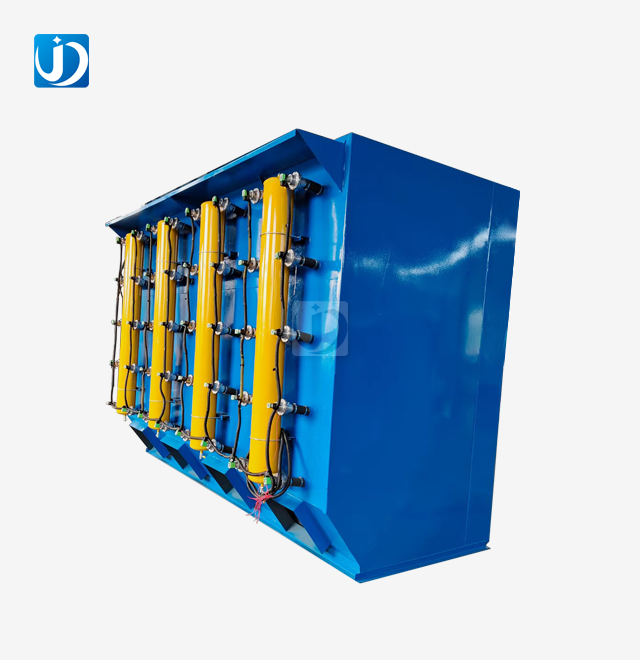
industrial dust extraction system
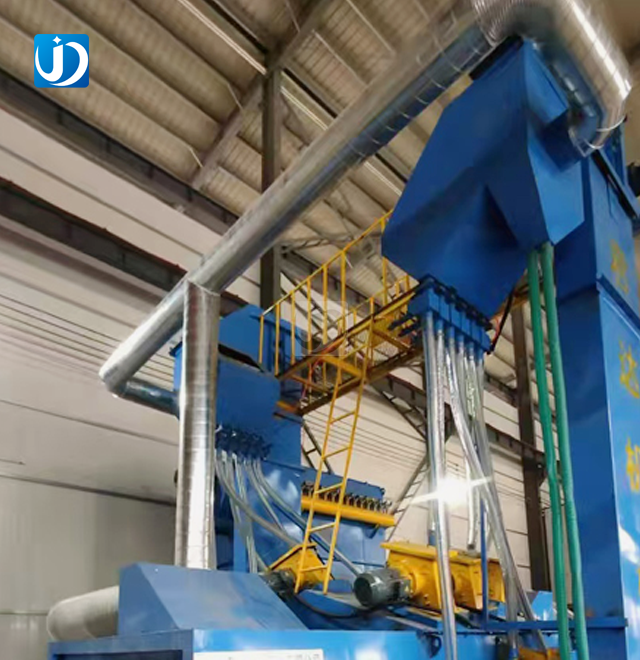
Suction hoods are arranged at dust sources to capture airborne dust continuously, preventing dust
diffusion and improving working conditions for operators.
Flexible multi-stage purification for abrasive recovery & compliant emission
For heavy metal abrasive dust, cyclone separators serve as primary pre-treatment to recycle broken
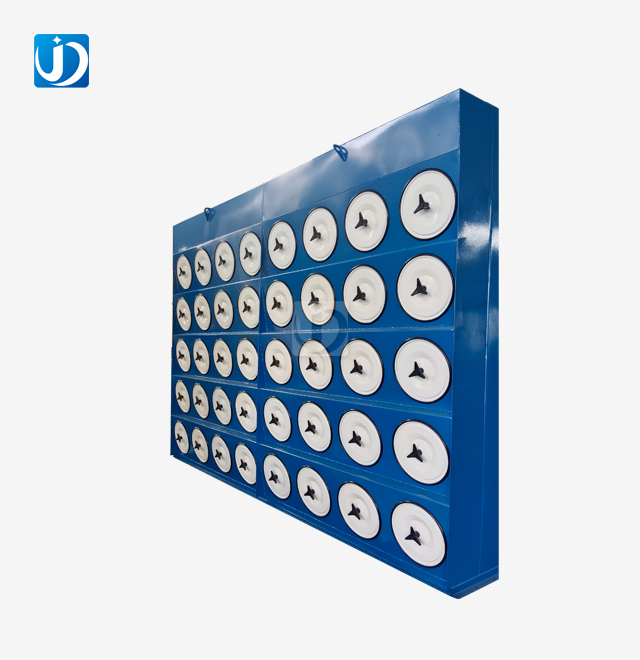
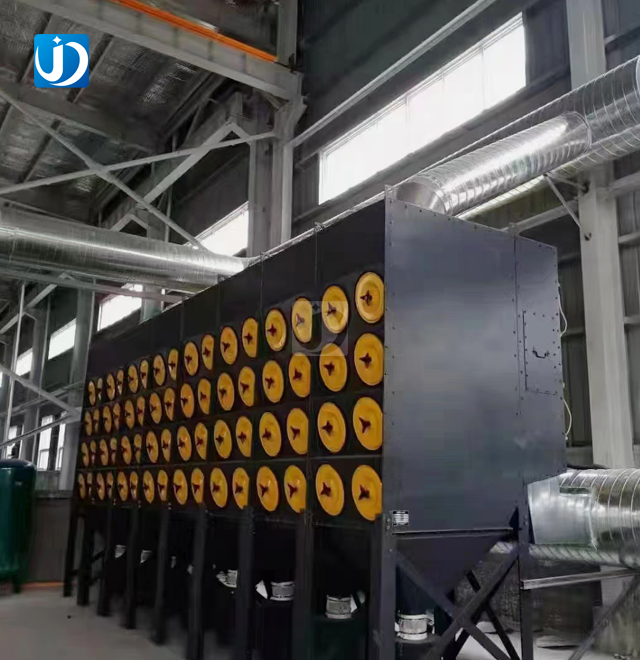
steel shots. Secondary bag or cartridge dust collectors capture fine dust to realize media recovery and
air purification.
Professional pipeline design ensures balanced suction and anti-blocking performance
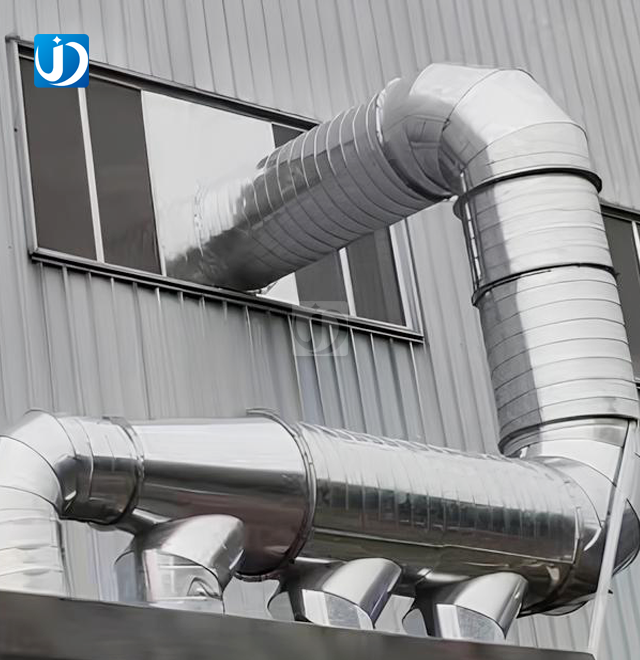
Duct velocity is designed based on dust density. Optimized elbows and tees reduce flow resistance.
Air dampers balance suction across all branches to guarantee stable extraction at remote stations.
Modular configuration suitable for new workshops and retrofits
Standardized ducts, dust collectors and fans allow flexible layout according to plant conditions.
- Product Description
Industrial Dust Extraction System — Centralized Multi‑Stage Filtration Solution for Workshop Air‑Quality Control
Botou Junda Machinery Equipment Co., Ltd. provides enterprise‑grade industrial dust extraction system designed for high‑volume production environments. Backed by our 3,000‑square‑meter production facility and over 20 years of experience in foundry equipment, our system achieves filtration efficiency ≥99.5 % while handling airflow volumes of 2,000‑20,000 m³/h. Featuring flexible configurations and automatic pulse‑cleaning technology, our solutions reduce dust hazards from shot‑blasting, welding and grinding activities by up to 95 %. Every system undergoes ISO9001‑certified quality control to guarantee long‑term reliability within surface‑treatment, chemical‑processing and metallurgical sectors.

Why Centralized Dust Control Matters for Industrial Operations
Airborne particulate matter poses serious risks to equipment service life and worker safety. Uncontrolled dust buildup degrades mechanical precision, raises maintenance costs and results in non‑compliance with environmental regulations.
Modern facilities require system‑level solutions that capture contaminants at their source. Centralized extraction prevents dust migration across production zones while maintaining negative pressure. This approach protects sensitive CNC components from abrasive wear and ensures emissions meet regulatory requirements.

Core Components of Our Industrial Dust Extraction System
The fully integrated system consists of precisely engineered modules working in coordination:
- Network of suction hoods: Strategically positioned at blast cabinets, grinding stations and cutting zones to intercept dust before it disperses.
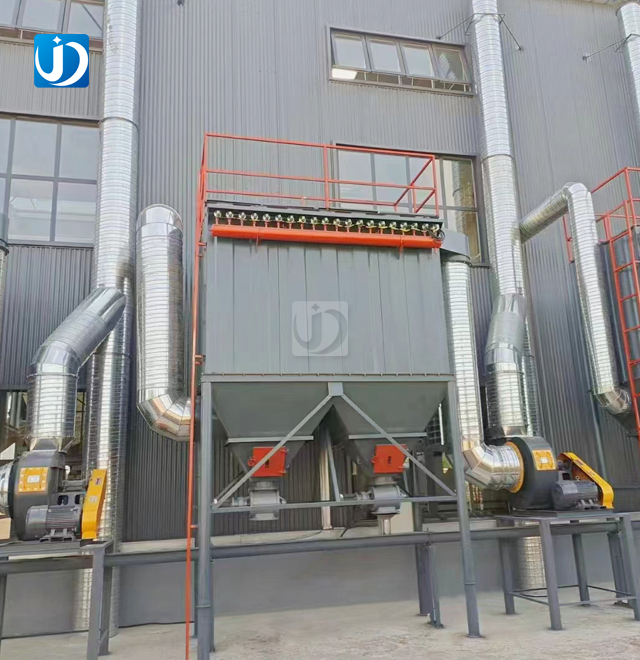
- Sealed ductwork assemblies: Velocity‑optimized ducts fitted with wear‑resistant liners convey dust without settling or leakage.
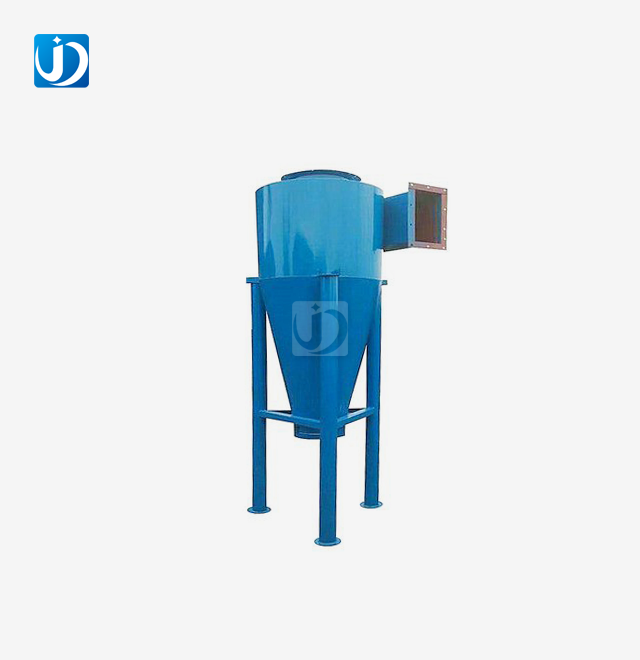
- Cyclone pre‑separator: Primary capture of heavy metallic particles and recovery of reusable abrasive media to lower operating costs.
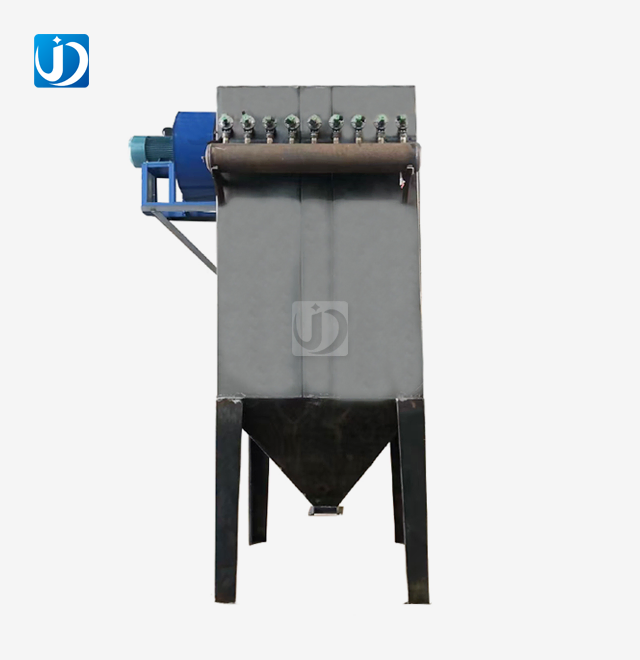
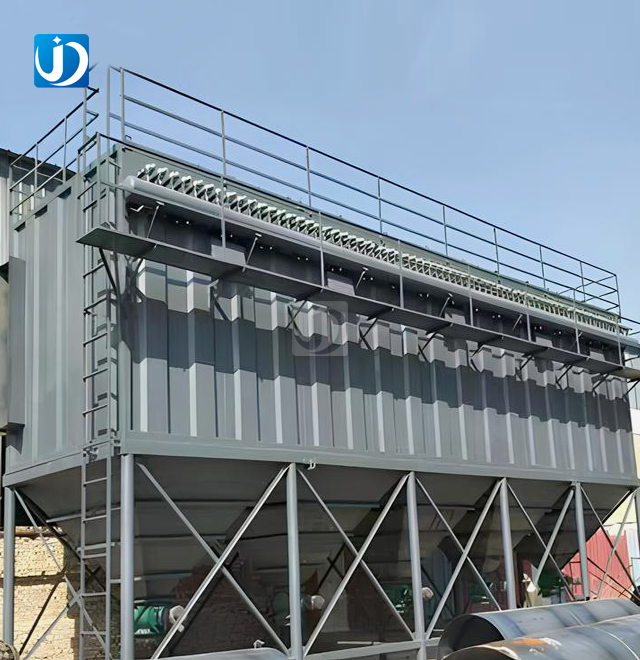
- Pulse baghouse dust collector: Secondary filtration unit capturing fine particles via automatically regenerated high‑efficiency fabric media.
- High‑pressure centrifugal fan: Delivers stable negative pressure across all extraction points with variable‑frequency control.
- Intelligent control panel: Monitors differential pressure, automatically executes cleaning cycles and provides real‑time system diagnostics.
Technical Specifications
| Parameter | Value |
|---|---|
| Air‑Handling Capacity | 2,000 – 20,000 m³/h (customizable) |
| Filtration Efficiency | ≥99.5 % for particles >0.5 μm |
| Filter Media Type | Polyester needle‑punched felt / PTFE membrane filter cartridges |
| Cleaning Method | Automatic pulse‑jet with dual‑mode trigger |
| Operating Pressure | ‑1,200 to ‑2,500 Pa (negative pressure) |
| Hopper Capacity | 0.5 – 3.0 m³, subject to configuration |
| Power Supply | 380V/50Hz (customizable to local standards) |
| Noise Level | ≤85 dB(A) at 1‑meter distance |
| Protection Class | IP54 for electrical components |
| Abrasive Recovery Rate | 70‑85 % for metallic shot (via cyclone separator) |
Key Performance Advantages
Targeted Source‑Capture Technology
CFD‑optimized suction hoods create effective capture zones right at dust‑generation points. This local extraction prevents fugitive emissions from spreading throughout the workshop.
Sustained negative‑pressure control keeps airborne particulates confined within controlled pathways. Operator visibility improves and respiratory exposure decreases during intensive blasting cycles.
Multi‑Stage Purification for Maximum Efficiency
Heavy metallic dust undergoes cyclone separation as the primary treatment stage. This process recovers 70‑85 % of steel shot and grit for reuse, substantially cutting abrasive‑consumption costs.
Fine particles then pass through pulse‑cleaned bag filters with removal efficiency exceeding 99.5 %. This two‑tier approach balances abrasive recovery with strict emission compliance, making our industrial dust extraction system ideal for metal‑processing facilities.
Balanced Airflow via Professional Duct Design
Duct velocities calculated according to dust density prevent particle settling in horizontal runs. Our systems maintain transport velocity of 18‑24 m/s for metallic‑dust applications.
Air dampers installed at branch junctions balance suction across multiple workstations. Consistent extraction performance is ensured even at collection points farthest from the main fan unit.
Automatic Pulse‑Jet Cleaning for Non‑Stop Production
The dual‑mode trigger combines timer intervals with differential‑pressure sensors. High‑pressure airflows automatically clear accumulated dust once filter resistance reaches preset thresholds.
This self‑maintenance feature eliminates manual filter cleaning during shifts. Production lines sustain steady airflow without interruption, supporting 24/7 continuous shot‑blasting operations.
Fully Enclosed Construction Eliminates Secondary Pollution
Industrial‑grade gaskets are fitted for flange connections to prevent air infiltration under negative pressure. Access doors adopt multi‑point locking mechanisms with rubber seals.
Rotary airlock valves isolate the dust‑discharge zone from the suction chamber. This prevents dust re‑entrainment during hopper emptying and guarantees zero secondary emissions within the workshop.
Customization Capabilities for Diverse Applications
Industry‑Specific Configuration Options
Our engineering team adjusts system parameters to match your production requirements. Pharmaceutical plants adopt HEPA‑grade secondary filters for sterile environments. Foundries receive spark arrestors and flame‑retardant media for high‑temperature applications.
Chemical‑processing facilities are equipped with explosion‑proof motors and continuous grounding for combustible‑dust handling. Every configuration of the industrial dust extraction system complies with local voltage standards and environmental regulations.
Modular Design for Flexible Installation
Standardized duct sections and collector units allow layout adjustments around existing equipment. Extraction systems are integrated during construction planning for new production lines.
Retrofit projects utilize space‑saving vertical collectors and optimized duct routing. Such modularity shortens installation time by 30‑40 % compared with bespoke solutions and accelerates project commissioning.
Proven Industrial‑Sector Applications
- Shot‑blasting workshops: High‑volume extraction handles large dust loads generated by continuous shot‑blasting lines. Cyclone pre‑separation recycles steel abrasives while preserving filter‑media service life.
- Welding stations: Movable suction arms connect to centralized fume‑capture systems. Spark‑resistant filters prevent ignition from hot welding particles.
- Grinding operations: Multi‑point suction on belt grinders and polishers keeps dust concentrations below 5 mg/m³. Precision machining quality of metallic workpieces is protected.
- Cutting processes: Plasma and laser cutting tables integrate downdraft extraction units. Negative pressure draws fumes and particulates away from cutting heads for improved cutting accuracy.

Frequently Asked Questions
Q: What components make up a dust‑extraction system?
A: A complete system consists of suction hoods, extraction ductwork, dampers, cyclone pre‑separator, main dust collector, exhaust fan, hopper discharge device and control system. Configurations can be adjusted for shot‑blasting machines, blast chambers and grinding lines.
Q: What are the core functions of a dust‑extraction system for shot‑blasting and sandblasting?
A: The fan generates stable negative pressure to suppress dust leakage. It captures metallic dust and treats exhaust gas to meet emission standards. The pre‑cyclone separator recovers reusable steel shot and grit to reduce abrasive costs and improve workshop conditions for both equipment and operators.
Q: What are the main causes of insufficient suction in a industrial dust extraction system?
A: Air leakage at flanges and access doors; dust‑clogged ductwork; blinded filter bags / cartridges; undersized or faulty fan; over‑filled dust hopper; excessive duct elbows; air short‑circuiting caused by internal cyclone‑separator wear.
Q: What optimization suggestions apply when building dust‑extraction systems for sandblasting applications?
A: Adopt series‑arranged cyclone separator + pulse baghouse dust collector for hard metallic dust. Optimize duct layout with airflow velocity of 18‑24 m/s and minimize sharp bends. Fit wear‑protection components in heavily impacted zones and reserve access ports for maintenance and filter replacement.
Why Choose Junda for Your Dust‑Control Requirements
With twenty years of specialized experience, we understand the critical balance between extraction efficiency and energy consumption. Our industrial dust extraction system achieves environmental compliance while lowering operating costs via abrasive recovery and extended filter service life.
Fast delivery schedules support urgent project timelines. Standard configurations ship from stock, whereas custom systems are manufactured within approximately 15 days. Our technical team replies to inquiries within 6‑8 hours for rapid project evaluation.
Comprehensive after‑sales support includes remote installation guidance, operator training and troubleshooting assistance. English‑language operation manuals and maintenance videos help your team maximize system performance across the full operational lifecycle.



Request Your Custom Dust‑Extraction Solution
Transform your workshop environment with proven centralized industrial dust extraction system technology. Our engineering team will assess your facility requirements and design an optimized system configuration.
Contact Us via junda001@jundablast.com to discuss your dust‑control needs and obtain detailed technical proposals.

USER EVALUATE
Real feedback and practical experience shared by worldwide partners who purchased our machinery and environmental treatment devices.