_1786959752558.webp)
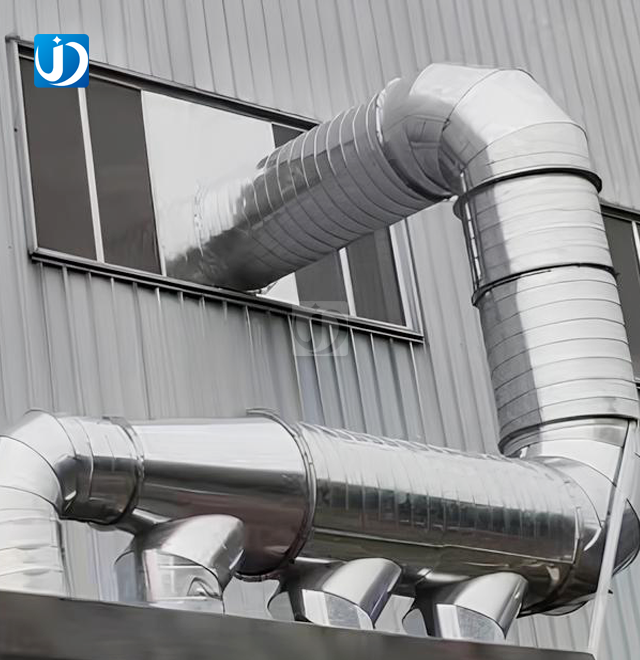
dust collection ductwork
Transport wind speed is configured according to metal dust characteristics to avoid accumulation of
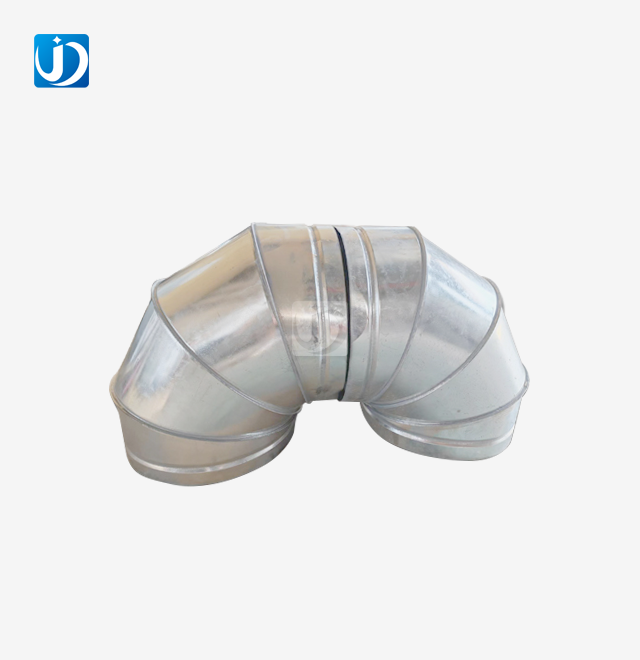
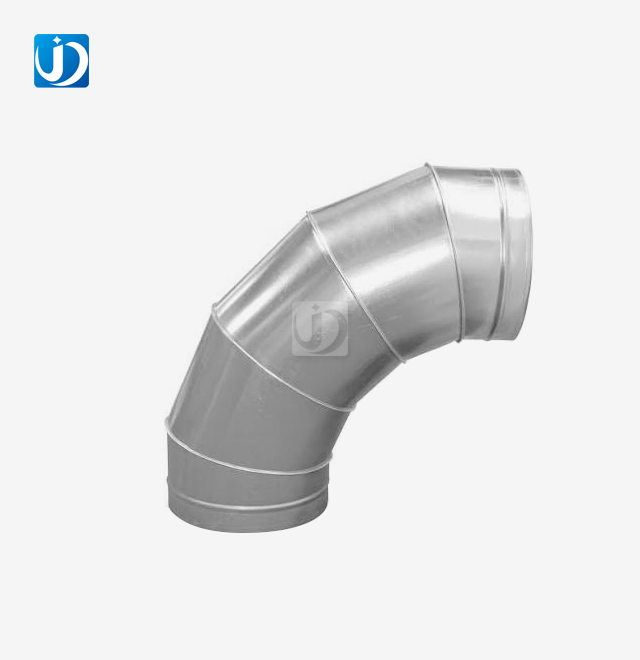
steel shot fragments and mill scale. Optimized elbows and tees lower pipeline resistance and maintain
balanced suction across the whole system.
Flexible material options; wear-resistant version for heavy erosion conditions
Carbon steel as standard material. Thicker plates or wear-resistant lining can be applied on elbows and
tees for high-concentration abrasive dust to extend service life.
Modular standard components enable fast on-site assembly
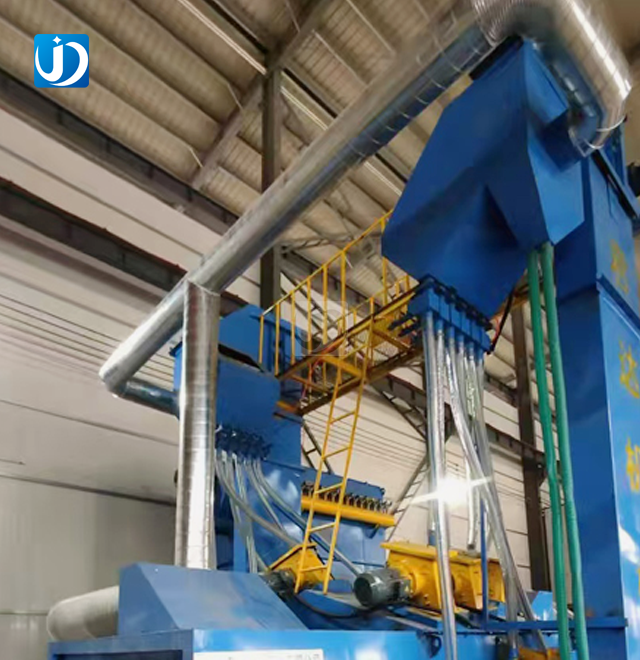
All duct parts are standardized with flange connection. The route can be adjusted freely according to
workshop layout, convenient for later reconstruction and expansion.
- Product Description
Industrial Dust Collection Ductwork for Centralized Workshop Air‑Filtration Solutions
Botou Junda Machinery Equipment Co., Ltd. supplies industrial‑grade dust collection ductwork, engineered for high‑performance centralized extraction systems in manufacturing plants. Drawing on over 20 years of foundry‑machinery expertise and a 3,000‑square‑meter production facility, our equipment features professionally calibrated airflow velocity of 18‑24 m/s to prevent particle deposition in metal‑processing environments. Our modular flange‑connection design enables fast installation of custom configurations in approximately 15 days, while heavy‑gauge galvanized‑steel construction withstands continuous negative‑pressure operation. Each system integrates optimized long‑radius elbows and strategically positioned tees, reducing wind resistance by up to 30 % compared with standard HVAC ducting and ensuring suction balance within multi‑station workshop layouts.

What Makes Professional Dust Collection Ductwork Critical
Industrial dust collection ductwork forms the backbone of workshop air‑quality management. These engineered networks create fully enclosed negative‑pressure pathways that capture contaminants at source points before they disperse into working areas.
Its core principle relies on centralized suction distributed through branch ducts. When connected to the main filtration unit, the system maintains consistent transport velocity to stop abrasive particles from settling inside the ductwork.
Proper dust removal mitigates three key operational risks: respiratory hazards from airborne metallic debris, equipment damage caused by dust accumulation, and regulatory non‑compliance within metallurgical and surface‑treatment industries. Production consistency in your workshop depends on this seamless particle management.

Technical Specifications & Performance Parameters for Dust Collection Ductwork
| Parameter | Specification |
|---|---|
| Applicable Industries | Shot‑blasting, sandblasting, grinding, welding, foundries |
| Working Principle | Centralized extraction under negative pressure |
| Airflow Velocity | 18‑24 m/s (optimized for metallic dust) |
| Material Options | Heavy‑gauge galvanized steel / carbon steel with wear‑resistant lining |
| Connection Method | Standard flanges with gasket sealing |
| System Components | Straight pipes, long‑radius elbows, tees, reducers, dampers, access ports |
| Installation Types | Overhead, wall‑mounted, floor‑supported |
| Customization Scope | Duct diameter, layout configuration, material thickness |
Core Advantages of Our Dust Collection Ductwork
Velocity‑Optimized Design for Metal Processing
Transport velocity is calculated based on characteristics of steel shot and mill scale. This prevents debris buildup in horizontal runs while maintaining suction balance across all collection points.
Heavy‑Duty Material Configurations
Standard carbon‑steel construction suits general‑purpose applications. For abrasive environments with high particle concentrations, thicker plates and wear‑resistant liners are applied at impact zones, tripling service life.
Field‑Adaptable Modular Architecture
Standardized flange assemblies allow routing adjustments according to your workshop layout. Paths can be reconfigured during facility expansion without replacing entire sections.
Leak‑Proof Sealed Construction
Continuous welding combined with compressed gaskets eliminates air infiltration. This preserves system negative pressure and prevents fugitive emissions at remote capture points.
Integrated Maintenance‑Friendly Features
Pre‑fitted access ports enable regular cleaning without disassembly. Adjustable dampers balance airflow distribution when adding new machinery to an existing network.
Versatile Installation Solutions
Our dust collection ductwork supports ceiling‑mounted, wall‑fixed or floor‑supported configurations. Both single‑machine connections and centralized networks serving multiple production lines utilize the same modular components.
System Components and Design Standards
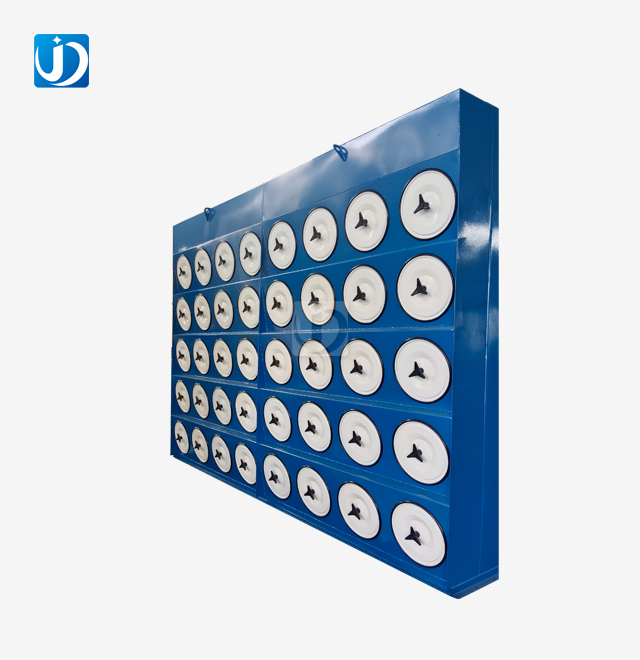
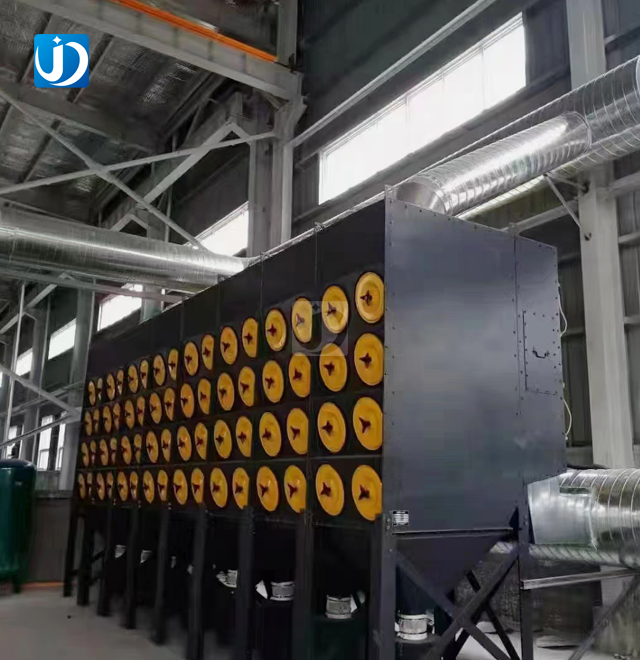
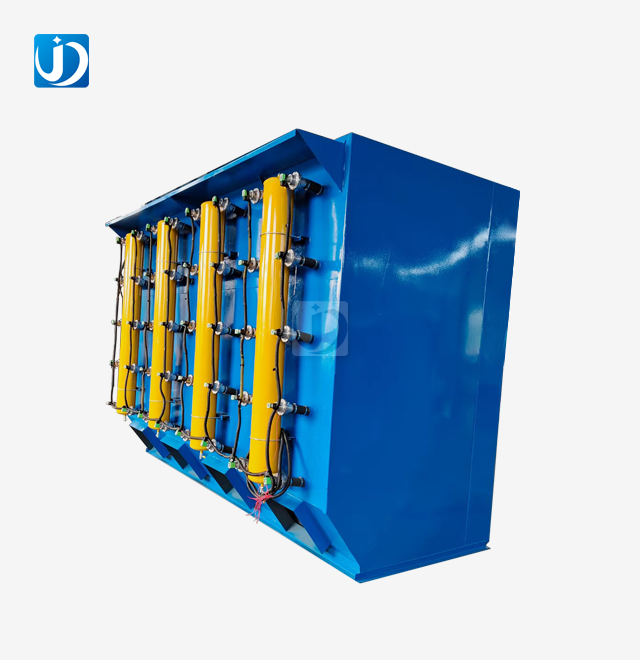
A complete extraction network comprises suction hoods at emission sources, straight transport sections, directional elbows, diameter transition reducers and connecting tees. Clean‑out access doors facilitate maintenance, while dampers regulate branch‑duct airflow. Pre‑cyclone separators remove coarse particles prior to main‑stage filtration.
Key design parameters include maintaining 18‑24 m/s velocity to prevent deposition. Long‑radius elbows reduce turbulence versus sharp 90‑degree bends. Branch ducts connect to the main duct from top or side positions to avoid sediment zones.
Wear‑resistant linings protect high‑impact zones at direction changes. Minimizing unnecessary diameter reductions preserves system pressure. Appropriate gradient angles on horizontal sections prevent particle accumulation during low‑flow conditions.

Common Performance Issues and Solutions
Diminished suction is usually caused by flange air leakage that compromises negative pressure. Dust buildup inside ducts restricts flow. Perforations from elbow abrasion lead to pressure loss.
Excessive direction changes increase resistance beyond fan capacity. Mismatched blower specifications fail to deliver required airflow. Improperly adjusted dampers create distribution imbalance. Insufficient duct slope results in material settling.
Perform regular inspections via access openings to detect blockages early. Replace rubber gaskets to retain sealing integrity. Promptly repair worn elbows. Optimize duct routing by reducing bend quantities to improve overall efficiency.
Installation and Maintenance Best Practices
Fit rubber gaskets on all flange joints before tightening bolts. Install support brackets at specified intervals to prevent joint separation caused by vibration. Verify continuous electrical grounding for static‑discharge protection in dry‑dust applications.
Schedule quarterly cleaning through access ports. Monitor wear patterns in high‑velocity zones every six months. Immediately replace perforated sections to sustain system pressure. Record airflow measurements at test ports to track performance degradation.
Minimize horizontal run lengths wherever possible. Use sweeping elbows instead of segmented designs. Orient branch take‑offs to align with airflow direction. These practices significantly extend the service life of dust‑removal systems.
Frequently Asked Questions
Q: Why choose spiral ductwork instead of straight‑seam construction?
A: Spiral‑wound design delivers superior structural rigidity under negative pressure. It enables lighter‑gauge materials without collapse risk, lowering installation weight and cost while preserving durability.
Q: How to prevent static‑electricity accumulation?
A: Electrically bond all metallic duct sections and ground them to a common earth point. This is critical for eliminating ignition risks when transporting non‑conductive combustible dust.
Q: What transport velocity should my system maintain?
A: Most industrial dust requires 3,500‑4,500 ft/min (approx.18‑23 m/s) to prevent settling. Heavier metallic particles may require velocity near the upper limit.
Q: Can standard tape seal duct joints?
A: No. Dust‑collection systems require mechanical sealing such as compressed gaskets or O‑rings. Ordinary tape will fail under sustained negative pressure and particle abrasion.
Q: When is stainless‑steel required instead of galvanized steel?
A: Specify stainless‑steel for corrosive materials, high‑humidity environments or food‑grade facilities. It eliminates oxidation risks that galvanized coatings cannot withstand under harsh conditions.
Partner with Junda for Your Air‑Quality Solutions
Ready to upgrade your workshop’s dust collection ductwork? Our engineering team responds within 6‑8 hours to design custom‑tailored solutions for your facility. Contact Us via junda001@jundablast.com for technical consultation and quotations.




USER EVALUATE
Real feedback and practical experience shared by worldwide partners who purchased our machinery and environmental treatment devices.