_1786959752558.webp)
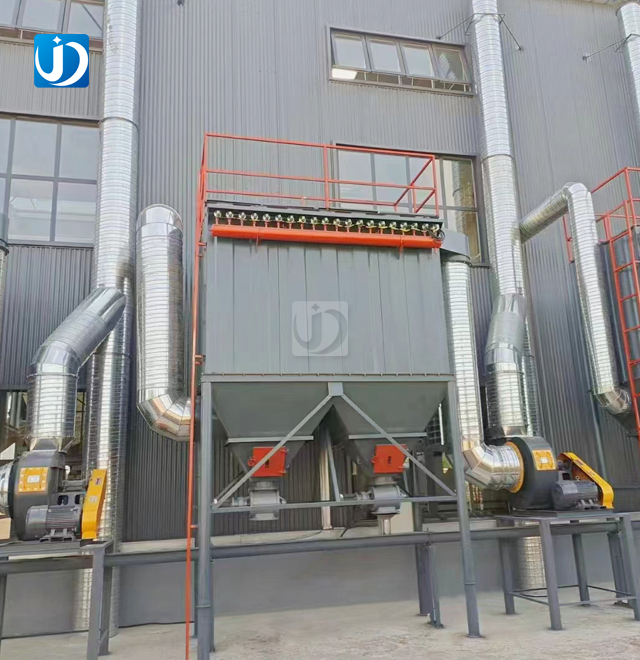
dust extraction systems
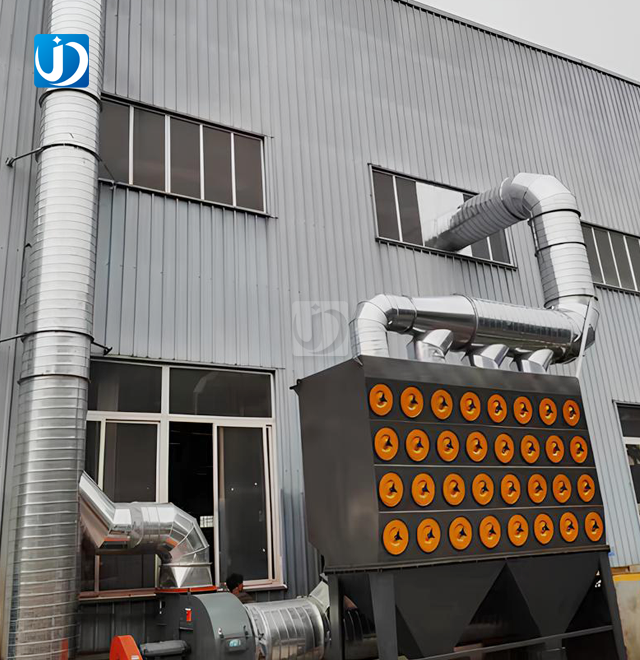
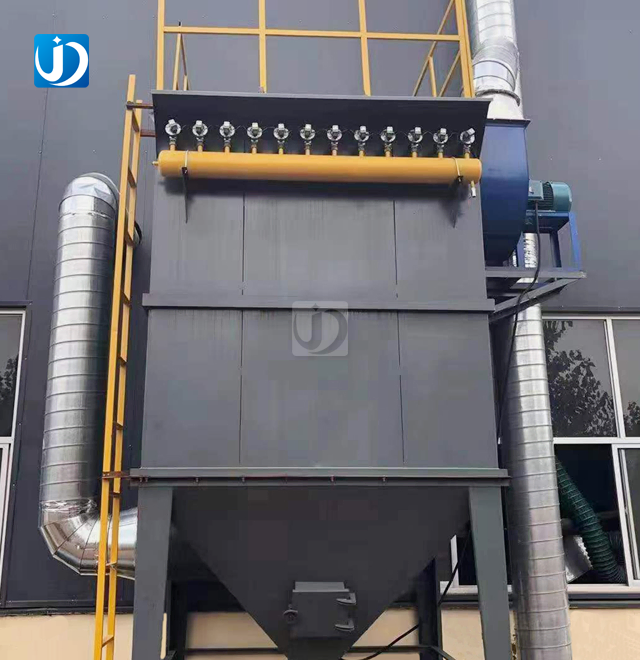
Suction hoods are arranged at dust sources. Negative pressure from fans captures fugitive dust rapidly
and improves workshop working environment.
Multi-stage dust removal option achieves superior purification
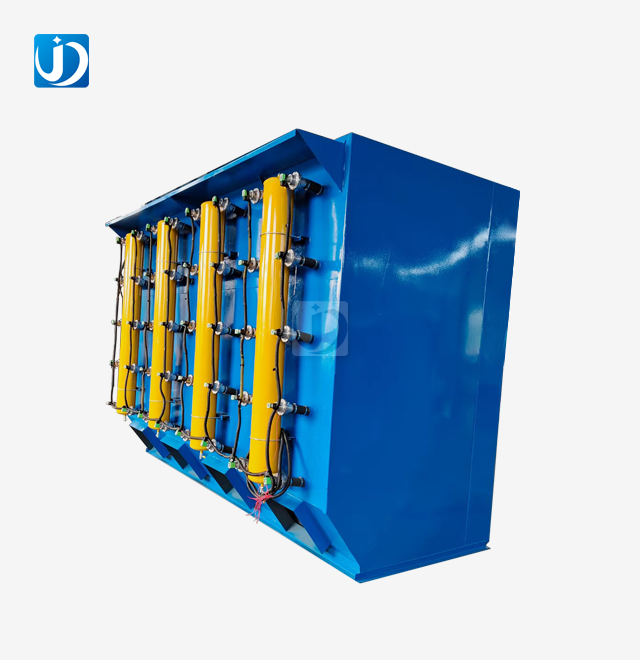
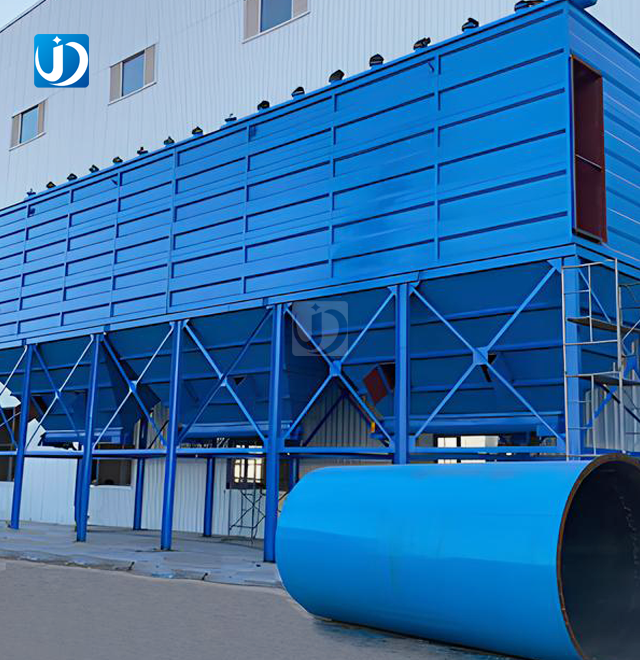
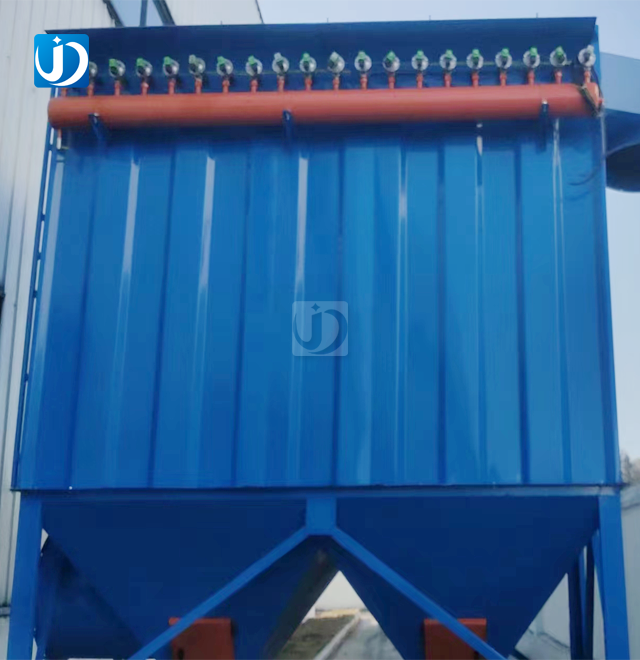
For high-concentration abrasive dust, cyclone pre-separator recovers coarse steel shot, while pulse bag
collector traps fine dust, realizing abrasive recycling and compliant exhaust emission.
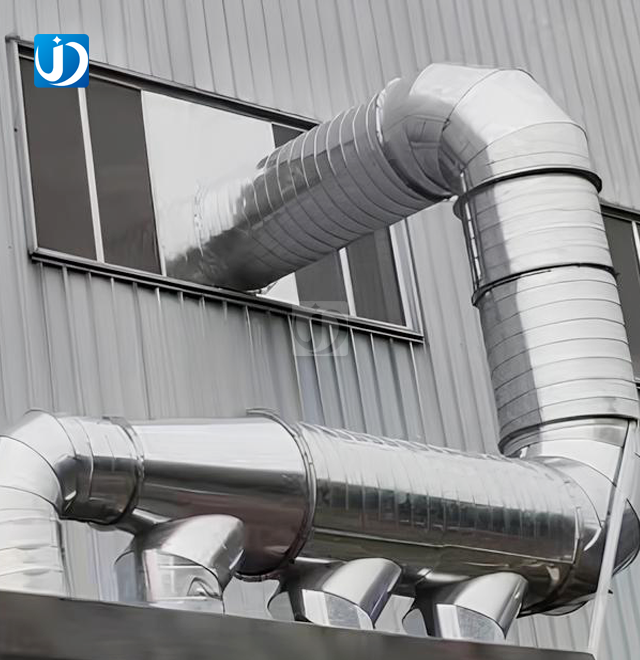
Modular pipeline layout adaptable to workshop layout
Standardized ducts, elbows, tees and dampers enable flexible routing. Suitable for single machine
independent extraction or shared central system for multiple production lines.
Balanced and adjustable air volume for stable collection
Air volume dampers balance suction force at all pick-up points, preventing insufficient suction at far
ends and excessive flow near the fan.
- Product Description
Industrial Dust Extraction Systems — Centralized Multi‑Stage Workshop Air Purification Solutions
Botou Junda Machinery Equipment Co., Ltd. supplies enterprise‑grade dust extraction systems designed for high‑flow industrial environments. Backed by our 3,000‑square‑meter production facility and over 20 years of manufacturing experience, our centralized air‑purification solutions achieve filtration efficiency of ≥99.5% for fine particulate matter, with customizable air‑handling capacity ranging from 2,000 to 20,000 m³/h. Suitable for shot‑blasting, sandblasting, welding and grinding operations, these systems combine multi‑stage separation with negative‑pressure collection technology to ensure compliant emissions and improve worker safety. Certified to ISO9001, ISO14001 and ISO45001, custom‑built units are generally shipped within 15 days.

Core Components and System Architecture
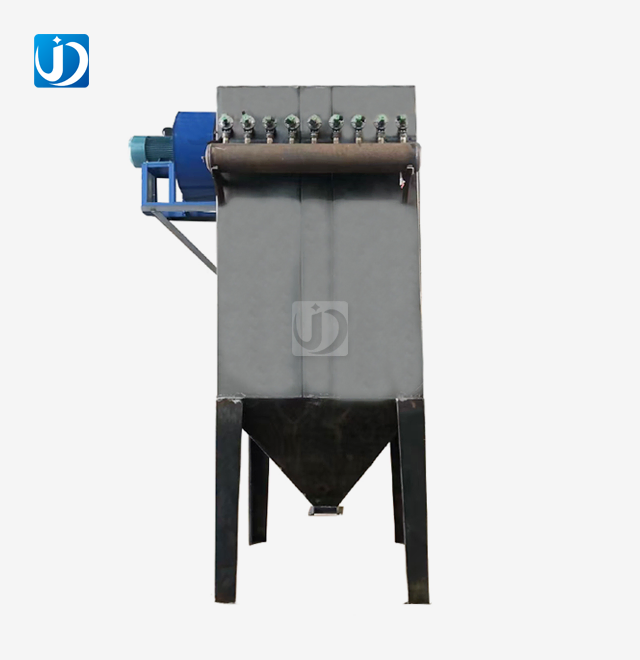
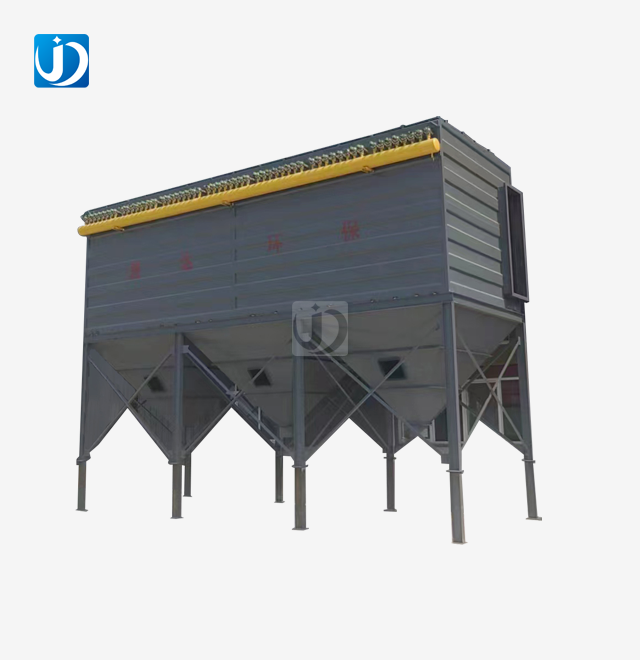
Seven interconnected components work in coordination to form your dust extraction systems. Dust hoods positioned at emission sources connect immediately to cyclone pre‑separators, which recover reusable abrasives through a network of suction ducts.
Sub‑micron particles are then captured as the drawn‑in airflow passes through cartridge filters or pulse‑jet bag collectors. An efficient centrifugal exhaust fan maintains constant negative pressure across the whole system, while a programmable control panel provides interlocked start‑stop sequences with overload protection and differential‑pressure alarms.
An ash‑discharge system with rotary airlocks prevents air leakage during material removal. This modular architecture ensures balanced airflow distribution at all pickup points, adapting to both centralized multi‑line installations and standalone single‑unit layouts.

Technical Specifications of Dust Extraction Systems
| Parameter | Specification |
|---|---|
| Air Handling Capacity | 2,000‑20,000 m³/h (customizable) |
| Filtration Efficiency | ≥99.5% for fine dust particles |
| Applicable Industries | Shot blasting, sandblasting, grinding, polishing, welding, cutting |
| Working Principle | Negative‑pressure centralized extraction, multi‑stage separation |
| Noise Level | <85 dB (with optional silencer) |
| Cleaning Mechanism | Automatic pulse‑jet filter cleaning |
| Construction Material | Heavy‑gauge galvanized steel or stainless steel |
| Control System | PLC‑based, VFD‑compatible |
| Duct Layout | Modular design with standardized elbows and dampers |
Key Operational Advantages
Negative‑Pressure Capture Technology
Strategically arranged suction hoods create local negative‑pressure zones at dust‑generation points. This fast‑containment measure prevents fugitive emissions from spreading throughout your workshop, protecting precision mechanical components and reducing respiratory hazards.
Multi‑Stage Separation for Material Recovery
For abrasive‑intensive applications, cyclone pre‑separators use centrifugal force to recover 80‑90% of reusable steel shot and grit. Secondary pulse bag collectors capture the remaining fine particles. Material recovery delivers up to 40% annual savings on consumable costs for your dust extraction systems.
Flexible Duct Configuration
Standardized duct sections with adjustable dampers enable you to balance suction at both distant and near‑field pickup points. This modular approach accommodates workshop expansion without full‑system redesign, supporting independent machine extraction as well as shared central networks.
Continuous Operation with Self‑Maintenance
Automatic pulse‑jet cleaning cycles remove accumulated dust from filter media during operation. Compared with manually cleaned systems, consistent airflow is maintained without production interruption, extending filter service life by 30‑50%.
Application Scenarios
Our equipment perform excellently in metallurgical facilities handling high‑temperature slag and mill scale. Surface‑treatment workshops benefit from integrated hood designs that capture grinding‑wheel sparks and polishing residues right at the source.
Foundry operations employ dry enclosed ductwork to convey metallic dust free of moisture interference, preserving abrasive quality. Machine‑building plants deploy centralized dust extraction systems serving multiple CNC stations, welding benches and assembly lines via a single fan unit. Building‑material production lines processing cement, silica and composite dust achieve OSHA‑compliant air quality with HEPA‑grade filter modules.

Quality Assurance Protocol
Every dust extraction systems unit undergoes factory acceptance testing to verify airflow performance against design specifications using calibrated anemometers. Differential‑pressure gauges are pre‑calibrated to your operating parameters. Leak‑testing via aerosol‑challenge method confirms filter housing sealing integrity above 99.95%.
For explosive‑atmosphere applications, ground‑continuity tests verify electrostatic‑discharge protection. All welded joints receive dye‑penetrant inspection, while painted surfaces undergo salt‑spray testing to confirm corrosion resistance. Complete technical documentation includes P&ID drawings, electrical schematics and maintenance schedules.

Frequently Asked Questions
Q: What causes insufficient negative pressure in these setups?
A: Common issues include duct blockages from accumulated material, air leakage at flange joints, clogged filter media requiring pulse‑system adjustment, undersized fan capacity for expanded layouts, excessive hopper deposits restricting airflow, or improperly set damper positions. It is important to regularly inspect cyclone interiors for wear‑related air short‑circuiting.
Q: Can these setups recirculate cleaned air indoors?
A: Yes, efficiency of 99.97% at 0.3 μm can be achieved when fitted with secondary HEPA filtration. You must verify whether local regulations permit air recirculation for your specific contaminants. Our units include real‑time particulate monitoring to ensure safe recirculation thresholds.
Q: How do I determine the required airflow capacity for these setups?
A: Calculations take capture velocity at hood openings (typically 100‑200 FPM for welding fumes, 200‑500 FPM for grinding dust) and transport velocity within ductwork (3,500‑4,500 FPM for heavy particles) into account. Our engineering team provides load assessments based on your equipment layout and production output.
Q: What are the maintenance intervals for filter cartridges in these setups?
A: Monitor differential pressure continuously; replacement trigger is at 5‑6 inches water column. High‑dust environments may require replacement every 6‑12 months, while lighter‑duty applications extend intervals to 18‑24 months. Pulse‑jet systems reduce replacement frequency by 40% compared with static filtration.
Q: Are explosion‑proof configurations available for these setups?
A: Absolutely. We integrate explosion‑vent doors matched to dust Kst values, isolation slide doors with closing time <50 ms, and rotary airlocks complying with ATEX/NFPA standards. Conductive hoses and proper earthing prevent ignition sources within combustible‑dust zones.
Cooperation & Support
Ready to eliminate dust hazards and recover valuable abrasives? For custom dust extraction systems design, contact our technical team via junda001@jundablast.com. We deliver complete solutions from airflow modeling to overseas commissioning support within your operational schedule.



USER EVALUATE
Real feedback and practical experience shared by worldwide partners who purchased our machinery and environmental treatment devices.