


_1786959752558.webp)
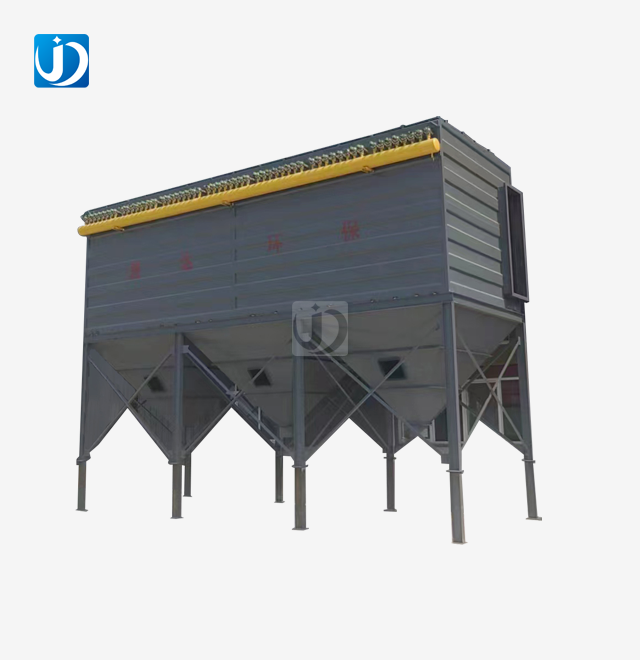
baghouse dust collector
Excellent capture performance for fine metal dust with efficiency over 99.9%, suitable for steel shot
fragments, mill scale and grinding dust.
Online pulse jet cleaning enables non-stop continuous production
Compartmentalized cleaning without full-unit shutdown, capable of running synchronously with shot
blasting machines for uninterrupted production lines.
Multiple filter bag materials for diverse working conditions
Standard polyester felt; anti-static and PTFE membrane bags are optional to prevent static hazards and
resist fine dust clogging.
Modular housing with complete air volume options
Customizable from small standalone units to large central dust collection systems. Flexible layout for
single machine matching or workshop central extraction.
- Product Description
Baghouse Dust Collector for Shot‑Blasting & Industrial Air Filtration | High‑Efficiency Pulse‑Jet Systems
Botou Junda Machinery Equipment Co., Ltd. supplies industrial‑grade baghouse dust collector systems engineered for ultra‑low emission control in shot‑blasting and metal‑processing applications. Backed by our 3,000‑square‑meter production plant and over 20 years of manufacturing experience, our baghouse dust collector achieves filtration efficiency above 99.9% for fine particulate matter. Custom ODM/OEM solutions can be delivered in around 15 days, with air‑volume configurations ranging from 3,000 to 30,000 m³/h. For global industrial applications, ISO9001, ISO14001 and ISO45001 certifications guarantee compliance with international environmental and safety requirements.

Why Choose Our Industrial Baghouse Dust Collector
Advanced filtration technology is required to capture metallic dust, broken steel shot and grinding waste. Our pulse‑jet cleaning baghouse dust collector maintains negative‑pressure synchronization with shot‑blasting lines while running continuously without production interruption.
Thanks to compartmentalized construction, filters can be cleaned section‑by‑section while other chambers remain in operation. This immediately boosts workshop productivity by ensuring your production lines never stop for baghouse dust collector maintenance.
Filtration‑media options include PTFE membrane bags for capturing ultra‑fine particles below 1 μm, standard polyester felt for general applications, and anti‑static versions for explosive‑dust scenarios. You may select the setup best‑suited to your specific workplace.

Technical Specifications of Baghouse Dust Collector
| Parameter | Specification |
|---|---|
| Product Name | Industrial Baghouse Dust Collector |
| Airflow Range | 3,000‑30,000 m³/h |
| Filtration Efficiency | ≥99.9% |
| Filter Media Options | Polyester felt / Anti‑static / PTFE membrane |
| Cleaning Method | Off‑line pulse‑jet |
| Operating Temperature | ≤120°C (standard), ≤260°C (special media) |
| Inlet Dust Concentration | ≤1,000 g/m³ |
| Emission Standard | ≤30 mg/m³ |
| Noise Level | ≤85 dB |
| Power Supply | 380V/50Hz (customizable) |
Core Advantages for Your Operation
Modular Housing Fits Any Layout
Whether you need a standalone unit for a single shot‑blasting machine or a centralized system for an entire workshop, our modular structure can be seamlessly scaled. Compact footprint suits space‑limited premises, while multi‑compartment configurations handle heavy dust loads in large foundries.
Sealed Construction Eliminates Fugitive Emissions
Fully welded housing and sealed access doors prevent air leakage. Rotary airlock valves isolate ash‑discharge chambers to avoid secondary dust release during material removal. This design protects worker health and keeps your facility compliant with strict environmental regulations.
Dry‑Type Filtration Supports Abrasive Media Recovery
Unlike wet scrubbers, our dry‑filtration process keeps collected dust free of moisture. Reusable steel shot can be screened and separated from fine waste, directly cutting abrasive procurement costs. This closed‑loop approach also minimizes waste‑disposal expenses.
Automatic Controls Reduce Labor Requirements
Dual‑mode controllers monitor differential pressure and automatically adjust cleaning cycles. When resistance exceeds preset levels, the system triggers pulse cleaning without manual intervention. Fault alarms immediately notify operators of solenoid‑valve or compressed‑air‑supply issues to prevent equipment damage.
Field‑Proven Applications Across Industries
Our baghouse dust collector delivers reliable performance in harsh environments where conventional filters fail. Machinery‑manufacturing workshops deploy our systems to capture welding fumes and grinding dust simultaneously. Steel‑structure fabrication facilities rely on centralized units to maintain air quality across multiple workstations.
Foundry operations pair our baghouse dust collector with cyclone pre‑separators to intercept coarse debris before it reaches filter bags, extending media service life. Metallurgical plants processing mill scale and forge‑shop dust benefit from wear‑resistant filter bags and reinforced inlet liners that withstand impact from abrasive particles.
Chemical‑processing and building‑material industries select our anti‑static configurations for safe handling of combustible powders, meeting NFPA explosion‑protection requirements. Flexible design adapts to varying dust loads and particle‑size distributions without performance degradation.

How the System Works
An exhaust fan generates negative pressure to draw dust‑laden air into the inlet chamber. Multiple filter bags hang vertically inside the main cabinet for even airflow distribution. Particulates accumulate on the outer surface of filter bags to form dust cakes, improving filtration efficiency.
Clean air passes through bag fabric into the upper clean‑air plenum and exits through outlet ductwork. When differential pressure reaches a predetermined level, the pulse‑jet mechanism activates. Bursts of compressed‑air reverse‑flow rapidly through each bag, dislodging dust deposits down into the bottom hopper.
Ash‑discharge mechanisms continuously remove accumulated particles without obstructing airflow. This cyclic process maintains stable pressure drop and filtration performance over long production shifts.
Maintenance Best Practices
Inspect filter bags monthly through access openings for tearing or excessive dust buildup. Replace damaged bags promptly to stop bypass leakage. Clean compressed‑air pipelines and pulse valves every three months to ensure fast response during cleaning cycles.
Empty hoppers and check fill levels weekly before any material clogs the inlet chamber. Retighten flange nuts every six months after equipment stabilizes to preserve sealing integrity. Replace gaskets every two years or whenever obvious compression occurs.
Closely monitor differential‑pressure trends via the control panel. Gradual rises even with regular cleaning indicate media saturation or bag blinding, signaling the need for replacement. Unexpected pressure spikes point to blockages or fan faults requiring immediate repair.
Frequently Asked Questions
Q: What causes a baghouse dust collector to lose efficiency over time?
A: Filter bags degrade from chemical attack or mechanical wear, allowing dust bypass. Air leakage at welded joints, door seals or tube‑sheet gaskets reduces suction. Bag blinding caused by insufficient pulse cleaning or excessive humidity also increases resistance and lowers airflow.
Q: Which shot‑blasting scenarios require a baghouse dust collector filtration system?
A: All enclosed shot‑blasting equipment generates fine dust that must be captured. Hook‑type, tumble‑belt and pass‑through machines produce broken steel‑shot fragments and metallic‑oxide dust. Grinding and polishing operations yield ultra‑fine particles that only high‑efficiency baghouse dust collector can capture to meet environmental standards.
Q: How is pulse‑jet cleaning performed without stopping production?
A: Compartment‑style design isolates sections of filter bags. While one chamber undergoes pulse cleaning, remaining chambers keep filtering. The overall system never shuts down, sustaining constant negative pressure and continuous dust capture for running machinery.
Q: Can the system handle different dust types simultaneously?
A: Yes, provided particle properties are compatible. Mixing abrasive metallic dust with combustible powders requires anti‑static bags plus explosion‑proof devices. Combining hygroscopic materials with standard dust demands inlet‑air heating to prevent moisture condensation and bag caking.
Q: What maintenance schedule minimizes downtime for a baghouse dust collector? A: Weekly hopper emptying and monthly bag inspections prevent most failures. Quarterly compressed‑air‑system checks guarantee pulse‑valve function. Annual fan‑bearing lubrication and biennial gasket replacement sustain long‑term reliability. Predictive maintenance based on differential‑pressure trends optimizes filter‑bag replacement timing.
Partner with Junda for Clean‑Air Solutions
Custom‑configured baghouse dust collector units are available to match your specific application requirements. Our technical team provides installation guidance, operator training and remote commissioning support. Contact Us via junda001@jundablast.com to discuss airflow calculation, filter‑media selection and delivery timelines for your facility.




USER EVALUATE
Real feedback and practical experience shared by worldwide partners who purchased our machinery and environmental treatment devices.