_1786959752558.webp)
Cyclone Dust Collectors vs. Baghouse Systems: Which to Choose
When it comes to industrial dust control, the decision between cyclone dust collectors and baghouse systems often determines whether your facility achieves compliance, maintains productivity, and controls operating costs. A Baghouse Dust Collector typically delivers superior filtration efficiency for fine particulate matter—often exceeding 99.9%—making it the preferred choice for operations facing stringent emission standards below 10 mg/m³. Cyclone collectors, on the other hand, excel at removing larger particles with minimal maintenance, serving as either standalone units or pre-filters in multi-stage systems. Both technologies have earned their place in modern manufacturing, yet understanding their operational differences is essential for procurement managers and environmental engineers tasked with upgrading or retrofitting dust collection infrastructure.
Understanding Cyclone Dust Collectors and Baghouse Systems
How Cyclone Collectors Operate
Cyclone Dust Collectors use centrifugal force to separate dust particles from moving air. Dusty air comes into the cylinder-shaped chamber from the side, making a vortex that pushes heavier particles against the outside wall. The particles are then pulled into a storage hopper by gravity, while clean air leaves through a center tube. This process is completely mechanical and doesn't need any filter media. This makes Cyclone Dust Collectors very durable in rough places like foundries, grain handling facilities, and woodworking shops where sawdust and chips are common.
Maintenance costs are lower because Cyclone Dust Collectors don't need to replace filters, and they can handle high-temperature exhaust streams without damaging the media. But when it comes to picking up particles smaller than 10 microns, they are much less effective. According to EPA Method 5 testing guidelines, Cyclone Dust Collectors rarely collect more than 80% of submicron dust. This makes them less useful for applications that need to meet strict emission standards.
The Fabric Filtration Advantage of Baghouse Systems
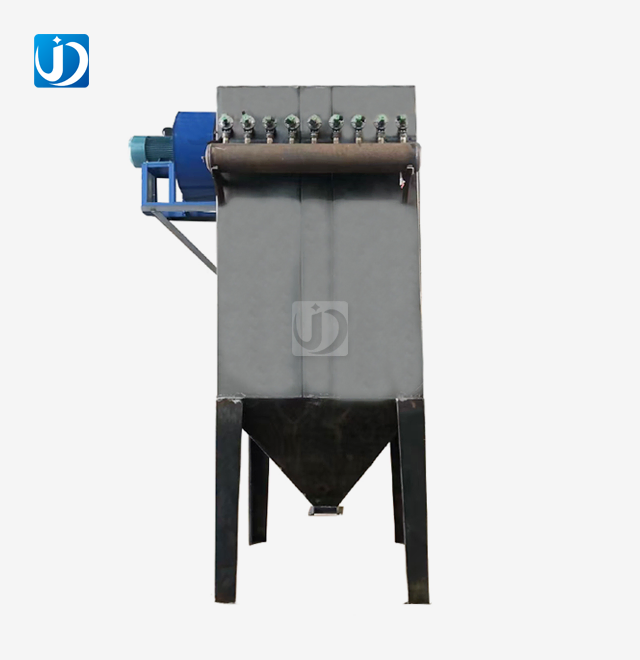
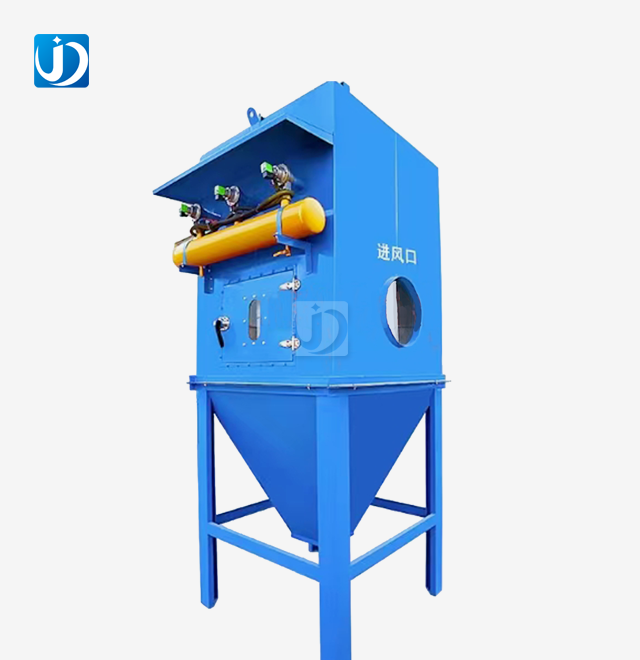
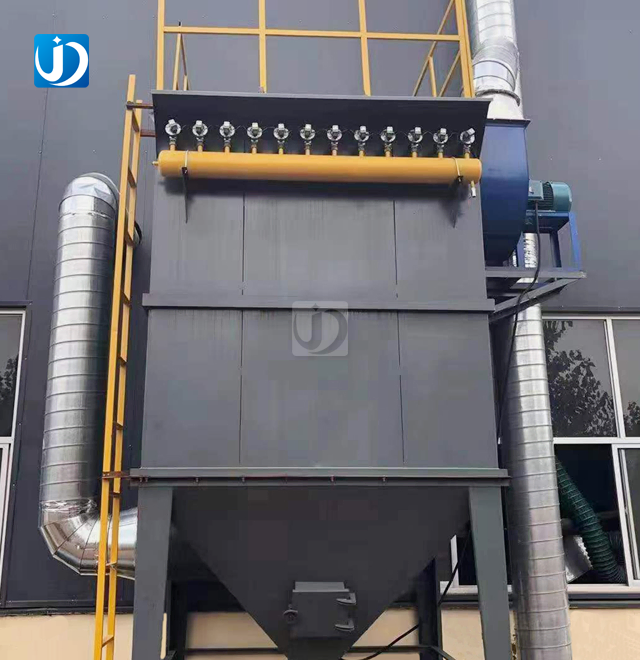
Baghouse Dust Collectors are precise filter screens. Polyester, polypropylene, or PTFE-coated fiberglass woven or felted fabric bags filter polluted air. Particles create a dust layer on the bag. The cake layer improves filtering over time, collecting particles as fine as 0.3 microns with over 99.9% success. Computer-controlled pulse-jet cleaners sometimes blast compressed air through bags to force dust into hoppers without interrupting airflow.
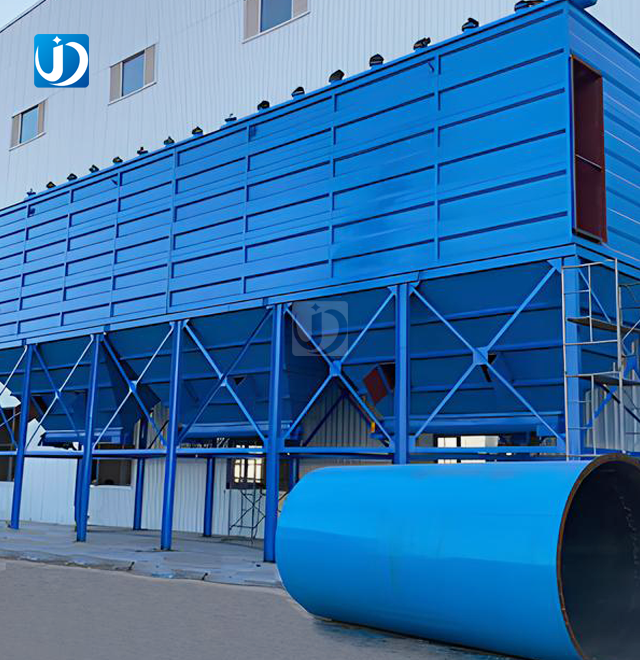
Baghouse Dust Collectors may be used in many industrial applications by customizing filter media. Antistatic bags prevent sparks from igniting fires in flammable dust, while PTFE membrane filters keep water and chemicals out of corrosive environments. Baghouse Dust Collector units, composed of modules, may be assembled in various sizes, from 3,000 m³/h for single grinding stations to 30,000 m³/h systems for whole production floors. Fabric filtration is ideal for dust management in industries requiring sub-10 mg/m³ emissions, such as metals, pharmaceuticals, and cement manufacturing, due to its adaptability.
Comparing Operational Contexts
Cyclone Dust Collectors pre-separate 70–90% of coarse material before the Baghouse Dust Collectors downstream in tandem systems. This tiered strategy extends filter bag life and reduces replacement and maintenance costs by reducing dust. However, standalone Cyclone Dust Collectors remain cost-effective for higher emission levels (50-100 mg/m³) and larger particle sizes.
Baghouse Dust Collector systems are most popular in process and precision manufacturing, where clean goods, healthy workplaces, and environmental regulations coexist. In hazardous areas with rigorous laws, they are vital since they may take up welding fumes, medication powders, and silica dust. In exchange, you must spend more on equipment, update filters more regularly, and use more energy to run fan systems that compensate for filter pressure loss.
Performance Comparison: Efficiency, Capacity, and Energy Consumption
Filtration Efficiency Across Particle Sizes
Which method gives the best results depends on how the particle sizes are spread out. Cyclone Dust Collector efficiency is highest for particles bigger than 20 microns, but it drops rapidly below 10 microns. Cyclone Dust Collectors are good at capturing large amounts of metal shot fragments and mill scale from a typical foundry, but emissions may still be higher than current standards if they are not further filtered.
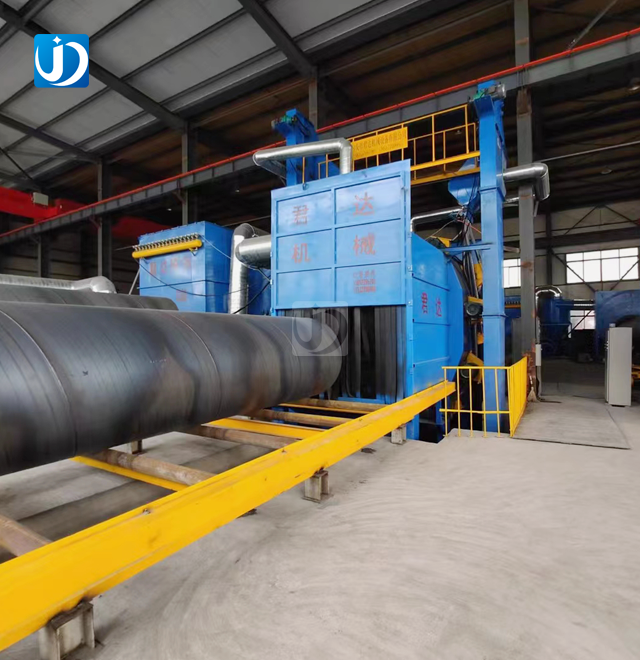
Baghouse Dust Collectors are 99.9% effective at removing all types of particles, including very fine grinding dust, welding smoke, and burning soot that would normally get past Cyclone Dust Collector separation. This level of performance meets NESHAP standards set by the EPA, OSHA exposure limits, and state rules that are getting stricter all the time. For shotblasting jobs, Baghouse Dust Collectors usually get the outlet concentrations below 5 mg/m³. This protects the environment and workers.
Airflow Capacity and System Design
Cyclone Dust Collectors can handle high mass flow rates with little pressure drop—usually between 2 and 6 inches of water column—which lets smaller fans use less energy. Their small size makes them easy to fit in tight areas, and more than one Cyclone Dust Collector unit can be set up in parallel to increase capacity without having to change the layout of the pipes in a lot of complicated ways.
Baghouse Dust Collector systems need careful planning of the air-to-cloth ratio to balance the speed of filtration with the drop in pressure. Modern pulse-jet Baghouse Dust Collectors work with pressure differences of 4 to 8 inches of water column when they are clean and 10 to 12 inches when they are full of dust. Because of this resistance, the fan needs more horsepower, which means it uses more electricity. The divided cleaning design, on the other hand, lets the machine run continuously; some filter sections turn off for pulse cleaning while others stay on, so there are no production stops like there are with older shaker-type Baghouse Dust Collectors.
Long-Term Operating Costs
The ways that different technologies use energy are very different. Cyclone Dust Collectors don't use much electricity besides running their fans, but if they can't meet strict emission standards, they may have to be upgraded or face fines from the government. It is normal for Baghouse Dust Collector systems to have costs that you can plan for, like replacing the filter bag every two to five years based on the type of dust and the temperature, using compressed air for pulse cleaning, and using more energy for the fans.
Compliance assurance, product recovery value, and production continuity are all important parts of a full lifecycle cost analysis. Dry cloth filtration in Baghouse Dust Collectors makes it possible to recycle dust, which is very helpful in shot blasting because the steel shot can be screened and used again, which saves money on buying new media. This chance to get back materials often makes the higher initial investment in Baghouse Dust Collector technology worth it for businesses that process valuable materials or abrasives.
Choosing the Right System for Your Industry Needs
Evaluating Dust Characteristics
Any structure for selection is built on the size, abrasiveness, temperature, and chemical reaction of dust particles. Cyclone Dust Collector pre-separation works best with coarse, non-flammable materials like metal shavings or wood chips. Fine dust that can be breathed in, like silica flour, cement ash, or medicinal powders, needs to be handled with great care in a Baghouse Dust Collector.
Temperature issues are just as important. Normal polyester filter bags can handle temperatures up to 135°C for long periods of time. Specialized aramid or P84 media can handle temperatures up to 260°C. When temperatures go above 400°C, Cyclone Dust Collectors don't break down, so they are perfect for kiln exhaust and hot process streams where fabric media would fail.
Regulatory and Compliance Imperatives
NESHAP guidelines mean that facilities in EPA non-attainment areas, or those that have to follow them, have to use high-efficiency Baghouse Dust Collector systems. Recently passed rules about crystalline silica exposure have made 99.9% collection success a must for activities like cutting, grinding, and abrasive blasting. More and more, environmental impact assessments need continuous opacity monitoring and annual stack testing. Both of these things are better done with fabric filtration because they give consistent performance.
Compliance paperwork includes more than just measures of emissions. Third-party audits, OSHA records, and ISO 14001 certification are all like systems that have maintenance records that can be tracked and performance curves that can be predicted. With automated pressure differential monitoring and cleaning cycle logging, Baghouse Dust Collector systems leave a paper trail that can be used to show that proper care was taken during inspections and permit renewals.
Spatial and Integration Constraints
In retrofit situations, the room is often very limited. Cyclone Dust Collectors take up vertical space but don't take up much ground space, so they can be installed outside or on a mezzanine. Baghouse Dust Collector units need a lot of floor space so that the bin can be accessed and bags can be replaced. They can be set up horizontally or vertically, based on the limitations of the building.
The total cost of installation is affected by how well it fits with current pipes and conveyance systems. Cyclone Dust Collectors can handle uneven airflow and are not as affected by changes in duct velocity. Baghouse Dust Collectors need even air distribution across the filter bags, which usually means making changes to the plenum design and adding flow-straightening baffles to stop dust from building up unevenly and the bags failing too soon.
Maintenance, Common Problems, and Cost Considerations
Preventive Maintenance Protocols
In a Cyclone Dust Collector, maintenance is mostly about checking the worn parts. Abrasive dust wears away at the inlet sections and internal vanes, so steel parts need to be replaced every so often. To keep fugitive dust from escaping, hopper release systems, which are usually rotary airlock valves, need to be oiled and their seals checked on a frequent basis. The most time-consuming part of dust collector maintenance is no longer needed because there is no filter media.
Baghouse Dust Collectors have a set repair schedule. Schedules for inspecting filter bags rely on how much dust they hold. In moderate-duty uses, bags should be replaced every year and visually checked every three months. Pulse-jet solenoid valves need to have their diaphragms replaced every 12 to 18 months so that they keep cleaning well. Pressure differential gauges and Magnehelic meters give operators real-time feedback on performance, letting them know about clogged bags or system imbalances before emissions get worse.
Troubleshooting Common Failures
The performance of a Cyclone Dust Collector slowly decreases over time due to wear and leaks, rather than failing completely. When air gets in through corroded seams or broken hopper seals, it changes the vortex pattern and makes the separation less effective. Finding and sealing leaks brings back performance without having to replace parts.
Baghouse Dust Collector troubleshooting looks at a number of different types of failure. If the difference pressure is high, it means that either there is too much dust because the filter wasn't cleaned well enough, the bag is blinding because of wetness, or the filter area is too small. High emissions could mean that the bag is torn, the placement is wrong, or there is a way around the tubesheet. Using opacity meters and Baghouse Dust Collector leak detection devices to do systematic root cause analysis helps find problems before they become regulatory violations.
Total Cost of Ownership Analysis
Cyclone Dust Collector systems have lower initial capital costs (30–50%) than Baghouse Dust Collectors of the same size. When Cyclone Dust Collectors need extra filtering or the value of the product recovered is taken into account, this cost advantage gets smaller. A steel mill that saves $50,000 a year on reused shot abrasive by using dry Baghouse Dust Collector filtration will get its money back in 3–4 years compared to other methods like wet scrubbing.
The most expensive part of running a Baghouse Dust Collector is replacing the filter bags. Standard polyester bags are less expensive than PTFE or anti-static versions, but picking the wrong media can cause systems to fail early and need to be shut down in an emergency. Working with experienced suppliers who offer dust analysis and media suggestions saves you a lot of money on costly mistakes.
Case Studies and Supplier Overview
Metalworking and Foundry Applications
A medium-sized foundry was getting fined more and more for pollution that could be seen coming from its old water scrubber system. By switching to a pulse-jet Baghouse Dust Collector, exit concentrations dropped from 80 mg/m³ to less than 5 mg/m³. This met the requirements and allowed 95% of the steel shot to be reused. The dry filtration process got rid of the costs of treating wastewater and turned a liability for disposal into a stream of recycled assets.
Chemical Processing and Powder Handling
Baghouse Dust Collector systems with explosion-proof parts and HEPA-grade filters are used by pharmaceutical companies that work with active pharmaceutical ingredients (APIs). Modern Baghouse Dust Collectors are sealed, which keeps products from getting contaminated with each other and keeps workers from being exposed to strong chemicals. Automated cleaning cycles keep production going while reducing the amount of work that needs to be done by hand in dangerous areas.
Trusted Equipment Suppliers in the Market
Donaldson Torit is one of the best makers when it comes to reliability and professional help. They are known for their advanced pulse-jet technology and global service network. Camfil APC specializes in making the Gold Series collectors, which are very efficient and come with built-in tracking systems. Nederman makes small Baghouse Dust Collectors that meet European emission standards, and Parker Hannifin makes solutions for complicated industrial processes that are engineered to order.
Not only do you have to look at the specs of the equipment, but you also have to look at the guarantee terms, the availability of spare parts, and the supplier's ability to provide field service. Companies with ISO 9001 approval and detailed quality management systems consistently do a better job than cheap providers who don't have controls for manufacturing or a way to help customers after the sale.
Conclusion
When choosing between Cyclone and Baghouse Dust Collectors, consider filtering efficiency, operating costs, and regulatory requirements. Cyclone Dust Collectors collect coarse particles inexpensively and easily, making them ideal pre-filters in circumstances where emission rules allow larger concentrations. Baghouse Dust Collectors gather tiny particles over 99.9% of the time, exceed ultra-low emission regulations, and recover valuable materials. The decision system must consider particle sizes, high temperatures, space constraints, and lifetime costs. Even if it costs more, fabric filtering technology helps facilities that care about worker health, environmental compliance, and long-term operational stability. Working with professional vendors that provide complete technical support is the best method to ensure system performance throughout equipment usage.
FAQ
1. How often should filter bags be replaced in a baghouse dust collector?
How often filter bags need to be replaced depends on how rough the dust is, how much chemical contact there is, and the working temperature. Standard polyester bags can be used for two to three years in light-duty situations, but PTFE membrane bags may need to be replaced every 12 to 18 months in tough chemical conditions. Keeping an eye on changes in differential pressure and doing visual checks once a year can help you figure out when to replace the filters before their effectiveness goes down.
2. Can cyclone collectors effectively capture fine welding fumes?
Cyclone Dust Collector technology has trouble with particles smaller than 10 microns, so it can't be used on its own to control welding fumes. Particles in welding smoke are usually between 0.5 and 5 microns, so Baghouse Dust Collector filtering is needed to get good catch rates. A lot of places use Cyclone Dust Collectors to get rid of big pieces of solid matter before the final filtering through fabric media.
3. What energy-saving measures reduce baghouse operating costs?
Exhaust fans with variable frequency drives (VFDs) change the flow of air depending on production needs. This cuts down on energy use when the machine isn't being used. Using differential pressure control to set the best pulse-cleaning times stops over-cleaning, which loses compressed air, and keeps the fan load as low as possible. Choosing low-resistance filter media and making sure the right air-to-cloth ratios are maintained also lowers the amount of energy needed for operation.
Partner With a Trusted Baghouse Dust Collector Manufacturer
With 20 years of experience, Junda Machinery has designed and built high-efficiency industrial Baghouse Dust Collectors that meet the specific needs of foundries, metalworking, and heavy manufacturing. Our factory is ISO 9001-certified and makes modular Baghouse Dust Collector systems that can handle air volumes of 3,000 to 30,000 m³/h. These systems are designed to meet ultra-low emission standards and have filter efficiency above 99.9%. Each system has pulse-jet cleaning technology for continuous use, a range of customizable filter media options, such as anti-static and PTFE versions, and a fully welded design to stop any fugitive emissions. Our expert team helps with everything, from figuring out what the dust is to installing it, getting it up and running, and planning for ongoing upkeep. Get in touch with us at junda001@jundablast.com to talk about your unique dust collection problems with a Baghouse Dust Collector supplier who has a lot of experience and knows how to find the right mix between following the rules, running the business efficiently, and lowering the total cost of ownership.
References
1. U.S. Environmental Protection Agency. Air Pollution Control Technology Fact Sheet: Fabric Filters. EPA-452/F-03-021, Office of Air Quality Planning and Standards, 2003.
2. American Society of Mechanical Engineers. Recommended Practices for the Design, Manufacture, and Operation of Baghouse Dust Collectors. ASME AG-1-2019 Standard, New York, 2019.
3. Cooper, C. David, and F.C. Alley. Air Pollution Control: A Design Approach. 4th Edition, Waveland Press, Long Grove, Illinois, 2011.
4. Industrial Ventilation: A Manual of Recommended Practice for Design. 30th Edition, American Conference of Governmental Industrial Hygienists (ACGIH), Cincinnati, Ohio, 2019.
5. National Fire Protection Association. Standard on Combustible Dust. NFPA 652-2023, Quincy, Massachusetts, 2023.
6. Theodore, Louis, and Anthony J. Buonicore. Air Pollution Control Equipment Calculations. John Wiley & Sons, Hoboken, New Jersey, 2008.

USER EVALUATE
Real feedback and practical experience shared by worldwide partners who purchased our machinery and environmental treatment devices.