


_1786959752558.webp)
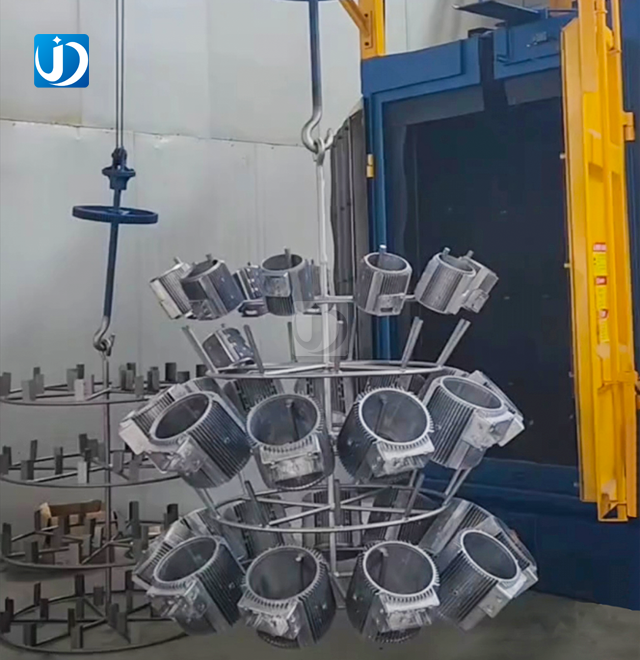
shotblast equipment
Includes air blasting and centrifugal wheel blasting models, applicable to steel plates, pipes, steel
structures, castings, pressure vessels and irregular parts, covering small-batch production and large
component treatment.
Stable surface treatment performance to meet anti-corrosion standards
Adjustable parameters consistently achieve Sa2.0, Sa2.5 blast cleaning grades and precisely control
anchor profile, greatly improving adhesion of paint and epoxy coatings.
Closed abrasive circulation reduces operating costs
Equipped with recovery elevator and air separation system for continuous reuse of intact abrasives.
Fragments and dust are separated automatically, cutting shot consumption and solid waste compared
with open blasting.
- Product Description
High‑Performance shotblast equipment Solutions for Industrial Surface Treatment & Anti‑Corrosion Preparation
Botou Junda Machinery Equipment Co., Ltd., with 20 years of professional foundry‑machinery expertise, supplies professional‑grade shotblast equipment. Our systems feature turbine speed of 60‑90 r/min, installed power ranging from 11 kW to 185 kW and processing capacity of 1‑20 t/h for diverse applications. Every machine is built within our 3,000 m² production facility, integrated with closed‑loop abrasive recovery systems cutting media waste by up to 95 %, pulse‑jet dust collectors delivering 99.9 % filtration efficiency, and high‑chromium alloy wear‑resistant components (≥60 HRC hardness) that extend service life beyond 2,000 hours in continuous‑production environments.

Why Choose Junda shotblast equipment Systems
Our equipment combines air‑blast and centrifugal‑wheel blasting technologies to process steel plates, pipes, castings, pressure vessels and irregular‑shaped parts. Whether you run small‑batch prototype trials or high‑volume production lines, our shotblast equipment maintains consistent Sa2.0 and Sa2.5 cleanliness grades while precisely controlling anchor‑profile depth for superior paint adhesion.
The fully‑enclosed design complies with stringent environmental regulations. Automatic air‑separation systems continuously recycle intact abrasives while removing debris and dust, drastically reducing shot consumption compared with open blasting methods. Standard configurations support manual operation via blast guns, while optional robotic systems and roller conveyors can be seamlessly integrated into complete metal pre‑treatment production lines.

Technical Specifications
| Item | Value |
|---|---|
| Model Series | Shotblast equipment |
| Blasting Speed | 60‑90 r/min |
| Installed Power | 11 kW‑185 kW |
| Processing Capacity | 1‑20 tons/hour |
| Structural Features | Fully‑sealed protective structure, automatic abrasive circulation, intelligent dust collection, no dead cleaning zones |
| Applicable Workpieces | Steel plates, steel structures, castings, forgings, mechanical components, pipes, vehicle parts |
| Surface Treatments | Industrial rust removal, mill‑scale cleaning, deburring, anti‑corrosion pre‑treatment |
Core Advantages for Reducing Operating Costs
Flexible Configurations for Multiple Applications
Choose between wheel‑blast and pressure‑air blasting models. Our shotblast equipment handles everything from precision pressure vessels to heavy‑duty steel structures, adapting to your specific output volume and part geometries.
Precision Surface Treatment for Maximum Coating Performance
Adjustable parameters deliver repeatable Sa2.0 and Sa2.5 surface finishes. Controlled anchor profiles enhance adhesion of epoxy coatings and anti‑corrosion treatments, extending the service life of finished products.
Automated Media Management Cuts Consumable Expenses
Recovery elevators and air‑wash separators maintain the optimal working mix of abrasive particle sizes. By automatically separating reusable shot from dust and broken particles, you minimise media purchasing and disposal costs.
Environmental Compliance with Zero Wastewater
Matching pulse‑jet dust collectors keep particulate emissions below 5 mg/m³. Dry blasting eliminates water consumption and wastewater‑treatment requirements, simplifying environmental permit approvals.
Scalable Modular Design
Standardised units can be easily expanded and retrofitted. Connect your shotblast equipment to loading, unloading and painting processes to build an integrated metal‑finishing line that grows alongside your business.

Customised Services According to Your Requirements
With professional ODM and OEM capabilities, we customise machine dimensions, dust‑collector specifications, voltage standards and control systems to satisfy local regulations and site conditions. Our engineering team provides technical drawings, intelligent monitoring software and private‑labelling services for custom configurations within approximately 15 days.
Long‑term partnerships with global logistics providers guarantee reliable delivery for FCL, LCL and over‑dimensional cargo. We handle export packaging, fumigation documentation and customs formalities to minimise transit risks.

Comprehensive After‑Sales Support
You receive English‑language remote installation guidance, commissioning support and operator training. Each system is supplied with maintenance videos and operation manuals. Our team replies to inquiries within 6‑8 hours, while genuine spare‑parts and fast‑delivery channels keep your shotblast equipment operating at peak performance.
ISO9001, ISO14001 and ISO45001 certifications validate our quality‑management procedures. We assist with CE certification applications and provide technical documentation to meet international market‑access standards.

Frequently Asked Questions
Q: What are the two main categories of such machinery?
A: Wheel‑type machines and pneumatic‑pressure equipment. Selection depends on workpiece dimensions, production output and technical requirements.
Q: What surface‑treatment processes can this machinery perform?
A: Remove rust, mill scale, welding slag and old coatings; strengthen workpiece surfaces and relieve internal stress; increase substrate roughness to improve adhesion of paint and anti‑corrosion coatings.
Q: What supporting systems make up a complete eco‑friendly equipment set?
A: Main blast chamber, abrasive recovery system, abrasive screening unit, pulse dust‑collection system and electrical control system. Closed‑cycle operation meets environmental‑protection emission standards.
Q: What key parameters should be considered when purchasing this type of machinery?
A: Processing capacity, maximum workpiece size, abrasive‑recovery efficiency, dust‑collector air volume, wear‑resistant material of components, and overall‑machine automation level.
Q: How can a specified Sa2.5 surface finish be achieved on quenched steel?
A: Adjust the working proportion of abrasives and ensure the wheel-type unit's current reaches 80‑90 % of rated capacity for maximum impact force.
Q: What is the typical service life of wear parts such as blades and liners?
A: For high‑chromium (27 % Cr) components, blades generally last 400‑600 hours, while chamber liners exceed 2,000 hours, subject to abrasive type.
Start Your Surface‑Treatment Upgrade Today
Please Contact Us via junda001@jundablast.com to discuss your specific application requirements and receive custom solution recommendations for your shotblast equipment.

USER EVALUATE
Real feedback and practical experience shared by worldwide partners who purchased our machinery and environmental treatment devices.