


_1786959752558.webp)
How Does a Shot Blasting Unit Work? A Practical Guide
A shot blasting unit is an industrial surface treatment machine that propels abrasive media — such as steel shot or grit — at high velocity against a workpiece to remove rust, mill scale, and surface contaminants. Using a high-speed blast wheel driven by an electric motor, the unit delivers controlled, repeatable surface preparation results. Whether you're cleaning automotive castings, strengthening fasteners, or preparing bearing components for coating, understanding how this equipment works helps you make smarter procurement decisions and get the most from your production line.
What Is a Shot Blasting Unit? Understanding the Basics
Core Definition and Purpose
A rotating blast wheel, not compressed air, throws abrasive particles at high speed through a shot blasting unit. This cleans or hardens metal surfaces. The wheel spins at 2,000 to 3,600 RPM, which is fast enough to remove dirt and make an even anchor profile on the surface of the workpiece. This step is necessary for the coating to stick, for better fatigue resistance, and to meet surface cleanliness standards like Sa 2.5 or Sa 3.0 according to ISO 8501-1.
Key Components Explained
Every shot blasting machine has the same parts that make it work. Understanding each one helps you make a more accurate assessment of the supplier's requirements:
"Blast wheel" or "turbine": The machine's heart. It spins very fast and throws rough materials at the workpiece. The most important part of upkeep is replacing the blades, which can last anywhere from 200 to 1,000 hours of use, based on the type of media. The abrasive material and feed method is as follows: From a hopper, steel shot, cut wire, or grit is put into the wheel at a steady pace. Surface finish consistency is directly affected by the feed amount that stays the same.
- Blast wheel (turbine): The heart of the machine. It spins at high speed and throws abrasive media onto the workpiece. Blade wear is the primary maintenance concern, with blade lifespan ranging from 200 to 1,000 operational hours depending on media type.
- Abrasive media and feed system: Steel shot, cut wire, or grit is fed from a hopper into the wheel at a controlled rate. Consistent feed volume directly affects surface finish uniformity.
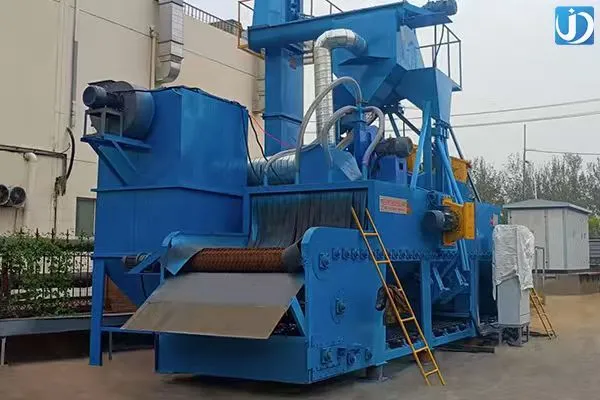
- Media recycling and separation system: Used media is collected, screened, and recirculated. Broken particles and dust are separated out, keeping the active media clean and effective.
- Dust collection unit: A cartridge or bag filter captures fine dust generated during blasting, protecting operators and meeting environmental discharge standards.
Because these parts work together as a closed-loop system, current units can handle between 80 and 600 parts per hour with little help from a person.
Shot Blasting vs. Sandblasting vs. Shot Peening
People often mix up these three processes, but they are used for different things. Compressed air is used to push abrasive through a nozzle in sandblasting. It's flexible, but it's slower, makes more dust, and is harder to control on a large scale. A motorized wheel is used in shot blasting to prepare a large, uniform area of surface. Shot peening, on the other hand, is a precise stress-relief method that adds compressive leftover stress to metal on purpose to make it last longer. For large-scale cleaning or getting an area ready for coating, a shot blasting unit machine is the right tool.
How Does a Shot Blasting Unit Work? Step-by-Step Operating Principle
The Blast Cycle Explained
A shot blasting machine works in a way that can be repeated over and over again. Parts can go into the blast chamber on a hanger, a conveyor belt, or a tumble belt. Once inside, the blast wheel may hit the object from the top, the side, or the bottom, based on how the machine is set up. It cuts away scale, rust, or waste, and the pieces fall into the collection hopper below. Parts that have been cleaned leave the chamber while the media recycling system gets ready for the next cycle. This whole process can be coordinated with equipment upstream and downstream using PLC signals in modular inline units made for assembly lines.
Types of Shot Blasting Units
The type of machine you need depends on the shape of your part, the amount of work you need to do, and how your line is set up.
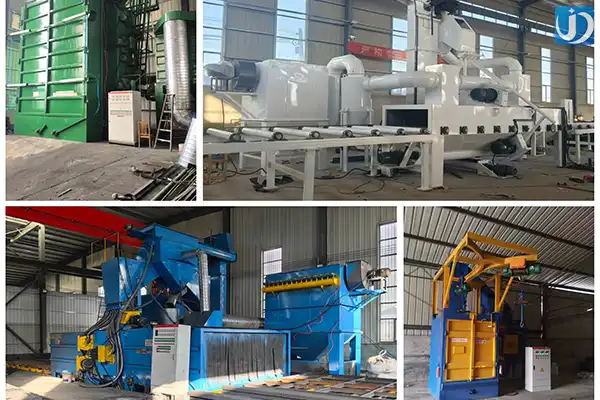
- Tumble belt machines: Ideal for small, durable parts like fasteners and bearings. Parts tumble freely inside a rubber belt while being blasted from above and below.
- Hanger-type machines: Parts are hung from rotating hooks and passed through the blast zone. Suited for complex geometries like transmission housings or brake components.
- Roller conveyor machines: Flat or structural parts travel along a roller bed through the blast chamber. Common for plates, beams, and large castings.
- Inline modular units: Compact, enclosed modules designed to embed directly into an existing production line. These support Profinet, EtherCAT, and Modbus protocols for real-time PLC communication.
After looking at the different types of machines, the inline modular format is usually the most important one for Tier-1 car providers because it fits into current line layouts without having to do a lot of work.

The Role of Dust Collection in Shot Blasting
In every production setting, the dust that is made during blasting is a safety and health issue. Fine particles are caught by an integrated dust collection device before they get into the air. Most people choose pulse-jet cartridge filters, which can remove particles as small as 1 micron with a rate of over 99.9%. IATF 16949 and ISO 14001 compliance also depend on good dust control. Both of these standards are important to automotive procurement engineers who are looking for new equipment suppliers.
Benefits and Applications of Shot Blasting Units in Industrial Settings
Why Shot Blasting Outperforms Traditional Methods
Chemical cleaning and wire brushing by hand take a long time, don't always work right, and are hard to scale up. When the shot blasting unit is set up correctly, the surface shape is the same on every part, every time. In real production settings, switching from cleaning parts by hand to an automated unit often cuts costs by 30% or more per part while increasing throughput from 30 parts per hour to over 120 parts per hour. That's a clear return on the money spent on equipment.
Industries That Rely on Surface Blasting Technology
A lot of tough businesses use shot blasting technology, including the ones below:
- Automotive manufacturing: Cleaning transmission housings, brake discs, and chassis components before coating or assembly. Inline modular units with robotic interfaces are standard in modern Tier-1 facilities.
- Foundry and casting: Removing core sand and burrs from engine blocks and castings under high-duty-cycle conditions.
- Fasteners and bearings: Tumble-belt machines process thousands of small parts per hour, improving surface cleanliness and coating adhesion uniformly.
- Construction and structural steel: Roller conveyor systems clean H-beams and steel plates to Sa 2.5 for corrosion-resistant coating applications.
All of these uses need the same thing: a surface process that can be done over and over again, which can't be done by hand on a large scale.
Energy Efficiency and Environmental Responsibility
The energy efficiency of modern shot blasting equipment is much higher than that of older models. Blast wheel motors with variable-frequency drives use less power when they're not working. Closed-loop media recycling gets rid of the need to dump trash. When combined with high-efficiency dust filters, these features help businesses meet ISO 14001 environmental standards while also cutting costs.
Maintenance and Safety: Ensuring Optimal Operation and Longevity
Routine Maintenance Checklist
The best way to protect your machine purchase is to keep up with regular maintenance. Important jobs are:
- Blast wheel blade inspection: Check for uneven wear weekly. Replace the full blade set — never individual blades — to maintain rotational balance and prevent excessive vibration.
- Control cage adjustment: Rotate the control cage to adjust the blast pattern's "hot spot." An incorrectly positioned cage causes uneven coverage and accelerated wear.
- Media quality checks: Screen the active media daily. Fines and broken particles reduce blasting efficiency and increase dust load on filters.
- Lubrication schedule: Bearings on the blast wheel shaft require lubrication at intervals specified by the manufacturer — typically every 500 operating hours.
Sticking to this schedule cuts down on unplanned downtime and greatly increases the service life of parts.
Operator Safety Standards
Operators who work near or with shot blasting equipment must wear the right PPE, such as safety glasses, hearing protection (noise levels can reach 85 to 95 dB), and dust masks when they are maintaining media or filters. During use, blast barrels should never be opened. Before an internal inspection or repair can happen, lockout/tagout (LOTO) procedures must be followed. At the start of each shift, the air and dust collection systems should be checked to make sure they are working properly.
Common Troubleshooting Scenarios
Most of the time, one of three things is to blame: worn blast wheel blades that lower the throwing power; a jammed or worn control cage that limits the flow of media to the wheel; or a slipping drive belt that lowers the turbine RPM. Each problem is easy to fix, but if you find them early on through regular checks, they don't become major problems that stop production.
Choosing the Right Shot Blasting Unit: A B2B Procurement Guide
Evaluating Capacity and Automation Level
First, make sure that the machine's throughput rating matches the time it takes to make one item. Modular inline units from Junda Machinery can make between 80 and 600 parts per hour, and their single-module power ranges from 7.5 to 55 kW. If your line makes 120 parts per hour, you need a unit that can handle more than that, so you have room for when demand is high. The amount of automation, from partially manual loading to fully robotic part handling, relies on how much labor costs and how complicated the parts are.
Interface Compatibility and Protocol Support
For systems that work with cars, communication protocols must be compatible. The shot blasting gear you use must be able to talk to the PLC on your line. You can set up units that work with Profinet, EtherCAT, and Modbus to send cycle data, problem alerts, and part counts to your plant's MES or SCADA system in real time. Junda Machinery's modular units come with this level of integration as standard. They also have fully open mechanical, electrical, and pneumatic connections so they can work with lines from different brands.
After-Sales Support and Documentation
When you buy integrated production tools, your choice will have long-term service effects. Check to see if suppliers can provide documentation that meets IATF 16949 standards, first article inspection (FAI) reports, and on-site commissioning support. Every unit that Junda Machinery delivers comes with full technical documentation, English-language operation instructions, online commissioning assistance, and a long-term supply of original spare parts.
Conclusion
A high-speed centrifugal blast wheel in a shot blasting unit throws abrasive media against the surface of a workpiece. This removes dirt and creates a clean, profiled finish that is ready to be coated or put together. Because it can be automated, repeated, and scaled up, the process is the best way to treat the surface of steel used in automotive, foundry, fastener, and structural steel applications. To choose the right machine, you need to make sure that its throughput, interface compatibility, and documentation standards are all right for your production environment. When those things come together, performance improvements happen right away and can be measured.
FAQ
1. What is the difference between shot blasting and sandblasting?
A mechanical centrifugal wheel moves abrasive media at high speed in shot blasting. It's faster, more consistent, and better for making a lot of things in an industrial setting. Sandblasting uses compressed air to force grit through a tube. This gives you more control over the direction of the blast, but it also makes more dust into the air and is harder to manage on a large scale. The more practical and cost-effective way to prepare surfaces for the production line is to use shot blasting.
2. How often should I perform maintenance on a shot blasting machine?
Every week, you should check the blast wheel blades and replace the whole set when the wear starts to look uneven. The quality of media should be checked every day. Every 500 hours of use, bearings usually need to be oiled. Every month, dust filter refills should be checked and changed if the pressure drop readings show that they need to be. A structured repair routine helps keep downtime to a minimum and increases the life of your equipment.
3. Can a shot blasting unit be customized for my production line?
Yes, you can set up modular shot blasting units with specific mounting measurements, electrical interface standards, PLC communication methods (such as Profinet, EtherCAT, and Modbus), dust collection capacities, and part fixture designs to fit the needs of your line's takt time and interfaces. System integrators and OEM customers who need branded equipment can also choose from ODM and private-label options.
Get a Custom Shot Blasting Unit Quote from Junda Machinery
Junda Machinery creates and builds shot blasting units that can be directly integrated into a production line. Our equipment is ready for use in foundries, automotive, and fastener industries because we've been making it for 20 years and have ISO 9001, 14001, and 45001 certifications. It also supports full PLC protocols. You can email our engineering team at junda001@jundablast.com to get a price that fits your needs as a shot blasting unit provider.
References
1. Wheelabrator Group. Shot Blasting Technology and Surface Preparation Standards. Wheelabrator Technical Publications, 2019.
2. Society of Automotive Engineers (SAE). SAE J443: Procedures for Using Standard Shot Peening and Blasting Media. SAE International, 2020.
3. ISO. ISO 8501-1: Preparation of Steel Substrates Before Application of Paints and Related Products. International Organization for Standardization, 2007.
4. Rosler, J. Metal Surface Treatment: Principles and Industrial Practice. Rosler Oberflächentechnik GmbH Technical Series, 2018.
5. SSPC: The Society for Protective Coatings. SSPC-SP 10/NACE No. 2: Near-White Blast Cleaning. SSPC, 2021.
6. Kalpakjian, S., & Schmid, S. R. Manufacturing Engineering and Technology, 7th ed. Pearson Education, 2014.

USER EVALUATE
Real feedback and practical experience shared by worldwide partners who purchased our machinery and environmental treatment devices.