_1786959752558.webp)
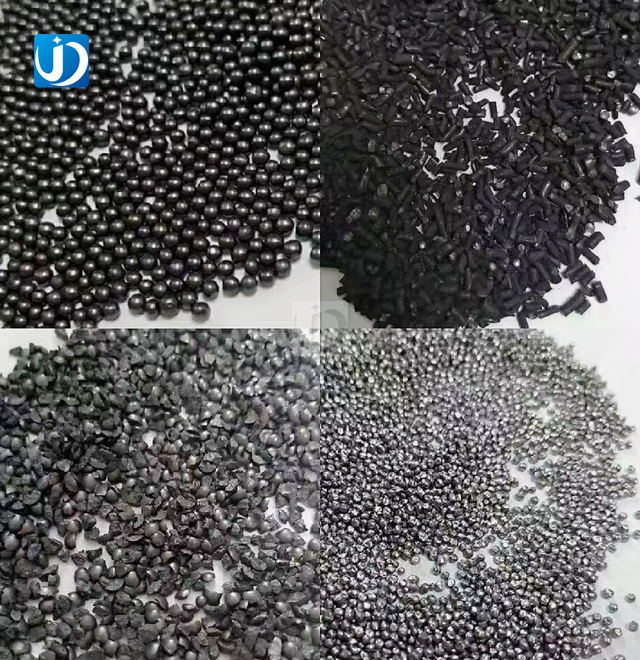
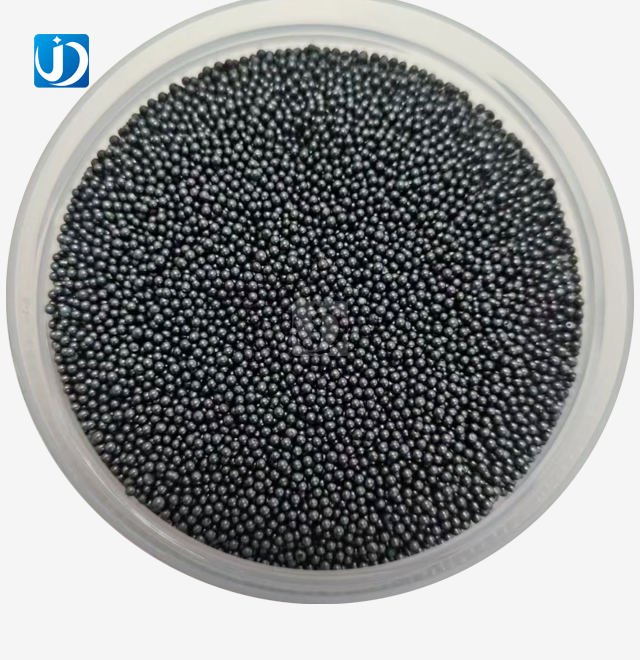
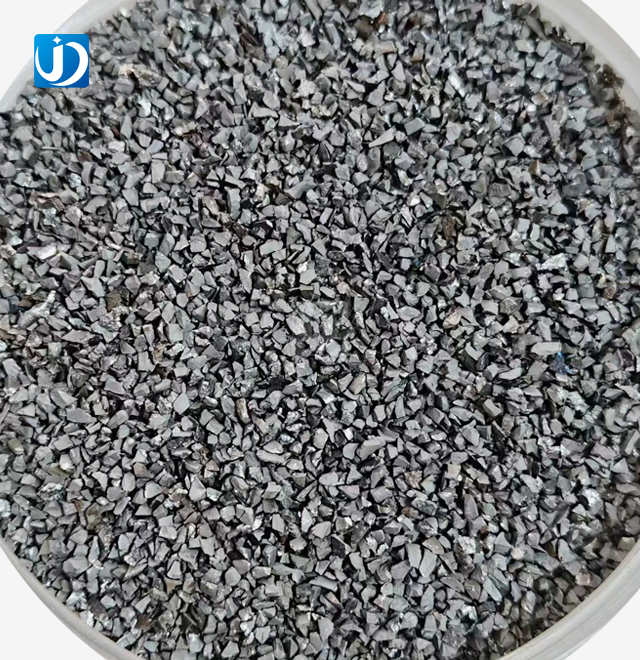
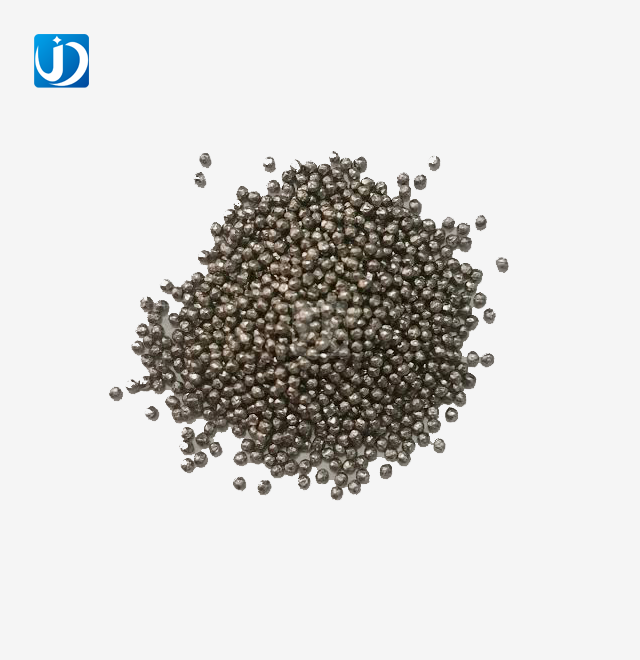
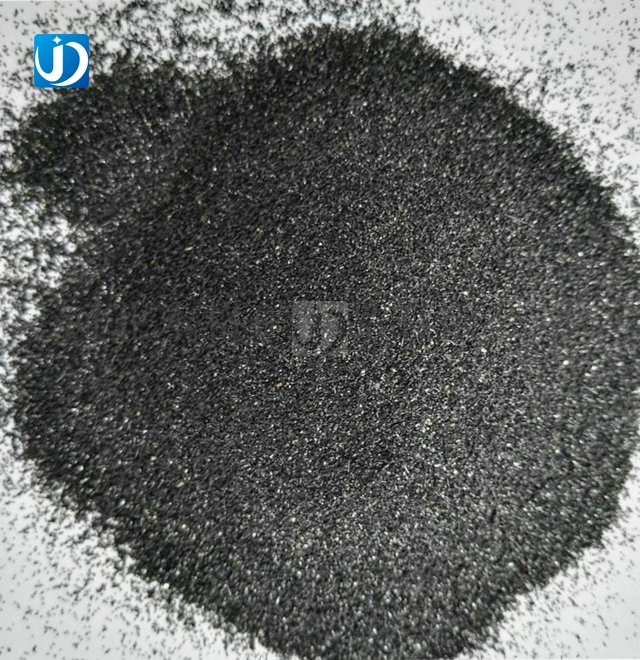
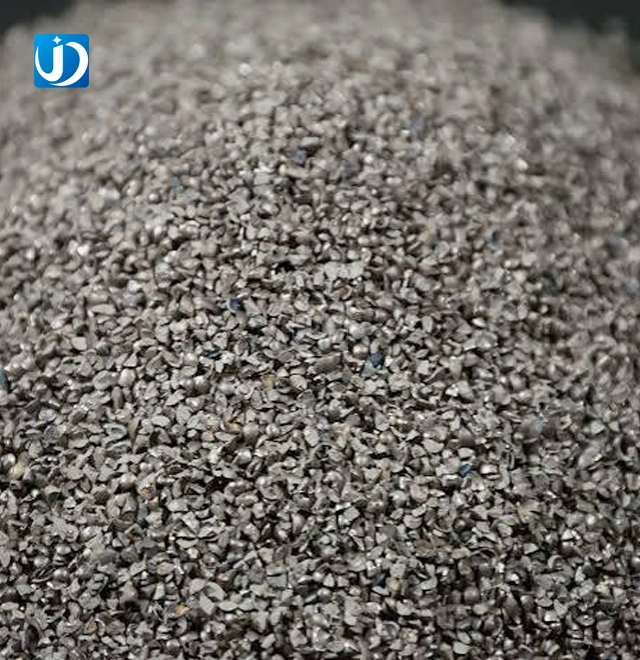
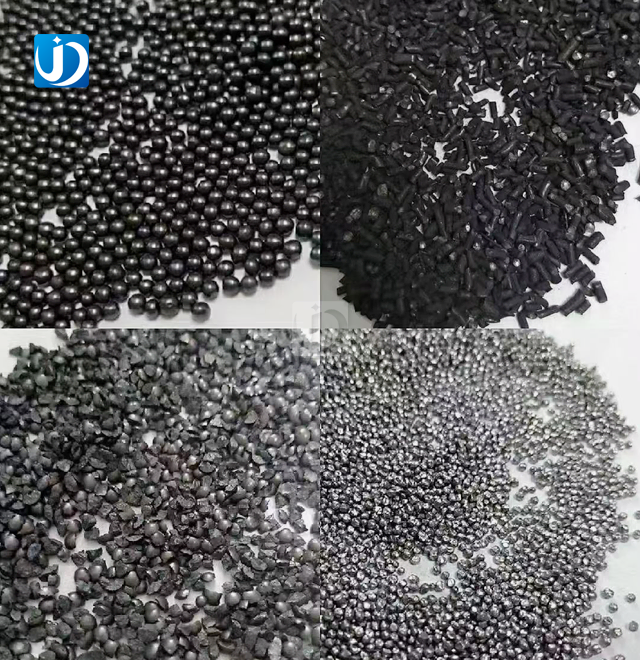
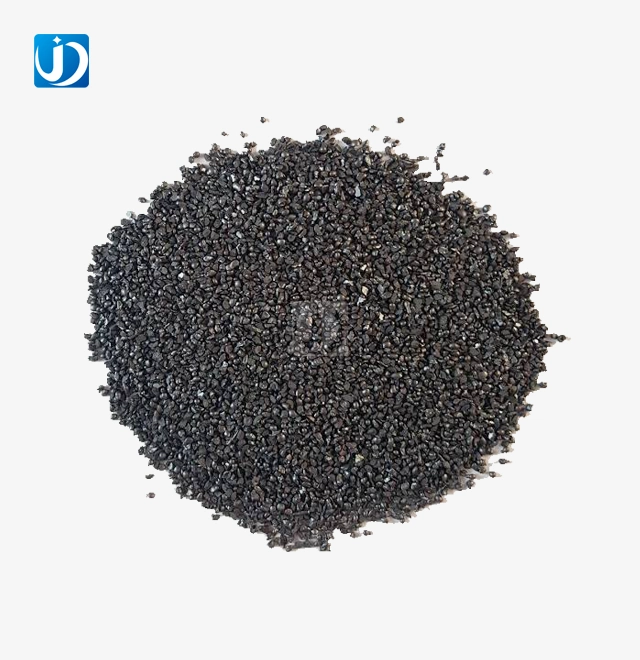
cast steel shot and grit
Cast steel shot shocks and peels rust layers while cast steel grit provides cutting force. It quickly removes
surface rust and forms standard anchor profile, balancing cleaning speed and surface roughness.
Compatible with diverse coating specifications
The anchor profile depth can be flexibly adjusted by changing the ratio of shot and grit to satisfy Sa2.0,
Sa2.5 blasting grades, matching various heavy-duty anti-corrosion systems such as epoxy primer and
zinc-rich paint.
Stable cyclic consumption to optimize overall operating cost
The blend features reasonable fragmentation gradient and avoids rapid massive pulverization. It can
be continuously recycled with recovery & screening systems and extends the overall replacement cycle
compared with single-type abrasives.
- Product Description
Cast Steel Shot and Grit – Premium Blended Blasting Abrasives for Superior Surface Treatment and Coating Preparation
Botou Junda Machinery Equipment Co., Ltd., with over 20 years of expertise in foundry machinery and abrasive manufacturing, supplies enterprise‑grade cast steel shot and grit for high‑performance surface treatment. Our scientifically blended abrasives combine spherical cast steel shot and angular steel grit, featuring hardness ranging from 420 HV to 780 HV and bulk density ≥7.8 g/cm³, designed for dual‑action cleaning and profiling. Our 3,000‑square‑meter production facility integrates R&D, precision manufacturing and quality control, ensuring stable recycling performance, low fracture rate and optimized operating costs for steel‑structure pretreatment, anti‑corrosion coating preparation and heavy‑duty industrial applications.

What Makes Blended cast steel shot and grit Distinctive
Compared with single‑type abrasives, the combination of steel shot and grit performs two key functions within one blasting cycle. Spherical shot delivers high‑energy impact to effectively remove oxides, rust and mill‑scale layers. Meanwhile, angular grit cuts into the substrate to form uniform anchor profiles required for coating adhesion.
This dual‑action system accelerates processing speed by eliminating the need for multiple operations or different abrasive types. When preparing steel plates, structural components or pipe sections for epoxy, zinc‑rich or other heavy‑duty coatings, you can achieve deeper anchor patterns and cleaner surfaces without excessive etching.
Furthermore, the diversified composition delivers excellent adaptability. You can fine‑tune surface roughness by altering the shot‑to‑grit ratio to meet specific coating‑system standards such as Sa2.0 or Sa2.5. This applies whether you are working with new steel requiring light profiling or aged components covered in heavy corrosion.

Technical Specifications
| Parameter | Value |
|---|---|
| Product Series | Blended Blasting Abrasives of Cast Steel Shot and Steel Grit |
| Material Grade | High‑Carbon Cast Steel (Custom blended formulations available) |
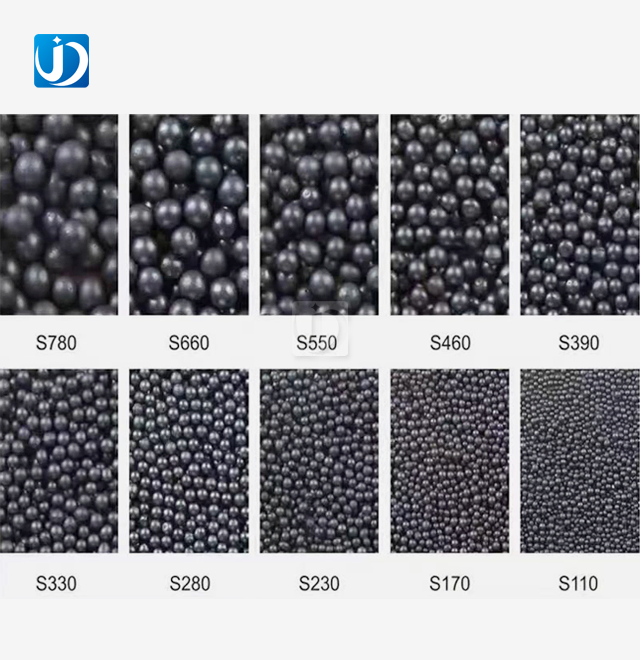
| Particle‑Size Range | 0.2 mm‑5.0 mm (Custom blended gradations) |
| Hardness | 420‑780 HV (Balanced composite hardness) |
| Bulk Density | ≥7.8 g/cm³ |
| Structural Feature | Scientific blend of spherical shot and irregular grit particles |
| Core Function | Dual‑purpose cleaning and profiling in one single operation |
| Recyclability | High durability and stable cyclic performance |
| Dust Generation | Low emission during blasting operations |
| Scope of Application | Steel structures, castings, pressure vessels, shipbuilding, machinery manufacturing |
Key Product Advantages
Balanced Impact and Cutting Performance
The unique blended mechanism combines the impact force of shot with the profiling sharpness of grit. Rust layers are rapidly removed while substrates obtain uniform textures. This balance helps you avoid extreme outcomes: insufficient roughness caused by pure shot, or excessive erosion caused by pure grit.
Flexible Coating Compatibility
Anchor‑profile depth can be controlled by adjusting blending ratios to match different anti‑corrosion systems. Whether your project requires epoxy primers, polyurethane topcoats or zinc‑rich formulations, the abrasives adapt to varied coating specifications without changing equipment settings or workflows.
Extended Service Life and Reduced Consumption
Our blended abrasives feature controlled fracture gradients to minimize rapid pulverization. When used with efficient recovery and screening systems, the abrasives retain their performance characteristics across thousands of cycles. Compared with single‑type abrasives, this extends replacement intervals and lowers overall consumption costs.
Reduced Risk of Workpiece Damage
This combination prevents common surface defects. Pure grit may leave deep scratches that become stress‑concentration points beneath coatings. Pure shot may fail to generate sufficient anchor profiles. Blended abrasives deliver consistent textures to enhance coating adhesion while preserving substrate integrity.
Broad Industrial Applicability
From steel‑structure fabrication workshops to shipyard blast rooms, the abrasives operate reliably in diverse environments. They suit both enclosed shot‑blasting machines and open‑air blasting work. Applications include pretreatment of new steel, rust removal for refurbishment, weld cleaning and paint stripping for aged components.
Proven Applications in Heavy‑Industry Sectors
cast steel shot and grit plays a vital role in industrial surface treatment where quality, speed and cost control are critical. In shipyards, it prepares hull plates and deck sections to Sa2.5 standard prior to application of marine‑grade coatings. Steel‑structure manufacturers rely on it to produce consistent anchor profiles on bridge components, towers and building frames.
Machinery manufacturers use the abrasives to clean casting surfaces, remove core‑sand residues, and prepare heavy‑equipment parts for thermal spraying or powder coating. It ensures welding zones and heat‑affected areas in pressure‑vessel manufacturing comply with strict cleanliness and roughness requirements set forth by ASME and API regulations.
In addition, this abrasive performs excellently in refurbishment projects that require removal of heavy corrosion, old paint or contaminants without endangering base steel. Thanks to its low‑dust emission and recyclable nature, it fits regulated maintenance operations and high‑volume production lines.

Usage Recommendations for Optimal Results
Equip your blasting system with bucket elevators and air separators to regularly remove dust and fractured particles for stable performance. This extends the service life of active abrasive mixtures and keeps them clean.
Periodically inspect the shot‑to‑grit ratio via sieve analysis. Different fracture rates will shift the ratio as abrasives circulate through the system. Add fresh abrasives to maintain desired surface finishes and restore original blending percentages.
Adjust blasting pressure according to coating and workpiece‑material specifications. Higher pressure accelerates cleaning speed yet speeds up abrasive degradation. Determining the ideal pressure range requires trade‑offs between cost‑efficiency and productivity.
Inspect separation components, liners and blast‑wheel blades on a regular basis. Although blended abrasives distribute wear more evenly than single‑media types, routine maintenance guarantees optimal equipment performance and avoids unplanned downtime.
Frequently Asked Questions
Q: What are the characteristics of blended steel shot and steel grit?
A: It is scientifically blended from spherical cast steel shot and angular cast steel grit. Steel shot removes contaminants via impact force, while steel grit generates uniform roughness through cutting action. Rust removal and surface roughening can be completed within one blasting operation.
Q: What application scenarios are suitable for blended steel shot and grit?
A: It is mainly used for pre‑treatment before coating of steel structures, steel plates, steel pipes and construction‑machinery castings, and is popular in steel‑structure factories and anti‑corrosion production lines. It easily achieves Sa2.5 standard and ranks among the most commonly used abrasive solutions for steel anti‑corrosion pretreatment.
Q: What advantages do blended abrasives have compared with single‑grade shot or grit?
A: Versus pure steel shot: higher roughness is more easily achieved for superior coating adhesion. Versus pure steel grit: shallower surface scratches, lower abrasive fracture rate and better cost control. It delivers uniform blasting textures and higher overall productivity.
Q: What key recommendations apply when using blended steel shot and grit?
A: Fit the system with bucket elevators and air separators to continuously remove fractured dust. Adjust the shot‑to‑grit blending ratio according to rust severity. Stabilize blasting pressure. Periodically test particle composition and replenish new abrasives to maintain blending ratios.
Partner With Junda for Reliable Abrasive Solutions
Certified to ISO9001, ISO14001 and ISO45001, Junda supplies quality‑controlled cast steel shot and grit, supported by fast delivery and professional technical assistance. Contact Us via junda001@jundablast.com to discuss your surface‑treatment requirements.




USER EVALUATE
Real feedback and practical experience shared by worldwide partners who purchased our machinery and environmental treatment devices.