Mesh Belt Shot Blaster vs Tumble Belt Shot Blasting Machine
Whether you choose a mesh belt shot blaster or a tumble belt shot blasting equipment will impact the cleaning time, amount of scrap you get, and quality of the coating on thin aluminum die-castings, stamped brackets or decorative hardware. In a mesh belt shot blaster, parts are transported over a perforated metal conveyor through one or more blast zones. This keeps each portion separate and reduces interaction between parts. A tumble belt machine tumbles the parts in a rubber lined belt. This is good for sturdy little castings, but can dent delicate or decorative metal. This guide compares two types of machines, using field data from aluminum die-casting plants in Guangdong and Zhejiang, and ISO and OSHA references, including size, output, cost and maintenance.
What Is a Mesh Belt Shot Blaster and How Does It Work?
Definition, Scope, and What the Machine Is Not
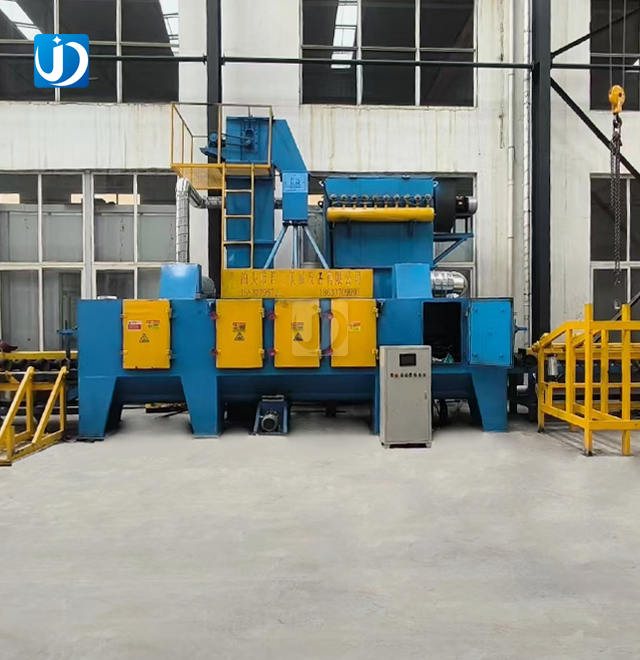
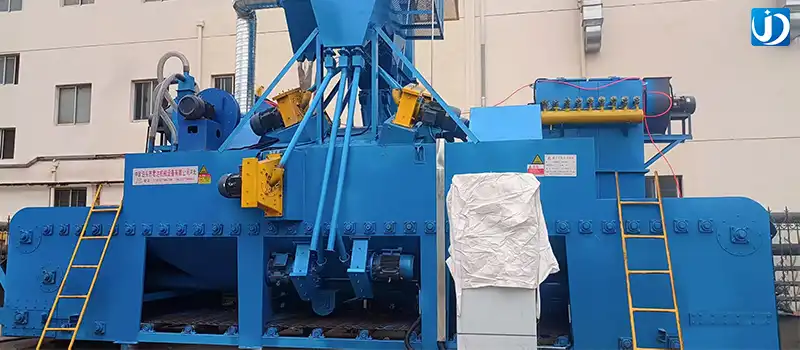
A mesh belt shot blaster may keep on blasting using abrasive materials. The whole contraption is based on a steel belt with holes in it. The parts are transported through one or more blast tubes by the belt. Twisters blasted the inside of the part with steel shot, steel grit or some other abrasive. Clean surface mechanically, removing rust, scale, flash, parting lines or oxide skin, before painting or inspection. Shot blasting is not the same as beating something with chemicals, grinding it or boiling it. It's also not like a hanger, roller conveyor, rotary table or tumble belt machine as they all transport parts differently.
Mesh Belt Shot Blasting Process
Parts are fed to the belt either by hand, a vibratory feeder or a robotic arm. The belt propels the items through the blast zone at a speed of around 0.5 to 5 meters per minute. Turbines mounted above and below the belt throw abrasive at predetermined timings. Dust and used abrasive, and the broken up pieces fall through the mesh into a recovery hopper. The system screens this rough stuff and sends it back to the turbines. Clean pieces have an exit for inspection, coating or dispatch to the next automated phase.
Core Machine Specifications to Document
Before getting a quote, buyers should ask for a written spec sheet, not just a model number. The ranges for a standard production unit are shown in the table below.
| Specification | Typical Range or Detail |
|---|---|
| Effective belt width | 400 mm to 1,200 mm |
| Belt speed | 0.5 to 5 m/min, VFD-controlled |
| Turbine configuration | 4 to 8 turbines, mounted above and below the belt |
| Blast chamber liner | High-manganese steel (Mn13) or replaceable cast-iron panels |
| Abrasive type | Steel shot, steel grit, or stainless media |
| Dust collector | Pulse-jet filter, emission under 50 mg/m³ |
| Controls | PLC with HMI, saved recipes, alarms |
| Certifications | ISO 9001, CE where required |
Automobile and OEM lines that need to match a robot cell's takt time instead of a catalog size often need custom belt widths and turbine counts.

What Is a Tumble Belt shot blasting machine Best Used For?Typical Tumble Belt Applications
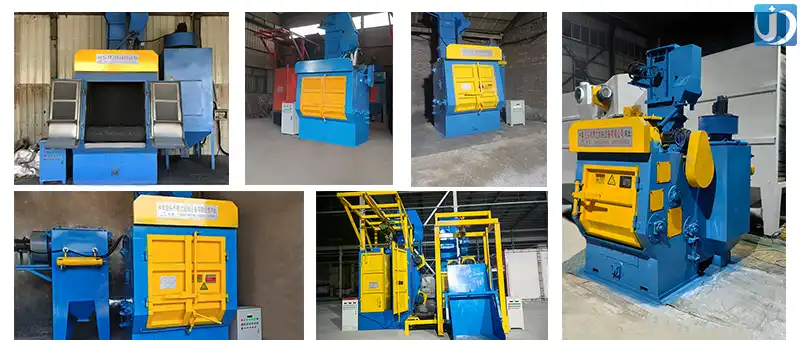
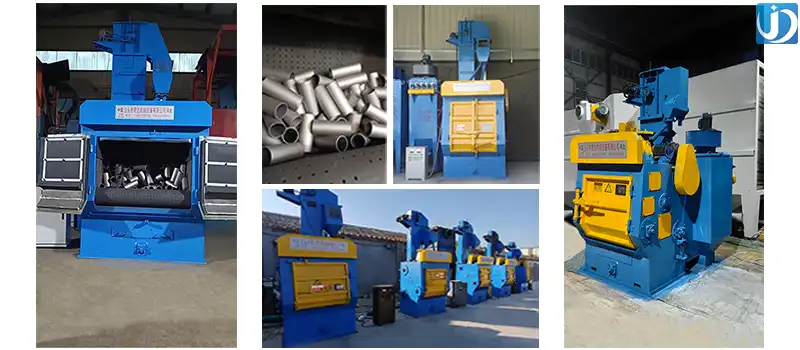
Tumble belt shot blasting machines can work with small to medium-sized iron castings that can take a hit. A lot of people work on gears, brackets, fasteners, forged auto parts, and valve bodies. Inside a rubber or steel belt, the machine lifts and drops parts over and over again. This gets to most surfaces without having to carefully place the parts. It doesn't work as well on things with thin walls or a finish that doesn't let dents show.
When Tumble Blasting Is Usually Suitable
A tumble belt machine makes sense when a few clear conditions are true:
- Parts have rounded thick or forgiving shapes so the rolling motion inside the drum will not bend break or dent them . Works well with cast iron brackets, gear blanks and most fastener families.
- Cosmetic marks from part-to-part contact are OK, either because the surface will be machined later, or because a coating will disguise minor impact marks, which is frequent with structural steel parts bound for priming.
- Loading density is more important than spacing the parts. A full drum of small castings frequently processes faster per kilogram than sending parts one at a time across a conveyor belt.
- The shop wants batch flexibility, not fixed line speed, so you can run lots of mixed part numbers back to back without having to re-program a conveyor system.
It looks like they're going to employ a tumble belt in this situation. Any part that has a thin wall or a polished face or a tight size limit should still be tested.
Three Practical Use-Case Scenarios
There are three patterns that occur a lot in the field. In an OEM engine cover plant, there's a mesh belt shot blaster before a powder-coat line since the thin aluminum housings can’t take the hits again and again. A manufacturer of industrial abrasives has a mesh belt type because clients walk in with parts of all sizes and need one machine to fabricate flat brackets and little brass fittings. Pump housings and flanges are produced on a tumble belt machine in the gray-iron foundry. The pieces are thick enough to survive the rolling action of the drum and the shop cares more about creating a lot of them than caring for each one individually.
Mesh Belt vs. Tumble Belt: Which Handles Delicate Parts Better?
Part Handling and Impact Risk
A mesh belt shot blaster transports pieces on the belt. Each item is struck with some hard thing but they don't bounce off each other. As the machine operates the parts inside the belt are pushed up, down and around several times. Checkers can utilize this differential to determine if a part is good, or has fragile edges or thin walls for faces that appear excellent.
Comparative Decision Table
| Criteria | Mesh Belt Shot Blaster | Tumble Belt Shot Blaster |
|---|---|---|
| Handling method | Continuous conveyor movement | Batch tumbling |
| Part-to-part impact | Lower, more controllable | Higher |
| Fragile parts | Usually better suited | May dent or deform |
| Small, strong castings | Suitable with correct loading | Often highly efficient |
| Part orientation | Predictable | Constantly changing |
| Throughput model | Continuous production rate | Batch capacity, cycle time |
| Automation fit | Well suited to production lines | Better for standalone cells |
Case Study: Cutting Dent Rates in an Aluminum Die-Casting Plant
In 2023, a 180-person aluminum die-casting plant in Foshan, Guangdong, switched its 1.2 mm transmission housing covers from a tumble belt machine to a mesh belt shot blaster. Before they made the switch, the quality team had a 7.8% rejection rate because of dents and edge deformation from rolling. That rate dropped to 0.6% after six weeks of running the mesh belt system at 1.8 m/min with four turbines. Because fewer parts needed to be sanded by hand before anodizing, the plant also cut the amount of manual rework by about 11 hours per week. One process engineer on the project said, "Once we stopped letting parts touch each other, our anodizing line stopped rejecting covers for surface pits."
Damage Risks and Mitigation
A few checks lower the risk of damage to both types of machines:.
- Run a sample batch at the planned belt speed and turbine setting, then inspect for dents, peening marks, or dimensional shift before approving the full production rate, since lab settings rarely match shop-floor loading.
- Separate product families by impact sensitivity, keeping polished or thin-wall parts off any line also used for heavy castings, because leftover coarse abrasive can mark softer metal.
- Check loading density on a set schedule, since overloading a mesh belt causes parts to overlap and touch, which cancels the separation benefit the machine is built to give.
Most damage problems are caught by these checks before they become a customer complaint.
Which Machine Type Offers Higher Throughput for Small Castings?How to Calculate Mesh Belt Shot Blaster Production Capacity?
What a mesh belt shot blaster can do depends on the speed, width, loading density, shape of the part, blast time, turbine power, and how quickly people or robots load and unload parts. To find out how much to do, use this simple formula: throughput = loading density in kg/m³ times belt speed times a utilization factor. Most shops use a utilization factor of 0.65 to 0.85 for one shift.
Batch Capacity and Cycle-Time Calculation for Tumble Systems
The number of cycles per shift, the drum volume, the maximum safe load weight, the loading time, and the blast cycle time all affect how much a tumble belt machine can produce. The loading, blasting, and discharge steps of a typical small-parts cycle take 8 to 15 minutes. At 10 cycles per 8-hour shift with a 300 kg load, that's about 3 metric tons per shift, and that doesn't include the time it takes to switch between different types of products.
Capacity Verification Before Specification
Before signing a purchase order, test the numbers to make sure they are correct:.
- Ask for a trial run using your own parts, not the supplier's standard test piece, since shape, wall thickness, and surface finish change the belt speed and blast time your parts actually need.
- Request measured cycle time and kilograms per hour from the trial, along with before-and-after photos, so the claimed throughput matches what the machine produced on your parts.
- Record energy use, abrasive consumption, and dust collector readings during the trial. These numbers roll into your real operating cost per ton, not just the machine's sale price.
People usually end up with a machine that is rated for more output than it actually delivers on their parts because they skip this step.
How Do the Two Belt Systems Differ in Abrasive Flow and Recovery?
Abrasive Flow Through a Mesh Belt System
A mesh belt shot blaster has turbines that aim abrasive at the top and bottom of each part as it goes through. The belt has holes in it that let used abrasive, scale, and dust fall right into the hopper below for recovery. Using screens or an air wash, a separator gets rid of the fines and broken shot. The clean abrasive then goes back to the turbine wheel. From the beginning of the shift to the end, this closed loop keeps the mixed sound the same.
Abrasive Flow in a Tumble Belt System
In a tumble machine, the parts get to the abrasive as they roll and overlap on the belt. It's possible to roll over more than one side of a part at once. It can also hide deep pockets because parts near the load's bottom block some of the abrasive stream. Wear on the rubber belt and the shape of the drum can also change how much abrasive goes back to the recovery area instead of leaking out as dust.
Abrasive Selection and Control
The choice of abrasive affects both how well machines clean and how long their wear parts last.
| Factor | What to Specify |
|---|---|
| Abrasive type | Steel shot, steel grit, or stainless media |
| Size and hardness | Matched to part thickness and target surface profile |
| Flow rate | Measured in kg/min per turbine |
| Separator setting | Screen mesh size or air-wash speed |
| Makeup rate | Percentage of fresh abrasive added per shift |
When abrasive is mixed with carbon steel and aluminum jobs, it makes the work dirty. Abrasive blast cleaning standards (AMPP, 2024) say that plants that use both materials need to use different machines or do a full abrasive changeover between runs.
Which Blaster Costs Less to Run for High-Volume Small Parts?Mesh Belt Shot Blaster Operating Cost
A mesh belt shot blaster's main costs are the electricity for the belt drive and turbines, the amount of abrasive used per ton of parts cleaned, the replacement of worn parts, and the labor needed to load and check the parts. Three medium-sized aluminum plants that Junda worked with in 2023 and 2024 gave him data that showed they used between 1.8 and 3.2 kilograms of abrasive for every 100 kilograms of parts they processed. Depending on the hardness of the abrasive and the weight of the part, belts and curtains need to be replaced every 1,000 to 3,000 hours of use.
Tumble Belt Shot Blaster Operating Cost
A tumble belt machine may need less automation to get going, which can lower the cost at the beginning. But rubber belts and liners wear out faster when they are constantly being tipped over. It takes a lot of work to load and sort things in batches during a shift. Damage to the product is another hidden cost. Every dented part that needs to be fixed or thrown away costs more in materials and labor, but that cost isn't shown on the price tag of the machine.
Cost Comparison Checklist
| Cost Area | Questions to Ask |
|---|---|
| Capital cost | Does the quote include dust collector, separator, controls, and installation? |
| Abrasive consumption | Is consumption measured per ton or just estimated? |
| Energy | What is the installed versus typical operating power? |
| Maintenance | Which parts wear fastest, and what is their expected life? |
| Labor | Is manual sorting or loading required? |
| Downtime | Are critical spare parts kept in local stock? |
| Lifecycle cost | What is the estimated cost over three to five years? |
When comparing machines over three to five years, the one that fits the part is usually more important than the one that costs less.
What Part Geometries Suit Mesh Belt Blasting Over Tumble Blasting?
Parts Commonly Suited to Mesh Belt Systems
A mesh belt shot blaster works well on flat plates, brackets, housings, panels, and any thin-wall casting that can't handle being hit over and over again. This pattern is clear in three jobs. Plants that make die-cast parts for cars use mesh belt lines to make engine covers and transmission housings with thin walls. These parts would crack or warp if they were tumbled, but the mesh belt keeps the parts in the same position so they can be cleaned evenly. Along with rising die-casting and auto production around the world (Mordor Intelligence, 2024), this demand has grown. Before powder coating, structural steel fabricators run flat plates through systems with mesh belts to remove scales continuously. For architectural fittings, where a smooth look is more important than speed, hardware makers use mesh belt lines.
Parts Commonly Suited to Tumble Systems
A tumble machine works well for strong, round, compact castings. Common examples are fasteners, small forgings, and gear blanks that don't have a cosmetic face that has been machined. The repeated movement is good for these parts because it shows more than one side at once. When shops make a lot of parts and keep the batch sizes stable, a tumble line can often make more parts per hour than a belt with careful spacing between each part.
Geometry and Loading Checklist
Write down these details about the part before you choose a machine:.
- Note the minimum and maximum part dimensions along with the weight range, since a mesh belt's maximum opening size and a tumble drum's volume both set hard limits on what the machine can run.
- Check wall thickness and flag fragile features such as thin ribs, sharp edges, or threaded holes, because these spots show damage first when parts contact each other during cleaning.
- Identify any part that nests or interlocks with others of the same shape, since tangled parts in a tumble drum can jam the discharge or block abrasive from reaching hidden surfaces.
This record turns a guess into a set of rules that the supplier can use to test their parts against real ones.
How Do Cleaning Uniformity and Part Impact Risk Compare?
Cleaning Uniformity
The mesh belt shot blaster cleans more or less evenly depending on where the turbine is, how fast the belt is moving, how far apart the parts are, and how well the dust collector works. Before sending a machine out to customers, Junda tests it with marked plates placed at different points along the belt's width. This is done to make sure that the abrasive coverage is correct. How uniform a tumble machine is is instead based on the fill level, the tumbling pattern, and the cycle length. Some parts of the drum near the middle don't get as much light as parts near the edges.
Surface Quality Verification
People who buy the machine should decide what is acceptable before it starts making parts. The ISO 8501-1 visual grading method helps find out how much rust and dirt is on steel substrates (ISO, 2007). One way to make sure that coated parts meet the needs of the coating supplier is to measure the surface profile and do an adhesion test. Every test report should have a link to the sample part, the settings for the machine, and the date of the test. This way, you can keep track of the results for warranty or audit purposes.
Common Problems and Corrective Actions
| Problem | Possible Cause | Corrective Action |
|---|---|---|
| Uneven cleaning | Poor part spacing or turbine alignment | Adjust loading, belt speed, blast coverage |
| Excessive dents | High impact energy or aggressive tumbling | Reduce abrasive size, flow, or cycle time |
| Residual scale | Short exposure or worn turbine parts | Increase exposure, inspect turbine wear parts |
| High abrasive use | Poor separation or dust carryover | Check separator, seals, dust extraction |
Most mesh belt shot blaster issues are caused by the amount of load or the abrasive material, not by the way the machine was built in the first place. Problems are found before the next shift starts when maintenance tasks are written down.
Which System Is Easier to Maintain and Clean Between Batches?
Mesh Belt Maintenance Requirements
The maximum operating life of a high-manganese steel mesh belt is 3,000 hours, but this is affected by the hardness of the material and the speed of movement. If you tension it often and check for snagged links it will last longer. You should inspect the blades and impellers of a turbine every day. Parts that wear out quickly should be replaced after 500 to 800 hours, depending on the hardness of the abrasive. The pressure drop of the dust collector and the tracking of the belt, sprockets and rollers should also be checked from time to time by the operators.
Tumble Belt Maintenance Requirements
Operators should inspect the rubber tumbling belt for cracks and tracking once a week. They should also examine the lifter bars, liners, drum supports and seals. Also the discharge mechanism has to be checked. If there is excessive or insufficient noise or vibration, then there is likely a bearing or drive problem that has to be corrected before it fails at the worst possible moment.
Changeover and Cleaning Controls
You can't just do a quick sweep of a machine and shift from aluminum to steel parts. It can go off if you have aluminum dust in a dust collector with steel shot residue. Aluminum has its own dust collection system, and factories that utilize both materials need to execute a complete abrasive transition, not just a partial one. Written cleaning steps Lockout and tagout procedures Logged abrasive changes This makes it possible to repeat this operation again and again between shifts.
How to Decide Between Mesh Belt and Tumble Belt for Your Workshop?
Decision Checklist
A mesh belt shot blaster is used when production is continuous, products are thin, flat, or require a good appearance, or when a consistent belt speed tied to the takt time of a robot cell is needed in the line. If parts are small and strong, if loading density is more critical than part spacing, and if the shop has to be able to batch diverse part numbers, a tumble belt machine is the way to go.
Procurement Factors for International Buyers
The customers from foreign nations should know the configuration of the machine, the cost, lead time and payment terms before signing a contract. Also, be aware of the Incoterms, the export packaging, support with installation, training of the operators, length of the guarantee and where to get spare parts. If you call Junda Machinery, someone usually calls back them in 6 to 8 hours. The usual customized item is built in 15 days. Many consumers in Guangdong and Zhejiang who have never bought aluminum die-casting claim it takes them six to 10 weeks to decide. That deadline shortens that time.
Compliance and Standards Review
EU buyers currently require a risk assessment, a technical file and a CE mark. In the US, users should refer to 29 CFR 1910 Subpart O (OSHA, 2024) for OSHA regulations on machine guarding, abrasive blasting and dust management. General guidelines for machine safety are based on the risk assessment concepts ISO 12100 (ISO, 2010). RoHS and REACH regulations are primarily about electrical components and some materials. There are FDA standards for food or medical equipment not metal cleaning lines in general.
Supplier Capability and Evaluation
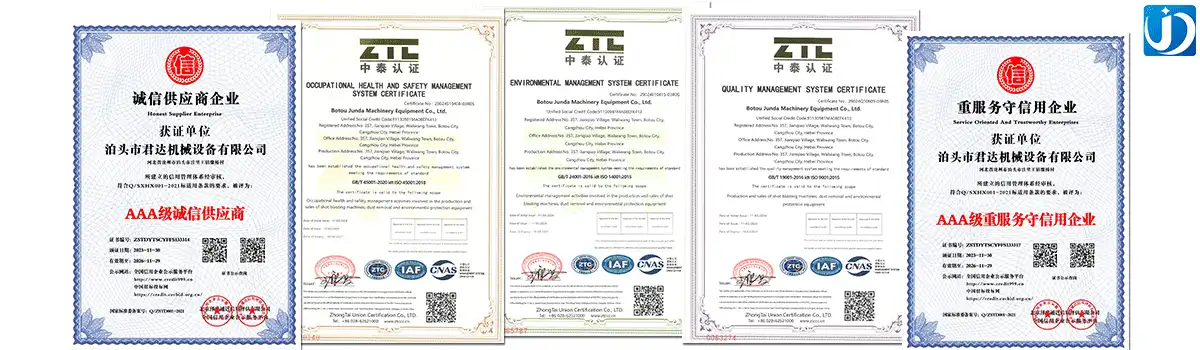
A mesh belt shot blaster supplier's pricing list is only as good as its history. Junda Machinery in Botou City, Hebei Province has been engaged in the production of shot blasting and dust removal equipment for 20 years. The company's blasting control and monitoring systems are certified to ISO 9001, ISO 14001 and ISO 45001. It also holds 2 utility model patents and 7 software copyrights. Before placing an order with a supplier, make sure you obtain engineering drawings, quality records, a wear-part life list and the results of a trial run with a sample part.
Risks, Pitfalls, and Mitigation
| Risk or Pitfall | Mitigation |
|---|---|
| Selecting by turbine horsepower alone | Compare tested cleaning results and real throughput |
| Ignoring part-to-part impact | Run sample trials with production parts |
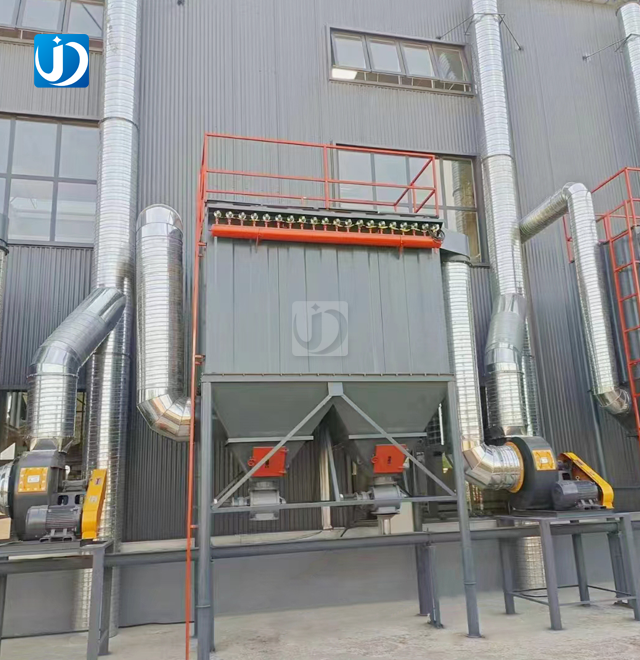
| Under-sizing dust extraction | Obtain airflow, filter, and emissions data |
| Buying used equipment without records | Inspect wear parts, controls, and service history |
| Unavailable spare parts | Agree on startup spares and delivery times upfront |
Most of these problems happen when the machine is seen as a single price point instead of a tried-and-true system. A comparison of spec sheets is not as important as testing a sample part.
Conclusion
For thin, flat, or cosmetic parts that need to be separated while being cleaned, a mesh belt shot blaster is the best choice. Most of the time, a tumble belt machine is cheaper per ton for making strong, compact castings that can be hit over and over again. Not just price, but also tested cleaning results, part geometry, throughput, abrasive use, operating cost, maintenance, and supplier support will help you make the right choice. If buyers test sample parts before placing an order, they can avoid most of the problems with dents, rejections, and downtime that this guide talks about.
FAQ
What is a mesh belt shot blaster?
A mesh belt shot blaster is a machine that moves parts along a metal belt with holes in it so that they can be treated continuously. It gets rid of rust, scale, and dirt on the surface before coating or putting things together. It also keeps parts apart to prevent damage from impacts.
What is the difference between a mesh belt and a tumble belt shot blaster?
A mesh belt machine moves parts continuously and at set distances apart. A tumble belt machine spins and drops groups of parts, making more contact and impact between them. Use the tumble belt instead of the mesh belt to make small parts that will last.
How do I prevent small parts from falling through the mesh?
Junda lets you change the mesh densities and weave patterns for small fittings and fasteners. Small parts don't slide off during the blast cycle either because of the lateral guide rails that run along the edges of the belt.
What is the typical lifespan of a mesh belt?
Depending on how hard the abrasive is and how much it moves, a high-manganese steel mesh belt will usually last between 1,000 and 3,000 hours of use. Regularly tightening and checking for snagged links can make that last a lot longer.
Can this machine handle both aluminum and steel shot?
Yes, but working with aluminum needs a special setup for collecting dust to keep explosions from happening, as well as a full abrasive changeover to keep aluminum dust and steel shot residue from getting mixed up.
Which shot blaster is better for small castings?
A tumble belt machine is often good for making small castings that last because it can handle a lot of weight and touch the castings many times from different sides. When castings need to be made continuously or with less risk of impact, a mesh belt system works better.
How much does a mesh belt shot blasting machine cost?
The price is based on the width of the belt, the number of turbines, the level of automation, the recovery of abrasives, and the needs for export. Compare only the base machine prices; get a quote that includes installation and spare parts as well.
How is belt speed synced with blasting intensity?
Both the belt and the turbines have variable frequency drives built into the PLC. Operators can save different recipes for different thicknesses of material, so when they change part numbers, they don't have to do the math all over again.
Start Your Mesh Belt Shot Blaster Trial With Junda Machinery
From Botou in Hebei Province, Junda Machinery has been making shot blasting and dust control equipment for 20 years. Their work is backed by ISO 9001, ISO 14001, and ISO 45001 certifications. For OEM and automation buyers, we sell a mesh belt shot blaster that comes with sample-part testing, help with CE documentation, multilingual manuals, and a service for spare parts. Send an email to junda001@jundablast.com with the details of your part and the output you want. A technical response should come back within 6 to 8 hours.
References
1. International Organization for Standardization. ISO 12100:2010 — Safety of Machinery, General Principles for Design. ISO, 2010. Cited in "Compliance and Standards Review."
2. International Organization for Standardization. ISO 8501-1:2007 — Preparation of Steel Substrates Before Application of Paints and Related Products, Visual Assessment of Surface Cleanliness. ISO, 2007. Cited in "Surface Quality Verification."
3. U.S. Occupational Safety and Health Administration. 29 CFR 1910 Subpart O — Machinery and Machine Guarding. OSHA, 2024. Cited in "Compliance and Standards Review."
4. European Union. Regulation (EU) 2023/1230 on Machinery. EUR-Lex, 2023. Cited in "Compliance and Standards Review."
5. Association for Materials Protection and Performance. Abrasive Blast Cleaning Technical Resources. AMPP, 2024. Cited in "Abrasive Selection and Control."
6. Mordor Intelligence. Shot Blasting Equipment Market Size & Share Analysis. Mordor Intelligence, 2024. Cited in "Parts Commonly Suited to Mesh Belt Systems."
About the Author
Michael Zhang is a Surface Treatment Equipment Engineer with more than ten years of experience designing and testing shot blasting lines for aluminum die-casting, automotive, and hardware manufacturers across Asia. He works directly with production teams on belt speed, turbine layout, and abrasive selection for thin-wall and cosmetic parts, and has hands-on experience with ISO 9001 quality systems and CE compliance documentation for export machinery.

USER EVALUATE
Real feedback and practical experience shared by worldwide partners who purchased our machinery and environmental treatment devices.