Automatic Steel Pipe Shot Blasting Machine for Industrial Applications
A steel pipe shot blasting machine can throw steel shot or grit at the surface of pipes very quickly. By impacting, rust, mill scale, welding residue, and old coatings are all taken off. This makes a controlled anchor profile that helps paint and layers that protect against corrosion stick. A closed, automatic steel pipe shot blasting machine is better than working by hand because it keeps things cleaner, reuses abrasive, and reduces dust. To help plant managers, engineers, contractors, and dealers understand how the gear works, what specs are important, and how to buy from a reputable company, this book was written.
How an Automatic Steel Pipe Shot Blasting Machine Works
Definition and Core Components
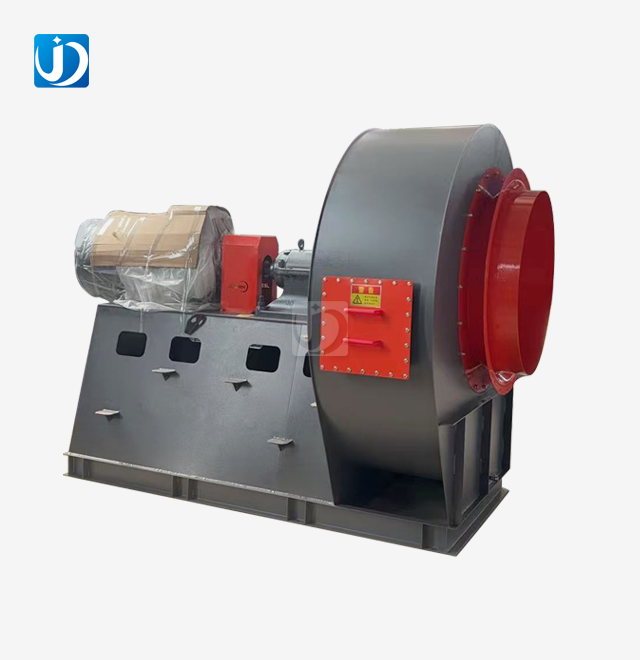
There is no way to get to the top inside a steel pipe shot blasting machine. Steel shot, steel grit, or a mix of the two can be used to hit the pipe by blast wheels that spin very quickly. Corrosion, mill scale, and paint residue are all removed by the blow. More than that, it makes the steel tougher so that paint sticks better to it. Most systems have electrical controls, wear liners, air separators, abrasive recovery loops, and dust collectors. It has blast wheels too. The piece of equipment used to prepare the surface of a steel pipe stays the same. It depends on the size of the pipe, the condition of the surface, the type of abrasive, how the wheels are set up, how fast they move, and how clean you need the area to be.
Steel Pipe Shot Blasting Process from Loading to Finished Surface
The steel pipe shot blasting process starts as soon as the pipes are put on the conveyor belt and lined up. The pipes then go through the blast chamber, making turns along the way. This makes sure that the wheels touch the whole outside. It picks up the used abrasive, sorts it out from the dust and broken pieces, and sends the clean media back to the wheels. Bits of dust in the air are pulled out of the chamber by the dust collection. The pipe is checked against ISO 8501-1 visual guides or SSPC standards after it has been blasted. When the abrasive flow stays steady, the pipe is ready to be coated. The surface profile should also stay steady.
Shot Blasting Compared with Sandblasting and Other Methods
Both sand and shot can be used to blast steel, but they do different things. A wheel-based machine is good for inside production that needs to be done over and over again because it recycles metal abrasive and is always on. To fix things in the field or on structures that are hard to get to, air-driven sandblasting works better. Silica sand is not the same thing as steel shot. When OSHA finalized its respirable crystalline silica standard in 2016, it made it harder to be exposed to silica. Thus, this is important. It's not the same thing to clean and shot peen. It doesn't clean, but instead uses managed stress to make something stronger over time. Most of the time, a wheel-based steel pipe rust removal machine works better than blasting by hand when a plant has to deal with a lot of pipes every shift.
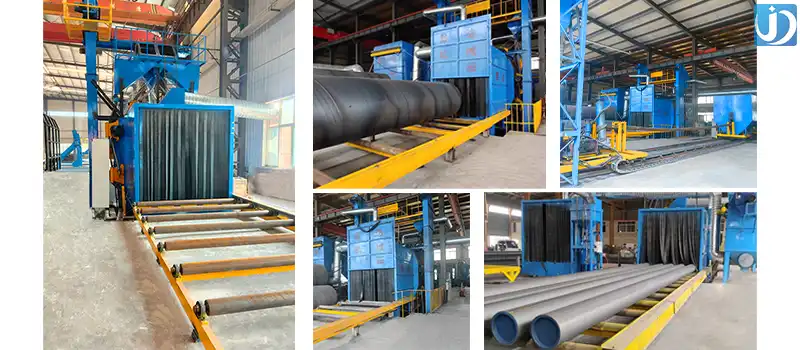
Key Features of Junda Machinery's Pipe Blasting EquipmentRotary Forward Conveying for 360° Coverage
In our rotary design, V-shaped inclined rotating rollers are used to move things forward in a circumferential direction. The rollers spin the pipe as they move it forward so that the whole thing faces the blast stream. To get rid of dark areas, we set up the blast wheels at different angles. Most of the time, a fixed wheel would miss these spots. The quality of the surface stays the same up to Sa2.5 when this layout is used. For a very thorough blast cleaning, that grade is the same as ISO 8501-1, and it's often compared to US SSPC-SP 10 near-white metal. Coverage that is even is important because if you miss one strip of mill scale, the coating could fail later.
Continuous Through-Feed Design for Automatic Lines
Pipes are always going in and out of the machine, and the speed at which the pipes move can be changed. That lets you match the blasting step's speed to the lines that come before and after it. Since the machine feeds pipes straight through, it can be used with methods that paint, stop rusting, and keep heat from escaping when making a lot of pipes. If the lines are properly matched, the blaster won't be the slowest part of the process, and the coating equipment won't have to wait for the pipe. Before you buy, don't just look at how fast the machine can go; also see how much it can actually handle based on how your line works. We can help you make sure that match during the technical proposal stage.
Adjustable Anchor Profile for Coating Adhesion
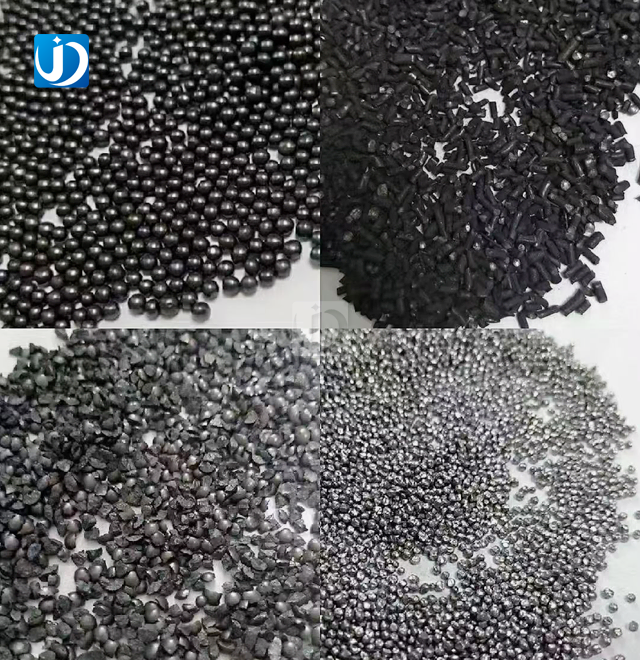
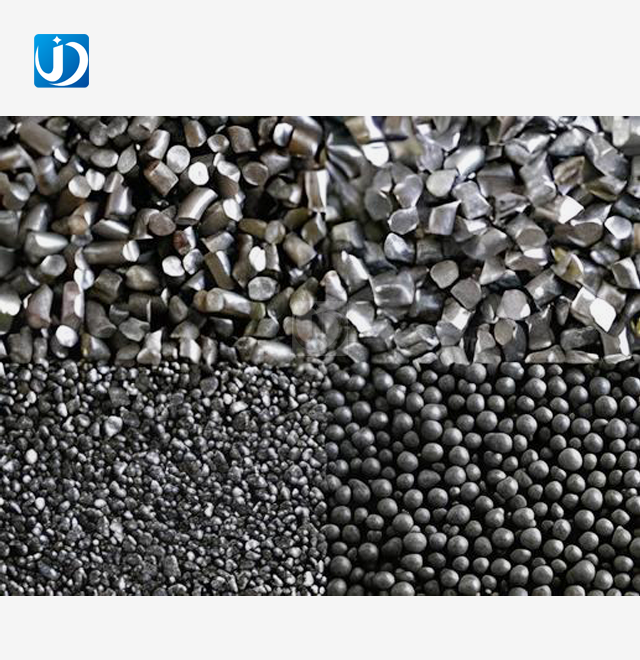
A small pattern of hills and valleys is left behind when you blast steel. The anchor profile is the name for this. Because of the different types of abrasives we offer, you can pick the level of roughness you want. Cast steel shot, cast steel grit, and shot-grit blends are some of these. A rougher grit called angular cuts a sharper edge, while round shot tends to peen and smooth the surface. The best thing is a mix of the two. Epoxy and polyurethane coatings stay on pipes longer and don't peel off better when they have a continuous micro anchor texture. You can also measure the profile. Inspectors often use the methods in ASTM D4417 or the comparators in ISO 8503-1 to make sure the result is right before coating. We will make a good abrasive mix for you if you tell us what kind of coating you need.
Technical Specifications and Industrial Applications
Rotary Hanger Series Specifications
These are the specs for our Rotary Hanger Shot Blasting Machine series, including the steel pipe shot blasting machine. The single hook can hold up to 8,000 kg, and it can turn at a speed of 2 to 5 r/min. Power installed ranges from 15 kW to 120 kW, and processing capacity is between 1 and 12 t/h. The type with an overhead suspension moves on a single rail, cleans in all directions without any dead angles, and keeps workpieces from getting damaged by collisions. It also has a fully sealed design that keeps dust out and automatically recycles abrasives. Send us the weight of your workpiece and how much you make every day so we can find the right configuration.
Where Industrial Buyers Use the Equipment
People who make pipes use this kind of equipment to get seamless and welded pipes ready for painting, insulating, and sealing with epoxy or polyurethane. Coating adhesion affects corrosion protection and service life, so pipeline projects need to keep the surface clean and in the right shape. Norms like ISO 12944-4 talk about the different types of steel surfaces and how to get them ready for protective paint systems. The hanger series can also handle parts for engineering machinery, vehicle frames, large castings, welded parts, and structural parts with unique shapes. Test the model in both regular and worst-case surface conditions before making your choice. Tell the supplier right away if your pipes come with heavy scale or old paint on them, because that will change the wheel power and abrasive choice.
Dust Control and Environmental Compliance
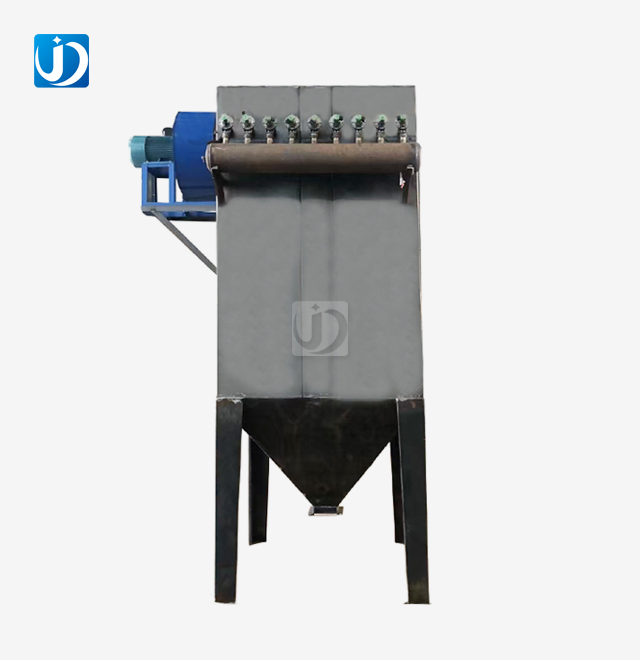
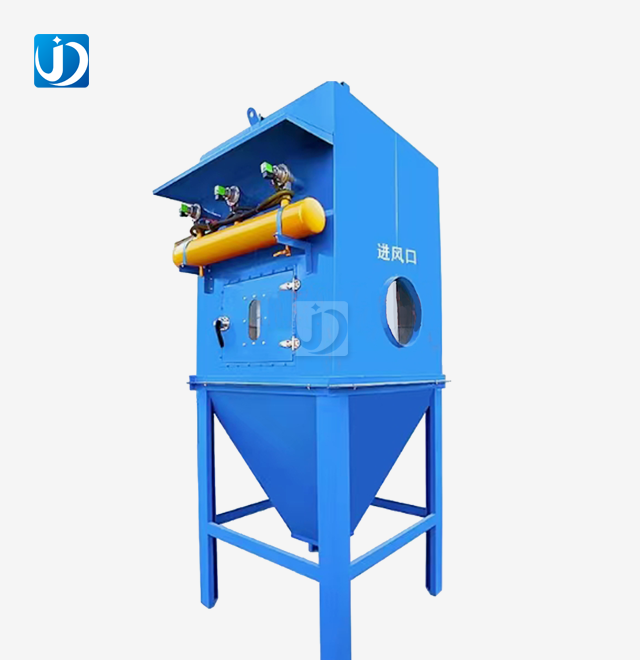
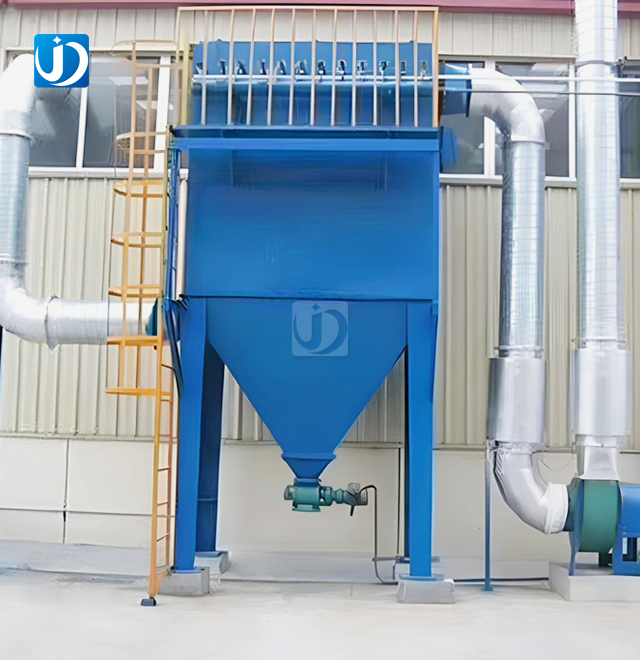
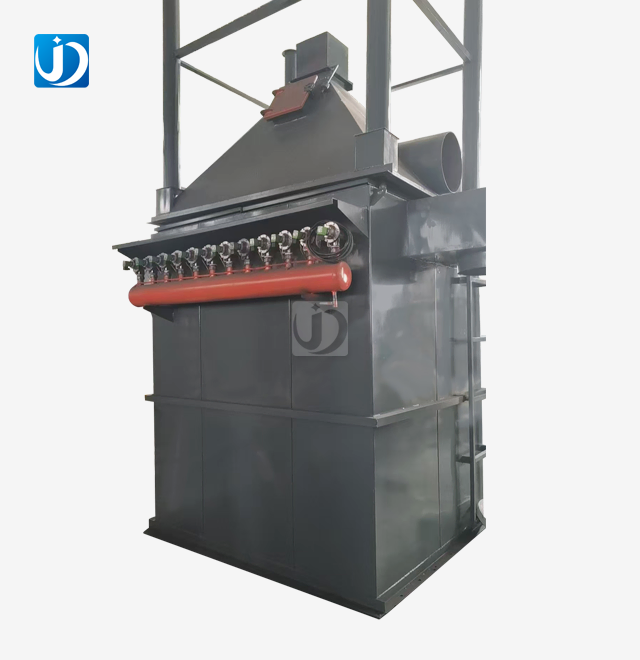
A machine that blasts needs to keep dust inside and clean the air it blows out. Our machines have a structure that is totally sealed off to keep dust out. We've also made a way for shot blasting machines to keep track of how well they clean up dust. Not only must the chamber be sealed, but the airflow in the collector must also match the machine. Rules vary from place to place, so a US company should check the local air permits and OSHA rules for worker exposure before putting in place. We have test reports, qualification files, and technical papers for sale. We can also help with CE approval if a market asks for it. As soon as possible, please let us know what voltage and emission levels you need. This will help us make sure that the dust collector is the right size and keeps us from having to do more work.
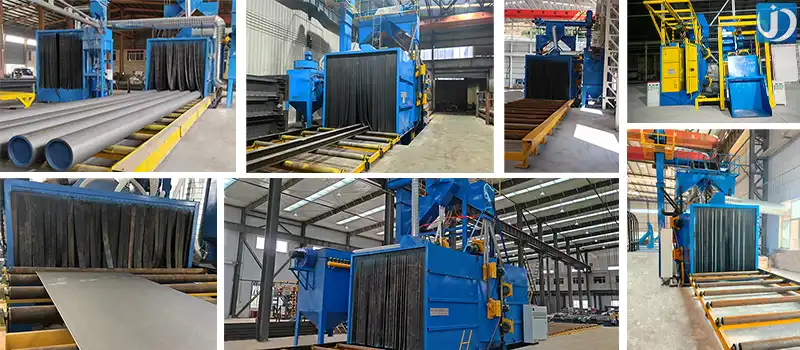
How to Choose and Buy the Right Machine?Prepare Your Inquiry Data
A precise quote starts with precise information. This is what I ask all of my buyers to get ready for.
- Pipe data: Give the diameter and length ranges, wall thickness, maximum weight, material, and straightness. Add photos of the worst surface condition you expect, including heavy scale, rust, or old paint. These details set the conveying design, wheel positions, and the power each blast wheel needs to clean the pipe thoroughly.
- Production data: State your hourly or daily output, shifts per day, and the cleanliness grade your coating specification requires, such as Sa2.5 or SSPC-SP 10. Also name the coating system that follows blasting. This information lets us match throughput to your line rhythm so the blaster never becomes the bottleneck.
- Site data: Share your voltage, available floor space, ceiling height, foundation conditions, and local dust emission rules. Mention the abrasive you already stock, since compatibility affects switching cost. We can then customize machine dimensions, the dust collection system, and automatic controls to your factory instead of forcing your factory to fit the machine.
A supplier can send a correct technical proposal instead of a guess with this information.
Understand Cost Factors Before You Compare Quotes
A lot of the time, buyers ask about price first, but that price changes based on the design choices made. Customization, the number and power of blast wheels, the size of the chamber, the level of automation, the design of the dust collector, the handling equipment, the construction that doesn't wear down easily, and the pipe capacity all affect the price. Most of these options are up to you because you decide on the pipe sizes and output goals. This is why full data comes first. Not just the purchase line, but also the total cost of ownership. Include costs for setting up, shipping, taxes, utilities, foundation work, abrasive, training, wear parts, filters, labor, and downtime. It may cost more in the long run if the quote doesn't include dust control or spare parts. To compare equal packages, ask each supplier to list the scope of their work.
Evaluating a Steel Pipe Shot Blasting Machine Manufacturer or Supplier
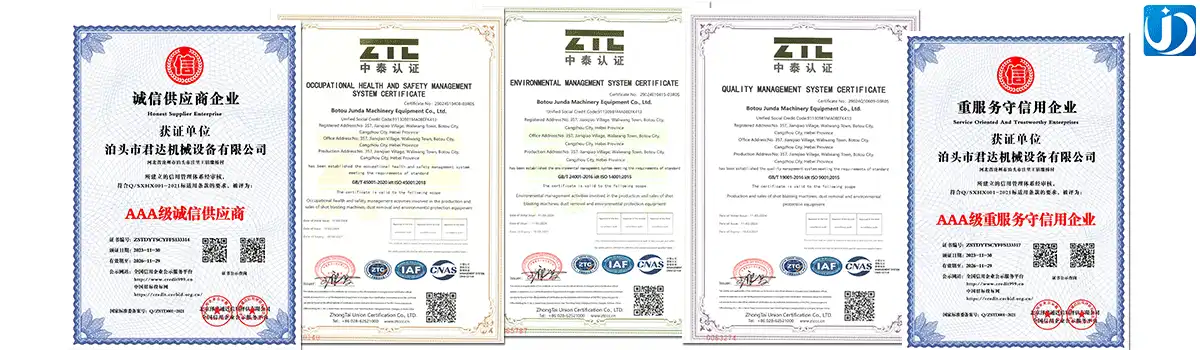
First, find out if the company makes the machine or just sells it. Then ask for proof that they have worked with coating lines and pipes of similar sizes before. An ISO 9001, ISO 14001, and ISO 45001-certified company called Botou Junda Machinery Equipment Co., Ltd. has been making shot blasting equipment for 20 years and is based in Botou, Hebei. Along with that, we have 7 software copyrights and 2 utility model patents. Find an industrial steel pipe shot blasting machine supplier and ask about wheel balancing, factory testing, manuals, spare parts, and how long it takes for them to respond. We answer questions within 6–8 hours, give out English manuals and maintenance videos, and, depending on the machine, can make standard customized equipment in about 15 days.
Maintenance, Efficiency, and Long-Term ValuePreventive Maintenance and Troubleshooting
Preventive checks keep the quality of the surface and the uptime high. Blaster wheel blades, chamber liners, rollers, chains, bearings, seals, abrasive level, filters, dust pressure, and safety interlocks should all be checked every shift. Check the pipe rotation, wheel alignment, abrasive flow, worn parts, and conveying speed if the cleaning doesn't look even. If you use a lot of abrasives, it's likely that there are leaks, poor separation, the wrong size of abrasives, or uneven airflow. More dust is coming out, so filters, the fan, and the ducting need to be checked. Choose ahead of time what electrical parts and wear parts you will keep on hand. We offer long-term supply of original spare parts and help with maintenance and training for operators.
Reducing Operating Costs with Closed-Loop Recycling
Since the cost of abrasive keeps going up, recovery is important. A screw conveyor, a bucket elevator, and an air separator make up our closed-loop system. It sends back to the wheels whole abrasive and separates broken pieces and dust, which lowers the amount of media used. This loop cuts down on the amount of new abrasive you need to buy and carry to the machine. In order to find waste, you should keep track of the following numbers: tons per hour, abrasive use, energy use, downtime, labor hours, wear-part life, and first-pass acceptance rate. What does the surface need? Set the wheel speed, the flow of abrasives, and the conveying speed. Settings that are too harsh wear down parts faster without making the finish better.
Why Automation Is a Sound Investment?
The differences that come from manual handling and operator skill are lessened by automation. Each pipe gets the same care because the conveying, blasting, abrasive recovery, and dust control all happen at the same time. Our smart systems have a platform for management and control, data collection and analysis, and supervision of the production process. These help you keep track of output and maintenance needs. Help with delivery is also important. We help with customs declarations, certificates of origin, and export documents. We work with freight forwarders for full containers, less-than-container loads, and loads that are too big for a container. A controlled process makes it easier to plan line changes for plants that want to grow.
Conclusion
An automatic steel pipe shot blasting machine cleans steel pipe by shooting metallic abrasive onto the surface. This gets rid of rust and scale and leaves a profile that can be used for coatings. The machine can match the speed of both the upstream and downstream lines thanks to its continuous through-feed design and rotary conveying wheels that can move at different angles. Choice of abrasive controls roughness, and closed-loop recycling cuts down on media use. To make a good choice, you need to look at all the data about the pipes, the production site, and the costs of installation, wear parts, and downtime. You also need to find a supplier that keeps records of quality, testing, and spare parts. Regular checks, sealed dust control, and keeping track of performance numbers keep output steady and protect the quality of the coating.
FAQ
What does a steel pipe shot blasting machine remove?
Steel shot or grit is thrown at the pipe surface to get rid of rust, mill scale, welding residue, and old coatings. Epoxy and polyurethane coatings stick better to steel because it leaves an anchor shaped mark.
Can one machine handle different pipe sizes?
Of course, but only within a certain range of mechanical and handling conditions. Send us your full diameter, length, and weight information, and our engineers will check to see if one layout works or if you need a custom layout.
Which abrasives work with your machines?
Cast steel shot, cast steel grit, and shot-grit blends can all be used in our machines. We will check to see if the abrasive you have on hand today is compatible before you decide. This way, you won't have to pay extra to switch products.
What do you need to prepare a quotation?
We need to know the pipe's diameter, length, weight ranges, hourly output, the level of cleanliness that is needed, the coating system, the voltage in your area, and how your factory is set up. We can send a technical proposal and a list of tasks once we have that information.
Request a Steel Pipe Shot Blasting Machine Quote from Junda Machinery
Making plans for a new blasting line? The steel pipe shot blasting machine is made by Junda Machinery, which has been in business for 20 years and offers OEM and ODM customization, English manuals, and remote commissioning support. Send an email to junda001@jundablast.com with your pipe data, coating standard, and voltage needs. Someone from our team will get back to you in 6–8 hours. You can go to jundablast.com to learn more.
References
1. ISO 8501-1: Preparation of Steel Substrates Before Application of Paints and Related Products, 2007
2. SSPC-SP 10/NACE No. 2: Near-White Metal Blast Cleaning, 2007
3. ASTM D4417: Standard Test Methods for Field Measurement of Surface Profile of Blast Cleaned Steel, 2014
4. ISO 8503-1: Surface Roughness Characteristics of Blast-Cleaned Steel Substrates, 2012
5. Occupational Safety and Health Administration: Respirable Crystalline Silica Standard, 2016
6. ISO 12944-4: Corrosion Protection of Steel Structures by Protective Paint Systems, Types of Surface and Surface Preparation, 2017

USER EVALUATE
Real feedback and practical experience shared by worldwide partners who purchased our machinery and environmental treatment devices.