_1786959752558.webp)
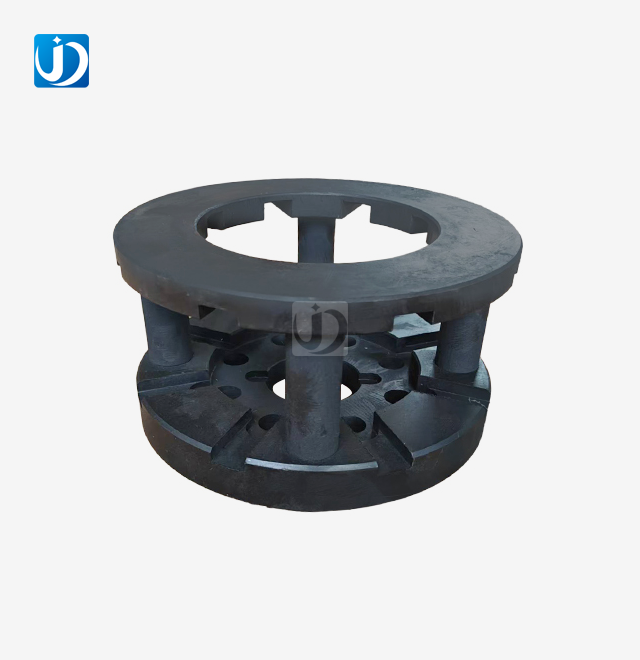
shot blasting turbine
Abrasives are accelerated by centrifugal force with much higher throughput than air blasting. Multiple
wheels can be combined to meet high-speed cleaning requirements for steel plate and profile
production lines.
Stable blasting coverage for uniform surface quality
Optimized blade profile and control cage angle deliver regular blasting pattern. Workpieces receive
consistent impact force to achieve uniform cleanliness grade and anchor profile.
Wear-resistant key components for extended service life
Impeller, blades, distributor and control cage are made of high-chromium wear-resistant cast iron with
excellent impact and abrasion resistance, reducing spare part replacement and downtime.
- Product Description
Shot Blasting Machine – High‑Performance shot blasting turbine for Industrial Surface Treatment & Peening
Manufactured by Botou Junda Machinery Equipment Co., Ltd., shot blasting turbine systems are engineered for mass‑production environments requiring reliable surface treatment. Backed by our 3,000 m² manufacturing plant and over 20 years of casting‑equipment expertise, our products delivers throwing capacity of 800‑4500 kg/min, installed power ranging from 7.5 kW to 55 kW, and rotational speed of 2200‑2900 r/min. Built with one‑piece forged impellers and high‑chromium wear‑resistant castings for ongoing steel‑plate pre‑treatment, profile cleaning and metal peening operations. It ensures balanced running, low vibration and quick replacement of consumable parts.

What is a shot blasting turbine?
A shot blasting turbine is the core component of centrifugal surface‑treatment systems. It converts electrical energy into kinetic energy to propel abrasive media (steel shot, grit or cut‑wire shot onto workpiece surfaces. This rotating mechanical unit addresses inefficiency and inconsistency of pneumatic sandblasting, achieving cleanliness standards such as Sa 2.5 and Sa 3.0 even on complex geometries.
Within industrial metallurgy, the turbine removes mill scale, rust and contaminants while generating beneficial compressive stress for shot‑peening applications. Compared with conventional air‑blast systems, its design lowers operating costs and increases throughput.

Main Technical Performance & Specifications
Modern shot blasting turbine assemblies rely on metallurgical composition and mechanical precision to withstand extreme wear. Our turbines operate at 2000‑3800 RPM with abrasive throughput from 50 kg/min to over 1200 kg/min, maintaining consistent performance under varying workloads.
| Item | Specification |
|---|---|
| Model Series | Shot‑blasting impeller / shot blasting turbine |
| Rotational Speed | 2200‑2900 r/min |
| Installed Power | 7.5 kW‑55 kW |
| Throwing Capacity | 800‑4500 kg/min |
| Core Material | High‑chromium wear‑resistant cast iron |
| Hardness | 60‑65 HRC (blades, impeller, control cage) |
| Balancing Accuracy | G2.5 dynamic‑balance standard |
| Drive Configuration | Direct‑drive / belt‑drive options |
Key components — blades, impeller and control cage — are manufactured from high‑chromium alloy with hardness exceeding 60 HRC. Direct‑drive configurations deliver superior energy efficiency, while belt‑drive designs protect motors from shock loads. Dynamic balancing to G2.5 accuracy minimises vibration and extends bearing service life, producing uniform blast patterns for consistent surface finishes.
Core Advantages for Industrial Applications
High‑Efficiency Centrifugal Blasting for Continuous Mass Production
Abrasives are accelerated by centrifugal force, delivering significantly higher throughput than air‑sandblasting methods. Multiple wheels can be combined to satisfy high‑speed cleaning requirements for steel‑plate and profile production lines and maximise operational output.
Stable Blast Coverage for Uniform Surface Quality
Optimised blade profiles and control‑cage angles generate regular blast patterns. Workpieces receive consistent impact force for even cleanliness grades and anchor profiles, ensuring reliable coating adhesion and uniform surface finish.
Wear‑Resistant Critical Components for Extended Service Life
Impellers, blades, distributors and control cages are made of high‑chromium wear‑resistant cast iron with excellent impact and abrasion resistance. This construction reduces spare‑part replacement frequency and minimises downtime costs.
Flexible Power Configurations for Broad Application Scope
Multiple motor power options are available to match your production scale. Rotational speed can be adjusted according to workpiece material and cleaning requirements, making the system suitable for both light‑duty finishing and heavy‑duty rust‑removal tasks.
Modular Construction for Easy Disassembly & Maintenance
Integrated assembly design allows individual replacement of consumables such as blades and liner plates. It simplifies overhaul procedures and substantially cuts maintenance downtime.
Smooth Operation, Low Vibration & Controllable Noise
Precise dynamic balancing minimises high‑speed vibration. Combined with sealing and noise‑reduction structures, the shot blasting turbine improves workshop working conditions and complies with ISO 10816 vibration standards.
Industrial Applications in B2B Sectors
Heavy‑Steel Manufacturing
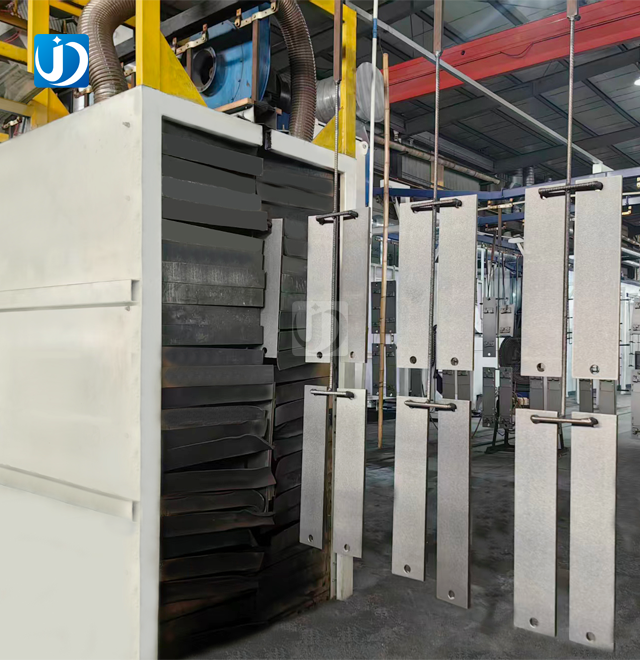
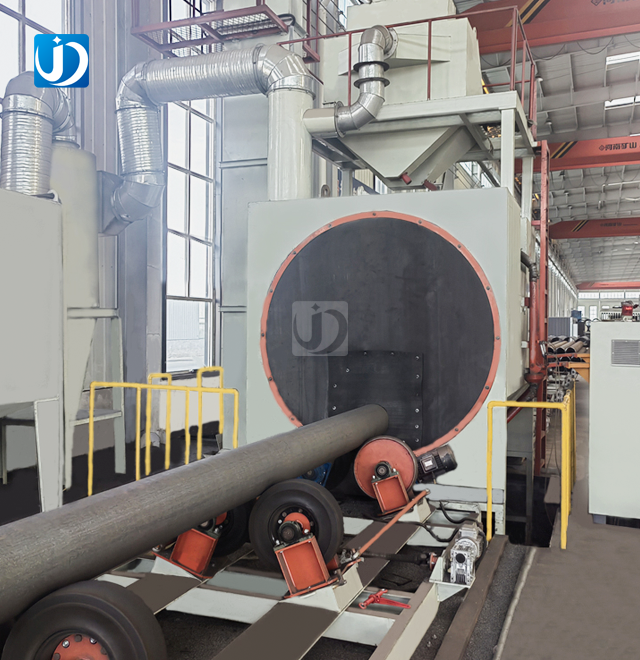
Deployed within roller‑conveyor lines for descaling H‑beams and steel plates, ensuring optimal coating adhesion in corrosive environments where consistent surface treatment is critical.
Automotive Foundry Operations
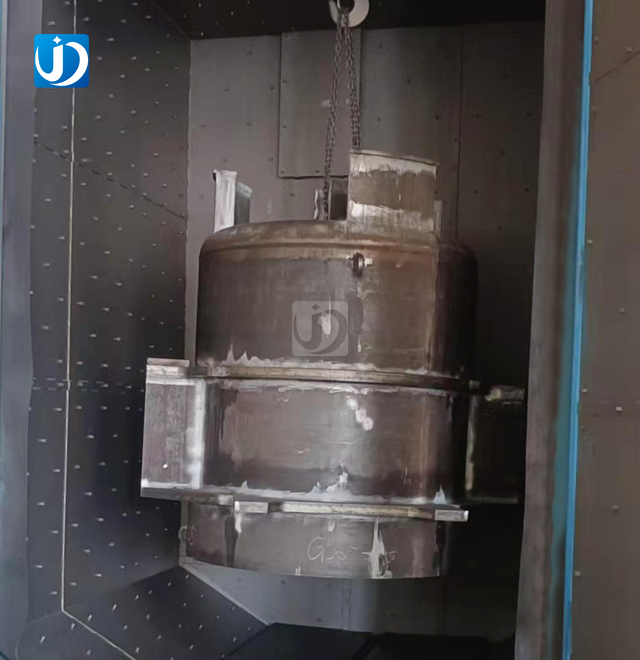
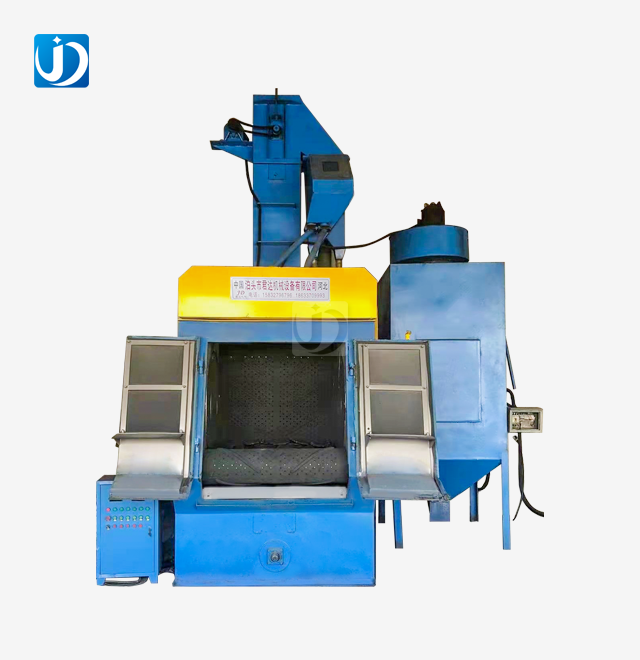
Integrated into tumble‑belt or hook‑type shot‑blasting machines to remove stubborn ceramic molding sand from engine blocks and gearbox housings under high‑heat and high‑dust conditions.
Aerospace Shot Peening
Used in precisely‑controlled environments to eliminate tensile stress by bombarding turbine blades and structural components with spherical media, improving their fatigue life.
In these scenarios, turbines run continuously in multi‑shift environments and maintain accurate abrasive flow even under severe turbulence inside blast chambers.

Quality Control & Compliance
Quality control focuses on durability and operational safety through rigorous inspections:
- Spectral analysis verifies chemical composition of alloy wear parts to guarantee proper chromium‑carbon ratios for wear resistance.
- Rockwell hardness (HRC) testing confirms heat‑treatment depth and hardness for all blades and bushings.
- Dynamic‑balance testing uses electronic equipment to detect and correct centrifugal‑force unbalance that would cause premature bearing failure.
- Dimensional‑tolerance verification measures gaps between impeller and control cage (within ±0.5 mm) to prevent media jamming.
- Acoustic and vibration monitoring ensures post‑installation operation within 85‑90 dB(A) and compliance with ISO 10816 vibration standards.
Our quality‑management system holds ISO9001, ISO14001 and ISO45001 certifications. We can assist with CE‑certification applications and supply technical documentation for global‑market access.

Frequently Asked Questions
Q: What key components make up the core unit?
A: It mainly consists of impeller, control cage, distributor, blades, wear‑resistant liner plates, spindle housing and drive motor. It serves as the core unit accelerating abrasives inside the broader equipment.
Q: What causes excessive vibration of the core unit?
A: Vibration is usually triggered by uneven blade wear or broken blades; a full matched set must be replaced immediately to restore balance.
Q: How do I adjust hot‑spots in the blast pattern?
A: Adjust blasting pattern by rotating the control cage; shifting the cage window changes the point where media feeds onto blades.
Q: What is the average service life of blades?
A: Depending on the abrasive used (e.g. steel shot versus grit), blades typically run for 200‑1000 operating hours before replacement is required.
Q: Can older machines be retrofitted with new high-efficiency units?
A: Yes, modern high‑efficiency units can often be retrofitted onto old housings to boost throughput and cut energy consumption by up to 20 %.
Q: Why does my equipment lose blast uniformity?
A: This is generally caused by worn impellers or control cages failing to feed sufficient media to blades, or slipping drive belts reducing rotational speed.
Q: How can I extend service life and reduce maintenance costs?
A: Adopt high‑chromium wear‑resistant blades; screen out broken steel shot regularly; calibrate control‑cage angles; perform periodic dynamic‑balance testing; replace worn liners in time to protect the housing.
Contact Us for Custom Solutions
Ready to boost your surface‑treatment efficiency? Please contact our team via junda001@jundablast.com for technical consultation, custom‑configured shot blasting turbine and fast‑delivery solutions tailored to your production requirements.



USER EVALUATE
Real feedback and practical experience shared by worldwide partners who purchased our machinery and environmental treatment devices.