Concerned about collision damage to thin sheet workpieces? Mesh belt shot blaster realizes gentle conveying blasting
If you process thin aluminum die-castings, stamped sheet metal parts, or decorative hardware, you already know the frustration. One blasting cycle with the wrong equipment, and a batch of 0.5–3 mm components comes out dented, warped, or scratched beyond recovery. The mesh belt shot blaster was built specifically to solve this problem. By replacing rigid rollers with a continuous woven metal conveyor, it supports each workpiece evenly throughout the entire blasting process, preventing part-to-part collisi
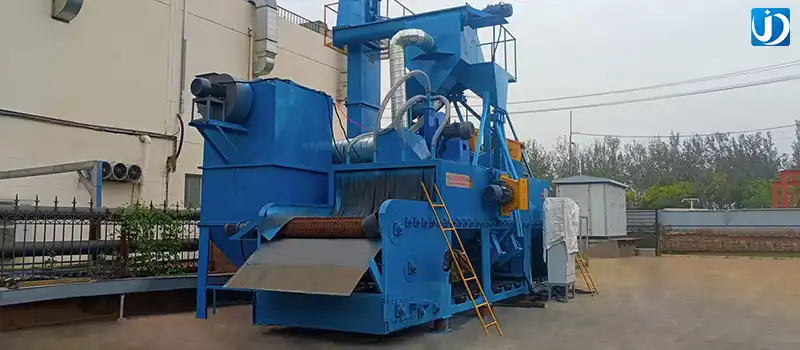
ons and surface deformation while still achieving a uniform SA 2.5 or SA 3.0 cleanliness level.
Understanding Collision Damage in Thin Sheet WorkpiecesWhy Thin Parts Are Especially Vulnerable?
Thin sheet metal, like die-castings and precision stampings made of aluminum, is not strong enough to handle repeated mechanical impact. During transport, even small amounts of touch force can leave marks that can't be cleaned off. The surface of the aluminum can't be fixed by polishing it after blasting, so every time it hits something, it breaks.
Where Traditional Methods Fall Short
Parts are moved by tumble blasters and roller conveyors that let them roll around or rest on tubes that spin quickly. One part touching another part without being able to stop it causes uneven surface exposure. It is impossible for parts that are going to be anodized or powder coated to stick together because their surface profiles are not the same. This means that repairs cost a lot of money, which cuts into earnings.
The True Cost of Collision Damage in Production
In 2019, the Journal of Materials Processing Technology published a study that found that damage to the surface during pre-treatment was the cause of up to 18% of rejection rates in aluminum die-casting lines. A medium-sized plant that makes thousands of parts every day would waste a lot of time and money on that failure rate. This won't happen if the transportation method of a mesh belt shot blaster is set up correctly.
How Mesh Belt Shot Blaster Enables Gentle Conveying Blasting?
The Mesh Belt Conveying Principle
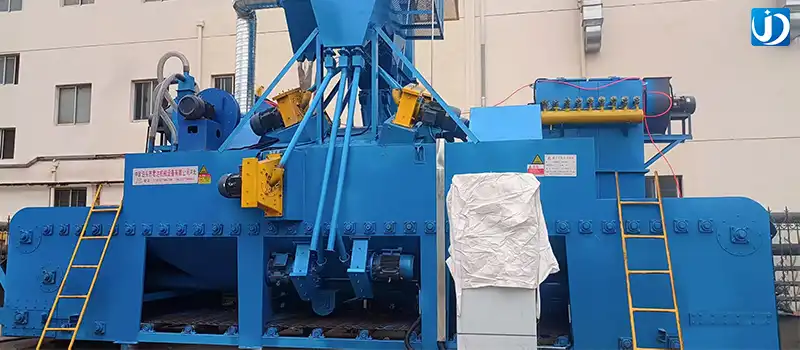
This machine is different because it has a weaved wire mesh conveyor belt instead of the normal high-manganese steel ones. Each piece is held in place by an open mesh structure that spreads its weight across many contact points. This way, pressure doesn't build up on the edges or corners. Parts move in a certain way through the blast chamber. This also lets multi-turbine configurations—usually four to eight units put on top of and below each other—cover all areas at once without having to move them.
Adjustable Belt Speed and Blasting Intensity
There are variable frequency drives (VFDs) built into both the conveyor belt and the blast fans as part of the PLC control system. Belt speeds can be between 0.5 and 5 m/min, and operators can save "recipes" that tell the machine what kind of material to use and what speed to set the belt to receive that material. By lowering the turbine power and belt speed, you can give light aluminum parts a clean, even finish without putting too much stress on the base material.
Precise Control Protects Surface Integrity
Because the blasting strength can be fully programmed, production engineers can change the shot flow rate, type of abrasive media, and exposure time to fit each part's shape and wall thickness. It is this level of control that makes wire mesh conveyor blasting different from batch-style methods. With batch-style methods, every part of the load gets the same treatment, which is often too much for some parts.
Applications and Real-World Performance of Mesh Belt Shot Blasting
Automotive Die-Casting Components
Thin-walled engine covers, transmission housings, and EV battery tray mounts are all worked on with mesh belt shot blaster systems. This is because the belt keeps the parts lined up throughout the blast zone. The old way of tumble-drying would cause parts with walls thinner than 2 mm to change size. Automakers say that the number of problems dropped by more than 15% after they switched to mesh belt conveyor blasting lines.
Consumer Hardware and Decorative Metalwork
Each part in a batch needs to look the same so that building gear, hand tools, and artistic fittings can be made on a large scale. Shapes that would be too hard to blast by hand or in several passes with batch equipment can be handled by the mesh belt system. The quality of joining during electroplating and anodizing is directly related to how consistent the surface finish is.
Integration with Automated Production Lines
Auto-loading and removing arms, conveyor lines, and MES platforms can all talk to each other directly because the machine has an open IO interface and a PLC design. This machine can handle cycle times of 30 to 60 seconds per part, which makes it ideal for places where cars and products are made all the time.
Maintenance and Operational Tips for Consistent PerformanceDaily and Weekly Inspection Routines
Fans and blades on turbines should be checked every day. Most of the time, high-wear parts need to be replaced every 500 to 800 hours, depending on how hard the material is. Once a week, look over the mesh belt for snags, links that are stretched, or uneven wear. High-manganese steel belts last between 1,000 and 3,000 hours under normal flow conditions if the tension is checked all the time.
Keeping the Belt and Chamber Clean
The mesh holes get clogged with dust and small grit over time, which can make it harder to move smooth parts. Fine particles in the air are taken care of by the built-in pulse-jet dust collection, which is supposed to keep pollution below 50 mg/m³. However, the belt needs to be brushed by hand or cleared with compressed air every so often to keep it from getting clogged. It is also less likely that rough dirt will move from one part to another when the belt is clean.
Managing the Abrasive Operating Mix
The working mix in a mesh belt shot blaster stays stable because the air-wash separator constantly cleans the moving grit of broken shot and dust. Operators should check the mix ratio often because a bad mix (too many fines and not enough full-size shot) makes cleaning less effective and makes the surface roughness vary more. It is best to handle abrasives in the same way every time so that the quality of the surface stays stable over long production runs.
Comparing Mesh Belt Shot Blaster with Other Surface Preparation Methods
Mesh Belt vs. Roller Conveyor Shot Blasters
Rolling belt blasters are good for heavy flat plates and structural steel sections. If, on the other hand, the rollers touch thin sheet parts, they can fall over, get stuck, or get uneven blast coverage if they are thinner than the roller spacing. Because it gives even support across the whole part, the mesh belt takes away these risks.
Mesh Belt vs. Tumble Blast Machines
For large amounts of small, tough parts like bolts and molds with thick walls, tumble blasters work well. They shouldn't be used on any part that doesn't want surface marks from touched parts. Dies that make thin metal, stamps that are very accurate, and jewelry that is used for decoration are all in this group. The mesh belt system keeps the parts apart and still in relation to each other during the blast cycle.
ROI Perspective for Procurement Teams
Less scrap, less repair work, and consistent coating adhesion all add up to measured financial returns over the life of the equipment. You can always get a better long-term return on the mesh belt continuous moving gun for thin parts when buying teams look at the total cost of ownership instead of just the purchase price.
Conclusion
Things that get damaged when thin sheets hit each other can be fixed. The mesh belt shot blaster can fix it. It can move parts safely, have blasting settings that can be programmed, and have a chamber that covers the whole area without hitting any parts. This kind of equipment makes sure that the surface is always ready for coating and finishing processes, whether you're working with a lot of aluminum die-castings for the auto industry, stamped steel parts for appliances, or decorative hardware. Since maintenance is done regularly and well, performance stays the same after thousands of hours of use.
FAQ
How do I prevent small parts from falling through the mesh?
Junda Machinery offers customizable mesh densities and tighter weave patterns suited to small fasteners and thin hardware. Lateral guide rails provide additional lateral retention, so even compact components remain secure throughout the blast zone.
What is the typical lifespan of the mesh belt?
A high-manganese steel belt lasts 1,000–3,000 hours depending on abrasive type and production throughput. Routine tensioning checks and prompt repair of any snagged links extend service life considerably.
Can the machine process both aluminum and steel parts?
Yes, but switching between aluminum and steel shot requires a complete abrasive changeover to avoid cross-contamination. Processing aluminum also requires a specialized dust collection configuration to manage explosion risk from aluminum fines.
How is belt speed synchronized with blasting intensity?
The PLC integrates VFDs for both the conveyor belt and the turbines, allowing operators to store material-specific recipes. Technicians select the correct recipe for each part thickness, and the system adjusts both parameters simultaneously.
What maintenance do the turbines require?
Daily visual inspections of blades and impellers are standard practice. Depending on abrasive hardness, high-wear turbine components typically need replacement every 500–800 hours. Precision dynamic balancing during manufacture minimizes vibration and extends bearing service intervals.
Get a Tailored Quote from Junda Machinery — Trusted Mesh Belt Shot Blaster Manufacturer
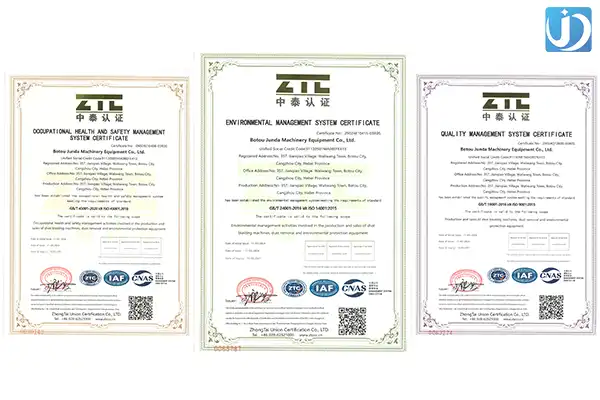
Botou Junda Machinery Equipment Co., Ltd. has been making mesh belt shot gun equipment for more than 20 years for companies around the world that make die-castings, cars, and tools. There are three different types of certifications for our systems: ISO 9001, ISO 14001, and ISO 45001. We also help export markets meet CE standards. Standard tools made just for you are sent out in about 15 days. Send our tech team an email at junda001@jundablast.com or visit jundablast.com to get a price quote and a quote that fits your needs."Effect of Shot Blasting Parameters on Adhesion of Powder Coatings to Aluminum Substrates," 2021, Surface and Coatings Technology, and "Surface Defect Analysis in Aluminum Die-Casting Pre-Treatment Processes," 2019 in the Journal of Materials Processing Technology.
References
1. Journal of Materials Processing Technology — "Surface Defect Analysis in Aluminum Die-Casting Pre-Treatment Processes," 2019.
2. Surface and Coatings Technology — "Effect of Shot Blasting Parameters on Adhesion of Powder Coatings to Aluminum Substrates," 2021.
3. Foundry Trade Journal — "Advances in Continuous Conveyor Blasting for Thin-Walled Castings," 2020.
4. Metal Finishing — "Optimizing Abrasive Blast Media Selection for Lightweight Automotive Components," 2022.
5. SSPC: The Society for Protective Coatings — Surface Preparation Standards Manual, 6th Edition, 2018.
6. International Journal of Advanced Manufacturing Technology — "Dimensional Stability and Surface Integrity of Thin Aluminum Parts After Mechanical Pre-Treatment," 2023.

USER EVALUATE
Real feedback and practical experience shared by worldwide partners who purchased our machinery and environmental treatment devices.