


_1786959752558.webp)
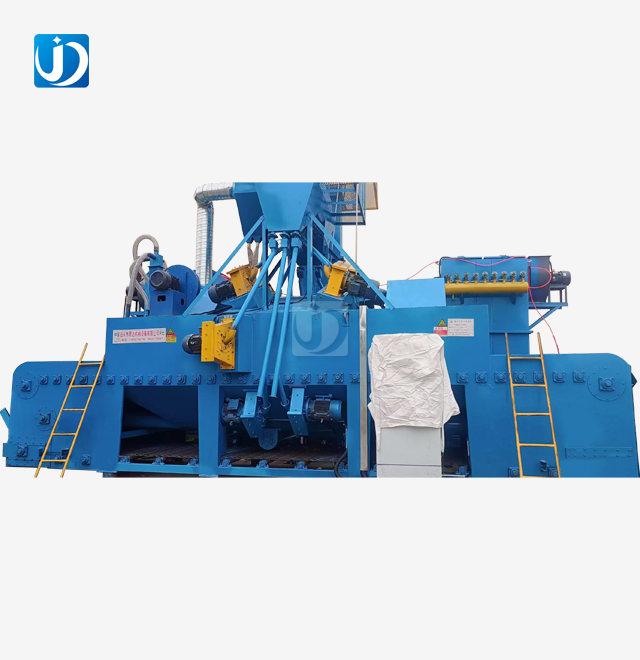
wire mesh shot blasting machine
Metal mesh belt transports workpieces non-stop with variable speed control. The machine can be
connected directly to washing and coating processes.
Upper & lower blast wheels realize simultaneous double-sided treatment
Blast wheels installed on top and bottom of the chamber penetrate mesh gaps to blast both sides of
parts, eliminating secondary flipping and improving productivity.
Gentle conveying avoids collision and surface scratches
Workpieces lie flat on the mesh belt with less friction compared with tumblast machines. Ideal for thin
sheets, die castings and precision parts vulnerable to damage.
- Product Description
High‑Performance wire mesh shot blasting machine – Continuous Mesh‑Belt System for Automated Surface Treatment
Botou Junda Machinery Equipment Co., Ltd. supplies industrial‑grade wire mesh shot blasting machine solutions designed for high‑volume production environments. Leveraging our 3,000 m² manufacturing facility and over 20 years of foundry‑technology experience, our mesh‑belt blasting systems process 1‑15 tons per hour while handling precision components gently. Our equipment accommodates batch weights from 500 kg to 10,000 kg and is fitted with dual blast‑wheel units, with installed power ranging from 37 kW to 160 kW. The variable‑speed mesh belt runs at 2‑4 r/min to guarantee uniform surface treatment without damaging workpieces.

What Is a wire mesh shot blasting machine?
A wire mesh shot blasting machine is automated continuous‑surface‑treatment equipment specially designed for thin‑walled, precision and flat parts that cannot be tumble‑processed. Workpieces travel smoothly through the sealed blasting chamber on wear‑resistant manganese‑steel mesh belts.
High‑velocity turbines mounted above and below the conveyor propel steel abrasives through mesh openings to deliver simultaneous double‑sided cleaning. This drastically reduces workload and eliminates manual flipping.
This solution addresses key manufacturing pain points such as throughput limitations of batch‑type equipment, inconsistent finish quality caused by human operation, and the risk of part deformation in tumble‑blast machines. It delivers consistent Sa2.5‑Sa3.0 surface finishes required for galvanizing and powder‑coating processes.

Main Technical Advantages
Continuous Non‑Stop Conveying System
The metal mesh belt provides uninterrupted workpiece transport driven by variable‑frequency drive (VFD). Speed adjustment between 0.5 m/min and 5 m/min satisfies diverse process requirements. Direct integration with washing and coating production lines creates fully‑automated production workflows.
Two‑Way Simultaneous Blasting
Strategically positioned blast wheels above and below the chamber penetrate mesh openings to treat both surfaces at the same time. Compared with single‑sided systems, this configuration doubles productivity while maintaining uniform coverage over complex geometries.
Gentle Damage‑Free Processing
Workpieces lie flat on the mesh belt with minimal friction and zero tumbling impact. This design protects thin sheets, precision die‑castings and deformation‑prone parts from collision damage and surface scratches commonly seen in tumble‑type machines.
Multi‑Part Versatile Processing
The system handles a wide range of part types including small steel plates, aluminium stampings, fasteners, springs and structural components. Capacity for mixed‑size batch processing maximises equipment utilisation across the full production line.
Technical Specifications
| Item | Specification |
|---|---|
| Model Series | Wire‑mesh‑belt shot blasting machine |
| Single‑Batch Load Capacity | 500 kg – 10,000 kg |
| Conveying Operating Speed | 2 – 4 r/min |
| Installed Power | 37 kW – 160 kW |
| Processing Capacity | 1 – 15 tons/hour |
| Structural Configuration | Through‑type mesh‑belt conveyance, fully‑automatic feeding / discharging, dual‑direction blasting from top and bottom |
| Abrasive Recovery | Automatic closed‑loop system with bucket elevator and air separator |
| Dust Control | Sealed chamber with pulse dust collector (emission < 20 mg/m³) |
| Applicable Workpieces | Thin sheets, hardware accessories, small‑and‑medium‑size castings, stamped parts, standard fasteners, deformation‑sensitive components |
Complete System Components
A full‑set wire mesh shot blasting machine includes an integrated metal mesh‑belt conveyor with VFD speed control and a sealed blasting chamber constructed with HRC 60+ high‑manganese wear‑resistant liners.
Multiple high‑power blast wheels (typically 7.5 kW to 15 kW each) are positioned at calculated angles for 360‑degree coverage. Bucket elevators transport recovered abrasives to multi‑stage air‑wash separators to remove debris while reclaiming usable media.
Pulse dust collectors maintain environmental compliance with emissions kept below 20 mg/m³. A PLC control system manages all operating parameters including belt speed, blast‑wheel rotation, abrasive flow and safety interlocks. This closed‑loop design minimises material waste while maximising operational efficiency.
Industrial Applications
Automotive Die‑Casting Operations
The machine excels at deburring and finishing aluminium engine blocks, gearbox housings and brake components. It delivers clean surface finishes required for precision machining and assembly processes.
Thin‑Sheet Stamping Production
Sheet‑metal manufacturers rely on this equipment for precision parts where flatness retention is critical. The gentle conveying method prevents warping associated with heavy‑impact treatment methods.
Forging and Structural‑Steel Processing
Heavy steel forgings and construction‑hardware products benefit from mill‑scale removal and consistent surface finishing. The system delivers production‑ready surfaces for subsequent coating or galvanising operations.
Fastener & Hardware Manufacturing
High‑volume producers of bolts, springs, clips and connectors deploy continuous mesh‑belt systems to achieve uniform cleaning for millions of small‑size parts at minimum processing cost.

Quality Control & Compliance
Our manufacturing procedures follow ISO9001, ISO14001 and ISO45001 certified quality‑management systems. Every wire mesh shot blasting machine undergoes strict factory tests, including dynamic blast‑wheel balancing to prevent vibration‑induced fatigue and verification of belt‑tracking accuracy under full‑load conditions.
Abrasive‑flow monitoring ensures consistent media volume via calibrated valves. Wear‑liner hardness tests confirm manganese‑steel shielding meets the minimum HRC 60 standard. Post‑treatment surface‑cleanliness assessments reference ISO 8501‑1 standards to verify removal of rust and contaminants.
We supply comprehensive technical documentation including English‑language operation manuals, maintenance schedules and troubleshooting guides. CE‑certification assistance and export‑compliance support facilitate smooth international equipment deployment.

Frequently Asked Questions
Q: What workpieces can this equipment process?
A: It is suitable for small‑and‑medium‑size thin‑walled workpieces such as small castings, stamped parts, hardware accessories, springs and fasteners. Parts lie flat during transport to avoid collision and deformation, making it ideal for continuous mass production.
Q: What are the features of the conveying structure of this equipment?
A: Wear‑resistant metal mesh belts carry workpieces through the blasting chamber at constant speed. The belt supports variable‑frequency speed regulation for different processes. Blast wheels arranged on both top and bottom enable simultaneous cleaning of upper and lower surfaces.
Q: What advantages does this equipment have compared with tumble‑belt models?
A: Workpieces lie flat without tumbling, preventing collision and squeeze damage to thin parts. It supports non‑stop feeding with high‑level automation and easy connection with upstream and downstream processes to form automated production lines.
Q: How do I select the proper mesh size for this equipment?
A: Mesh size is determined by the minimum workpiece dimension. Normally, aperture size should be 30 % smaller than the part to prevent jamming while allowing adequate abrasive penetration.
Q: What is the typical service life of manganese‑steel mesh belts?
A: Under normal operation with S280 steel shot, high‑quality mesh belts last 2,000‑4,000 hours, subject to abrasive hardness and part weight. Regular inspection and proper maintenance can extend service life.
Customisation & Global Support
Botou Junda offers professional ODM/OEM services tailored to your specific requirements. We customise equipment configurations according to local environmental regulations, voltage standards and installation conditions.
Custom options include machine dimensions, dust‑collector capacity, automatic‑control systems, intelligent‑monitoring software and private‑labelling services. Standard units ship from stock, while custom configurations are generally completed within 15 days subject to specifications.
Our global logistics network handles FCL, LCL and over‑dimensional break‑bulk shipments. We manage export packaging, fumigation certificates and customs documentation to guarantee smooth international delivery and minimise transit risks.
Contact Us for Expert Consultation
Ready to upgrade your surface‑treatment business? Our technical team responds within 6‑8 hours to discuss your application requirements and recommend optimised solutions. Please reach us via junda001@jundablast.com for quotations and technical specifications for the wire mesh shot blasting machine.



USER EVALUATE
Real feedback and practical experience shared by worldwide partners who purchased our machinery and environmental treatment devices.