Choose the Right Shot Blasting Machine: A Step-by-Step Guide
Picking the right mini shot blasting machine determines whether your small parts come out clean and consistent, or whether you waste money on equipment that never fits your shop floor. I wrote this article because small hardware makers, mould repair workers, and export resellers asked me for a simple compact blasting solution hundreds of times. Find out how to choose the right machine type for your needs, how to size it for your parts, how to deal with dust, and how to figure out the real cost of ownership. There you have it! You now know which mini shot blasting machine configuration works best for your parts, power source, and budget.
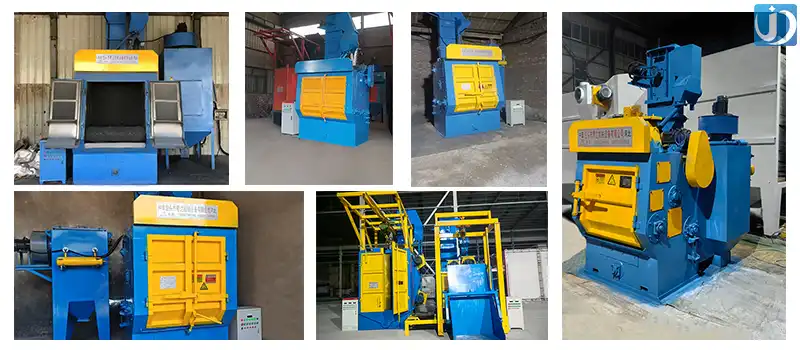
What Are the Main Types of Shot Blasting Machines?
Many people start their search with a general idea, like "I need something to clean rust off of small parts." This can mean five different types of machines, and choosing the wrong one will waste your time and money.
What Is a Mini Shot Blasting Machine?
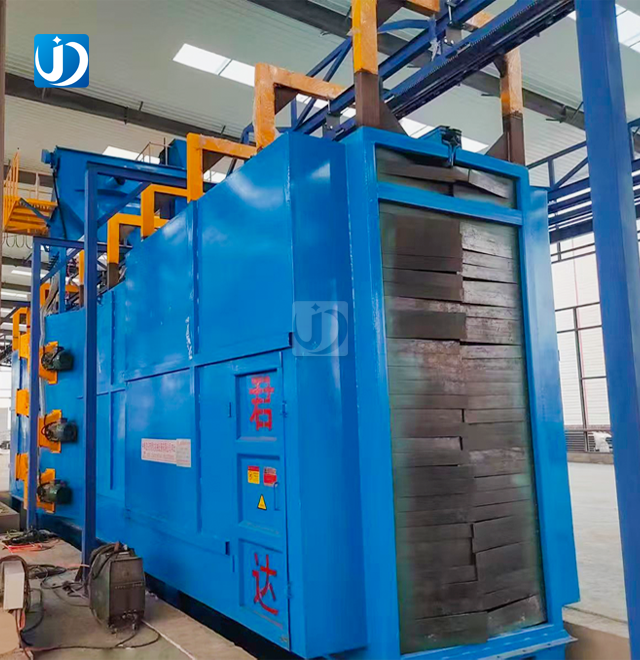
A compact, enclosed "mini shot blasting machine" throws metal abrasive at a controlled speed to clean, deburr, descale, or prepare small parts for coating or assembly. Most have a motor that spins the blast wheel 55–80 m/s. They can process 0.3–5 tonnes of parts per hour, depending on kind.
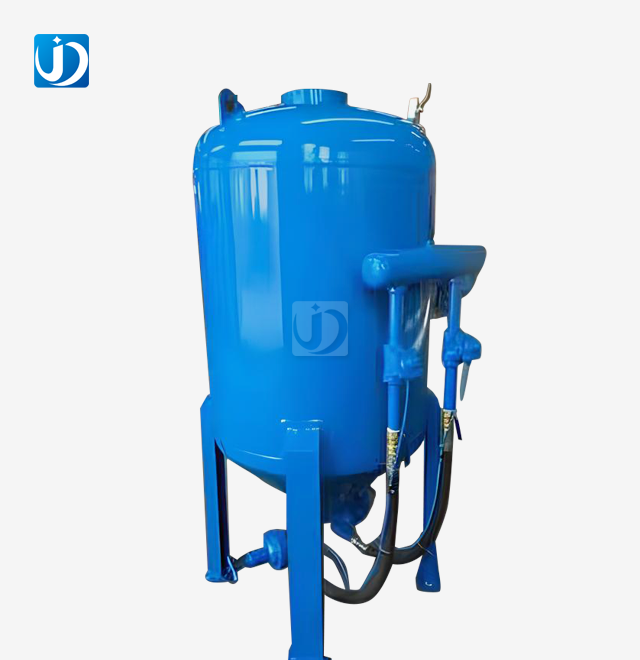
Many small compressed air sandblasting devices are bolted to the floor and can't be taken with you. It doesn't work for large, heavy, or fragile pieces unless the maker customises the chamber, wheel angle, and abrasive flow.
Mini Shot Blasting Machine vs Sandblasting Machine
| Factor | Mini Shot Blasting Machine | Sandblasting Machine |
|---|---|---|
| Abrasive propulsion | Centrifugal blast wheel | Compressed air |
| Typical media | Steel shot, steel grit, stainless shot | Garnet, glass bead, mineral media |
| Abrasive recovery | Usually integrated and reusable | Often lower recovery |
| Best suited for | Batch cleaning, deburring, descaling | Localized repair, delicate surfaces |
| Dust profile | Enclosed with dust collector | Depends on cabinet design |
| Energy demand | Motor-driven blast wheel | Compressed-air generation, often higher |
| Small shot blasting machine | Sandblasting machine |
Step 1: Define Part Size, Weight, and Output
More return requests for a mini shot blasting machine come from wrong sizes than from any other reason I keep track of in customer service tickets. If you do this right before you call a provider, you'll avoid weeks of back and forth.
Calculate Capacity and Production Requirements
Here's a simple formula that can help: needed output = number of parts per batch times number of batches per hour, with the efficiency of the operation taken into account. Combine load, blast, empty, and check times to calculate cycle time. Loading generally takes longer than blasting small parts. Multiply your daily goal production by your shifts to avoid overworking the machine on day one. Add 15–20% for regular repairs and changeovers.
Mini Shot Blasting Machine Size and Capacity Checklist
| Selection criterion | Information to confirm |
|---|---|
| Cabinet or chamber size | Maximum usable work envelope |
| Batch load | Rated load and practical working load |
| Part density | Risk of nesting or shadowing during tumble |
| Blast wheel power | Power, wheel speed, abrasive flow rate |
| Dust collector | Airflow, filter type, dust capacity |
| Footprint | Machine dimensions plus service clearance |
| Utilities | Voltage, amperage, compressed air, ventilation |
| Weight of the part | Chance of nesting or shadowing during tumble |
| Power, wheel speed, and abrasive flow rate | Blast wheel power |
| Airflow, filter type, and dust capacity | Dust collector |
| Footprint | Machine size plus space for service |
| Electricity, air flow, voltage, and current | Utilities |
Step 2: Match Machine Type to Your Workpieces
Once you know the size of the part and the amount of output you want, it's much easier to choose the type of mini shot blasting machine. Most of the time, geometry and fragility decide.
Choose the Machine for Part Geometry and Fragility
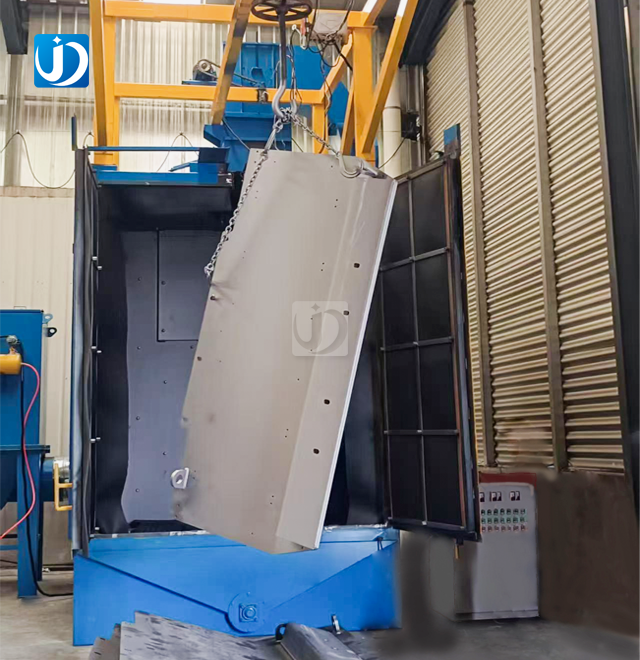
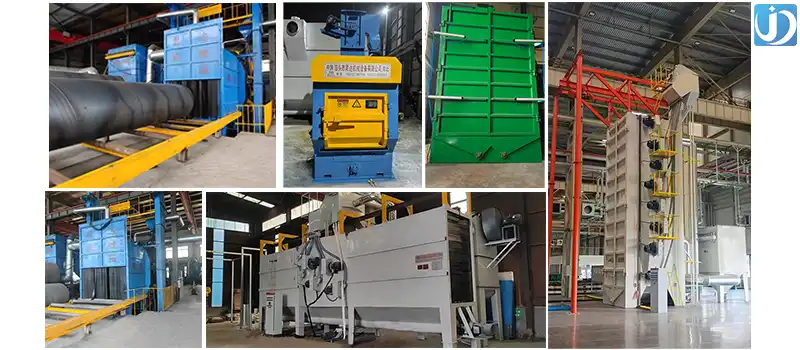
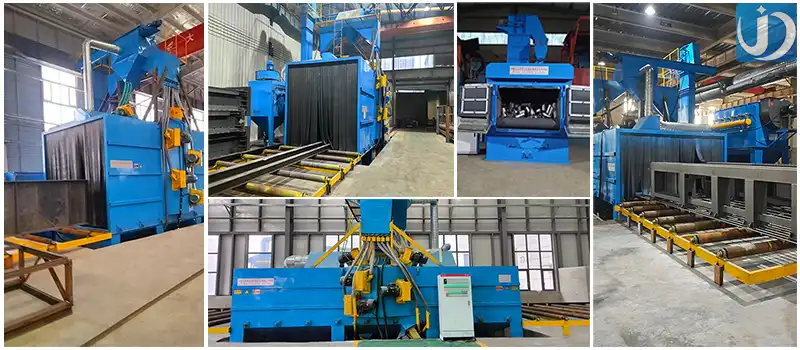
The best metal gear to tumble dry is strong castings, forgings, fasteners, and small metal parts that can get dirty. Because they leave no marks, hook machines are great for fragile, odd, or light-sensitive items. When controlled exposure is more important than speed, rotary tables are the best way to repeat single pieces or small groups. Mesh belt machines can be used for continuous production runs where the moving of parts through the chamber can be planned ahead of time. When flexibility is more important than output, manual cabinet machines are good for small repairs, making prototypes, and testing things out in the workshop.
Application-to-Machine Decision Table
| Application | Preferred configuration | Key verification point |
|---|---|---|
| Small castings | Tumble belt or rotary table | Batch weight and part durability |
| Aluminum castings | Rotary table, hook, or controlled tumble | Avoid excess impact and surface deformation |
| Automotive fasteners | Rotary table or automated cell | Repeatability and cycle time |
| Rust removal | Tumble belt or hook | Required cleanliness grade |
| Deburring | Rotary table or tumble belt | Edge geometry and dimensional limits |
| Workshop use | Manual cabinet or compact automatic unit | Footprint, noise, and power supply |
Step 3: Choose the Right Abrasive and Blast Wheels
How fast you clean, how smooth the surface is, and how often you need to replace worn parts with a mini shot blasting machine depend on the blast wheel and abrasive you use together. If you get this match wrong, all the other specs won't matter.
Select Abrasive Media by Material and Finish
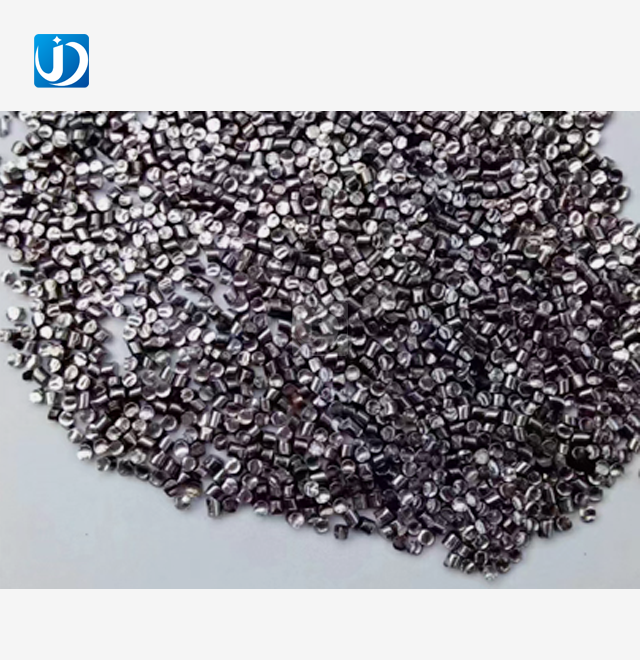
Steel shot's round shape allows mild peening and cleaning without removing too much material. Steel grit cuts deeper and roughens surfaces, which can aid before coatings. For parts that corrode and are stained by carbon steel media iron pollution, stainless steel shot is employed. Only machines with wheels, liners, and recovery systems for aluminium oxide or glass beads may properly use those materials. Only recycled abrasive that meets the manufacturer's particle size and pollution standards can be utilised.
Match Blast Wheel Design to the Process
For a mini shot blasting machine, check the width of the wheel and its spinning speed. Wheels that are bigger and spin faster tend to cover more ground per cycle. Check the flow rate of the abrasive and the resistance of the blade to wear. Blades that are worn out throw the abrasive unevenly and slow down cleaning without giving you a clear sign. Make sure that you can replace the blades, liners, and impellers easily.
Step 4: Compare Dust Extraction and Safety Options
Dust control is not an extra; it is what makes the difference between a workshop that follows the rules and one that gets told to close by a local inspector.
Dust Collector and Ventilation Requirements
It should be very clear in the documentation for a mini shot blasting machine with a dust collector what the measured airflow, filter type, and filtration efficiency are, not just a vague "high efficiency" claim. It's important to check whether the filter cleans itself or if you need to shake it. During long shifts, the person running a hand-cranked device needs to pay more attention to it. Check to see how big the dust bin is and how it's emptied. Also, make sure that the system has differential-pressure monitoring. This will let you know before the airflow drops too much if a filter needs to be changed.
Essential Machine Safety Features
Inside each unit, there should be a blasting chamber that is fully enclosed, doors that can be locked and unlocked, and an easy-to-reach emergency stop button. People who work on or clean the blast wheels and drive parts are kept safe by guards around them. If something gets stuck, the machine will stop itself when the overload motor safety and abrasive-flow shutoff work together. In this way, neither the part nor the wheel will get broken.
Step 5: Calculate Total Cost of Ownership
The price listed on a quote sheet doesn't always show the whole picture when it comes to money. People have bought the cheaper machine only to pay for it twice over in repairs and downtime.
What Determines Mini Shot Blasting Machine Price?
The price changes based on the chamber size, the number of blast wheels, the motor power, and the level of automation. However, the setup of the dust collection and the design of the abrasive recovery system often change the price more than buyers expect. When a machine needs to be changed to work with a different country's power, the cost goes up because of the electrical standards and control panel requirements. You should also compare the costs of installation, commissioning, freight, and import taxes for the mini shot blasting machine, since the landed cost can be very different between two providers who quote the same price for the same machine.
Operating Cost Model
| Cost category | Items to include |
|---|---|
| Initial equipment | Machine, dust collector, controls, accessories |
| Installation | Site prep, lifting, electrical, ventilation |
| Consumables | Abrasive, filters, liners, blades, seals |
| Utilities | Electricity, compressed air, extraction |
| Labor | Loading, unloading, inspection, maintenance |
| Downtime | Changeovers, repairs, cleaning cycles |
| Logistics | Freight, customs, insurance, local delivery |
| Support | Training, service visits, spare parts |
Conclusion
When you need to repeatedly clean, deburr, remove rust, or prepare small parts in a controlled environment, a mini shot blasting machine belongs on your shop floor. The optimal option depends on the part's form, batch weight, required output, abrasive needs, dust management, and machine life cost. Try tumble belts for tough batch pieces. For delicate parts, use hook or rotary table machines. Mesh belt equipment is suitable for continual production. Before deciding, test your pieces and record the findings. Check every supplier claim with proof, not just a sales pitch.
FAQWhat do mini shot blasting guns do?
Tiny shot blasting tools that are enclosed use centrifugal blast wheels to throw metal abrasive at the workpieces. Shops use it to clean, remove rust, deburr, descal, and get small metal parts ready.
How do mini shot blasting machines work?
In a chamber that is closed off, the blast wheel speeds up the abrasive material that is on the workpiece. The media can use the reusable abrasive again because it has a recovery mechanism that separates dust and debris from it.
Which micro shot blasting gun for small parts is the best?
Choices are best based on part shape, longevity, and batch size. Rotating tables are good for controlled processing, hook machines are good for small or oddly shaped parts, and tumble belt systems are good for large amounts.
How much do little shot blasters cost?
Cost is based on freight, capacity, blast wheel power, automation, and dust gathering. A good quote will split the costs of the equipment from the costs of shipping, installation, consumables, and extra parts so that there are no surprises.
Get a Mini Shot Blasting Machine Quote Built Around Your Parts
Before we talk about price, send our team your part drawings, the amount of output you want, and the country where the product will be sent. We will then make a size suggestion. For 20 years, Junda Machinery has helped small shops, resellers, and OEM buyers in Vietnam, Indonesia, India, and South Korea find the best mini shot blasting machine supplier configuration for their electrical needs and floor space. Send your instructions to junda001@jundablast.com, and you should hear back in 6 to 8 hours, not days.
References
1. International Organization for Standardization. ISO 8501-1:2007 — Preparation of steel substrates before application of paints and related products. Cited in Step 3 for surface-cleanliness assessment.
2. European Commission. Machinery — Regulatory Framework. Cited in Step 4 for CE and Declaration of Conformity requirements.
3. European Chemicals Agency. Understanding REACH. Cited in Step 4 for restricted-substance documentation.
4. ASTM International. Standards for Surface Preparation and Blast Cleaning. Cited in the machine-type comparison section.
5. National Institute for Occupational Safety and Health. Abrasive Blasting and Silica Exposure. Referenced for workplace exposure context in dust-control planning.
About the Author
Kevin Zhang is a Small Equipment Application Engineer who works directly with workshop owners and export buyers on mini shot blasting machine sizing, dust-control planning, and installation support. He has reviewed hundreds of buyer inquiries across Southeast Asia and South Korea and specializes in matching machine configuration to real production data rather than catalogue specifications.

USER EVALUATE
Real feedback and practical experience shared by worldwide partners who purchased our machinery and environmental treatment devices.