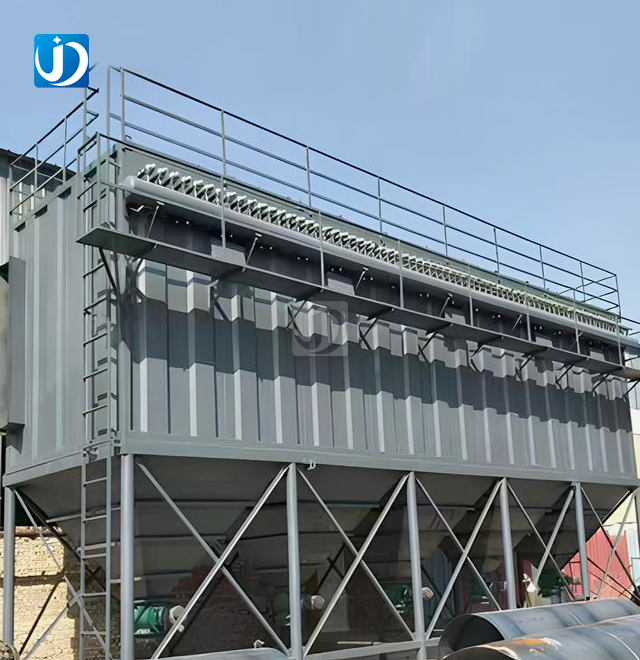
Looking for mature dust treatment solution for blasting workshops? Baghouse dust collector efficiently captures mixed dust
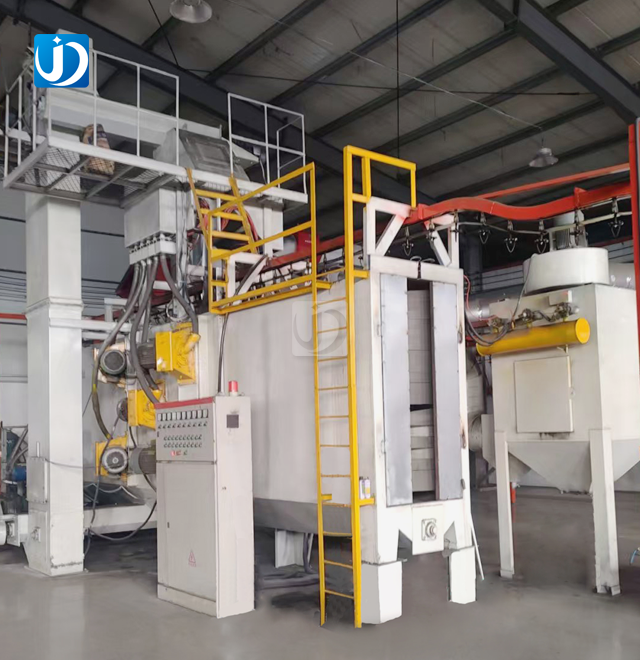
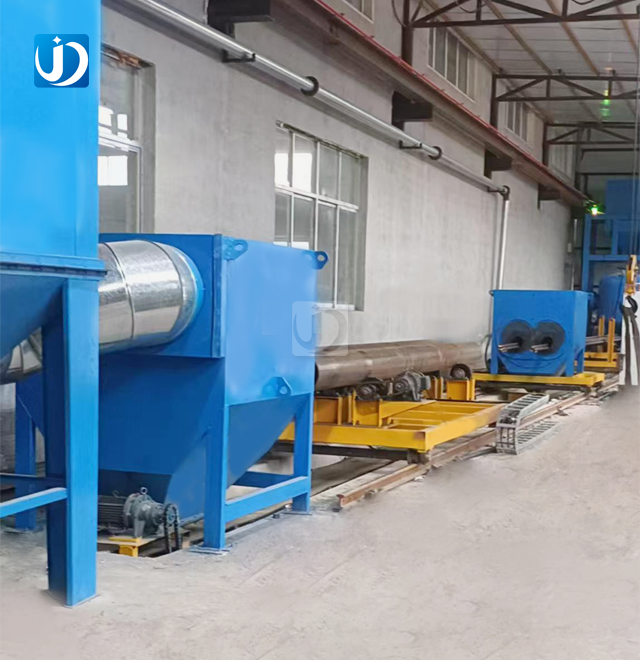
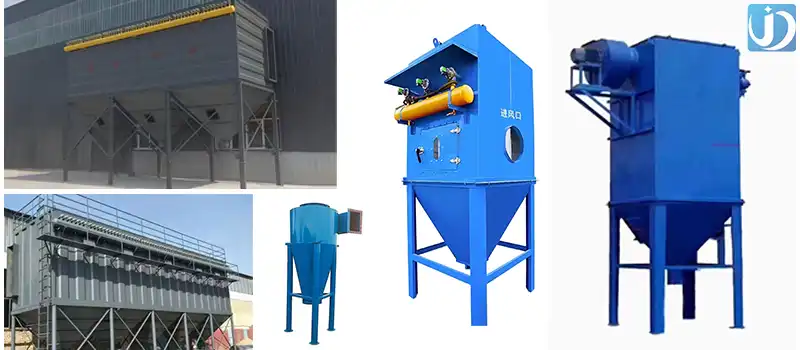
A baghouse dust collector is a proven answer for blasting workshops that produce mixed dust. It pulls dirty air through fabric filter bags, holds fine metal dust, steel shot fragments, mill scale, and grinding dust on the bag surface, and releases the dust cake into a hopper with pulses of compressed air. Junda Machinery units reach filtration efficiency above 99.9% and clean section by section, so your shot blasting line keeps running. This article covers how these systems work, how to size them, how they compare with other collectors, how to maintain them, and how to buy with confidence.
Understanding Baghouse Dust Collectors and Their Role in Blasting Workshops
How a Baghouse Dust Collector Cleans Blasting Air?
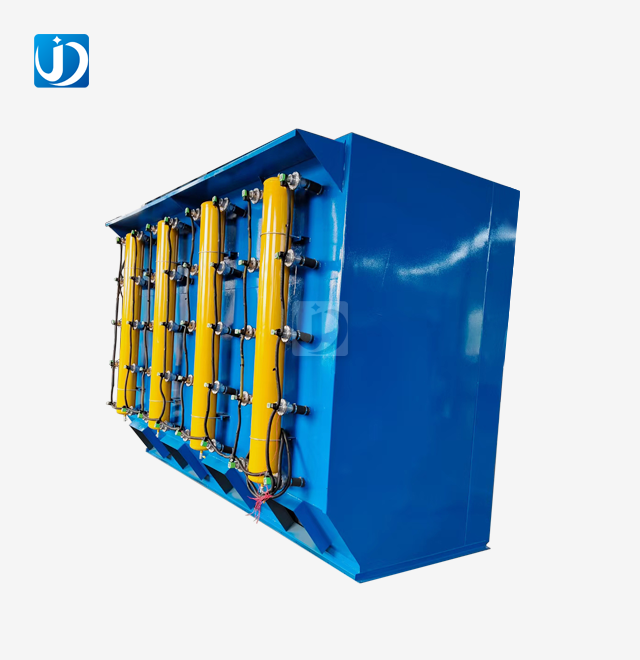
An exit fan pulls dirty air from the blasting machine or hood into the entrance room, creating negative pressure. Inside the cabinet, filter bags hang vertically so that air can flow freely over the media. On the outside of each bag, a thin layer of dust called a "dust cake" forms. This helps the filter work better. It goes into the upper clean-air plenum through the cloth. After that, it leaves through the exit duct. When the difference in pressure gets high enough, a rush of squished air goes backward through the bags and drops the dust into the hopper. It goes like this for the whole shift, with no breaks in the flow of air.
Why Blasting Workshops Create Mixed Dust?
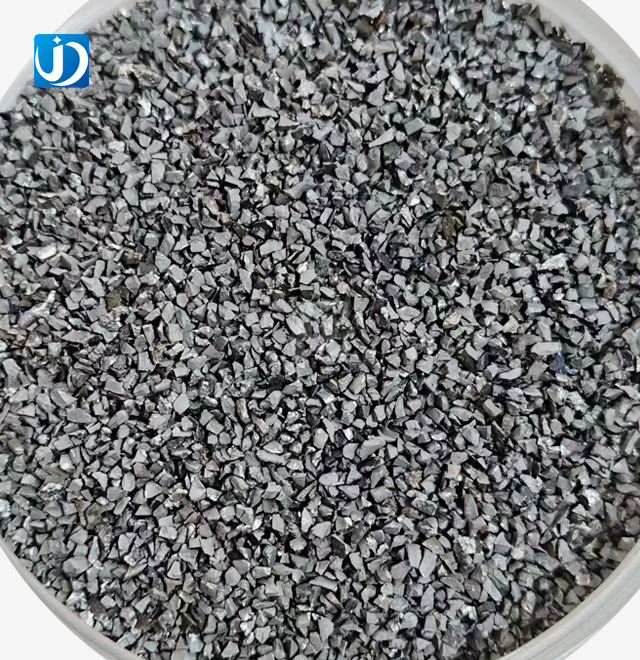
When you fire a shot, you make more than one kind of dust. There are pieces of broken grit, mill scale that has been knocked off of forgings and molds, and fine grinding dust from finishing work all in the same airstream. There are two types of particles: fine and large. Fine particles stay in the air and move into lung zones. If you use abrasives or parts that contain crystalline silica, OSHA says you shouldn't be exposed to more than 50 milligrams of it per cubic meter of work area for eight hours straight. It is common in this setting to have a baghouse dust collector that can handle both large and small particles. This keeps workers safe and keeps dust off of nearby equipment.
Core Components and Cleaning Configurations
A baghouse has four main parts: an air cleaner, filter bags, support cages, and a dust hopper. The bars keep the bags open so air can flow through them, and the hopper dumps the dust that has been moved. Backward air, pulse jet, and shaker are the three main types of cleaners. Most of the time, shaker and reverse-air units have to shut down a section in order to clean it. On the other hand, pulse-jet systems clean quickly with cool air. The EPA in the US says that pretty much all new fabric filters work all the time, or 99.9 percent of the time. It cleans one chamber at a time, and while one chamber is being cleaned, the other chambers stay clean.

Key Design Principles and Operational Parameters of Baghouse Dust CollectorsMatching Air Volume to Your Workshop
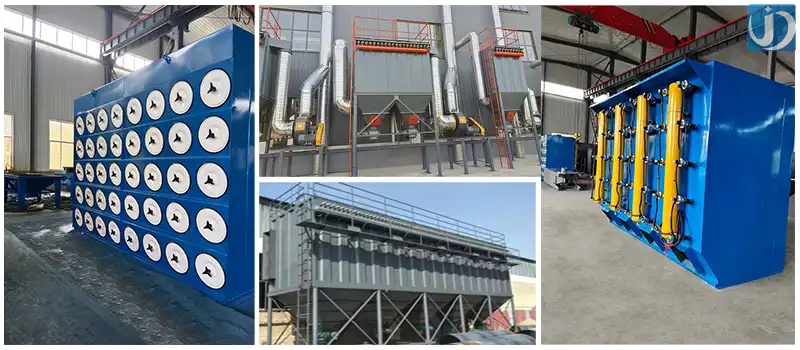
This question and the answer tell us if the baghouse dust collector can collect dust at the source. Doors and hoods can't get rid of dust because there isn't enough air flow. When there is too much, the bags lose air power and fill up faster. The amount of dust points, the type of hood, the length of the duct, and any turns will help you figure out the right size package. Our line of baghouse dust collectors can handle up to 30,000 m³/h, so you can hook one up to a machine for single shot blasting or use it to clean the space. The house that can be moved can be put together on any floor. If you bring us your machine data and duct plans, we can make sure the match is correct before you place your order.
Air-to-Cloth Ratio and Differential Pressure
You can get most of the information you need about the health of a system from two numbers. This number tells you how much wind there is compared to the filter size. Most pulse-jet units run between 2:1 and 6:1, but this depends on the type of dust and how it is cleaned. It's better for the bags to cover more ground and last longer when there is a lot of dust. The difference in pressure between the bags shows how much resistance there is. Our two-mode controls keep an eye on this reading and start pulse cleaning as soon as it gets high enough. Fault alarms let you know when there are issues with the solenoid valve or the compressed air. Watch the trend for a few weeks. On the other hand, a slow rise could mean that the media is getting old, while a sudden jump could mean that there is a glitch.
Filter Media, Temperature, and Emission Targets
The print you pick should fit the dust. Polyester felt can be used to clean up most metal dust. Things smaller than 1 μm can fit through PTFE membrane bags, and they don't get clogged up with fine dust. Anti-static bags make it less likely that static electricity will happen when there is burning dust around. Some media can get as hot as 260°C, and most tools can handle up to 120°C. It's possible for 1,000 g/m³ of concentration to go in and 30 mg/m³ or less of concentration to go out. The noise level stays at 85 dB or less. If your permit says that the pollution must be very low, don't think that a normal setup will work. Let us know the limit right away so that we can make sure the media and filter area fit.
Comparative Analysis: Baghouse Dust Collectors vs Alternative Dust Collection Systems
Baghouse vs Cartridge Collectors
This is a picture of a cartridge collector, which is made up of pleated media in a small body. They are good for picking up light, fine dust when the load is low. It's not the same as blast dust. It's rough, heavy, and mixed, and sharp pieces can damage fine pleats over time. The bags are smooth, which makes it easy to get rid of the dust cake. In our standard design, they can handle high inlet loads of up to 1,000 g/m³. Also, baghouse dust collector housings can hold a lot of air since they are made up of many parts. For a small job on a bench, they might work well. This is the case most of the time: a pulse-jet baghouse works best with a 24/7 shot firing line.
Baghouse vs Electrostatic Precipitators and Cyclones
The force that pulls dust out of the air is centrifugal force. You should use them as pre-screens instead of final screens because they work better on big particles than on small dust. In foundries, a cyclone and a baghouse are often used together to catch big pieces of trash before they reach the bags. Electric charge generators charge particles, which are then gathered on plates. They only work well if they can keep dust out, and the sparks inside the unit worry me that dust could catch fire. Since a baghouse screens by physically catching dust, it doesn't need to change how its electrical fields are tuned to handle different kinds of dust. It's nice to be free when your job changes from casting to forging.
Operating Cost, Dry Filtration, and Abrasive Recovery
Over time, fan power costs the most, and they go up as pressure drops. Resistance stays the same after pulse-jet cleaning, which means that fan load stays the same. This method saves even more time. Wet scrubbers collect wet dust, but our dry process keeps the dust dry. This lets us screen out the fine trash and use the steel shot again. Since there is no sludge, you don't have to buy as many abrasives or take up as much room at the dump. You can also clean water and move mud with wet devices. You should not only look at how much the equipment costs, but also how much it costs to run the fan, change the bags, use compressed air, and take care of the trash.
Maintenance Habits That Extend Baghouse Dust Collector Life
A Simple Inspection Schedule
When you write down your goals, small problems stay small. Look through the holes in the filter bags once a month for tears or a lot of dust. If you find any, you should replace the broken bags right away to stop bypass leaks. Fill the hoppers up and empty them once a week. This will keep the material in the inlet chamber from building up. Clean the compressed air lines and pulse valves every three months. This will make them work quickly when you clean them. Tighten the flange nuts again after six months of letting the equipment settle down. Every two years, or sooner if they look like they are getting squished, gaskets should be changed. Make sure you keep track of each check so that your team can see patterns between shifts and maintain your baghouse dust collector correctly.
Reading the Warning Signs
A warning is sent out early by the control panel. You should replace the bags soon if the differential pressure slowly goes up, even after cleaning it often. This happens when the media is full or the bags are blinded. A sudden spike is probably caused by a blockage or a problem with the fan. Check right away. Some dust on the stack means that the bag or seal is torn or broken. Once everything is set up, a bright powder leak test can be done to make sure the tubesheet and bag seals don't let air in. Make sure the compressed air is dry and doesn't drop below the dew point. Also, water can make you blind.
Safety Checks for Combustible Dust
Some of the dust that is made when you blast and grind can catch fire or blow up. From 1980 to 2005, the U.S. Chemical Safety Board looked into 281 cases of burning dust that hurt 718 workers and killed 119. NFPA 652 says that buildings must do a dust danger study. Talk to your professional about what parts of your process need to be kept safe. As a result, static electricity is less likely to happen, and rotating airlock valves keep the output area from letting out too much dust. Place blast vents that meet NFPA standards where your study tells you to. Clear the area around the unit of dust because it adds fuel.
Procurement Guide: Selecting the Right Baghouse Dust Collector for Your Blasting Workshop
Start With Your Dust, Airflow, and Space
Write down what you find, including the type of grit, the parts' material, where the cutting or welding is happening, and any dust that could catch fire. Then, write down the cap points, the amount of air that is needed, the available floor space, and the emission limits in your area. A power source is also important. There is a chance that we can change it to fit your voltage if you need us to. That way, you can compare like with like when you ask each seller for a price. That is because engineers can choose the filter area, media, and baghouse dust collector housing layout right away when they have a clear outline.
Compare Suppliers and Total Cost of Ownership
Brands like Donaldson, Camfil, and Aero Engineered Products are known all over the world for making industrial dust control equipment. Equipment for shot blasting is made by companies like Junda Machinery that specialize in this. You should rate each supplier on the same things, no matter what shortlist you make: test reports and certifications, filter bag availability, spare parts supply, installation support, and customer service after the sale. Find out how long the supplier keeps original spare parts in stock and if the bag sizes are standard. Not only how much the equipment costs, but also how much it costs to run, buy bags, hire workers, and fix when it breaks down.
What Junda Machinery Provides
This is what you get when you work with Junda Machinery on a baghouse dust collector project:
- Production and delivery: We can handle both OEM and ODM orders because our 3,000-square-meter plant and more than 20 years of experience with shot blasting tools let us know what to do. We have a lot of regular custom equipment in stock, and it only takes about 15 days for each machine to arrive. The automatic controls, the painting on the surface, the tracking software, and the labels can all be changed. You can also change the size.
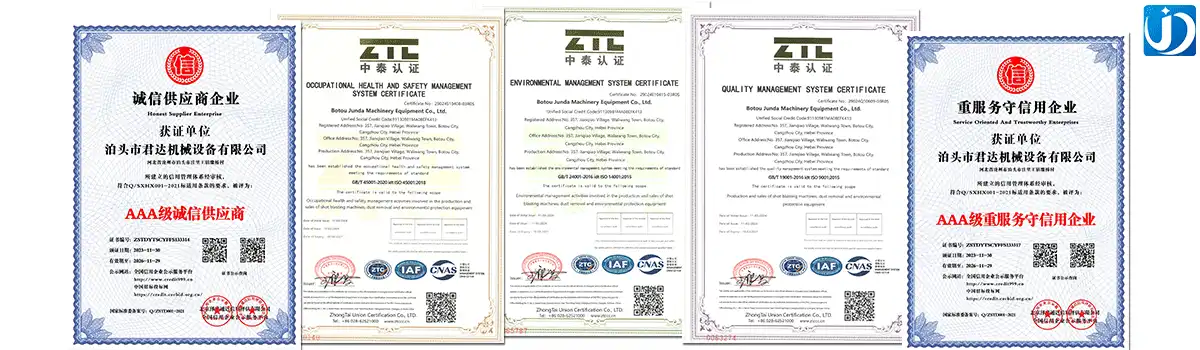
- Certifications and documents: We have three different kinds of certifications: ISO 9001, ISO 14001, and ISO 45001. We give you all the technical papers, qualification files, and test results you need to get your project accepted or sent to another country. We can also help you get market access certifications like CE to make sure you follow the rules in different countries and regions.
- Support after delivery: We offer English operation instructions and maintenance films, as well as online installation help, troubleshooting, teacher training, and maintenance help. Every machine comes with a full warranty. We can send an engineer from another country to help if needed, we have a lot of original spare parts on hand, and we answer questions within 6–8 hours.
These services cover the usual purchasing risks: delivery time, documents, and support after startup.
Conclusion
The mixed dust that blasting shops make is cleaned up by a baghouse dust collector, which blows air through fabric bags. The bags have both small and large particles on their surface. They are cleaned with a pulse jet before being put into a hopper. For the best results, make sure the amount of air, the ratio of air to cloth, and the filter media are all right for the dust. Then, keep an eye on the difference in pressure to find issues quickly. There are several types of dust collectors, but bag filtering is the best because it can handle heavy, gritty loads and different types of dust. It can also work dry, which lets you get the steel shot back. A simple check list and safety steps for dust that can catch fire keep workers safe and make the system last longer. You should know how much dust and room you need before you buy. Then, you should compare sources based on how organized their paperwork is, how many parts they offer, and how long they offer help for.
FAQWhat causes high differential pressure in a baghouse dust collector?
Usually, it's because the pulse-jet cleaning system isn't working right, there's too much air, or the bag is too wet or full of fine dust to see through. First, check the source of compressed air and the pulse valves. After that, check the bags of your baghouse dust collector.
How often should filter bags be replaced?
This depends on the type of dust, the temperature, and the load. Most bags last between two and five years. You should get new bags if the pressure stays high after cleaning or if the fumes get worse. Every month, checks find tears early.
Can one unit serve several shot blasting machines?
Yes, as long as each catch point has the same airflow and set-up for the duct. Our portable housings can handle flows of up to 30,000 m³/h, so we can offer either a single unit or a network of units that work together. Once you send it to us, we'll size it.
Which filter bag should I choose?
In general, polyester felt works well for metal dust. Shops with dust that can catch fire should use anti-static bags. It's hard for the PTFE membrane bags to get clogged, and they can hold particles smaller than 1 μm.
Talk to Junda Machinery About Your Baghouse Dust Collector Needs
Junda Machinery is a business in Botou, Hebei, that makes baghouse dust collectors. They ship in about 15 days and have air amounts ranging from 3,000 to 30,000 m³/h. You can choose ODM or OEM. The type of dust, airflow, and layout you send to junda001@jundablast.com will help us come up with a configuration. Go to jundablast.com and start your question right away to find out more about the product.
References
1. U.S. Environmental Protection Agency, Air Pollution Control Technology Fact Sheet: Fabric Filter, Pulse-Jet Cleaned Type (EPA-452/F-03-025), 2003.
2. Occupational Safety and Health Administration, Occupational Exposure to Respirable Crystalline Silica, Final Rule, 2016.
3. U.S. Chemical Safety and Hazard Investigation Board, Investigation Report: Combustible Dust Hazard Study, 2006.
4. National Fire Protection Association, NFPA 652: Standard on the Fundamentals of Combustible Dust, 2019.
5. American Conference of Governmental Industrial Hygienists, Industrial Ventilation: A Manual of Recommended Practice for Design, 2019.
6. U.S. Environmental Protection Agency, Air Pollution Control Technology Fact Sheet: Electrostatic Precipitator, Wire-Plate Type (EPA-452/F-03-028), 2003.

USER EVALUATE
Real feedback and practical experience shared by worldwide partners who purchased our machinery and environmental treatment devices.