Baghouse Dust Collection System Guide
A baghouse dust collection system pulls dirty air through fabric filter bags, traps dust on the bag surface, and releases clean air. According to the U.S. EPA, new fabric filter designs typically reach 99 to 99.9 percent efficiency. A well-sized baghouse dust collector also cleans itself with pulses of compressed air, so production keeps running. This guide explains how the system works, how it compares with cyclones and cartridge units, how to choose and maintain one, and what to check before you buy. We also describe what we build at Junda Machinery, so you can judge the fit for your plant.
Understanding Baghouse Dust Collection Systems
Before you compare models, it helps to know what happens inside the housing.
How a Baghouse Filters Dust?
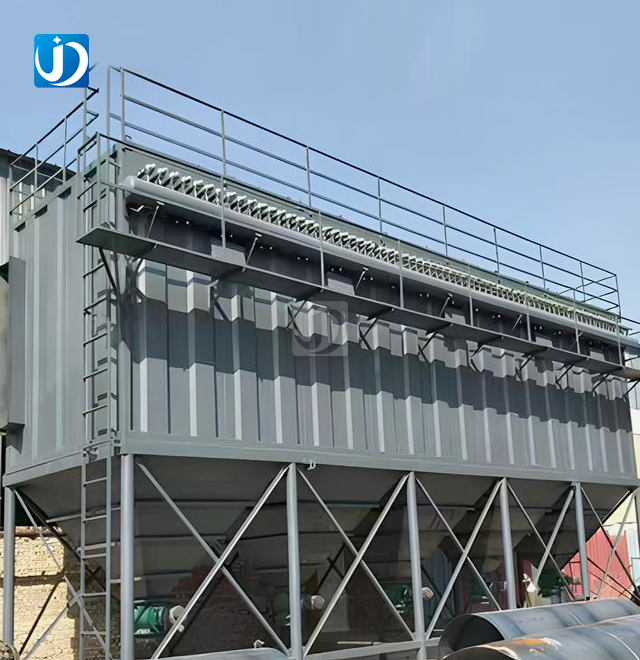
A fan makes negative pressure, which pulls air full of dust into the entrance room. Because of this, the air moves more slowly, and the heavier particles fall toward the hopper. A dust cake is made when dust builds up on the outside of vertical filter bags where the rest of the dust goes. That cake is helpful because it can catch smaller bits than cloth alone. Clean air goes into the clean-air plenum through the fabric and out of the room through the outlet duct. The filter media, the airflow, and the care the unit gets all affect how well it works, so a data-sheet number only applies when the system is the right size and is well taken care of.
Main Components of a Baghouse
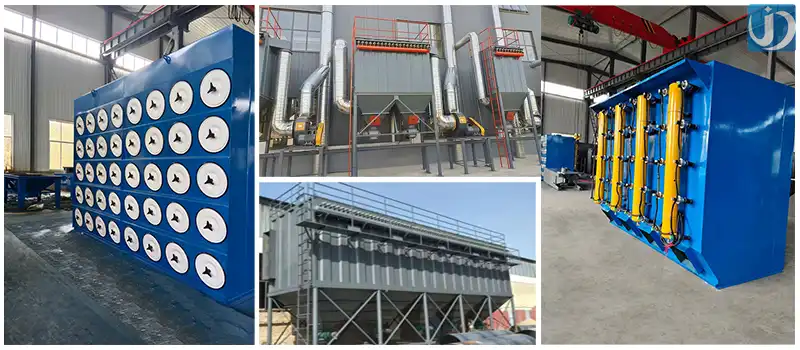
Five parts do most of the work. The dust cake is kept in filter bags. It is taken off by a pulse-jet cleaning device made up of compressed-air valves and blow lines. The hopper holds the dust, and a rotating seal valve lets it out without letting air from outside the machine in. Differential pressure is the difference between the pressure coming in and going out. A control panel keeps an eye on this and starts cleaning when resistance goes up. The shell finishes off the set. Leaks that would let dust get around the bags are stopped by fully welded seams and blocked entry doors. When we look over a design, these five points are the first things we check. If any of them are weak, it shows up as a high pressure drop or dust that can be seen at the stack.
Pulse-Jet, Reverse-Air, and Shaker Types
The three most popular types clean the bags in different ways. Pulse-jet units send short bursts of compressed air through each bag. This lets them clean one compartment at a time while the others keep filtering. A slow, low-pressure flow is pushed backward through the bags by reverse-air units. That works for delicate fabrics, but the housing needs to be bigger. Shaker units use machines to shake the bags, which generally means taking a section out of service. They can handle a lot of dust while taking up little space, which is why we built our line of baghouse dust collectors around them. Each type has an info sheet put out by the EPA.
Comparing Baghouse Dust Collectors with Other Dust Collection Systems
Each technology is good for a different job, so let's start with your dust.
Baghouse vs. Cyclone
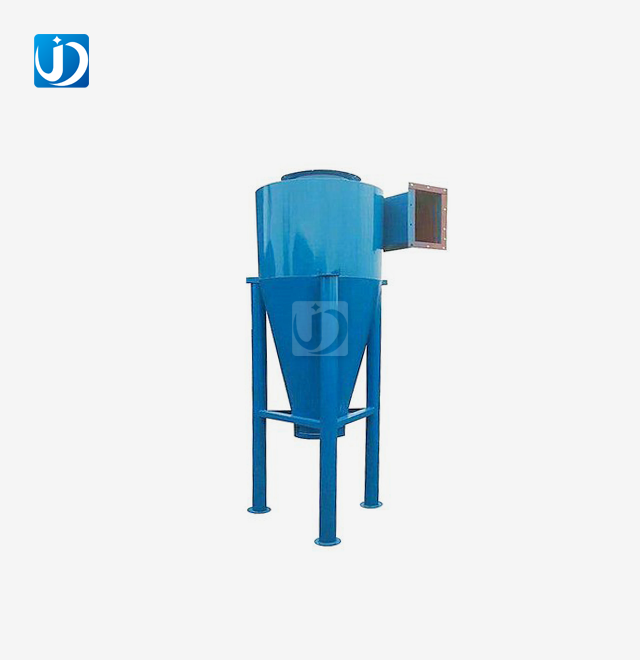
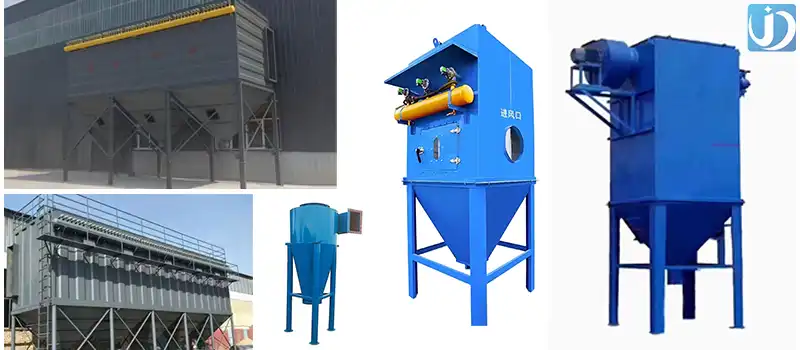
A cyclone spins the air flow, sending heavy particles outward where they fall into a hopper. It doesn't have any filter media, so it doesn't need much upkeep and is good at getting rid of rough debris. Fine dust is what hurts it. The EPA says that cyclones are mostly used as pre-cleaners before a higher-efficiency device. This is because efficiency drops as particles get smaller. The small particles that a cyclone lets through are caught by a baghouse. A lot of foundries put them together. A cyclone pre-separator gets rid of big pieces of waste before they get to the filter bags. This makes the media last longer. Most of the time, it makes sense for your dust to have both big chips and small metal particles.
Baghouse vs. Cartridge Collectors
Pleated filter pieces are used in cartridge collectors. Because they have pleats, these units can fit into small rooms and are good at getting rid of light, fine, dry dust. Baghouses generally need more space, but they can handle more dust and rough particles and give you more hot gas choices. Up to 120°C (248°F) can be used with our standard polyester bags, and up to 260°C (500°F) with our special media. Because steel shot and mill scale are rough, a baghouse with bags that don't wear down easily is often better for blasting and grinding. Let the dust, the weight, and the floor space decide.
Pulse-Jet vs. Reverse-Air Baghouses
The amount of work and energy used for baghouse dust collector maintenance usually decide this. When it comes to airflow, pulse-jet units need fewer bags and less floor space than reverse-air units because they use more air per piece of cloth. Since they use compressed air, the air supply and pulse valves need to be checked often. Some valves are missing on reverse-air units, which use a low-pressure fan to clean. They also need more bags and a bigger housing. In both ways, the fan is powered by the drop in air. People who use controllers that clean based on differential pressure instead of a set timer use less electricity and compressed air.
How to Choose the Right Baghouse Dust Collector for Your Industry?
A good match starts with data from your own process to get a good match.
Start With Your Dust and Airflow
Find out about the type of dust, its size, concentration, wetness, gas temperature, and the amount of movement that each machine or hood needs. For hood and duct design in the US, the ACGIH Industrial Ventilation manual is the standard source. A bigger collector won't fix a poorly designed hood. In the next step, match the numbers to the unit. Our airflow ranges from 3,000 to 30,000 m³/h, which is 1,800 to 17,700 CFM, and the amount of dust coming in can be up to 1,000 g/m³. If your process makes solid silica that can be breathed in, keep in mind that OSHA says the most you can be exposed to in 8 hours is 50 micrograms per cubic meter. One way to meet that limit is through the collector.
Match Filter Media to the Dust
Choice of media affects both how well it works and how long the bag lasts. Everyday synthetic felt works well for dry dust. PTFE membrane bags can catch very small particles smaller than 1 μm and don't get clogged up by fine dust. In places with flammable dust, anti-static bags lower the risk of static electricity. Media that can handle up to 260°C are used for hot gas. To avoid this risk, keep the gas temperature above the dew point. If you don't, the cake will turn into paste and the bags will become opaque. If your dust can catch fire, NFPA 660 and a dust hazard analysis should be used to plan the venting, isolation, and controls. Before you place your order, your process expert should make sure of those things.
Match the Collector to Your Industry
There are different kinds of plants that put stress on a baghouse dust collector in different ways. Shot-blasting lines make fine metal dust, broken steel shot, and grinding waste. These materials need to be put in bags that won't tear easily and a blast machine that works with negative pressure. A lot of the time, welding fume and grinding dust have to be collected together in machinery shops. Steel structure fabricators cover a number of workstations with centralized units. Wear-resistant bags and reinforced inlet liners are helpful for metallurgical plants that deal with mill scale and forge shop dust. Companies that make chemicals and building materials often choose anti-static designs for powders that can catch fire. Heavy loads are added by foundries, so a cyclone pre-separator is often added to the system.
Maintenance Habits for Steady Baghouse Performance
Maintenance saves your investment and keeps pollution below the limits set by your permit.
A Simple Inspection Schedule
Most mistakes can be avoided with a short, steady practice. Once a week, empty the hoppers and check the level of filling to make sure there isn't too much material in the inlet chamber. Once a month, look through the access holes in the filter bags for tears or a lot of dust. The pulse valves and compressed air lines should be cleaned every three months so that they work quickly during cleaning cycles. After six months, when the equipment has settled down, tighten the flange nuts again to keep the seals in place. Every two years, or sooner if you can see compression, you should replace the seals. Put each task on a list and give it to a specific person. The schedule doesn't get off track because of that little habit.
Read Differential Pressure Trends
If you pay attention, the control screen will let you know early on. A slow rise in differential pressure, even after regular cleaning, means that the media is full or the bags are blinded, and it's time to replace them. To fix a rapid spike, you should clear out the clog or fix the fan right away. A rapid drop could mean a torn bag, so look for emissions that can be seen at the exit. Note the readings every week and look at the changes over the months. A trend line shows more than one number, and it helps your team plan bag orders before something goes wrong and shuts down the business.
Bag Replacement and Upgrades
Quickly replace bags that are torn because even a small tear lets dust get past the filter. Service life of the baghouse dust collector is affected by the type of dust, the temperature, and how often it is cleaned, so don't rely on a general number. Instead, keep track of your own history. Keep extra bags on hand, order them ahead of time, and plan for changes to happen during a planned shutdown. Upgrades can lower costs in the long run. Fine dust can't get stuck in the PTFE membrane bags, and the cleaning processes are changed automatically by dual-mode controls based on pressure readings. Our fault alarms let us know about problems with the solenoid valve and compressed air before they hurt the equipment. Plan these changes to happen at the same time that you replace your bags.
Procurement Guide: Buying and Integrating Your Baghouse Dust Collector
Most buyers are worried about acceptance testing, downtime, and getting parts for a long time. Each worry is taken care of by these steps.
Standard Model or Custom Design
There are standard models that can be used when your dust, airflow, and layout are the same as a catalog unit. When your plant needs a certain voltage, has strange duct runs, or doesn't have a lot of floor space, custom design makes sense. We do both OEM and ODM work, and based on the machine specs, it takes about 15 days to make standard personalized equipment. You can change the size of the machine, the way it collects dust, the automatic controls, the painting of the surface, the tracking software, and the labels. Voltage and the rules in your area can also be matched. There are different layouts, from a single unit for one shot-blasting machine to a central system for the whole workshop. Send us your drawings and data on the dust, and we'll come up with a configuration.
Core Features of Our Baghouse Dust Collector
Here are the main features that buyers are most interested in.
- High dust removal efficiency: 99.9% or higher filtration efficiency on fine metal dust, such as steel shot fragments, mill scale, and grinding dust, with an emission standard of 30 mg/m³ or less. The fully welded, sealed case and rotating airlock valves stop leaks and secondary dust release while the ash is being removed.
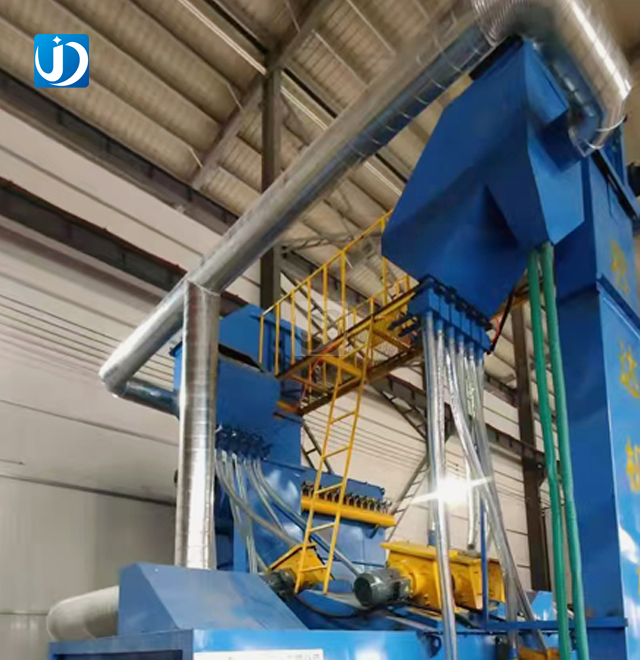
- Online pulse-jet cleaning: with compartmentalized cleaning, one chamber can clean while the others keep filtering. This way, the unit doesn't have to be shut down completely, and your production line can keep running. It can work with shot-blasting tools, and when the differential pressure goes over a certain amount, the dual-mode controls clean it automatically.
- Media and housing options: you can choose standard polyester felt, anti-static bags, or PTFE membrane bags depending on the dust and working conditions. The flexible building can be anything from a small unit that stands alone to a big central system. It can handle airflows of 3,000 to 30,000 m³/h and noise levels of 85 dB or less.
These features fix the most common issues in production, like dust leaks, line stops, and media that doesn't match.
Supplier Checks and Delivery Planning
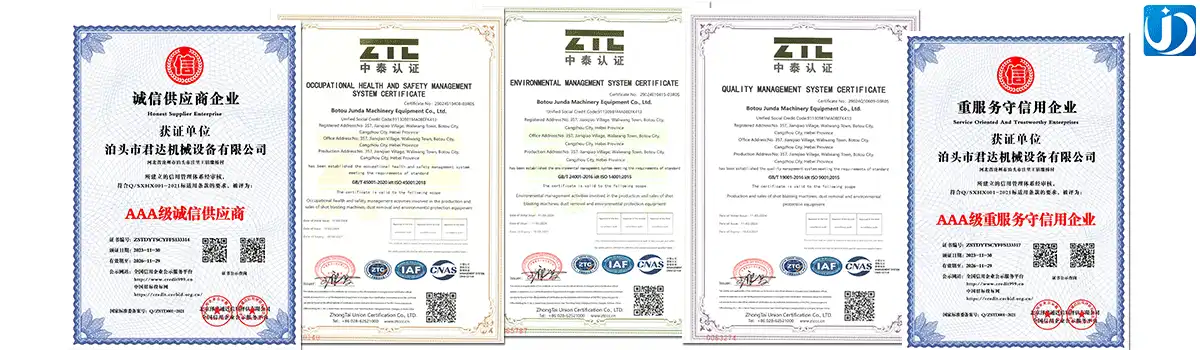
Make sure you get the same things from all of the suppliers before you sign: certifications, test reports, technical documents, and a plan for spare parts. Our company has been certified with ISO 9001, ISO 14001, and ISO 45001, and we offer technical papers, qualification files, and test results. If a market needs it, we can help with CE certification. We offer online installation help, commissioning, troubleshooting, operator training, English instructions, and upkeep videos. If needed, we can also send a tech from another country. Full containers, less-than-containers, and oversized shipping are all ways that we ship, along with export packing and paperwork. We answer questions within 6 to 8 hours, and we keep original extra parts in stock for a long time. Installing something should be done during a holiday or maintenance break so that output doesn't go down.
Conclusion
If you pull air through fabric bags, a baghouse dust collector makes a dust cake and cleans the bags with short bursts of compressed air. Which unit you need depends on the type of dust, the size of the particles, the flow of air, the temperature, and the amount of moisture in the air. Baghouses are better at getting rid of fine and rough dust than cyclones alone, and they can handle heavier loads than most cartridge units. However, pulse-jet and reverse-air designs have different cleaning energy and footprints. Using the right filter media for the dust saves both the performance and the life of the bag. Checks every week, every month, and every three months, along with tracking of difference pressure, find problems before they stop output. A good choice to buy also depends on how well it fits, whether there are any certifications, whether spare parts are available, and when the fitting is scheduled to happen.
FAQ
What causes high differential pressure in a baghouse?
Bags that are blinded are usually the cause, which is usually water. A pulse-jet system that isn't working right or a ratio of air to cloth that is too high can also make resistance go up. First, check the pulse valves and the supply of compressed air. Then, check the bags.
How often should I replace filter bags?
How long something lasts relies on the type of dust, the temperature, and how often it is cleaned. If the difference pressure stays high after cleaning, or if you see dust at the exit, you should get new bags. The best way to get an estimate is to keep track of your own pressure history.
Can a baghouse handle combustible dust?
Yes, as long as the design is right. Explosion vents, anti-static bags, and separation devices can all be useful. The final specification should be based on an NFPA-compliant study of the dust danger.
Why choose pulse-jet cleaning over a shaker system?
With pulse-jet cleaning, some compartments can be cleaned while others keep filtering, which keeps production and airflow going. These units can also handle large amounts of dust while taking up less space.
Talk to Junda Machinery About Your Baghouse Dust Collector
Tell Junda Machinery about your dust, airflow, and plant layout, and they will suggest a configuration that will work for you. We are a baghouse dust collector maker with a 3,000-square-meter production plant and more than 20 years of experience. We offer unique orders, quality that is ISO-certified, and a response time of 6 to 8 hours. To get your quote right away, email junda001@jundablast.com or go to jundablast.com.
References
1. Air Pollution Control Technology Fact Sheet: Fabric Filter – Pulse-Jet Cleaned Type, U.S. Environmental Protection Agency, 2003
2. Air Pollution Control Technology Fact Sheet: Fabric Filter – Reverse-Air Cleaned Type, U.S. Environmental Protection Agency, 2003
3. Air Pollution Control Technology Fact Sheet: Cyclones, U.S. Environmental Protection Agency, 2003
4. Industrial Ventilation: A Manual of Recommended Practice for Design, ACGIH, 2019
5. Occupational Exposure to Respirable Crystalline Silica, Final Rule, OSHA, 2016
6. NFPA 660: Standard for Combustible Dusts and Particulate Solids, National Fire Protection Association, 2025

USER EVALUATE
Real feedback and practical experience shared by worldwide partners who purchased our machinery and environmental treatment devices.