Looking for gentle continuous cleaning for thin components? Mesh belt pass-through shot blasting machine meets production demands
You already know how much a bent bracket or a scratched panel costs if you run a stamping line or an aluminium die-casting shop. Thin, flat, and fragile parts are cleaned by a mesh belt pass-through shot blasting machine. The parts are moved along a woven steel conveyor belt instead of being tumbling in a drum. It tells you how the process works, how much it costs, how to try it before you buy it, and what real production data from thin-wall parts plants shows about the rates of deformation. You will have a clear list by the end of this article to help you choose a machine that works with your part geometry and line speed.
What Is a Mesh Belt Pass-Through Shot Blasting Machine?
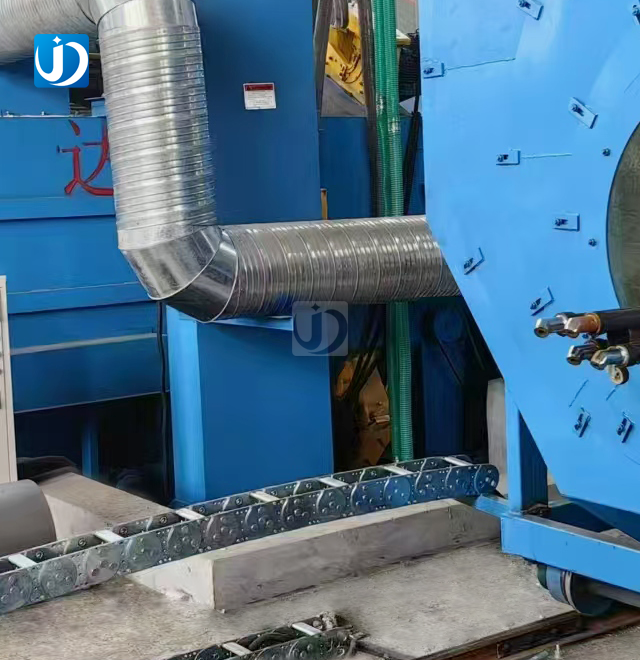
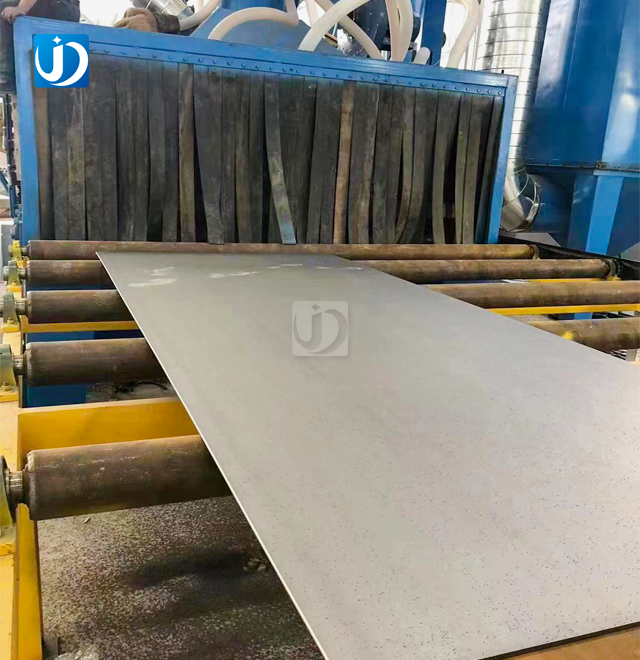
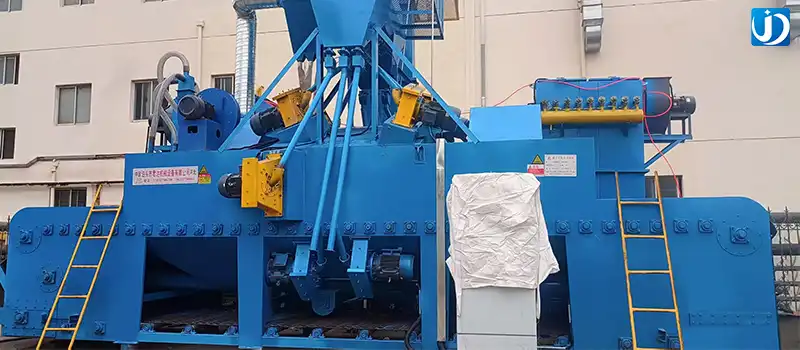
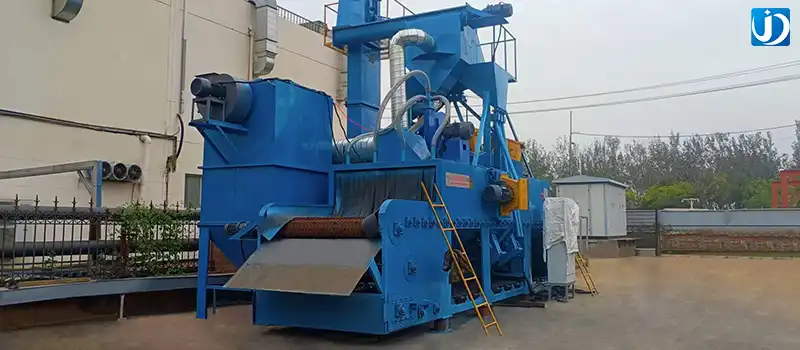
Something that cleans things all the time is a mesh belt pass-through shot blasting machine. It has a closed blast chamber that is moved through by a woven metal conveyor. Bits made of steel or stainless steel are hit by blast wheels as they move. The belt holes let the abrasive clean the top of the part while it gets to the bottom. This is the main reason why flat, thin parts work best with this kind of machine.
How This Differs From a Standard Shot Blasting Machine?
Shot blasters come in different styles that move parts on hooks or through a drum. A lot of the time, parts hit the machine wall or each other. With a mesh belt, each piece stays put on the belt. The person running the machine decides what moves, drops, or stacks. Thin-wall die-cast housings and 0.5 mm pressed sheet metal don't get dents when they're being made because of this one thing.
Core Components in the Machine
The machine is made up of several groups that always work together.
- The 304 stainless steel woven mesh belt moves the parts horizontally through the container so that zinc or aluminium surfaces don't rust.
- Two are on top and two are on the bottom. If you compare this to flip-and-repeat processing, these clean both sides of the part in one pass. This cuts the cycle time in half.
- Sealed abrasive recovery hopper: this holds used abrasive below the belt to reduce shot loss and keep the floor clean.
- Based on the thickness of the part and the amount of finish that needs to be achieved, the operator can change the variable-frequency drive to make the belt move at speeds between 0.5 and 3 meters per minute.
- Since these parts fit together, you have full control over the blast exposure time. When they get a new part, they don't have to change the wheel gear.
What the Machine Is Not?
A mesh belt pass-through shot blasting machine is not the same as chemical cleaning, plating, or milling. Light rust, surface scale, flash, and printing residue are all taken care of. You need a cutting tool to fix dimensional burr flaws. It's also not designed for parts with big open holes where dirt can get stuck.

Why Thin, Flat Components Need a Mesh Belt System?
Thin parts in tumble blasters break for real, not just because they're supposed to. The weight and movement of a drum gun show every surface. Parts hit the drum wall and each other every time the machine turns.
Problems With Tumbling Thin Components
Six clients in Vietnam and Indonesia who did pressing and die-casting were turned down by Junda Machinery in 2024. A scrap rate of between 9% and 14% was common for parts that were less than 1.5 mm thick and were worked on with tumble equipment. Common flaws included edges that bent, scratches on the surface, and flattening in certain places on the corners. Three of these plants said that part-bending was done by hand for 20 to 30 minutes each shift before the parts were sent out.
How a Mesh Belt Reduces That Damage?
When a flat conveyor is used, the process is different. The pieces don't move. The mesh holes and top-and-bottom wheels still let the grit reach both sides, but the part never falls or hits another part during the pass.
- Support for the whole area: the mesh belt spreads the weight of the part over many contact points instead of just one edge. This stops the pressure marks that are common in drum machines.
- Controlled spacing: When parts are loaded, operators set gaps between them. This makes it so that during blasting, overlap and shadowing are almost nonexistent on flat parts.
- A 300mm pass-through chamber lets parts move in and out with almost no vertical fall. This eliminates the pressure that bends most edges.
- Consistent orientation: since the parts don't move, the blast angle always hits the same face at the same angle. This helps quality teams get a repeatable Sa 2.5 cleanliness grade.
- These four things make thin-wall aluminium brackets and precision stampings that come out of a mesh belt machine much less deformed than the same parts that come out of a drum-style machine.
Case Study: Vietnamese Die-Casting Plant Cuts Scrap by 62%
Vietnam's Binh Duong is home to a medium-sized aluminium die-casting plant that makes thin-wall bracket housings for small devices. The inside width of these housings is about 1.2 mm. A rubber-belt tumble machine was used to work on the parts at the plant. Their own quality logs from the first quarter of 2024 show that 8.4% of the parts were distorted and 11% were thrown away because they were scratched.
The company sent 200 sample parts to Junda Machinery to test a 1000 mm wide mesh belt pass-through shot blasting machine. The abrasive flow rate was slowed down and the belt speed was set to 1.2 m/min. The process engineer wrote in the plant's trial report, "The parts came out flat with no visible bending, and we didn't need a second pass to clean the underside." After everything was fully set up, the plant's Q3 2024 quality report showed that deformation dropped to 2.1% and scratch rejection dropped to 3.2%. This means that 62% less scrap was made than with the old method. Because the blast wheel had two sides, it wasn't necessary to flip and reload it by hand, which cut down on cycle time per batch as well.
How Mesh Belt Shot Blasting Works Step by Step?
Buyers can know what to check during a plant acceptance test if they know the order.
Loading and Blast Chamber Travel
At the filling station, operators or a pressing press further upstream put parts right on the mesh belt. The belt moves the parts into a room that is sealed off. There are four wheels above and below the belt line that rub against both sides of the parts at the same time. How long each part stays under the blast stream is set by the belt speed, which ranges from 0.5 to 3 m/min.
Abrasive Recovery and Circulation
The used grit and the waste that was removed fall through the mesh holes and into a hopper below the belt. The used abrasive is moved to a separator by a screw conveyor or a bucket elevator. There, an air-wash stage gets rid of dust and broken shot pieces. The abrasive that has been used and is clean goes back to the holding hopper for the next rotation. Because of this closed loop, a properly covered mesh belt unit uses less abrasive than open tumble systems, where shot can move around more easily.
Process Settings Worth Recording
Ask your provider to write down these settings before you start using a mesh belt pass-through shot blasting machine for production. That way, when you place another order, it will exactly match the results that were tried.
- The speed and direction of the belt are confirmed in meters per minute and are based on the thickness of the part and the level of cleanliness that you need.
- Blast wheel motor power and number: most have four wheels, and each one is rated between 5.5kW and 11kW, based on the size of the chamber and how hard the part is.
- Type, size, and flow rate of the abrasive: recorded in kilograms per minute, and slowed down for soft or thin parts.
- Airflow through a dust collector is measured in cubic meters per hour and is based on the chamber's size and the amount of coarse dust it collects.
As soon as you write down these numbers during the test run, you have a spec sheet that you can use for the next production run.
Mesh Belt vs Steel Belt vs Roller Conveyor Blasting
Most of the time, the weight, thickness, and amount of surface contact of the part determine which type of conveyor to use.
| Conveyor type | Best suited for | Main advantage | Main limitation |
|---|---|---|---|
| Mesh belt | Thin, flat, or delicate parts | Full-surface support with two-sided blast exposure | Lower load limit than solid steel belts |
| Solid steel belt | Heavy, hot, or sharp-edged parts | High load capacity and heat resistance | No underside blast access without flipping |
| Rubber belt | Small parts needing extra cushioning | Reduces noise and surface impact | Wears quickly under aggressive abrasive |
| Roller conveyor | Long or rigid fabricated parts | Strong support for oversized pieces | Poor fit for small or thin components |
| Tumble drum | Bulk castings that tolerate impact | Simple batch loading | High part-on-part contact risk |
A thick steel belt doesn't help much in a stamping plant that uses 0.8mm sheet metal clamps because the bottom never sees direct abrasive without being flipped over by hand. That problem can be solved by a mesh belt pass-through shot blasting machine, which cleans both sides of the part as it moves through it.
When a Tumble Machine Still Makes Sense?
You don't have to be gentle with every part. Tumble units are often faster and cheaper ways to work with solid steel braces, casts, and forgings that can already handle being rough when they are being machined. The choice is based on how fragile the part is, not on brand taste.
Which Materials and Parts Suit Mesh Belt Blasting?
Mesh belt systems in a mesh belt pass-through shot blasting machine can work with many different kinds of materials, but the abrasives they use are different for each one.
Common Applications
- Aluminum die-cast housings: thin walls and cosmetic surfaces respond well to lighter abrasive and lower wheel speed settings.
- Precision stamped brackets: flat geometry matches the belt surface, so parts stay stable during the full pass.
- 3C structural parts: small decorative and structural metal components need a consistent matte finish across every batch.
- Automotive small parts: brackets, clips, and light gauge stampings benefit from the double-sided cleaning in one pass.
Abrasive Media Selection
| Media type | Typical use | Note |
|---|---|---|
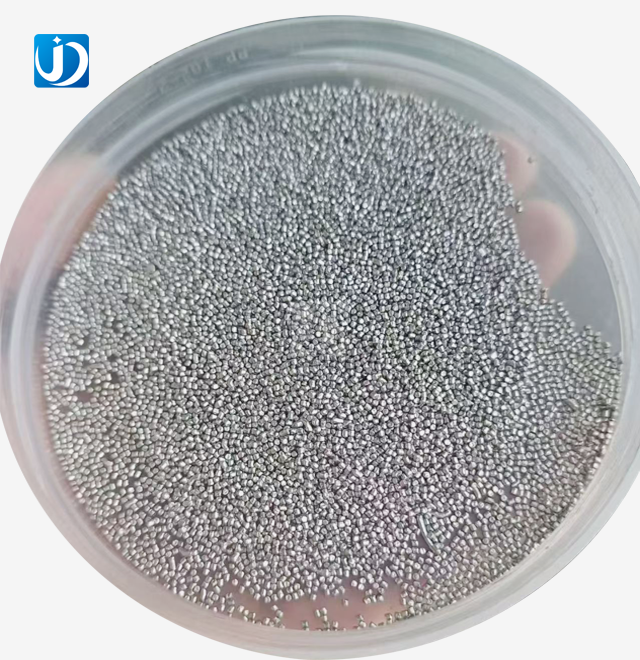
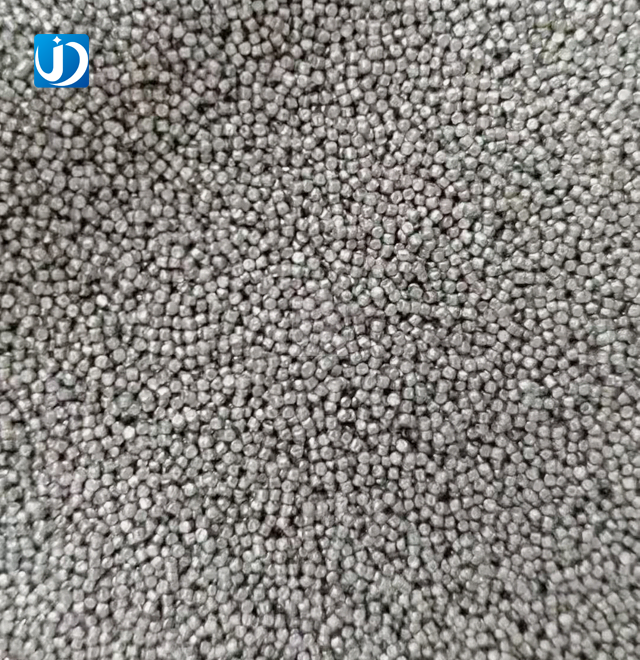
| Cast steel shot | General steel cleaning | Reusable but can be too aggressive for soft aluminum |
| Stainless steel shot | Non-ferrous or contamination-sensitive parts | Higher cost, prevents iron contamination |
| Glass bead | Cosmetic finishing | Lower cutting force, good for decorative hardware |
| Steel grit | Heavy scale removal | Higher surface profile, monitor for thin part bending |
Steel grit can embed particles in soft metal or leave a rough surface texture that fails a cosmetic check. This means that aluminum and zinc parts need extra care. The only way to be sure of the finish before placing a full order is to do a test run with the exact grit that will be used in the production run.
Conveyor Speed, Mesh Size, and Throughput Data
Throughput is not just the number on a spec sheet; other things also play a role. The thickness of the belt, the weight of the parts, and the length of time they are exposed to the blast all matter.
How to Estimate Capacity?
The hourly throughput is found by multiplying the effective belt area per hour by the average part loading density. A belt that is 1000 mm wide and moves at 1.5 m/min would move about 90 linear meters of belt every hour. It's possible to make several hundred parts an hour if the gaps between the parts are about 150 mm. This depends on how tightly they load.
Mesh Opening and Part Stability
The parts might fall through or tip over during the pass if the mesh hole size is bigger than the smallest part size. Before sending the belt, the seller should look at your part drawings to confirm the wire diameter, opening size, and load rating. This is better than just following the belt specification.
Confirming Cleanliness on Delivery
Ask for facts that can be measured instead of a guess. ISO 8501-1 gives a score that you can always get for surface cleanliness, such as Sa 2.5. This grade is already used in most contracts for fabrication and sealing (International Organization for Standardisation, 2007). By looking at the sample parts' surface shape and measures, we can be sure that they were cleaned without being bent.
How Mesh Belt Blasting Prevents Bending and Denting?
Four things must be controlled in a mesh belt pass-through shot blasting machine in order to avoid damage: impact force, part spacing, drop height, and mesh support.
Mechanical Controls Worth Requesting
- Reduced abrasive flow for thin parts: lowering kilograms-per-minute flow cuts total impact energy without extending cycle time significantly.
- Lower drop height at loading and unloading: a 300mm chamber height keeps parts close to belt level the whole way through.
- Spacing control during loading: proper gaps between parts stop shadowing, where one part blocks abrasive from reaching another.
- Wheel angle adjustment: angling wheels slightly reduces direct perpendicular impact on flat, thin surfaces while keeping coverage even.
These tools don't work separately; they work with each other. If a seller only changes the speed of the belt and not the flow of grit or the angle of the wheels, they are not fully fixing the problem.
Common Damage Modes and Fixes
| Risk | Likely cause | Fix |
|---|---|---|
| Bending | High impact on unsupported part edge | Lower abrasive flow, add mesh support |
| Denting | Part-on-part contact during loading | Improve spacing and loading fixtures |
| Shadowing | Overlapping parts on the belt | Reduce loading density |
| Uneven finish | Wrong wheel angle for part shape | Adjust wheel position and test again |
Why Sample Testing Matters More Than Specs?
A spec sheet can't tell you how the blast pressure affects a certain part. Before giving a final quote, Junda Machinery tests samples for most thin-wall part manufacturers. This is because the rate of deformation and scratching depends on the alloy, thickness, and shape of the part, even within the same industry.
Mesh Belt Machine Price and Operating Costs
The price of a mesh belt pass-through shot blasting machine changes depending on the setup, and there is no one number that works for all buyers.
Main Cost Drivers
- Belt width and chamber length: 600mm, 1000mm, and 1500mm options change both price and footprint significantly.
- Blast wheel count and motor power: four wheels for double-sided cleaning cost more upfront but cut cycle time roughly in half versus single-sided models.
- Dust collection and abrasive recovery design: a fully sealed recovery system reduces ongoing abrasive purchase costs over the machine's working life.
- Automation and line integration: connecting the machine to an upstream stamping press or downstream robot arm adds engineering cost but removes manual handling steps.
Total Cost of Ownership
A lot of money is spent on electricity every month on things like blast wheels, conveyors, and dust collection. Next are changes to the dust filter, blast wheel liners, and mesh belts that are worn out. Most of the time, a well-kept mesh belt on moderate abrasive settings lasts longer than buyers think. However, the real life depends a lot on the hardness of the abrasive and the density of the load.
What a Good Quotation Should Include?
A full quote should include information about the belt's size, the power of the blast wheel, the design of the abrasive system, the airflow rate of the dust collector, the wait time for delivery, the terms of the guarantee, and the scope of the installation. When people compare quotes without checking these details, they often only look at price, which can lead them to choose one very different machine.
Maintenance and Mesh Belt Replacement Guidance
The belt stays straight and the grit stays in the chamber, where it belongs, thanks to regular checks.
Daily and Weekly Checks
Operators should clean up any dirt and check the tracking of the belt every day. A belt that is slightly off-center runs out faster and can get stuck at the chamber seal. Every week, the state of the mesh links, the wear plates on the blast wheels, and the performance of the separators should be checked. This way, small problems can be found before they cause downtime.
Signs the Belt Needs Replacement
- Broken or stretched wires: these create gaps that let small parts fall through or catch during travel.
- Uneven tracking: a belt drifting to one side often signals sprocket wear or tension loss.
- Abrasive leakage: shot escaping through damaged mesh sections signals the belt has reached the end of its service life.
If shot is escaping through broken mesh parts in a mesh belt pass-through shot blasting machine, it means the belt has hit the end of its useful life.
How to Choose a Mesh Belt Shot Blasting Machine?
It's not about getting the cheapest price; selection is about matching machine specs to your parts.
Technical Checklist Before You Order
- Part thickness and material: confirms whether you need reduced abrasive flow or a specific media type.
- Target throughput per hour: confirms belt width and speed range needed for your production volume.
- Available floor space and line height: confirms whether the 300mm pass-through design fits your existing layout.
- Required cleanliness grade: confirms wheel count, motor power, and exposure time needed to hit your quality target consistently.
Supplier Evaluation Points
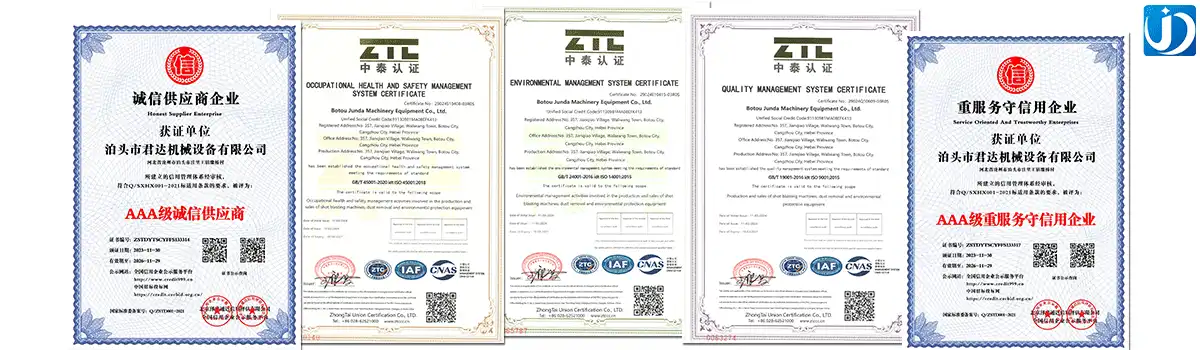
Check to see if the seller has worked with parts like yours before, if they let you test a sample before you place an order, and if they clearly write down electrical specs and safety compliance. Botou Junda Machinery Equipment Co., Ltd. is a company in Botou, Hebei Province, that has been making shot blasting equipment for 20 years and is certified by ISO 9001, ISO 14001, and ISO 45001. The company's engineering team helps buyers outside of China get CE documentation and does remote commissioning, which is important for plants in Vietnam, Malaysia, and Indonesia that use voltage standards that are different from China's.
Compliance Documents to Request
Before you buy, make sure you get a general arrangement plan, an electrical schematic, an ISO 12100-compliant risk assessment, and test results from any sample runs (International Organization for Standardization, 2010). Check the status of the CE marking and electrical safety compliance under IEC 60204-1 (International Electrotechnical Commission, 2016) for shipments going to the EU.
Conclusion
When thin, flat, or fragile parts need to be cleaned without the damage that comes with tumble equipment, a mesh belt pass-through shot blasting machine is the best choice. They can really control the rate of bending and scratching with a 300mm pass-through chamber, four-wheel double-sided blasting, and a changeable belt speed. Sample testing before buying is still the best way to be sure of the results, since the thickness, metal, and form of a part all affect how it reacts to blast pressure in a certain batch.
FAQ
What is a mesh belt pass-through shot blasting machine used for?
It cleans thin, flat metal parts by moving them on a rotating belt with holes in it through a sealed blast chamber. Blast wheels clean both sides at once, getting rid of scale, light rust, and stamped dust.
How does a mesh belt shot blasting machine avoid part deformation?
Parts don't tumble because the belt holds them flat across many touch points. The force that bends things is lessened when the drop height is lowered, the spacing is controlled, and the abrasive flow settings are lowered.
Can aluminum die-cast parts go through a mesh belt shot blasting machine?
Yes, as long as the abrasive is chosen correctly and the flow rate is set correctly. Aluminum and zinc parts are less likely to get surface embedding or discoloration when they are mixed with stainless steel shot or glass beads.
What belt width should I choose for my production line?
The width of the belt should be the same as or a little wider than the largest part you want to run. Common widths are 600mm, 1000mm, and 1500mm. With wider belts, you can change parts in the future without having to change the whole machine.
How long does a mesh belt last before replacement?
Life depends on how hard the abrasive is, how much weight is on it, and how long it is used. Wear is caught before it leads to abrasive leakage or part loss by checking regularly for tracking drift or stretched wires.
Is a sample test really necessary before ordering?
Yes. The rate of deformation and scratching is different for each metal, thickness, and part shape, so a spec sheet by itself can't tell you for sure what the results will be for your parts.
Need a Detailed Quote for Your Production Line?
The rates of deformation and scratch rejection cut into plant profits, and most standard equipment specs don't tell you how your parts will actually behave. Before you decide to buy anything, our engineers at Junda Machinery can look over your part plans, suggest a chamber size and belt width, and set up a sample trial. Please email our team at junda001@jundablast.com to get a quote from a mesh belt pass-through shot blasting machine supplier that is based on your actual production numbers and not a price from a catalog.
References
1. International Organization for Standardization. ISO 8501-1:2007 — Preparation of steel substrates before application of paints and related products. Referenced in the surface cleanliness section.
2. International Organization for Standardization. ISO 12100:2010 — Safety of machinery — General principles for design. Referenced in the compliance documentation section.
3. International Organization for Standardization. ISO 13849-1:2015 — Safety of machinery — Safety-related parts of control systems. Referenced in the supplier evaluation section.
4. International Electrotechnical Commission. IEC 60204-1:2016 — Safety of machinery — Electrical equipment of machines. Referenced in the compliance documentation section.
5. Association for Materials Protection and Performance (AMPP). Surface preparation and abrasive blast-cleaning standards and recommended practices. Referenced in the media selection and cleanliness verification sections.
Author
Robert Wang is an engineer for shot-blasting equipment.
Robert Wang has been making shot blasting and surface preparation tools for Southeast Asian export markets for more than ten years. He designs mesh belt and tumble blasting methods for thin-wall castings, stamped parts, and structural steel components with process engineers. Instead of using general spec sheets, he focuses on results that can be measured for distortion and cleanliness.

USER EVALUATE
Real feedback and practical experience shared by worldwide partners who purchased our machinery and environmental treatment devices.