2026 Guide to Cyclone Dust Separators: Types, Uses, and Dust Collection
If you work in industrial manufacturing, environmental engineering, or equipment procurement, you've likely encountered the question: what's the most cost-effective way to handle heavy particulate dust before it reaches your primary filtration system? A cyclone dust separator answers that question directly. This guide covers how these devices work, which types suit which industries, how they compare to other collection methods, and what procurement professionals should know before placing an order in 2026.
Understanding Cyclone Dust Separators: Principles and Benefits
How Centrifugal Separation Works
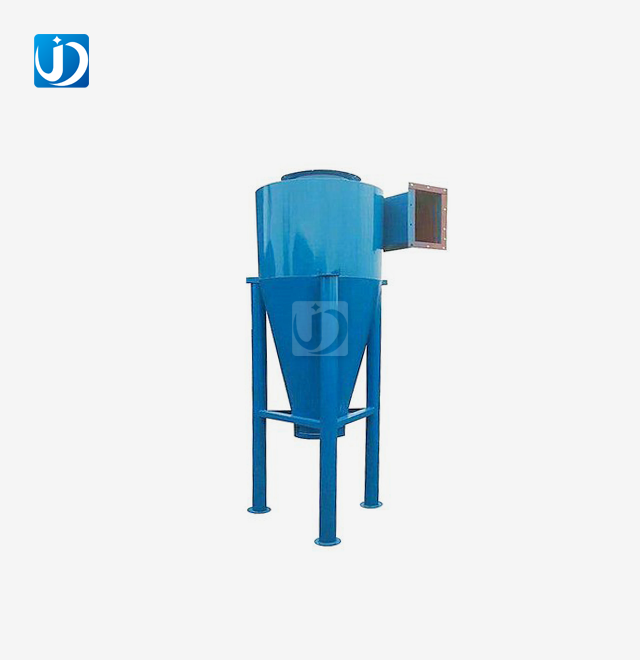
Dust-laden air enters the cylindrical chamber at high velocity through a tangential inlet. The airflow spins into a vortex, and centrifugal force pushes heavier particles outward against the chamber wall. Those particles lose momentum, slide downward, and collect in the ash hopper below. Clean air exits through the central vortex finder at the top. The entire process relies purely on physics — no filter media, no moving parts.
Key Efficiency Factors
Three variables govern separation performance: inlet airflow velocity, particle size, and the cone geometry of the separator body. Particles larger than 10 microns respond well to standard cyclone geometry, with removal efficiency exceeding 95% for medium and large particles. Finer particles below 5 microns typically require a downstream baghouse or cartridge filter as a secondary stage.
Why Low Operating Cost Matters
Because there are no filter bags or cartridges, ongoing consumable costs are essentially zero. Maintenance focuses on periodic inspection of the hopper outlet seal and checking the inner wall for abrasion wear. According to the U.S. EPA's guidance on particulate matter control, mechanical separators such as cyclones consistently show lower lifecycle costs than media-based alternatives when used as pre-separators in two-stage systems.
Types of Cyclone Dust Separators and Their Industrial Uses
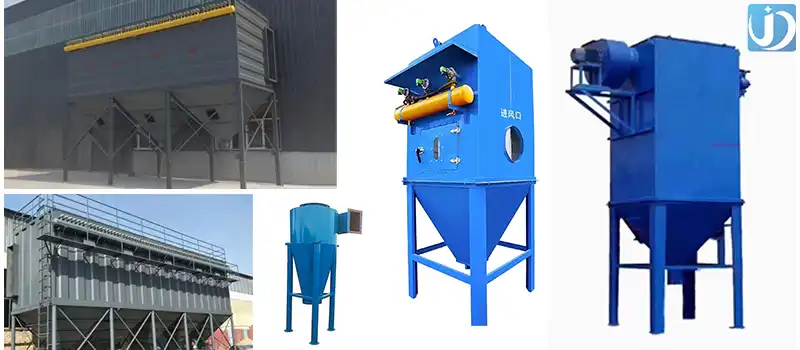
The performance of a cyclone dust separator depends heavily on configuration. The choice between vertical and horizontal layouts, and between single and multi-cyclone arrangements, determines how well the cyclone dust separator matches a given airflow rate, dust load, and available floor space.
Vertical vs. Horizontal Configurations
The most popular type of cyclone in foundries, shot blasting lines, and steel building manufacturing is the vertical type. They can handle the heavy dust and high airflow that come with industrial bays with high ceilings because of their tall shape. Horizontal cyclones, on the other hand, are better for buildings with low ceilings because they fit better into existing pipes. Both can be made in any size to fit the job and can handle airflow rates between 1,500 and 15,000 m³/h.
Single Cyclone vs. Multi-Cyclone Arrangements
When sandblasting or shot blasting, a single large-diameter cyclone is usually better because it can handle a lot of airflow and coarse, gritty dust without getting clogged. Multi-cyclone systems use groups of smaller tubes to increase the rotational force on smaller particles. However, these narrow tubes are more likely to get clogged when there is a lot of dust or water in the system. A single cyclone that is matched to the airflow in the system is usually the best place to start for heavy-industry pre-separation.
Industry-Specific Applications
Centrifugal dust separators perform best in industries where the dust stream is heavy, coarse, or high in volume. The following applications illustrate where cyclones deliver the greatest value as pre-separators:
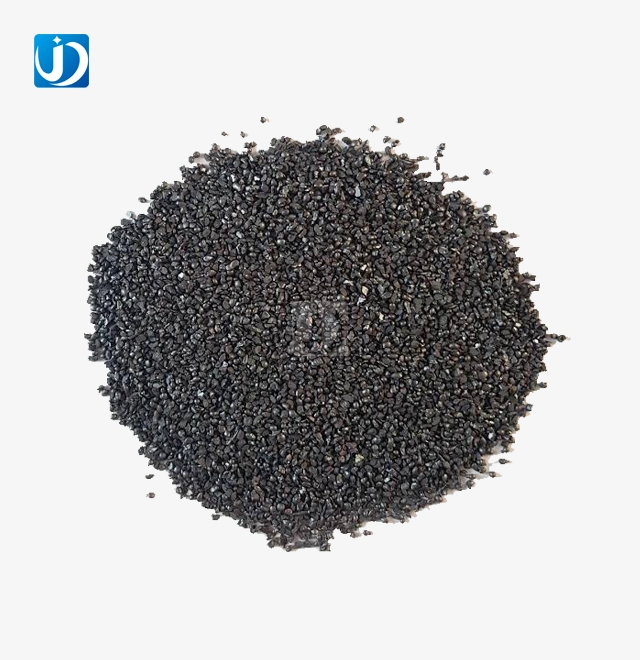
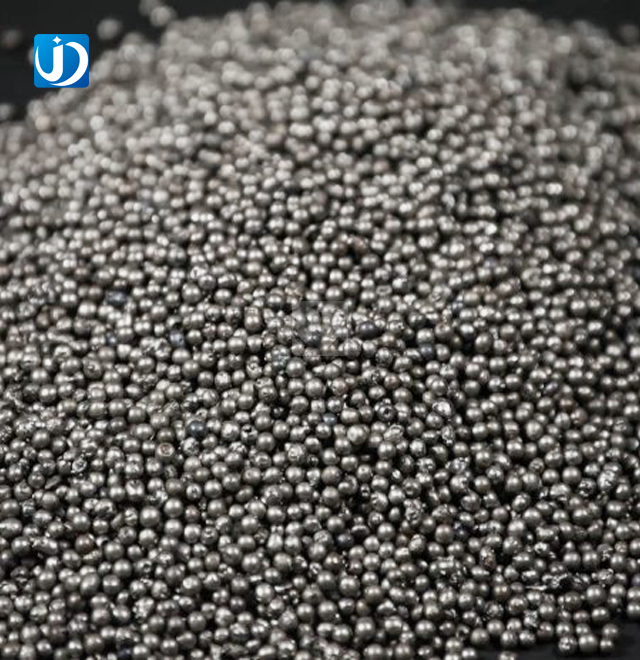
- Shot blasting and sandblasting lines: Before it gets to the baghouse, the cyclone collects broken steel shot, mill scale, and other rough materials. In this way, reused coarse media are recovered, and filter bags are replaced a lot less often.
- Casting and metallurgy: Metal dust from operations like grinding, cutting, and casting has hard particles that would quickly clog filter media. A cyclone body lined with ceramic or manganese steel that doesn't wear down easily can handle this environment without speeding up erosion.
- When it comes to building materials and processing cement, the coarse mineral dust that comes out of crushers and mixers is a good size for cyclones to work best.
- Large amounts of sawdust and wood chips are sorted before they reach the secondary collection steps. This lowers the risk of fire and system backpressure.
Cyclone Dust Separators Compared: Choosing the Optimal Dust Collection SolutionCyclone vs. Baghouse Filter
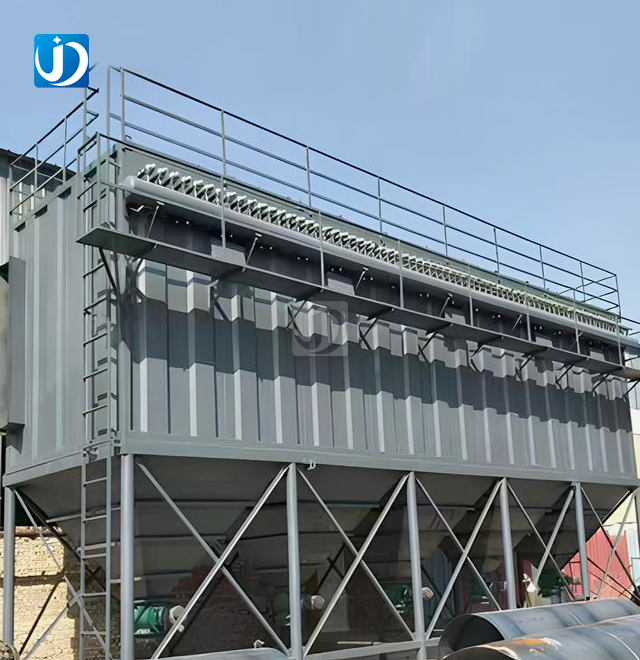
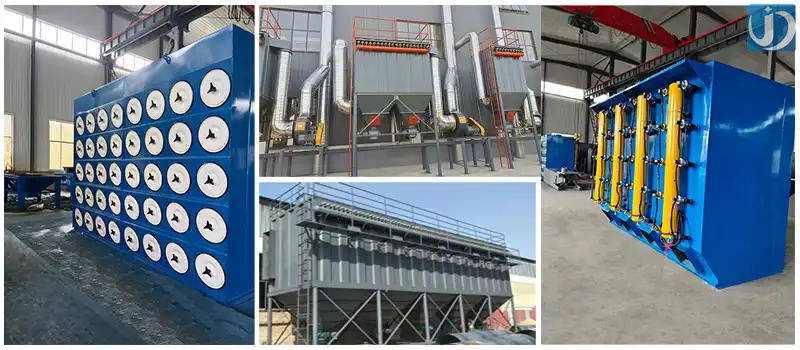
A baghouse filter can catch smaller particles, like sub-micron dust, but it needs to have its bags replaced often, is shut down for repair many times, and doesn't work well when there is a lot of dust at the exit. Putting a cyclone upstream and a baghouse downstream is the standard two-stage method in business. The cyclone gets rid of 90–95% of the particle mass load, which in harsh environments makes the bag last three to five times longer.
Cyclone vs. Electrostatic Precipitator
Electrostatic precipitators (ESPs) are good at getting rid of small, dry particles that are in very hot exhaust gas streams. They do, however, cost more to buy and need electrical maintenance. Cyclones are easier to make, cost less, and use the same amount of power as the main fan. A cyclone is better when the main goal is to separate large particles before they are processed further down the line.
Cyclone vs. Wet Scrubber
Wet scrubbers can get rid of dust that is sticky, wet, or chemically reactive, but they make sludge that needs to be thrown away separately. Dry mechanical separation makes sure that the stuff is dry and ready to be screened or recycled with abrasives. This is especially helpful in shot blasting jobs where getting used media back is very expensive.
Procurement Insights: Buying and Partnering with Cyclone Dust Separator Suppliers
What Drives Cyclone Separator Pricing
The price depends on the chamber diameter (which tells you how much air can flow through it), the material of the housing, the thickness of the walls, and whether a wear-resistant lining is chosen. Cost is also affected by how hard it is to make because inlet and outlet flanges, inspection ports, and hopper discharge configurations have to be placed exactly where they need to be. Tiered pricing is normal for big orders, like OEM integration or environmental engineering projects with multiple units.
Supplier Evaluation Criteria
When buying a cyclone dust separator, procurement teams should make sure of four things: the measurements given by the manufacturer match the drawings; the material certifications for the housing steel and any internal linings are valid; the separation efficiency test results can be seen; and the lead time given by the manufacturer can be trusted. It costs the most to fix something on-site when the measurements at the flange joint are off. There is a lot less risk in a project if the supplier gives detailed interface drawings and helps with installation in person or over the phone.
Customization and Delivery Windows
Environmental engineering projects have set dates for when they need to be done. When you buy tools for a job, they usually need to be brought two to four weeks after you place your order. When suppliers have both standard model parts in stock and the tools to make custom parts, they can handle both regular OEM orders and urgent needs for one project through the same supply chain.
Maximizing Performance and Troubleshooting for Cyclone Dust Separators
Common Causes of Efficiency Loss
Most of the time, sorting slows down because of an air leak at the hopper outlet seal. If there is a small hole in the bottom swirl, it can get messed up and bring back dust that has settled. Studying how to stop industrial air pollution has shown that a 1% air leak at the collection bin can make the separation process up to 20% less effective.
Internal Wear and Wall Erosion
Most of the force from shot blasting and coarse media hits the inside wall of the cyclone cone. If standard carbon steel walls don't have a layer that resists wear, they start to fall apart after a few months. Linings made of ceramic or manganese steel make the machine last a lot longer and keep its original shape, which means it keeps sorting as efficiently as planned over time.
Routine Maintenance Checklist
For constant operation, you need a simple repair schedule:
- Check the airlock or bin release valve for proper closing on a frequent basis.
- Look for thinning or cracking on the inside wall surface, especially in the lower cone area.
- Remove any dust that has gathered at the point where the inlet and outlet meet, as this can cause bridging with wet or fine-grained material.
- After making any changes to the ductwork, make sure that all of the flange connections are still airtight.
Conclusion
Cyclone dust separators last a long time and don't need much upkeep. They are an important part of industrial dust collection systems because they can handle large amounts of particles without using up media. A tornado also keeps the equipment below it safe and, in many tough situations, rescues materials that can be used again. How well the setup fits the dust type, wind volume, and placement plan determines how long the system lasts and whether it needs to be fixed early on. This guide is for technical experts and procurement teams who are looking at different ways to collect dust.
FAQ
Why is my cyclone's separation efficiency dropping?
Most likely, there is an air leak where the hopper drains. No matter how small the gap is, it changes the pattern of the vortex inside and pulls particles that have settled back into the flow of exhaust air.
Can a cyclone separator handle particles smaller than 5 microns?
Standard cyclone shape makes it easy to catch particles bigger than 10 microns. For dust lower than 5 microns, you need a second stage, such as a baghouse or capsule collector with pulse air jets. The particles are split up by the cyclone before they reach the secondary unit, which is kept clear.
Does dust moisture content affect cyclone performance?
Yes. Dust sticks to the inside wall when there is a lot of water in the air. Over time, this changes the shape of the inside, which causes the pressure drop to be greater. Multicyclone tubes with a small width are the best examples of this. Single-body storms that are more common can handle modest amounts of moisture better.
How often does a cyclone require maintenance?
There are no moving parts inside, so all that needs to be done for regular maintenance is to look for wear on the cone wall and the hopper seal. In harsh conditions, it's a good idea to check the wall thickness every three months. If you use the ash bin every day, you only need to empty it every so often.
Can a cyclone integrate with an existing baghouse system?
Yes. Adding a cyclone before a baghouse that is already there is one of the most common ways to make dust control better in factories. The amount of dust that gets into the baghouse goes down, the filter bags last longer, and the cost of running the system goes down total.
Request a Quote from Junda Machinery — Your Cyclone Dust Separator Manufacturer
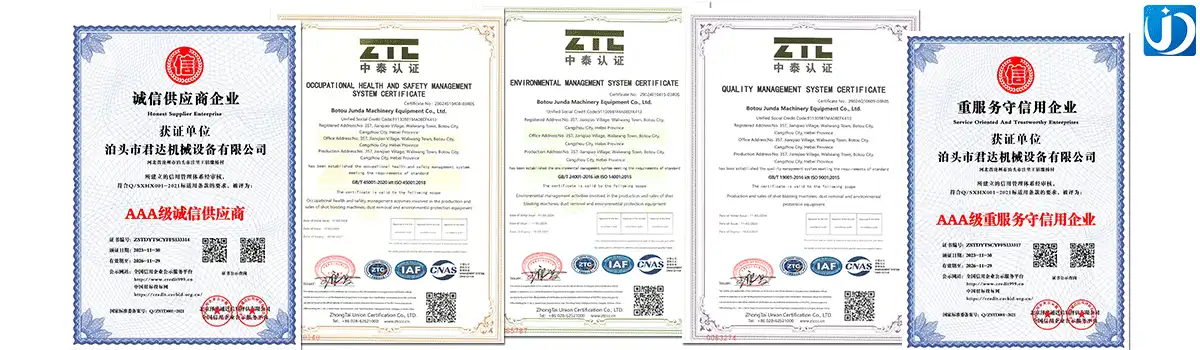
Our full line of cyclone dust separator dividers is made by Junda Machinery, which is based in Botou, Hebei Province. They have been making industrial dust removal equipment for more than 20 years. Anywhere from 1,500 to 15,000 m³/h of air can flow through our goods, and they can be fully adjusted to fit your system plans. They also have linings that won't wear down easily for rough uses. We have ISO 9001, ISO 14001, and ISO 45001 certifications, and we offer full technical data to help your project meet its compliance needs. Most of the time, our lead times are 15 days, and our team responds to questions within 6–8 hours.
You can email us about your project at junda001@jundablast.com or visit jundablast.com to see how our products can be set up and get a full quote.
References
1. U.S. Environmental Protection Agency. Air Pollution Control Technology Fact Sheet: Cyclone Separator. EPA, 2003.
2. Cooper, C. David, and F.C. Alley. Air Pollution Control: A Design Approach. Waveland Press, 2011.
3. Hoffmann, A.C., and L.E. Stein. Gas Cyclones and Swirl Tubes: Principles, Design, and Operation. Springer, 2008.
4. Lapple, C.E. "Gravity and Centrifugal Separation." American Industrial Hygiene Association Quarterly, 1950.
5. Wang, L., C.B. Parnell, and B.W. Shaw. "Analysis of the Cyclone Collection Efficiency." Transactions of the ASAE, 2006.
6. Occupational Safety and Health Administration (OSHA). Industrial Hygiene: Dust Control Methods. U.S. Department of Labor, 2016.

USER EVALUATE
Real feedback and practical experience shared by worldwide partners who purchased our machinery and environmental treatment devices.