Looking for cost-effective cleaning equipment for small workpieces? Small shot blasting machine lowers investment threshold
If you run a small metal shop and keep paying outside vendors to clean or deburr parts, a mini shot blasting machine can bring that work in-house at a lower cost than most owners expect. What do these small machines do? How do they stack up against full-size lines? How much do they cost? How do you choose one that fits your parts, your power supply, and your budget? It also has real numbers from a workshop that switched and cut its outsourced costs in just six months.
What Is a Mini Shot Blasting Machine?
Definition and Core Components
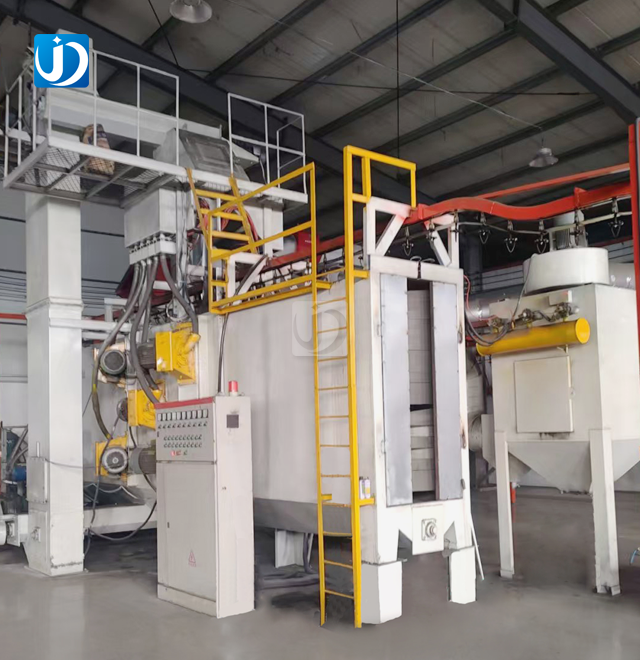
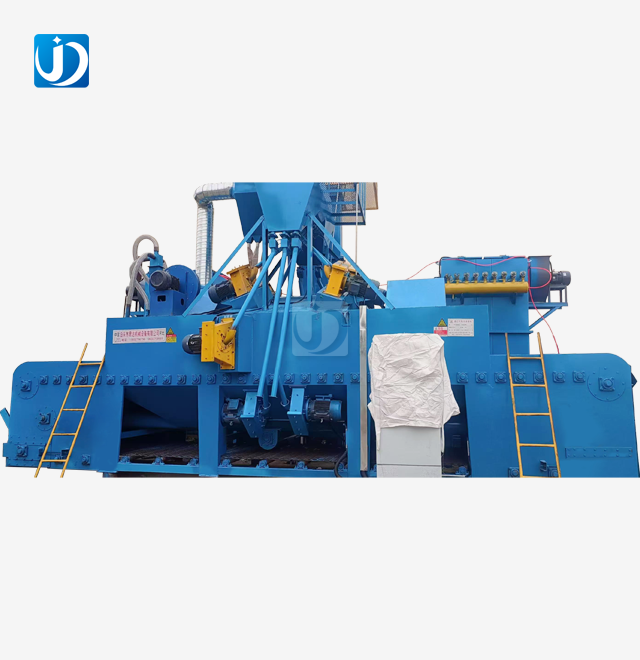
There is a small machine called a mini shot blasting machine that throws rough materials at something to get rid of rust, scale, or coats and smooth out the edges. A sealed cylinder, a blasting wheel or nozzle, a system for moving abrasives around, a dust collector, and a control panel with safety interlocks are the five main parts of most of them.
For a small shop, the chamber is usually between 600 and 1200 mm long, can hold pieces that are less than 50 kg, and needs between 7.5 and 45 kW of power, based on how many blasting wheels it has. Most dust traps let between 2,000 and 6,000 m³/h of air flow through them. Each seller gives you a different set of numbers, so make sure they match your parts before you buy them.
What a Mini Shot Blasting Machine Is Not?
Shot blasting is a mechanical method that doesn't require chemicals or lasers. It doesn't utilise acid to break away rust or heat to burn off coatings; it strikes objects. This is significant since it affects what garbage you can create and if you require a pass.
Shot blasting is often confused with sandblasting, rolling, wire cleaning, and shot peening. Sandblasting uses crushed air to propel media through a tube. However, shot blasting uses a rotating wheel to hurl media quicker, making media recovery simpler. Tumbled pieces are rolled in rough material in a turning drum. This procedure works for little bits of hardware but not for parts that are larger or more delicate. Shot peening makes metal surfaces harder, not cleaner, with controlled pressure.
Common Machine Types for Small Parts
Makers make variants for batch sizes and part shapes. First-time buyers typically choose the incorrect item. Hollow or deep-drawn pieces don't function well with flat-part machines.
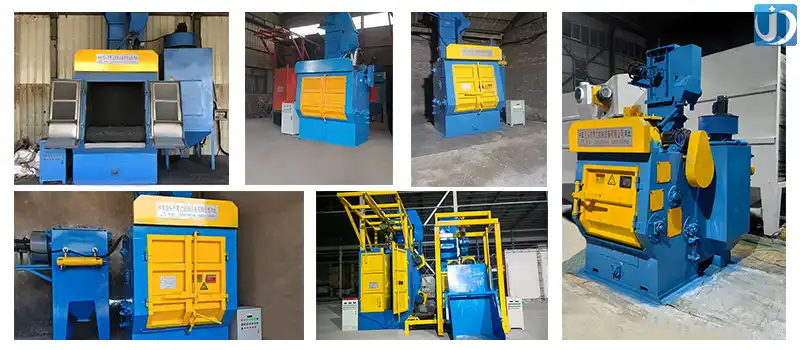
- Cabinet-type machines are suitable for processing loose tiny parts like fasteners, bolts, and small castings. Operators load trays or baskets and lock doors for one turn.
- Blasting wheels mounted on table or rotary machines may evenly cover flanges or tiny brackets with a constant base shape.
- Drum machines tumble many tiny bits. They are ideal for manufacturing several fasteners or stampings that may contact during blasting.
- Hanger-type machines use hooks or fittings to hang delicate pieces that shouldn't contact throughout the cycle.
These forms may be used to tighten loose nuts or position mould pieces one at a time in shops. Adjust the style to your body before comparing pricing. So you won't have to purchase it again, which may be expensive.

Why Small Workpieces Need a Compact Blasting Machine?Lower Investment and Smaller Footprint
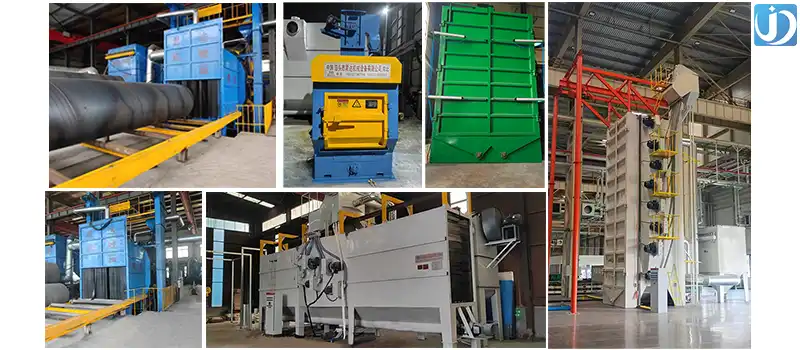
Full-size shot blasting lines usually need a construction bay, concrete pit and a stronger three-phase power input than tiny shops. A little micro shot blasting machine can sit on a concrete floor and connect to a three-phase power supply with enough space for the door to swing open for maintenance staff to reach it. Only 15–25 square meters are needed.
Junda Machinery surveyed 86 Vietnamese, Indonesian, and Indian small workshop consumers in 2024. Some 71% of respondents indicated "fits in my existing space without construction work" was a top machine feature. They prioritised this above speed and automation. Shop owners said they don't want to create a pit since they want to start creating parts by Wednesday after plugging in a machine on Monday.
Better Fit for Small-Batch and Mixed-Part Work
Not big tools, but small ones that can be used in many ways. There should be more than one machine on a belt in a shop that makes both screws and small castings. The machine should be able to quickly change between fixtures and cycle times instead.
But that adaptability can only go so far. A "mini shot blasting machine" is not the right tool when the parts are too big for the chamber, when the daily volume needs a steady conveyor feed, or when the total surface area per shift is more than a few hundred kilograms. When buyers try to use equipment that isn't meant for the job on a large scale, the blast wheels usually wear out faster and the cleaning isn't as good as it could be.
Real Buyer Scenarios We See Most Often
When Junda works with certain types of customers, these machines are used in the following ways:
| Buyer or user | Typical application | Recommended configuration |
|---|---|---|
| Small hardware or fastener shop | Rust removal before plating or coating | Cabinet machine with basket loading |
| Mold repair workshop | Local descaling on mold steel and inserts | Manual cabinet with fine-media option |
| Auto parts reconditioner | Cleaning small brackets and fittings | Rotary table with dust collector |
| Distributor reselling standard units | Multiple customer part types on one floor | Manual cabinet, adjustable blast angle |
| School or R&D lab | Sample testing before scale-up decisions | Small cabinet with variable cycle timer |
That's most of the questions our team gets every month. These five situations cover them all. If your job doesn't clearly fit one of them, that's usually a sign that you need to talk to someone about a custom fitting before you order one.
How a Mini Shot Blasting Machine Works?The Six-Step Blasting Cycle
It doesn't matter if the mini shot blasting machine is a simple cabinet or a semi-automatic rotating table; each run goes through about the same steps. If you know this process, you can figure out where a machine might slow down your work before you buy it.
- Load and secure the workpiece in the basket, fixture, or hanger.
- Select abrasive media type and blasting parameters for the material and finish target.
- Start the dust collector and confirm all safety interlocks are engaged.
- The blasting wheel or nozzle projects abrasive against the part surface.
- Reusable media is recovered, screened, and recirculated automatically.
- The operator inspects the finish and clears residual dust before unloading.
This cycle takes between two and twelve minutes, but it depends on the size of the part, the thickness of the coating, and how clean the part needs to be. If a shop is new to blasting, they should never believe catalog cycle times and should always ask for a test run on a sample part instead. This is because real parts rarely match perfect test conditions exactly.
Choosing the Right Abrasive Media
The choice of abrasive affects both the quality of the finish and how often you need to buy new media. One of the main reasons first-time buyers are let down by results is that they got this wrong, which is the media's fault, not the machine's.
| Abrasive media | Typical use | Selection considerations |
|---|---|---|
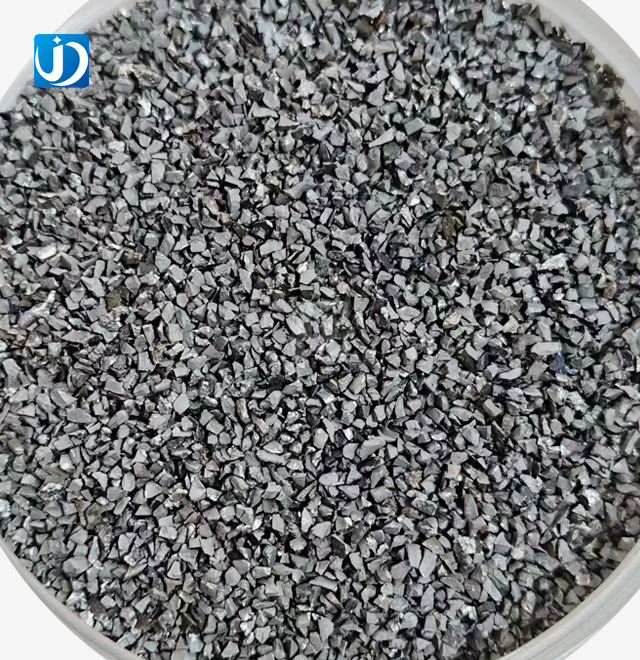
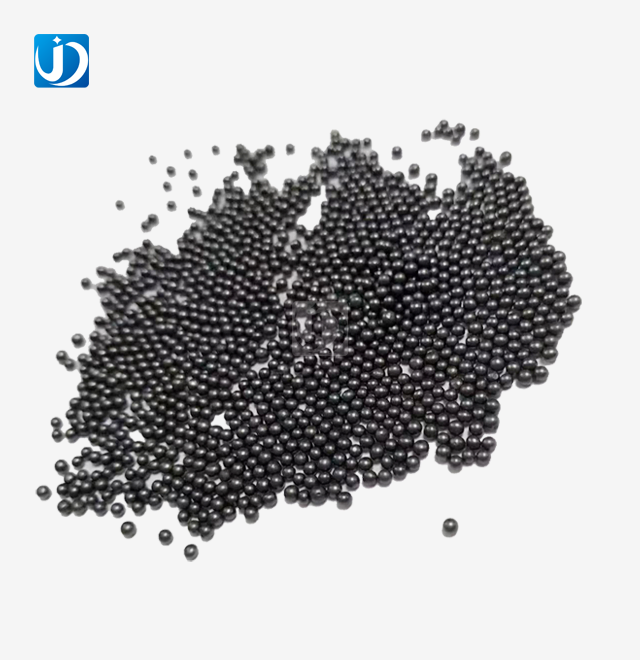
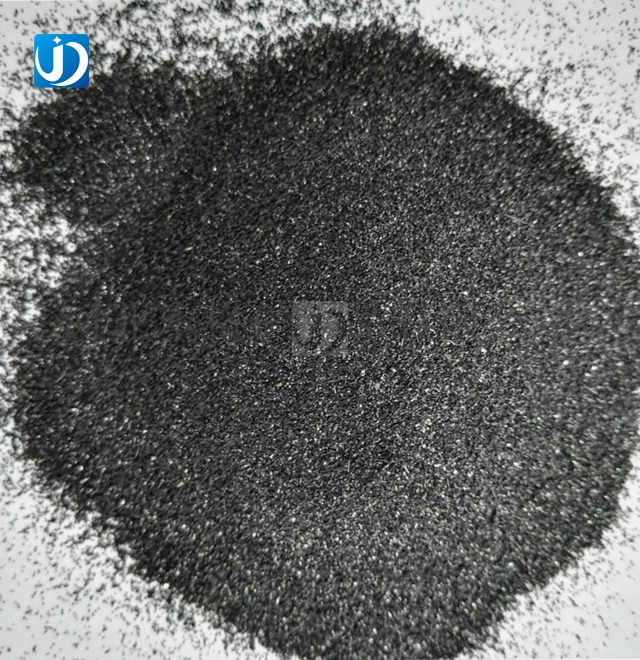
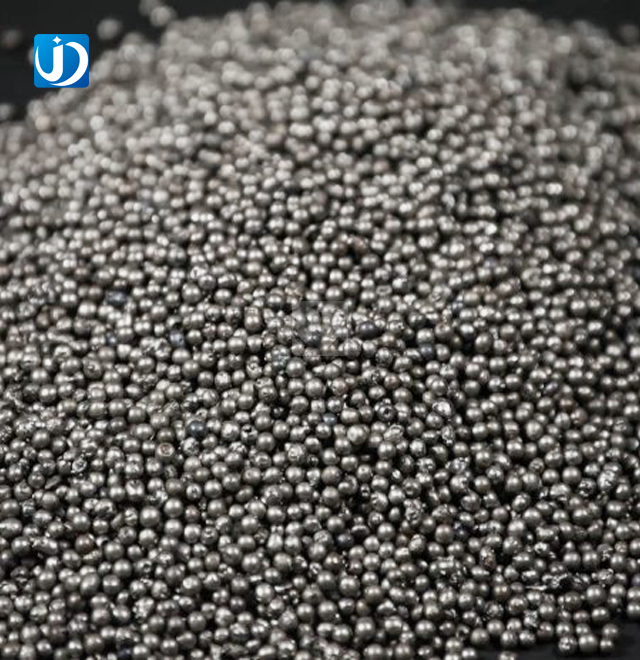
| Steel shot | Cleaning and light peening of durable metal parts | Reusable many cycles; produces a rounded impact |
| Steel grit | Aggressive rust, scale, or coating removal | Sharper profile; more aggressive on stubborn scale |
| Glass bead | Light cleaning and cosmetic finishing | Gentler finish; suited to visible surfaces |
| Aluminum oxide | Precision surface preparation | Controlled profile for bonding or coating prep |
| Ceramic or plastic media | Sensitive or non-ferrous parts | Lowers risk of substrate damage on softer metals |
The International Organization for Standardization (ISO) 11124 and 11126 are often used as references in media requirements for metallic and non-metallic blast-cleaning abrasives. The finish and the amount of contaminants are both affected by the hardness, particle size, form, and level of contamination.
Dust Collection and Media Recovery
A dust collector is an important tool that you should have for a mini shot blasting machine. It protects the blast wheel bearings from abrasive dust and keeps airborne particles from getting into the shop. It also lets the operator see clearly inside the chamber.
The dust collector's volume should match the rate at which air leaks out of the chamber, the type of grit being used, and any air-quality rules that apply in your area. Before you accept a machine, make sure you get measured airflow data, readings of the difference pressure between the filters, and proof that the machine is properly grounded electrically. This is because static buildup in dust systems can cause fires with some metal dusts (National Fire Protection Association, NFPA 484).
Mini vs Full-Size Shot Blasting Machines Compared
Side-by-Side Machine Comparison
| Criteria | Mini shot blasting machine | Full-size shot blasting machine |
|---|---|---|
| Workpiece range | Small parts and compact assemblies | Large, heavy, or continuous-flow parts |
| Investment | Lower equipment cost | Higher equipment and installation cost |
| Floor space | Compact footprint, 15–25 m² typical | Larger chamber plus material-handling area |
| Throughput | 0.3–5 t/h typical | Medium to high, often continuous |
| Flexibility | Strong for mixed small batches | Strong for standardized repeat production |
| Energy demand | 7.5–45 kW typical | Often well above 45 kW |
| Maintenance access | Usually simpler, fewer moving systems | More complex conveyors and handling gear |
Mini Shot Blasting Machine vs Sandblasting Equipment
Shot blasting with wheels and sandblasting with compressed air both work to fix similar issues, but they do so in different ways. A blasting wheel uses centrifugal force to throw media, and most of the media naturally gets picked up and used again. It costs more to run an air compressor that powers a compressed-air sandblasting nozzle, and the dust that it creates often needs its own containment booth.
Shot blasting is better for cleaning metal parts over and over because the media can be recovered easily. However, portable air blasting is better for random or one-time jobs where direction control is more important than recovery efficiency. Mold repair shops, like the one we just talked about, usually keep both a small blasting cabinet and a hand-held sandblaster on hand for jobs that the cabinet can't reach.
When a Full-Size Line Makes More Sense?
When parts get too big for the cabinet, when the daily part count needs constant conveyor feed, or when the total blasted surface area per shift hits several tons, a small machine is no longer the best choice. Buying too much equipment "just in case" generally backfires because it uses more energy, costs more to maintain, and is harder to set up than what is needed. I usually tell shop owners to size based on how many orders they actually get today, not how many orders they hope to get in three years.
Best Applications for Small Shot Blasting Machines
Rust and Scale Removal on Fasteners and Castings
Most of the parts I see going through a mini shot blasting machine are carbon steel screws, small iron castings, and forged brackets. The part has to stay in the blast zone for a certain amount of time and the abrasive that is used must be used on it. If there is only light surface rust, the job might be done in two minutes. If there is years of uneven rusting, the cycle time or grit size might need to be longer.
Paint and Coating Removal Before Refinishing
On metal surfaces, small tools can successfully remove old paint, mill scale, mold release residue, and light process contamination. One very important warning: before blasting can start, any materials that contain lead, unknown coatings, or dangerous leftovers must be identified, contained, and thrown away properly using a filter. Substrates that are too thin, too soft, or too sensitive to heat might not be able to handle blasting at all, and a supplier should be honest about that instead of promising results they can't keep.
Deburring and Pre-Coating Preparation
Blasting is used to make a clean, even surface outline on parts that are going to be painted, powder coated, plated, or welded so that the next finish can stick well. When it's important to have proof of how clean something is, ISO 8501-1 gives visual grading standards for preparing steel surfaces (International Organization for Standardization, 1988/2007), and project specs will sometimes list AMPP/NACE standards for controlled surface profile needs.
Capacity and Throughput of Small Machines
Metrics That Actually Predict Output
Catalog numbers for capacity don't always match up with what your parts actually produce. What matters most are the maximum size and weight of the part, the batch load or box volume, the cycle time (which includes loading and unloading), and the amount of abrasive used per cycle. It is rare for a shop floor to have perfect loading and no downtime, which is what a potential capacity number is based on.
A Simple Throughput Formula
A rough guess of how much work can be done in an hour looks like this:
Estimated hourly output = number of parts per batch times the number of batches per hour times the usage rate
The utilization rate should take into account the time it takes to load and unload, check, and have short breaks. For a small shop with one person, the real number is usually between 60 and 75%, not the 100% that catalog specs say it should be. If you ask for a sample-part test run, you can get a much more accurate number than from a spec sheet alone.
Specification Checklist Before You Sign
Before agreeing to a quote, compare these specs to your real parts instead of the supplier's general brochure numbers:
- Chamber size determines part compatibility directly — measure your largest and smallest parts, plus fixture clearance, before assuming a machine fits.
- Blasting power from the motor or wheel setup influences cleaning speed and how aggressive the impact is on tougher scale or coatings.
- Media size range affects both surface finish quality and whether the media can reach recessed features on your parts.
- Dust airflow controls chamber visibility during operation and keeps airborne contamination within safe limits for your operator.
- Electrical input requirements, including voltage, frequency, and phase, must match your local power supply exactly to avoid costly conversion work.
The single most important thing that separates a happy first-time buyer from an unhappy one is comparing these five things to real parts, not brochure values.
Mini Shot Blasting Machine Price and Running Cost
What Drives the Purchase Price?
How much something costs depends on how many mini shot blasting machines it has, how automated it is, how much dust it collects, how the media is separated, and how the fixture is customized. Custom voltage configuration, extra guarding for local safety codes, and CE-related parts usually cost more than what's listed in a catalog, so ask sellers to give separate prices for these things instead of one big number.
Total Cost of Ownership Beyond the Invoice
The cost of a machine over its lifetime is not just the price you pay for it. A reasonable total cost of ownership would include:
- Freight, insurance, and import duties, which can add 10–25% to landed cost depending on your country's import policy and shipping method chosen.
- Electricity consumption during blasting cycles, which scales with motor power and daily run hours rather than being a fixed monthly figure.
- Abrasive media replenishment since some media wears out and needs periodic top-up even in a closed-loop recovery system.
- Wear parts including filter cartridges, wear plates, blast wheel blades, seals, and liners that need scheduled replacement over the machine's service life.
- Labor and downtime costs tied to maintenance, since a machine sitting idle for a missing spare part erases any savings from the low purchase price.
When you add up these categories before compared two quotes side by side, you won't make the common mistake of picking the lowest price only to find out later that it has higher hidden costs.
Procurement Checklist for First-Time Buyers
Ask for a formal quote that includes the model number, full scope of supply, technical specifications, and a list of what the quote does not cover. Before you sign anything, make sure you understand the minimum order number, production wait time, sample testing available, payment terms, warranty period, and spare parts stock. Make sure you understand shipping terms like EXW, FOB, CIF, or DAP, and ask who will clear customs and install the goods on your end.
Maintenance Tips for Compact Blasting Machines
Daily and Weekly Checks
It only takes a minute to do daily checks, and they find most problems before they cost a lot of money to fix. At the start of each shift, check the abrasive level, door seals, filter state, lines, and safety switches. Wear parts, drive belts, bearings, and electrical connections should all be checked once a week because they wear out slowly and rarely break without first giving you a warning.
Preventive Maintenance Schedule
| Interval | Recommended checks |
|---|---|
| Daily | Clean chamber, inspect media level, check dust collector and interlocks |
| Weekly | Check wear parts, belts, bearings, seals, electrical connections |
| Monthly | Inspect filter performance, media separator, grounding, emergency stop |
| Periodically | Replace wear components, verify control calibration |
Common Problems and How to Fix Them
Several key difficulties cause most small store owners to complain about mini shot blasting machines. Knowing what the problems are helps me avoid sending someone to solve them. Uneven cleaning is usually caused by part placement or worn blast wheel blades, not the machine. High dust levels are usually caused by a full filter or seal rupture, not a tiny collection. Abrasives that are filthy or the improper size cause quick media wear, not the machine. Keeping a basic repair diary with dates and comments helps you see these tendencies before they create downtime.
How to Choose a Small Shot Blasting Machine?
Buying Checklist Before You Request a Quote
Start by listing the material, size, weight, surface condition, finish, and daily workload you desire for your workpiece. Bring this list when you negotiate pricing with the vendor. Cheap machines that can't handle your parts waste more time than somewhat more costly ones.
Compliance and Documentation to Ask For
Before confirming an order, check legal issues to reach the correct individuals. EU documents include Declaration of Conformity and CE stamps. It covers OSHA machine guarding guidelines (Occupational Safety and Health Administration, 2023) and electrical clearance requirements at your installation location in the US. ISO 12100 assesses equipment risk (International Organization for Standardisation, 2010), and EN 60204-1 ensures electrical safety in machines. Ask your merchant which of these they can substantiate, and avoid those that can't.
How to Vet a Manufacturer's Real Capability
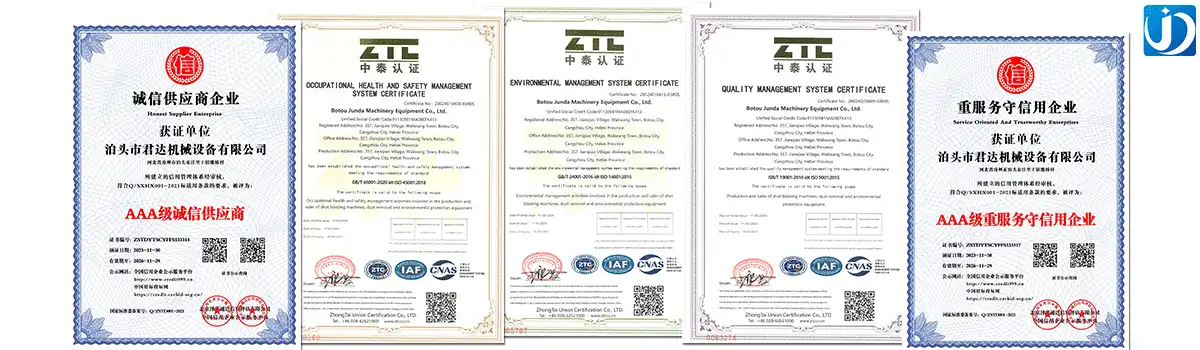
If you don't ask the correct questions, companies might make hard-to-check promises. Junda Machinery, a foundry and dust removal equipment manufacturer in Botou, Hebei Province, has designed and manufactured shot blasting equipment for 20 years. They hold ISO 9001, ISO 14001, and ISO 45001 certifications, 2 utility model patents, and 7 software copyrights for smart control systems and dust monitoring. Standard customised computers respond to questions in 6–8 hours.
Before giving a seller a deposit, ask for factory photographs, certificates, a sample part test report, and a list of additional parts with wait periods. A creator who won't share should be reconsidered.
Conclusion
A "mini shot blasting machine" is perfect for shops that need to work with small parts, limited floor space, a variety of batch sizes, and a strict budget. You should try the real parts you're interested in instead of just relying on catalog numbers. Before signing a quote, you should also look at the dust control, safety paperwork, and total ownership cost. If your needs for parts, volume, or automation make a compact unit too small, it's better to move up to a full-size line. Buying equipment that is too big at first rarely pays off as much as buying equipment that is the right size.
FAQ
What is a mini shot blasting machine?
A "mini shot blasting machine" is a small piece of equipment that moves abrasive media over small pieces of work to clean, remove rust, deburr, or prepare the surface. It usually has a blasting chamber, a system for moving abrasives around, a dust collector, and safety interlocks.
How does a mini shot blasting machine work?
A person puts the part into a closet, table, drum, or hanger stand. A blasting wheel or compressed-air nozzle sends abrasive media onto the surface. At the same time, the machine collects the media to be used again and filters out the dust through a system.
How much does a mini shot blasting machine cost?
Prices are different for each chamber size, blasting method, dust collector capacity, amount of automation, fixture design, and electricity setup. If you want to know how much the machine really costs to own, you should add up the freight, import duties, installation, and spare parts.
What abrasive media can be used in a mini shot blasting machine?
Steel shot, steel grit, glass beads, aluminum powder, and ceramic or plastic media are all common options. Which choice is best depends on the material of the workpiece, how badly it needs to be cleaned, and whether or not a finish for looks is important.
Is a mini shot blasting machine suitable for rust and paint removal?
There is a good chance that most metal parts with light rust, scale, or coats will work. Before blasting, extra care must be taken with lead-based paint, thick unknown layers, or thin, heat-sensitive substrates that need to be contained and trash must be disposed of in a controlled way.
Get a Machine Recommendation Based on Your Actual Parts
Send your part's size, material, present outsourcing cost, and power supply to junda001@jundablast.com, and our team at Junda Machinery will tell you straight out if a small unit will work for you or if you need a different setup. As a mini shot blasting machine seller with 20 years of experience, we'd rather turn down an order that doesn't match than sell you something that doesn't get used. People who are buying something for the first time and want to see proof before committing can get sample part testing and video ordering help.
References
1. International Organization for Standardization, ISO 12100:2010 — Safety of Machinery, General Principles for Design.
2. International Organization for Standardization, ISO 11124 and ISO 11126 — Metallic and Non-Metallic Blast-Cleaning Abrasives.
3. ASTM International, ASTM D4417 — Standard Test Methods for Field Measurement of Surface Profile of Blast-Cleaned Steel.
4. National Fire Protection Association, NFPA 484 — Standard for Combustible Metals, 2022 edition.
About the Author
Kevin Zhang is a Small Equipment Application Engineer with hands-on experience specifying and commissioning compact shot blasting systems for workshops across Southeast Asia and South Asia. He works directly with first-time buyers to match machine configuration, media selection, and dust control setup to real parts before purchase, drawing on field testing data and direct plant visits rather than catalog assumptions alone.

USER EVALUATE
Real feedback and practical experience shared by worldwide partners who purchased our machinery and environmental treatment devices.