Cyclone Separators: Design, Sizing, Cut Point & Applications
When environmental compliance deadlines tighten and your two-stage dust control system needs a reliable pre-filter, understanding Cyclone Dust Separator technology becomes mission-critical. These high-efficiency inertial devices harness centrifugal force to capture medium and large particulates—often exceeding 95% efficiency—without consumable filter media. For project engineers managing environmental retrofits or OEM procurement managers sourcing components for shot blasting machines, selecting the right cyclone involves balancing air handling capacity (typically 1,500–15,000 m³/h), material durability, cut point specifications, and total cost of ownership. Our experience working with machinery manufacturers and environmental contractors across diverse industries has shown that proper design and sizing directly determine whether your system passes compliance inspections and maintains long-term operational stability.

Understanding Cyclone Separators: Principle, Design & Types
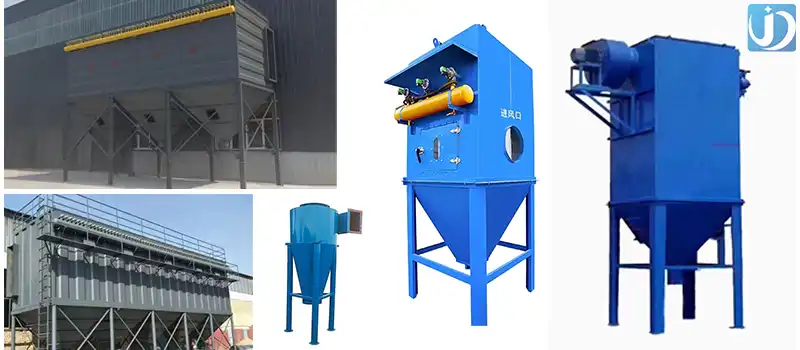
Centrifugal separation is how Cyclone Dust Separators work. They make a high-speed whirlwind that pushes particles against the cylinder wall. High-speed, dusty air comes in from the side, creating a rotating airflow inside the cone-shaped chamber. Heavy particles hit the inner wall, slow down, and fall into the collection hopper below. At the same time, clean air leaves through the center vortex finder at the top.
How Airflow Dynamics Drive Separation
Inside the cyclone body, two vortex shapes form at the same time. Along the wall, the outer vortex spirals down, carrying large particles toward the ash hopper. At the same time, an inner tornado changes direction and rises through the middle, pushing out clean air. This constant spinning motion creates centrifugal forces that are many times stronger than gravity. In the best conditions, these forces can effectively catch objects as small as 10 microns. No electricity, filter bags, or chemicals are used in the sorting process. It's all based on mechanical science.
Common Cyclone Types and Industrial Suitability
Different cyclone configurations work best for different types of dust and limited space. Standard reverse-flow cyclones can handle a lot of material with a modest level of efficiency. This makes them perfect for processing wood and moving grains. In metalworking and casting uses, high-efficiency long-cone shapes make the separation zone bigger, which makes it easier to catch smaller particles. Multi-cyclone assemblies, which are groups of small tubes working together, use centrifugal force to get rid of tough dust, but they need to be carefully managed to keep them from getting clogged. When floor space is limited, vertical setups are most common. In workshops with low ceilings, horizontal layouts work well.
Critical Design Parameters Affecting Performance
Both efficiency and pressure drop are directly affected by the shape of the cyclone. The speed of the inlet must stay between 15 and 20 m/s. If it's too slow, the separation force is weaker, and if it's too fast, there is too much wear and energy loss. The ratio of the diameter to the height determines the residence time. Longer bodies can catch smaller particles, but they leave a bigger mark and lose more pressure. The internal flow patterns are controlled by the vortex finder's width and insertion depth. Even small mistakes in these dimensions can cause the vortex to break down and the efficiency to drop. Our engineering team changes these settings based on the type of dust, such as coarse steel grit in shot blasting systems or fine mineral powders in cement plants.
Sizing and Cut Point: Making the Right Selection
If you get the sizes right, you can avoid two expensive mistakes: Cyclone Dust Separators that are too small cause too much pressure drop and system failure too soon, and units that are too big waste money and floor space without improving performance. The cut point, which is the particle diameter that can be captured with 50% efficiency, is the most important factor in matching equipment to application needs.
Defining Cut Point and Its Practical Significance
The cut point shows how well the separator can handle certain particle distributions. A vortex with a 10-micron cut point gets rid of particles bigger than that, but it lets smaller dust go through to the next stage of the filter. When shot blasting, broken steel shot and mill scale (usually 50–500 microns) are produced. To recover reusable abrasives and protect baghouse filters further downstream, cyclones with cut points around 15–20 microns are needed. On the other hand, woodworking sawdust with a wider range of sizes may be able to handle higher cut points because most of the material is bigger than 30 microns.
Step-by-Step Sizing Methodology
Accurately measuring airflow is the first step in sizing. Check the real CFM at the source of the dust, taking into account how weather and humidity change the gas density. Figure out the needed cyclone width using tried-and-true methods that balance efficiency goals with a safe pressure drop (usually 4 to 6 inches of water column). Make sure the speed of the inlet stays within the design limits. Compare the calculated cut point to your particle size analysis. If 80% of your dust is bigger than the cut point, you have a good match. We offer detailed worksheets for sizing and can run computational fluid dynamics simulations for very complicated custom tasks.
Avoiding Common Sizing Errors
Cyclone projects often make three mistakes. When efficiency is overestimated, secondary filters that are too small fail before they should. If you don't take into account changes in dust density, you get wrong separation predictions because metallic particles behave differently from organic fibers. Not planning for future capacity growth locks you into equipment that isn't up to the task. When a foundry client increased production by 30%, their first cyclone became a bottleneck, which required a costly redesign of the system. This won't happen if you plan for 20–25% capacity headroom.
Cyclone Separators vs Other Dust Collection Technologies
To choose from the technologies that are available, you need to know what their operational trade-offs are and how much they will cost in total. Each system deals with a range of particle sizes, upkeep needs, and initial investments.
Performance Comparison Across Technologies
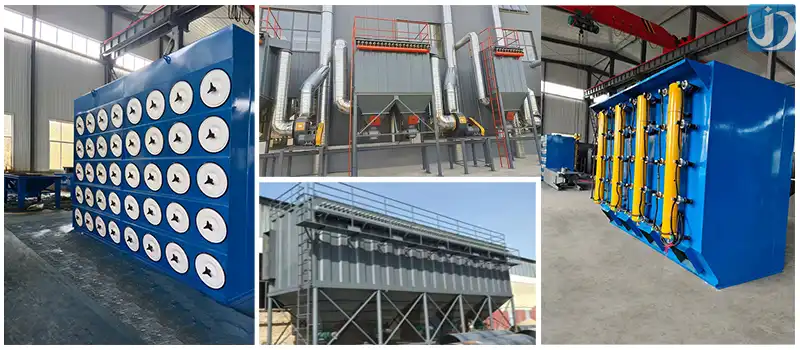
Bag filters are great at catching sub-micron particles (99%+ efficiency), but they need to have their media replaced often and have trouble with dust that is hot or rough. Electrostatic precipitators can handle large amounts of material with little drop in pressure, but they need a lot of electricity and careful moisture control. Wet scrubbers get rid of the risk of explosions, but they make wastewater that needs to be treated. Cyclone Dust Separators thrive in pre-separation roles, capturing 95%+ of coarse particles without consumables, then feeding cleaned air to secondary systems. This staged approach reduces baghouse filter load by 70–80%, extending bag life from months to years.
High-Efficiency vs Standard Cyclone Models
Standard Cyclone Dust Separator offers simple construction and low capital cost but plateaus at 85–90% efficiency for particles above 20 microns. High-efficiency designs—featuring extended cone lengths, optimized inlet geometry, and precision-machined vortex finders—push efficiency past 95% while reducing cut points to 10–15 microns. The performance gain comes at a moderate cost premium, typically justified when recovering valuable materials like abrasive media or when tighter emissions control prevents regulatory penalties. We help procurement teams quantify return on investment by modeling filter replacement savings and media recovery value.
Total Cost of Ownership Analysis
Initial purchase price represents just 20–30% of lifecycle costs. Energy consumption from pressure drop accumulates relentlessly—a poorly designed cyclone wasting 2 inches of static pressure costs thousands annually in fan power. Maintenance labor for bag changes, disposal fees for spent filters, and production downtime during filter failures dwarf equipment depreciation. Cyclone separators minimize these ongoing expenses through mechanical simplicity and absence of wear parts, delivering payback periods under two years in high-dust environments like shot blasting facilities. ISO 9001-certified manufacturers provide transparent lifecycle cost data supporting capital approval processes.
Maintenance, Troubleshooting & Best Practices
Cyclones earn their reputation for reliability through proper maintenance discipline. Without moving parts or filter media, routine care focuses on structural integrity and ensuring unobstructed flow paths.
Routine Inspection and Preventive Maintenance
Monthly visible exams check for ash buildup on walls, which changes internal geometry and reduces efficiency. Quarterly removal of the hopper cover allows viewing of the output area for blockages or rust. Annually, measure internal dimensions at key points—the vortex finder, inlet duct, and cone apex—to spot wear from abrasive particles. In foundry applications handling steel grit, our wear-resistant ceramic or manganese steel liners extend service intervals by protecting the base metal from erosion. Hopper outflow valves require weekly spinning to avoid jamming; air-lock rotary valves need lubrication per the maker's plans.
Troubleshooting Efficiency Drops and Pressure Issues
Sudden efficiency drop signals air leaks, usually at the hopper seal or inspection openings. Even 1% leakage disrupts the lower vortex, re-entraining settled dust into the exhaust. Pressure gauges upstream and downstream reveal developing problems—a gradual increase indicates internal buildup, while sudden jumps suggest blockage. If collection rates drop but pressure remains normal, check for vortex finder erosion or damage, which allows short-circuiting of dirty air. Moisture condensation causes dust to stick and bridge, a common problem in unheated facilities during winter. Installing hopper heating or insulating the cyclone body avoids this behavior.
Upgrading and Retrofitting Existing Systems
Aging cyclones can gain new life through focused changes. Replacing worn inlet parts with abrasion-resistant alloys returns original effectiveness. Adding variable-frequency drives to fan motors makes the best use of energy when production changes. By combining our smart monitoring systems, which come with differential pressure sensors and predictive maintenance algorithms, we can track performance in real time and find problems early on. When environmental rules get stricter, connecting the current cyclone to a small baghouse makes two-stage filtration system that meets the new rules without having to replace the whole system. This is what we've done for machinery makers who need to meet the new EPA emission limits.
Buying Guide & Procurement Strategies for B2B Clients
To successfully navigate cyclone procurement, you need to make sure that the technical requirements meet the operational conditions while also getting good financial terms and long-term support.
Key Selection Criteria for Environmental Projects
Managing environmental retrofits requires project engineers to focus on exact flow rate matching—oversizing loses money and undersizing increases the chance of not meeting compliance requirements. Make sure the maker gives you approved data on how well they work across the relevant particle size range. The structure of the material needs to match the chemistry of the dust. For example, carbon steel works well for wood and grain, but manganese steel or bodies lined with ceramic are needed for shot blasting metal dust that is rough. When integrating into existing ductwork, the ability to customize is important. To meet site requirements, we make non-standard inlet orientations, flange dimensions, and hopper configurations. Delivery times affect project schedules; confirm production lead times and ask for penalties for late deliveries.
Evaluating Suppliers and Ensuring Quality
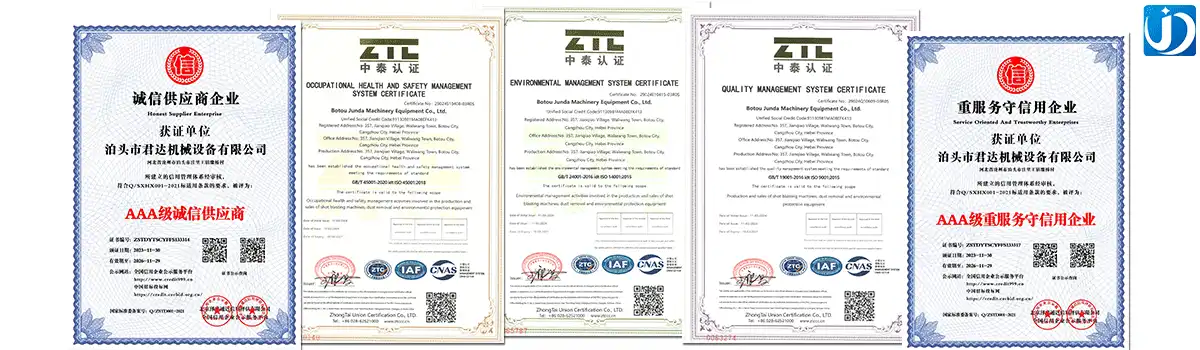
Getting ISO 9001, ISO 14001, or ISO 45001 standards shows that you care about quality management and the environment. Ask for proof that claims of efficiency have been tested by a third party; this industry is full of marketing claims that can't be backed up. Check the quality of the seams and welds on sample units or during factory visits. Bad fabrication can cause air leaks and structural failure. Well-known brands have engineering support teams that can do CFD analysis and give you AutoCAD integration drawings, which makes installation easier. We have two utility model patents and seven software copyrights to protect our smart control systems, which shows that we are committed to continuing to innovate.
Value-Added Services and Commercial Terms
OEM buyers who order 20 or more units a year can get big savings. We set up tiered pricing that rewards long-term relationships and makes sure that deliveries happen on time every time. We offer technical support after the sale as well, including online installation help, operator training videos, and English instructions for clients in other countries. The warranty should cover the whole housing structure, not just certain parts. Our full warranty shows that we are confident in our manufacturing process. For quick fixes, spare parts must be available; make sure the seller keeps important parts like hopper valves and inspection hatches in stock. Our overseas customers benefit from the fact that we know about export paperwork, fumigation rules, and how to work with freight forwarders to make sure that goods get from one place to another.
Conclusion
Choosing the right Cyclone Dust Separator can turn environmental compliance from a hassle to a business benefit. You can get efficient pre-filtration that cuts down on secondary filter costs and keeps production going by knowing the basics of design, making sure the right-sized filter is used for the particles you have, comparing different technologies, and doing regular upkeep. Precise cyclone selection gives measurable returns through longer equipment life, lower energy use, and less maintenance work, whether you are an environmental contractor bidding on factory retrofits, an OEM manufacturer standardizing dust collection components, or a facility manager dealing with compliance pressures. Strategic relationships with qualified makers give projects the technical depth, customization options, and quick support they need to be completed successfully.
FAQ
1. Why is my cyclone dust collector losing efficiency over time?
The gradual loss of efficiency is generally caused by air leaks at the inspection ports or output hopper, which mess up the internal vortex pattern. Every three months, check all of the seals and gaskets. Abrasive particles can wear down the input section or vortex finder from the inside, which lets dust get around separation zones. In high-abrasion situations like shot blasting systems, this problem can be avoided by installing wear-resistant liners during the initial installation.
2. Can cyclone separators handle particles smaller than 5 microns effectively?
Standard cyclones work best with particles bigger than 10 microns; they're more than 95% effective in this range. High-efficiency long-cone designs and multi-cyclone assemblies are better at catching fine particles, but they are usually used as pre-filters for HEPA or baghouse systems instead of being used on their own. Two-stage systems that use cyclones and cloth screens work best and are the most cost-effective for getting rid of sub-5-micron dust.
3. How do I choose between single and multi-cyclone configurations?
Single large-diameter cyclones can efficiently handle large amounts of coarse dust, which makes them good for working with wood and grains. Parallel small tubes, called multi-cyclone arrangements, create more centrifugal force for smaller particles, but they are more likely to get clogged and need more upkeep. The best choice depends on the size distribution of the particles and the room you have available. We give you decision matrices based on your dust analysis.
4. What maintenance does a cyclone separator require?
One big benefit is that it doesn't need much upkeep. Emptying the hopper once a week keeps it from overflowing and keeps the divide working well. Visual inspections are done once a month to look for damage or buildup inside the structure. Seals and gaskets should be checked every three months to stop air leaks. The vortex finder and outlet are checked for wear in abrasive uses once a year. Compared to bag filters, there is no need to change the filter or make any complicated adjustments. This saves a lot of money on work and parts.
Partner with Junda Machinery for Reliable Cyclone Dust Separator Solutions
We at Junda Machinery have 20 years of experience creating and making cyclone dust collectors that are perfect for shot blasting, foundries, and other heavy industry uses. Our ISO 9001-certified factory in Botou makes high-efficiency systems that don't wear out and can handle air flows from 1,500 to 15,000 m³/h. These systems can be customized to fit the needs of your project. Whether you need a Cyclone Dust Separator supplier that can make custom parts quickly (within 15 days) or technical help for upgrading existing environmental systems, our engineering team can help. They can give you AutoCAD drawings, efficiency certifications, and smart monitoring software to make the buying process easier. Please email us at junda001@jundablast.com to talk about your specific needs, ask for technical specs, or set up a full quote. Our team usually responds within 6–8 hours, which will help your project stay on track.
References
1. Cooper, C.D., Alley, F.C. (2011). Air Pollution Control: A Design Approach, Fourth Edition. Waveland Press.
2. Hoffmann, A.C., Stein, L.E. (2008). Gas Cyclones and Swirl Tubes: Principles, Design, and Operation, Second Edition. Springer.
3. Stern, A.C., Boubel, R.W., Turner, D.B., Fox, D.L. (1984). Fundamentals of Air Pollution, Second Edition. Academic Press.
4. Perry, R.H., Green, D.W., Maloney, J.O. (1997). Perry's Chemical Engineers' Handbook, Seventh Edition. McGraw-Hill.
5. Svarovsky, L. (2000). Solid-Gas Separation, Handbook of Powder Technology Series, Volume 11. Elsevier Science.
6. Leith, D., Mehta, D. (1973). "Cyclone Performance and Design," Atmospheric Environment, Vol. 7, Issue 5, pp. 527-549.

USER EVALUATE
Real feedback and practical experience shared by worldwide partners who purchased our machinery and environmental treatment devices.