_1786959752558.webp)
What is a Pipe Shot Blasting Machine and How Does It Work?
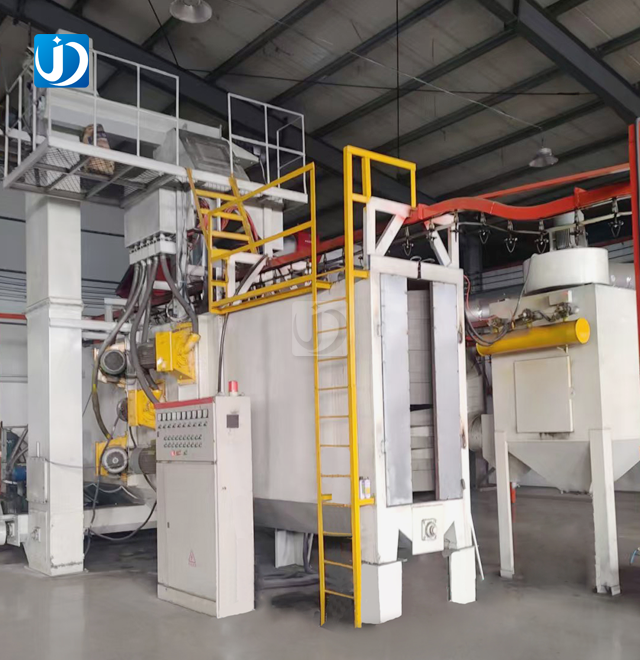
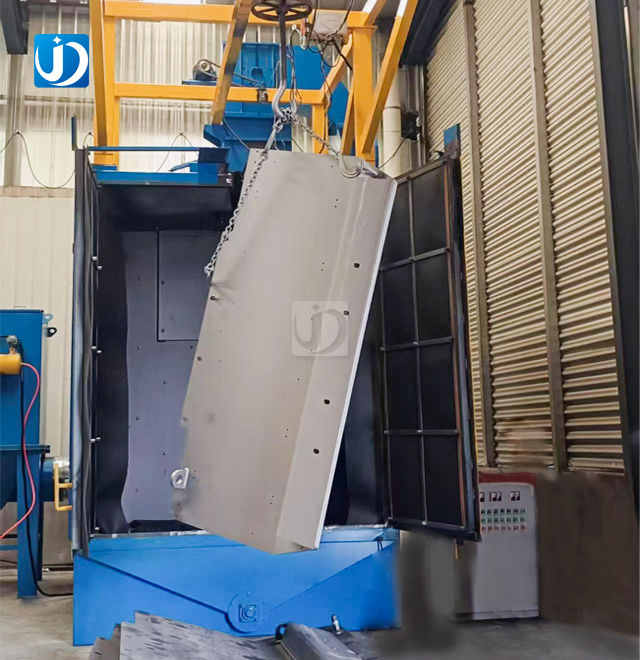
A pipe shot blasting machine is an automated surface preparation system that propels abrasive media — typically steel shot or grit — at high velocity onto pipe surfaces using centrifugal blast wheels. Unlike a pipe air blasting machine that relies on compressed air, centrifugal systems deliver far greater energy efficiency and consistent coverage. The equipment rotates each pipe on V-shaped rollers while it advances through the blast chamber, achieving 360° circumferential cleaning that consistently meets Sa 2.5 cleanliness standards per ISO 8501-1 — the benchmark required before applying anti-corrosion coatings or galvanizing.
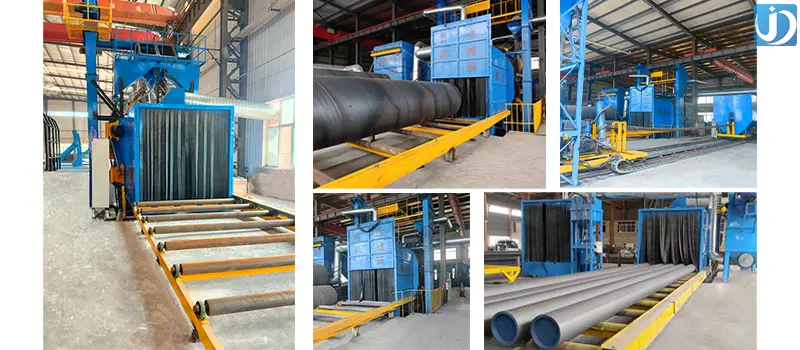
Understanding Pipe Shot Blasting Machines: Definition and Working Principle
What Makes This Equipment Different from Air Blasting
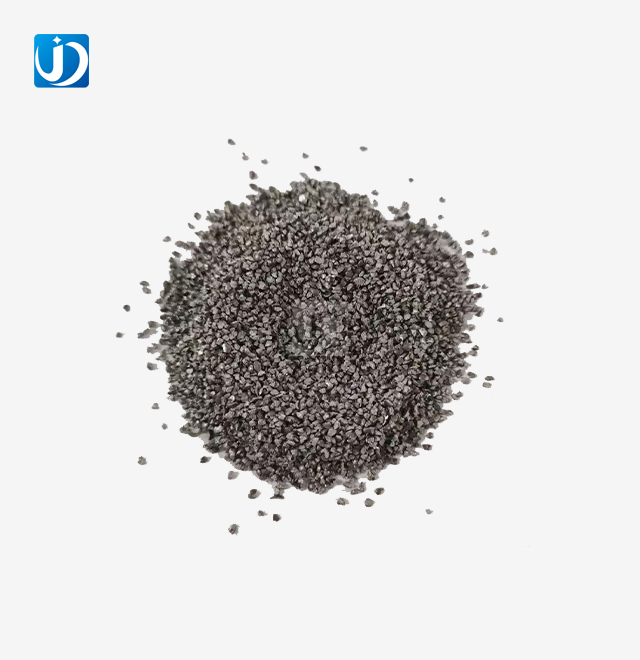
Shot blasting and air blasting are both ways to clean metal, but they do it in different ways. A pipe air blasting machine uses compressed air to push grit through a nozzle. This gives the operator direct control but lower output. A centrifugal shot blasting machine has blast wheels that are powered by motors and throw abrasive at 60–80 m/s. This works on whole batches of pipes with even force. This mechanical method gets rid of mill scale, rust, and other contaminants a lot faster and with less energy used per square meter treated.
Core Components You Need to Know
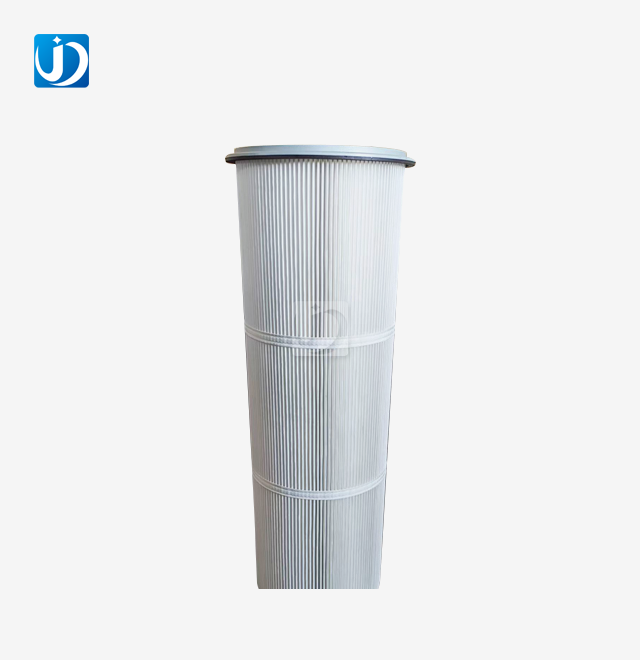
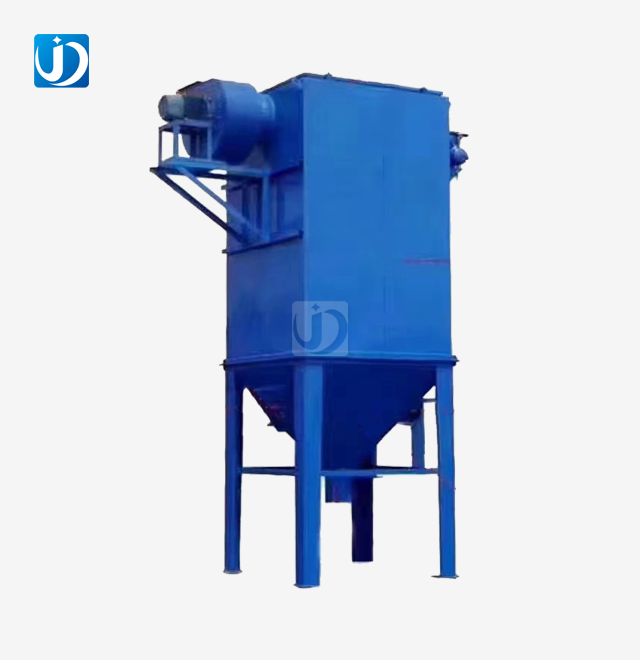
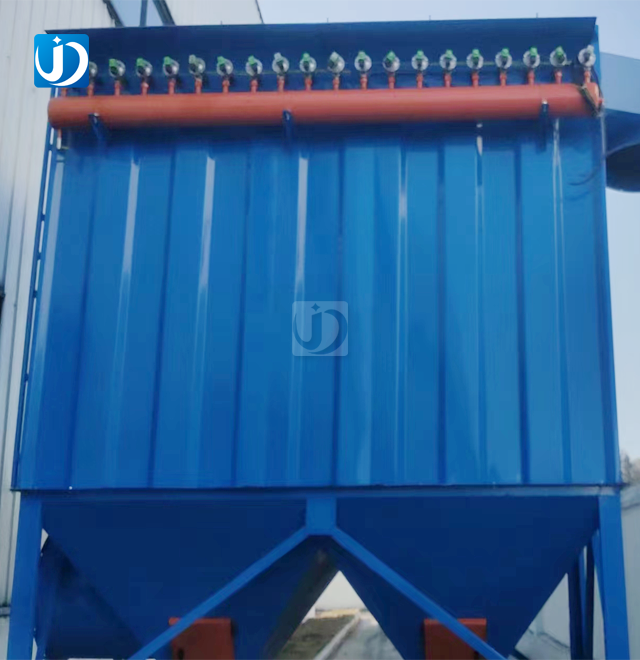
A set of moving parts is used by all pipe shot blasting systems. The blast wheels, which usually have high-chromium metal blades with a rating of HRC 60 or higher, are arranged around the pipe in a circle. Rollers in the shape of a V move each pipe through the chamber at a speed set by a variable frequency drive (VFD). A bucket elevator and separator keep the abrasive media fresh, and a pulse-jet cartridge filter collects dust as small as 0.5 microns, which keeps emissions below 20 mg/m³.
Pipe Types and Size Compatibility
These tools can work with many types of pipes, such as seamless steel pipes, oil and gas transport pipes, scaffold tubes, chemical pipes, and pipes that have already been galvanized. The diameter ranges used for processing are usually between 20 mm and 3,000 mm. Long-haul pipeline projects can use extended-frame models that can handle pipe lengths of up to 12 meters. This is a requirement that oil and gas contractors often have because they have to stick to tight project schedules.
The Benefits and Industrial Applications of Pipe Shot Blasting Machines
Surface Quality You Can Verify at Inspection
How long a pipe's coating lasts is directly related to how clean it is and what kind of anchor profile it gets in the blast chamber. When the equipment is set up correctly, it can reach Sa 2.5 or even 3.0, and the surface roughness profile (Rz) must meet the needs of fusion-bonded epoxy, polyurethane, and other industrial coatings. Before pipes leave the line, digital roughness gages confirm the Rz values. This gives project managers concrete data that inspectors can sign off on.
Industries That Rely on This Technology
Pipe air blasting machine equipment is used in many different fields. There is a clear difference in the following places where the technology is used:
- Oil and gas pipelines: Pre-coating preparation for anti-corrosion linings on transmission and gathering lines, where coating adhesion failures can mean costly field repairs.
- Chemical plant piping: Internal and external cleaning before lining application in corrosive service environments.
- Scaffold tube refurbishment: High-volume de-rusting of returned rental tubes before re-galvanizing, where per-meter processing cost drives every purchasing decision.
- Structural steel fabrication: Surface preparation before powder coating or paint on structural pipe sections.
All of these uses need the same thing: a surface that is consistently and verifiably clean that is provided at production line speed. Grinding things by hand or using acid to pickle them can't compare to automated blasting in terms of speed or documentation.
Environmental and Safety Compliance
In most operating areas, controlling dust emissions is no longer a choice. Multistage filter systems keep the amount of particulate matter well below the limits set by regulations. This protects workers and keeps workplaces in line with the rules. Cutting down on the cost of consumables by a large amount over long production runs is what abrasive recovery systems do.
Maintenance and Troubleshooting: Keeping Your Machine Running
Routine Maintenance That Prevents Costly Downtime
A regular maintenance plan will keep your investment safe. High-chromium metal blast wheel blades usually last between 500 and 800 hours of use before they need to be replaced. Liner wear, roller alignment, and separator condition should all be checked once a week. The machine stays at full capacity without stopping for unplanned reasons that throw off project schedules as long as the conveyor bearings are oiled and old liners are replaced on time. The filter cartridges are also checked regularly.
Common Problems and How to Fix Them
The most common issue from production teams is that pipe surfaces are not cleaned evenly. It's generally caused by one of two things: the "hot spot" setting on the blast wheel directing cage being in the wrong place, or the pipe not rotating at the right speed through the chamber. Most coverage problems can be fixed without calling for outside help by checking and resetting the cage angle and then comparing the VFD settings to the manufacturer's instructions.
Working with Your Equipment Supplier Post-Sale
It's more important than you might think to get your blast wheel blades, liners, and separation screens from the original equipment maker. Most aftermarket replacements are made of softer alloys that wear out faster, which raises the cost of operating each ton. Reliable providers offer remote diagnostic help, maintenance guides written in English, and on-site tech visits when the problem is big enough.
Comparing Options: Making the Right Choice for Your Operation
Centrifugal Blast vs. Pipe Air Blasting Machine
A pipe air blasting machine or a rotating blast system? That depends on how much work you need to do and how much money you have. Air blasting works well for small amounts, odd forms, and spot fixes that need to be portable. Centrifugal blast equipment has better abrasive recovery, lower running costs per square meter, and more uniform results for production lines that go through dozens to hundreds of pipe joints per shift. Once the daily volume goes over a small level, centrifugal systems become more cost-effective for companies taking on big pipeline projects.
Manual vs. Automatic Systems
Manual systems need an operator to guide the blast process, which works well for workshops with low volume. Automatic systems with VFD-adjustable moving speed are handled by a PLC and keep processing settings the same from shift to shift. Automatic systems produce more consistent results with less variation between operators for tasks that need to record cleanliness grades for inspectors to look over.
Matching Machine Specifications to Your Project
Before you ask for a quote, make sure you know three things: the range of pipe diameters you work with most often, the longest pipe lengths you'll be working on right now or in the future, and the cleanliness level that was agreed upon in your project contract. If your contract says that Sa 2.5 with a certain Rz range must be used, give that paper to your equipment seller so that they can set up the blast wheel layout and choose the right abrasives.
Procurement Guide: How to Buy the Right Machine
Total Cost of Ownership, Not Just Purchase Price
The price of a pipe air blasting machine is only a small part of how much it really costs. The cost per meter of processing depends on how long the blast wheel blades last, how much grit is used per ton of pipe handled, how often the filter cartridges need to be replaced, and how much power the machine uses. This cost will determine if the machine pays for itself in the project cycle. When comparing suppliers, don't just ask for specifications; also ask for information on operating costs.
Supplier Evaluation Criteria That Actually Matter
A trustworthy supplier should give you ISO 9001 certification, pre-shipment dry-run test reports, and documentation packages that meet the needs of your inspectors. On project-based plans, delivery dates are important; ask about wait times for custom setups. If a seller offers online commissioning support and warranties that cover the whole machine, not just certain parts, that's a good sign that they believe in their product.
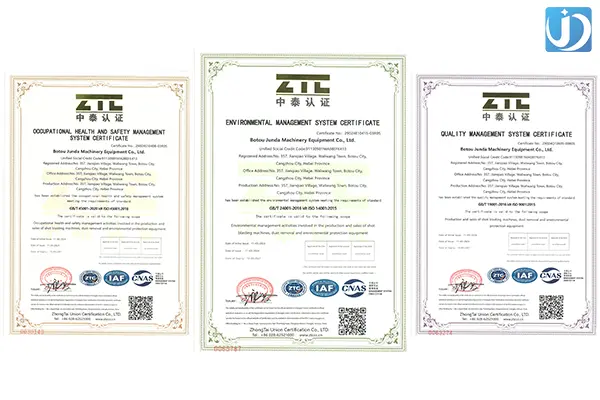
Customization Options to Request
Most business buyers need at least one feature that isn't common. Customization requests often include longer conveyor frames for 12-meter pipe lengths, better dust collection systems for indoor or partially enclosed sites, changes to the PLC interface to make it work with existing production lines, and documentation packages that reference ISO 8501-1, SSPC, or NACE standards to make sure the project meets international standards.
Conclusion
Pipe air blasting machine tools are a reliable way for contractors and pipe processors to get uniform anchor profiles, verifiable Sa 2.5 results, and proof of compliance. These are the three things that decide whether a coating check passes or fails. When it comes to output, abrasive recovery, and dust control, centrifugal blast technology works better than traditional methods. Having the right machine for your project's cleanliness level and range of pipe diameters lowers the chance of having to do extra work and keeps your production schedule on track. Companies that process a lot of pipe will make better long-term decisions if they take the time to look at both the purchase price and the total operating cost.
FAQ
1. What abrasive media works best for pipe surface preparation?
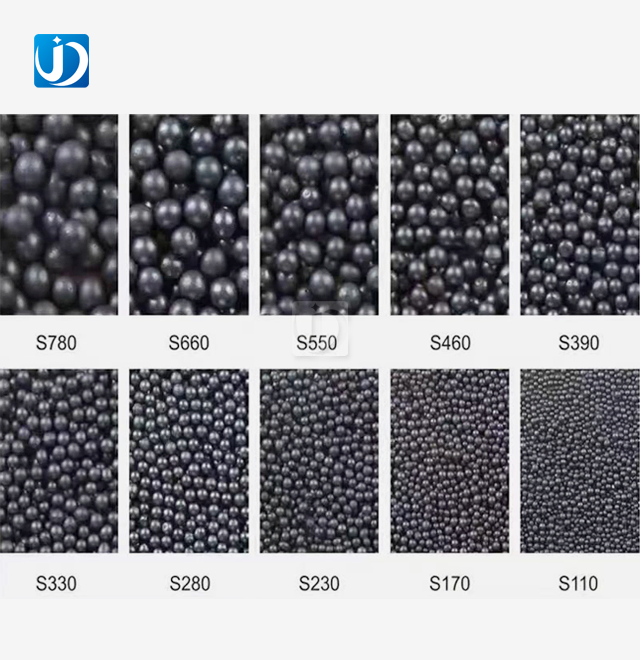
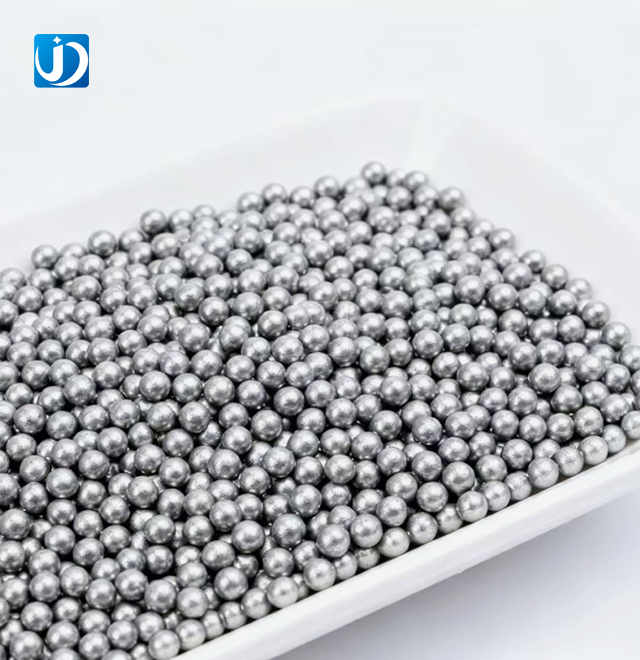
S330 or S390 steel shot handles general descaling effectively. Adding steel grit increases the anchor profile depth for coatings that require higher Rz values. The right mix depends on the roughness specification in your coating system data sheet.
2. How often do blast wheel blades need replacement?
Under standard operating conditions with high-chromium alloy blades, replacement typically falls between 500 and 800 operating hours. Blasting harder abrasives or running higher wheel speeds shortens that interval.
3. Can the machine process both internal and external pipe surfaces?
External blast wheels handle outer-diameter cleaning in standard configurations. Internal surface treatment uses specialized hydraulic or pneumatic lances inserted into the pipe bore — a separate system that your supplier should specify separately.
4. What causes uneven cleaning, and how do I fix it?
The most common cause is an incorrectly set directional cage on the blast wheel, which shifts the abrasive stream away from the intended impact zone. Inconsistent pipe rotation speed is the second most common cause. Both are operator-adjustable parameters.
5. What certifications should I ask a supplier to provide?
Request ISO 9001 quality management certification, pre-shipment test reports, and surface cleanliness documentation referenced to ISO 8501-1. If your project is in a regulated market, ask whether the supplier can support CE certification for the machine.
Get a Custom Pipe Shot Blasting Solution from Junda Machinery
Junda Machinery has been making pipe shot blasting tools for builders, pipe mills, and coating applicators working on pipeline projects around the world for 20 years. Our pipe air blasting machines and centrifugal blast systems are built to meet SA 2.5 standards and can be tailored to your exact diameter range and pipe length, with types that can be extended to 12 meters. To get a technical plan, email our technical team at junda001@jundablast.com. We have been making pipe air blasting machines for a long time, and we respond within 6–8 hours.
References
1. Society for Protective Coatings (SSPC). Surface Preparation Standards for Steel. SSPC, 2021.
2. International Organization for Standardization. ISO 8501-1: Preparation of Steel Substrates Before Application of Paints — Visual Assessment of Surface Cleanliness. ISO, 2007.
3. NACE International. NACE No. 2/SSPC-SP 10: Near-White Metal Blast Cleaning. NACE International, 2012.
4. Visser, W. Corrosion Protection of Steel Structures by Coating Systems. Elsevier, 2016.
5. Keane, J.D., & Trimber, K.A. Industrial Lead Paint Removal Handbook. SSPC, 2019.
6. American Society for Testing and Materials. ASTM D4417: Standard Test Methods for Field Measurement of Surface Profile of Blast Cleaned Steel. ASTM International, 2021.

USER EVALUATE
Real feedback and practical experience shared by worldwide partners who purchased our machinery and environmental treatment devices.