_1786959752558.webp)
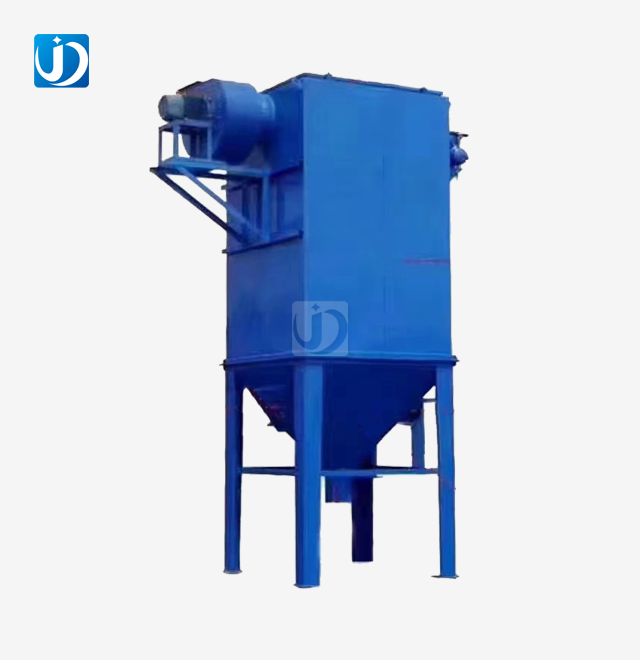
small dust collector
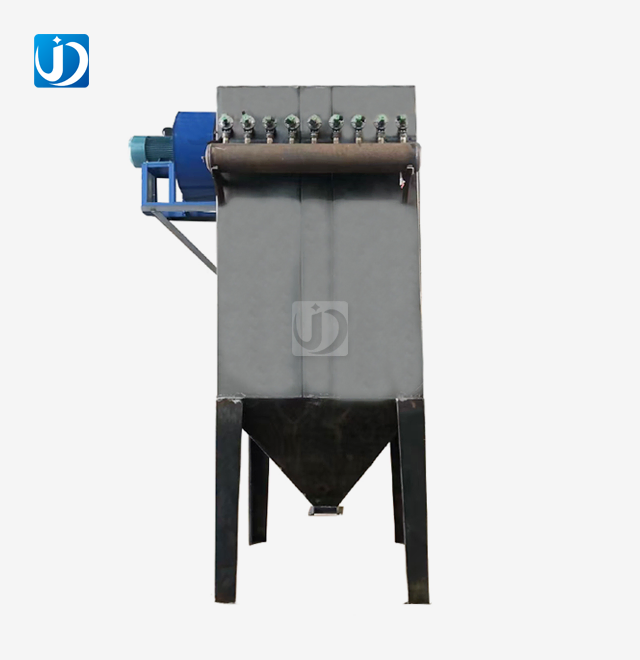
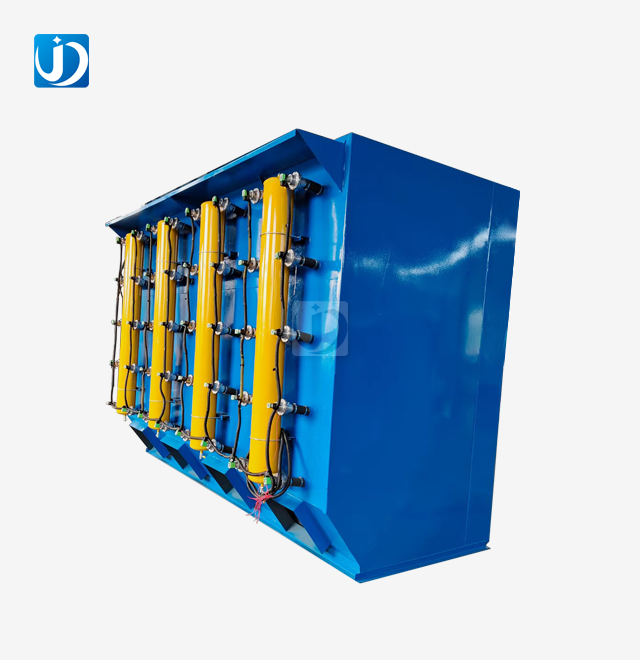
Integrated unit design saves workshop space, suitable for installation beside small blasting machines
and working stations.
Complete all-in-one unit for quick installation
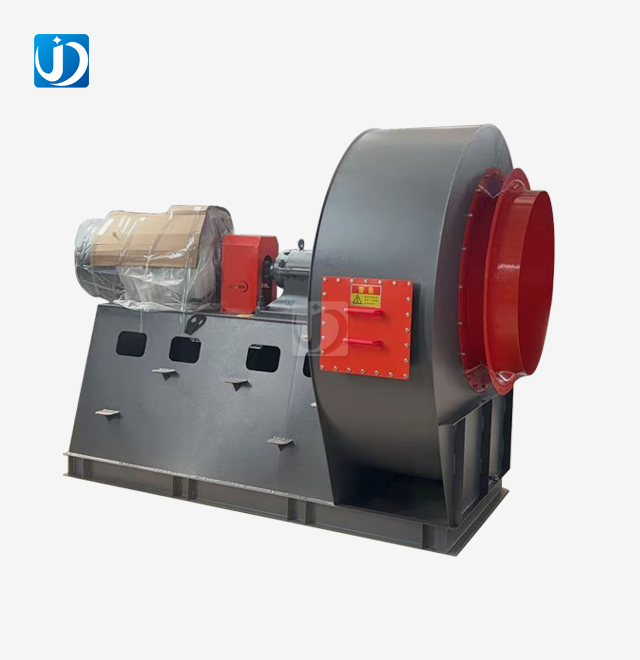
Fan, filter assembly, pulse cleaning system and hopper are pre-assembled. Simply connect suction duct
before operation to shorten on-site work.
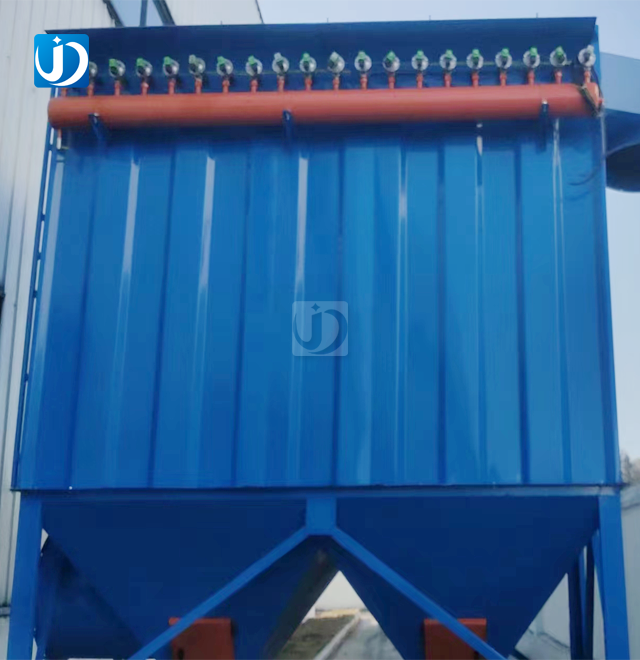
Automatic pulse cleaning maintains stable suction
Timing & differential pressure dual-mode jet cleaning prevents filter clogging and supports long
continuous operation.
Various filter media available for metal dust
Polyester, anti-static and membrane filter materials optional. Safe for steel abrasive dust, preventing
static risk and filter clogging.
- Product Description
Small Dust Collector for Industrial Applications|Compact Filtration Solution with High‑Efficiency Pulse Cleaning
Botou Junda Machinery Equipment Co., Ltd. supplies professional small dust collector systems designed for industrial environments with limited space. Drawing on over 20 years of foundry‑machinery expertise and a 3,000‑square‑meter production facility, our compact filtration units achieve filtration efficiency ≥99.5% for fine particulate dust. These integrated systems are engineered for airflow volumes of 800‑5,000 m³/h, combining fan assemblies, pulse‑cleaning technology and pre‑assembled filter housings. Custom configurations support fast deployment within 15 days. Our solutions serve grinding stations, welding workstations, small sandblasting units and machining operations in metallurgy, chemical processing and light‑manufacturing industries.

What Makes Our Small Dust Collector Ideal for Workshop Space Constraints
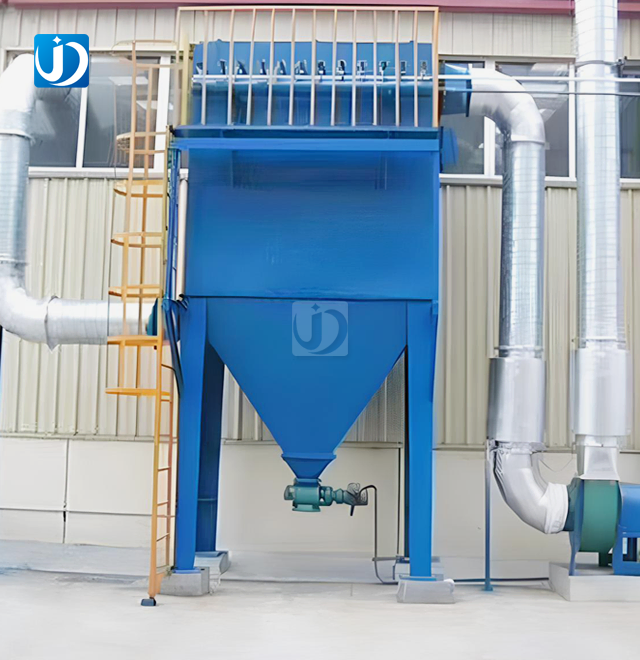
Modern industrial facilities face tough challenges managing local dust emissions without sacrificing valuable floor space. Our integrated‑unit design addresses this by vertically stacking fan motors, filter chambers and collection hoppers within a minimal footprint.
The pre‑assembled structure eliminates complex on‑site assembly requirements. You receive a complete functional unit consisting of blower, pulse‑jet manifold, filter elements and ash hopper. Installation teams only need to position the equipment, connect inlet ducting to your workstation, and verify electrical connections prior to operation.
This configuration proves especially effective for cabinet‑type sandblasters and portable grinding equipment. Workshop operators place the small dust collector close to dust sources, maintaining suction performance while keeping transport ductwork short and efficient.
Technical Specifications & Performance Parameters
| Parameter | Specification |
|---|---|
| Airflow Range | 800‑5000 m³/h |
| Filtration Efficiency | ≥99.5% for fine particulate matter |
| Filter Media Options | Polyester, Anti‑static, Membrane‑coated materials |
| Cleaning System | Dual‑mode pulse‑jet (timer & differential pressure) |
| Power Configuration | Customizable voltage standards |
| Noise Level | Low‑decibel operation for indoor environments |
| Housing Material | Fully welded steel with gasket sealing |
| Ash Discharge | Removable manual bottom drawer |
| Maintenance Access | Easy‑open inspection door |
| Production Lead Time | Approx. 15 days for custom specifications |
How Pulse‑Jet Cleaning Sustains Continuous Suction
Traditional single‑mode cleaning systems require manual intervention once filters reach maximum dust load. Our dual‑mode pulse‑jet technology automatically monitors filter conditions via two independent triggers.
Timer‑based sequences initiate compressed‑air blasts at preset intervals to remove accumulated dust before resistance builds up. Meanwhile, differential‑pressure sensors measure pressure drop across filter media. When this increment exceeds the threshold, supplementary cleaning cycles activate regardless of timer status.
This redundant approach prevents common failure points where filter clogging reduces airflow and impairs workplace air quality. Consistent extraction rates are maintained throughout production shifts without manual filter maintenance.
Filter Media Selection for Metallic‑Dust Applications
Standard polyester felt cannot safely handle the special challenges posed by steel abrasive dust and metallic grit particles. Sharp metallic particles may puncture conventional filter fabrics, while static‑charge accumulation creates ignition risks in the presence of combustible dust.
Our anti‑static filter materials incorporate conductive fibers to dissipate static charges to the earthed housing assemblies. This prevents spark formation when processing dust from aluminum, magnesium or other reactive metals.
Membrane‑coated filters provide PTFE or ePTFE barrier layers for applications requiring maximum surface‑loading capacity. Unlike depth‑loading filters (typically removing 60‑70% of dust per cycle), these microporous membranes capture sub‑micron particles on the surface instead of within the fiber matrix, enabling pulse‑jet cleaning to remove 95% of accumulated dust.
Installation Flexibility & Convenient Maintenance
Workshop layouts rarely accommodate fixed equipment positions. Our small dust collector design includes forklift pockets in the base and optional casters for semi‑permanent installations requiring regular relocation.
Hinged inspection panels use quarter‑turn fasteners instead of multiple bolts, cutting filter‑inspection time from 20 minutes down to under 3 minutes. Maintenance personnel open the chamber, visually inspect filter conditions, then re‑seal the housing without special tools.
The bottom ash drawer slides out on steel rails for dust disposal. Unlike systems requiring vacuum transfer or manual scooping from internal hoppers, operators simply pull out the drawer, empty contents into disposal containers, and re‑insert it without entering the dust‑filled chamber.

Quality Assurance Compliant with International Standards
Every unit undergoes pressure‑decay testing to verify cabinet integrity under negative‑pressure operation. Our quality‑control protocols include 48‑hour continuous‑run validation to confirm motor thermal stability and reliability of electrical components.
Filter assemblies receive integrity verification via aerosol‑challenge testing, ensuring gasket seals and filter‑to‑housing interfaces achieve zero bypass. These procedures align with our ISO9001 quality‑management‑system certification, supported by ISO14001 environmental and ISO45001 occupational‑health standards.
For export markets requiring CE marking, we supply technical documentation packages including material certificates, electrical‑safety test reports and machinery‑directive compliance declarations. Our team replies to certification‑related inquiries within 6‑8 hours to keep projects on schedule.

Custom Options to Meet Regional Requirements
Global voltage standards vary, and our electrical‑engineering team configures motor control panels for 208V, 230V, 380V, 415V or 480V three‑phase systems with appropriate rated frequencies. Control interfaces support multiple‑language operation panels and HMI touch‑screens.
Dimension modifications address site‑specific constraints. If ceiling height at your facility limits vertical equipment placement, we redesign units with horizontally oriented filters. When ambient temperatures exceed standard operating ranges, we upgrade motor insulation classes and adopt cooling‑fan arrays.
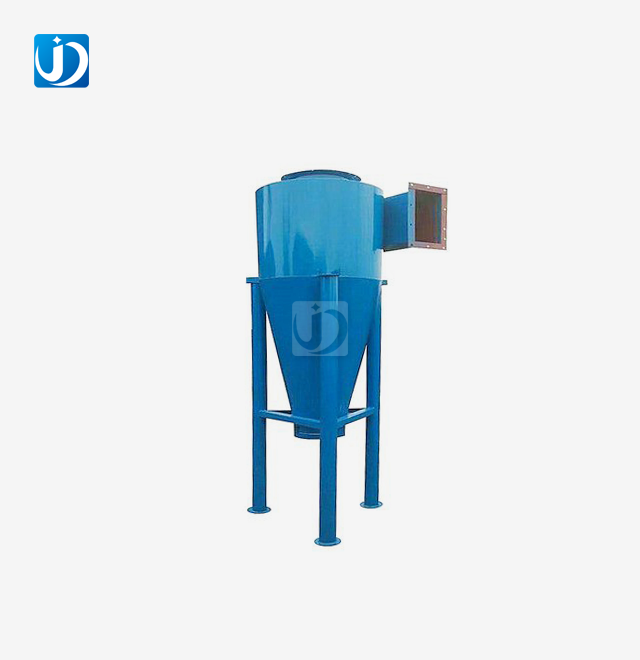
For jurisdictions with strict emission regulations, we add secondary HEPA‑grade or activated‑carbon polishing filters to achieve emission concentrations below 5 mg/m³. These configurations include upstream pre‑cyclone separators to extend service life of final filters when handling heavy dust loads.


Logistics Support for Global Installation Projects
Our partnerships with international freight forwarders ensure competitive ocean‑freight rates and reliable container‑space allocation. Standard units ship in 20‑foot containers with reinforced bracing to prevent transit damage.
Extra‑large custom configurations are shipped via flat‑rack containers or bulk transport. Our export‑packaging team applies heat‑treatment fumigation for wooden packaging materials, provides moisture‑proof wrapping, and completes all customs‑clearance documents including commercial invoices, packing lists and certificates of origin.
Door‑to‑door delivery arrangements coordinate port handling, inland transportation and final positioning at your factory. We maintain digital‑tracking systems delivering real‑time freight visibility from our production workshop to your receiving dock.

Frequently Asked Questions
Q: What are the application scope and mainstream types of dust collector?
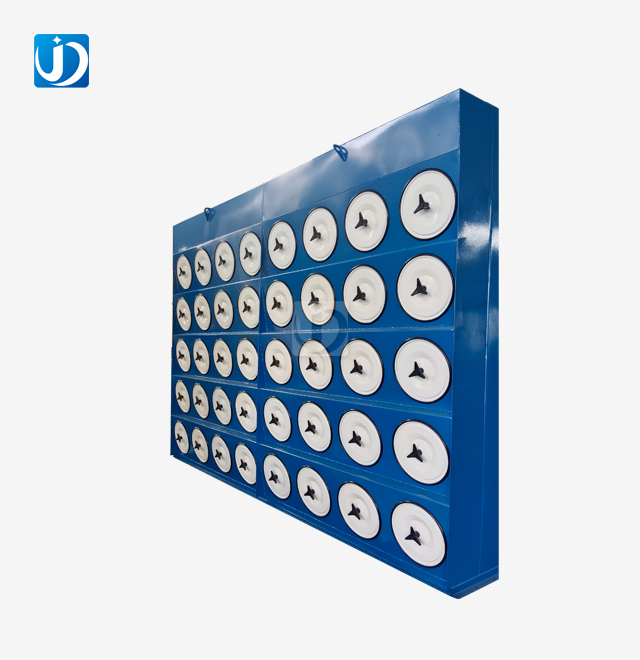
A: Main types include miniature pulse bag‑type dust collectors and small cartridge‑style dust collectors. They are suitable for small shot‑blasting machines, simple sandblasting stations, workpiece grinding and welding‑fume treatment. Compact dimensions and flexible installation make them ideal for sites with limited space and low dust output.
Q: What limitations do dust collector units have for sandblasting and shot‑blasting applications?
A: Limited airflow means they are not suitable for large continuous shot‑blast chambers or pass‑through shot‑blasting lines. Tolerance to large volumes of coarse metallic debris is poor. A simple pre‑cyclone separator is recommended to capture large particles and prevent wear or puncture of filter media. They are only matched with medium‑and‑small intermittent sandblasting equipment.
Q: What key parameters should be considered when purchasing a dust collector?
A: Core parameters include airflow volume and filtration area. Additional factors: cleaning method, fan power and cabinet material. For hard metallic dust generated by sandblasting, filter media with wear‑resistant coatings are preferred. Reserve maintenance space for convenient filter‑bag or filter‑cartridge replacement.
Q: What daily‑maintenance work is required for a dust collector?
A: Run automatic pulse‑jet cleaning periodically; inspect filters for damage; empty hopper dust to avoid dust re‑entrainment; check sealing performance of doors and flanges; lubricate fans regularly; troubleshoot blockages and air leakage once suction declines.
Get Your Custom Dust‑Removal Solution Now
Contact our engineering team via junda001@jundablast.com to discuss your specific small dust collector requirements. We will provide system‑sizing recommendations and delivery timelines according to your operational needs.

USER EVALUATE
Real feedback and practical experience shared by worldwide partners who purchased our machinery and environmental treatment devices.