Is single station hook shot blasting limiting output? Manufacturers select hook pass-through shot blasting machine
Most shot blasting bottlenecks trace back to one design choice: batch versus continuous flow. If your team loads a part, waits for blasting to finish, then unloads before starting again, that dead time is capacity you paid for but never use. A hook pass-through shot blaster solves this by keeping loading, blasting, and unloading running at the same time on separate stations along one track. This article compares single-station hook machines with pass-through systems, walks through a real capacity calculation, and gives you a checklist for choosing between them based on your part mix, hook load, and floor layout.
What Is a Hook Pass-Through Shot Blaster?
Definition and How It Differs From Batch Hanger Blasting
A hook pass-through shot blaster is a cleaning device that is fixed on a single rail. Pieces of work are hung from hooks and move through a blast chamber without stopping the whole line. In a single-station hanger machine, the whole process stops every time the machine loads or unloads something. Tumble blasters and mesh belt shot blasters are used for different things. Tumble blasters are good for bulky small parts, while mesh belts are better for flat or rolled stock. "Pass-through" refers to the way that materials move, not a set number of items that can be made. Still, capacity is based on part size, hook spacing, and blast time, all of which we will talk about later in this piece.
Core Components Inside the Machine
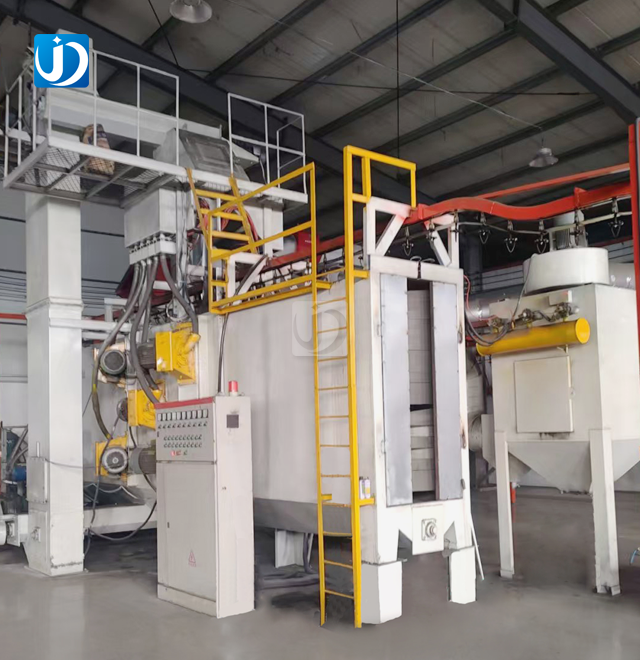
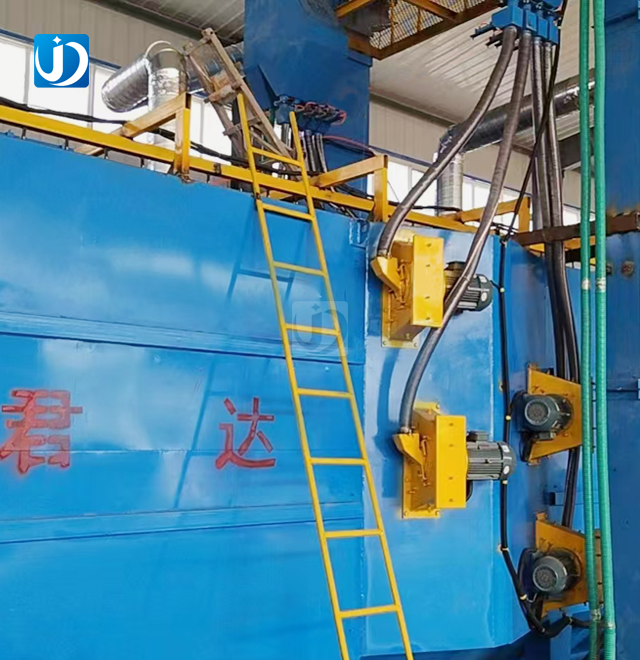
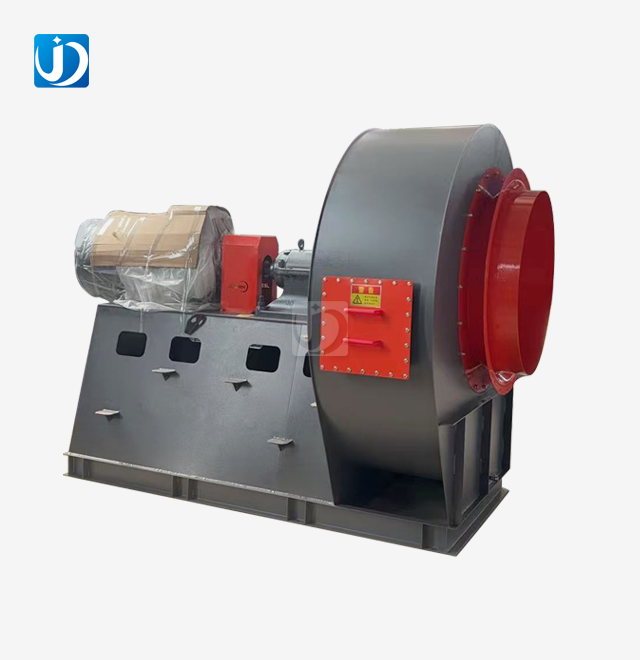
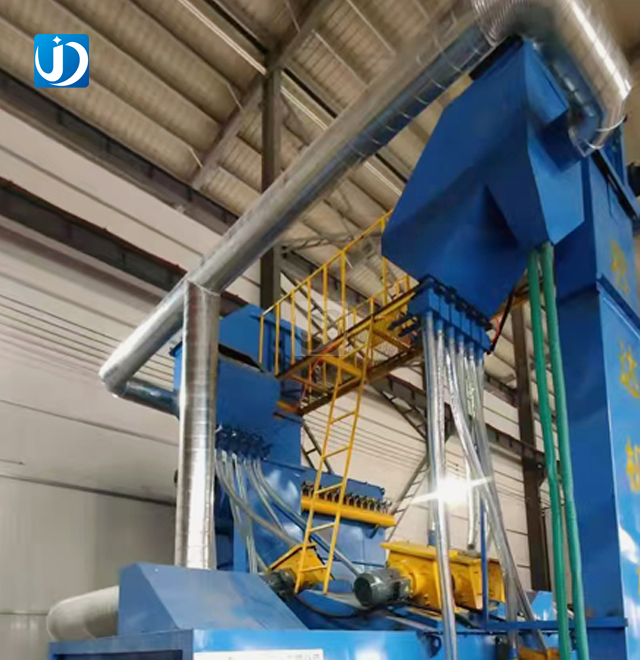
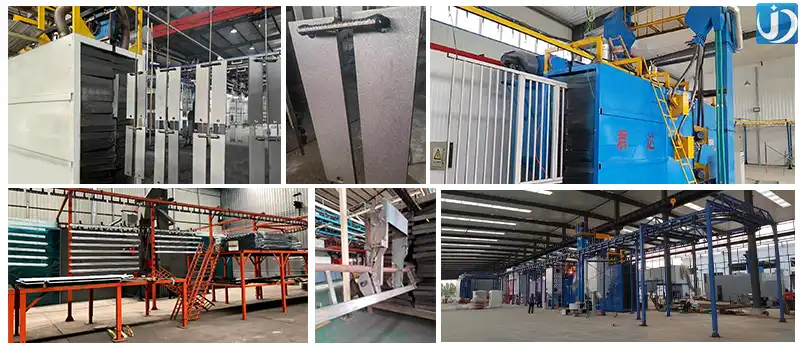
The machine features a railway track, 10,000-kg hook carriers, and a blast chamber with high-manganese steel wear plates. Turbine or blast wheels shoot steel at the spinning component as it goes through the enclosed space. A bucket lifter transports used grit to a screw conveyor and air-wash separator. Fines are removed by the separator and shot is returned to the hoppers. This recovery loop collects dust to monitor emissions and protect turbine bearings from unclean abrasive.
Motor ratings, chamber diameters, hook load tables, abrasive flow rate, and conveyor speed range should be available from any source. Junda Machinery offers these data in all quotations for the Q37, Q38, and Q48 series of machines, along with worn part lifespan forecasts based on manganese steel liner thickness and blast wheel material.

Why Single-Station Hook Blasting Limits Output?Where Cycle Time Gets Lost?
Four areas where single-station instruments lose time stand out. Since the room can only be utilised while empty, loading and unloading happen then. Second, workers wait near the machine until the crane clears the room to start the next step. Third, odd-shaped pieces must be relocated mid-cycle to disclose concealed sections, which slows each load. Fourth, following the blast cycle, cooling, inspection, and painting or welding are added.
Machine blast-wheel horsepower and grit flow do not reveal these delays. A facility reported 24 pieces instead of 40 on the shift report.
Case Study: A Vietnam Fabrication Plant Hits a Ceiling
For three years, this northern Vietnam mid-sized steel structure fabricator cleaned 2–6-ton excavator arms and frame parts using a single-station hook hanger equipment. Companies offered our engineering team internal records showing each item had an average blast time of 11 minutes. The average cycle was 27 minutes, including hook-on, hook-off, and crane adjustment. That gap limited the plant's blast power to 41% for an eight-hour shift.
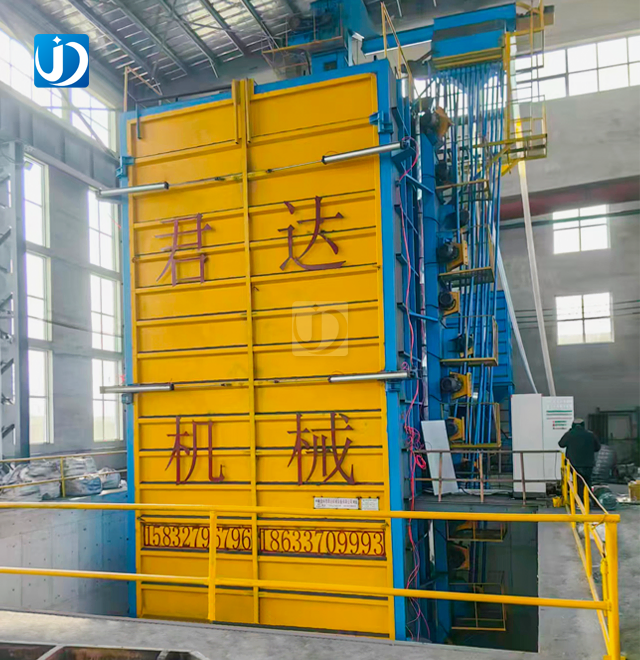
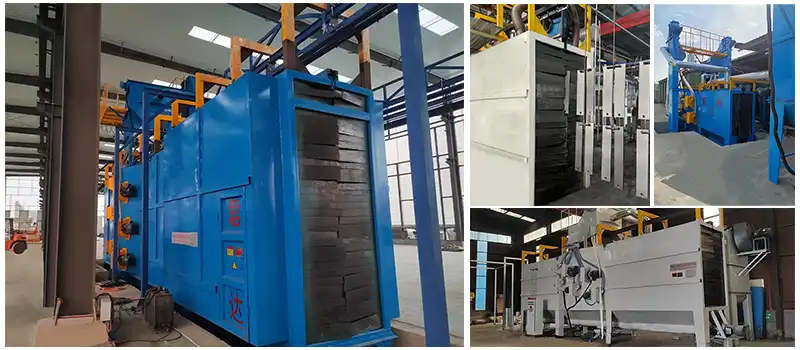
To segregate loading and unloading from blasting, the facility used a Q48 "hook pass-through shot blaster" with a 24-meter train loop. While blasting continues in the sealed section, two workers transport cargo on and off the track at opposing ends. In six weeks after the facility opened, production climbed from 24 to 39 equivalent pieces each shift, according to follow-up site visits. The spinning hook device could reach places that needed hand-touching, reducing missed coverage rejections.
How a Hook Pass-Through Blaster Raises Throughput?
Continuous Flow and Parallel Loading
The nicest part about a hook pass-through shot blaster is that it can load, blast, and empty at multiple spots on the track at the same time. While the first part is blasted, the next is hung and an unfinished part is removed. The blast chamber is kept active virtually the entire shift by moving hooks along the railroad. During load changes, it's active. This arrangement turns idle time into useful time and maintains blast wheel horsepower.
A Simple Capacity Calculation You Can Run Today
Do this calculation with your part data before believing a supplier's capacity promise. It makes the distinction between a theoretical ceiling and your floor's.
60 times hook pitch time in minutes = theoretical units per hour. > Effective units per hour = theoretical units × use rate.
Hook pitch time depends on machine speed and hook spacing. Actual loading delays, inspection pauses, and maintenance breaks are shown by utilisation rate. Testing across Junda-supplied locations shows it's between 65% and 85% for well-run lines. With a 3-minute hook pitch, you could create 20 units each hour. Using the machine 75% of the time yields 15 units per hour. Put this number in your purchase order as a performance target.
The distance between hooks, the number of pieces on each hook, the surface grade, the weight and visible area of the workpiece, and floor loading might affect this number. Tracking these data before the first test run helps you compare them against the provider's promises.
Process Controls That Protect Quality
Different conveyor speeds, abrasive flow based on recipes, and tracking of turbine current make sure that the blast strength of a hook pass-through shot blaster is right for each type of part. If you need a light profile on a plate, you use a different recipe than if you need to aggressively descal a heavy casting. Before a part leaves the chamber unclean, automatic problem alarms let the operator know about overloaded turbines or low abrasive flow. This avoids having to do extra work that would show up later in painting or coating rejection.
Single Station vs Pass-Through Hook Systems ComparedSide-by-Side Comparison Table
In the table below, you can see what each system does well and where it fails on the shop floor.
| Criterion | Single-Station Hook Blaster | Hook Pass-Through Shot Blaster |
|---|---|---|
| Material flow | Batch, one load at a time | Continuous or indexed movement |
| Best strength | Flexible for varied, low-volume parts | Repeatable output at medium to high volume |
| Handling | More crane time per part | Loading runs parallel with blasting |
| Changeover | Often quicker for mixed jobs | Needs planning for hook compatibility |
| Throughput stability | Depends heavily on operator pace | Depends on line balance and conveyor speed |
| Footprint | Smaller | Needs loading, blast, and discharge zones |
| Best fit | Prototypes, one-off jobs | Repeat orders with steady takt time |
| Main risk | Idle chamber time | Higher setup and integration cost |
How Pass-Through Hooks Compare to Tumble and Roller Systems?
Small, tough parts that can handle rolling contact work well in tumble blast machines. But large castings or frames that are made on a lathe or mill could damage them if they hit something inside the tumble drum. Shot blasters and roller conveyors can handle flat plates and rolled sections well, but they can't hold heavy, curved forms like a monorail hook system can. If you need to clean large, oddly shaped, or heavy parts that need to be hung and not touched, a "hook pass-through shot blaster" can do the job without the batch delays that come with a single station.
Which Production Volumes Justify a Hook Pass-Through?
Volume and Product-Mix Thresholds
It's not so much the amount of raw materials that matter, but how they are used, how much labor costs, and what surface grade is needed. A plant that gets steady daily orders for the same parts gets paid for faster than one that has times of high demand followed by weeks of low demand. This machine may still cost less to run per part if the mix of parts changes every few loads and batch sizes stay small. This is true even though it goes slower each turn.
Three Use-Case Profiles
Most of the buyers we work with in the industrial tools, foundry, and structural steel fields fit into these three groups.
- OEM production line: Repetitive parts such as excavator arms, axle housings, or standardized frame sections benefit from fixed takt time, recipe-based control, and direct feed into painting or coating lines. Traceability data from the control system supports quality audits for export customers.
- Distributor or contract shop: Handling multiple customer specifications calls for flexible hook layouts and quick recipe changes rather than one fixed program. Spare-parts inventory should stay lean but cover common wear items like liners and turbine blades.
- Foundry, forge, or steel plant: Heavy castings, forgings, and structural beams need hook load ratings up to 10 tonnes, thick manganese liners, and abrasive recovery sized for high dust loads from scale and sand residue.
These specs help you match the hook load and machine size to the parts your plant actually ships, so you don't have to buy extra space that you won't need.
When a Pass-Through System May Not Be Suitable?
The extra line length that a hook pass-through shot blaster system needs is rarely needed when the number of orders is low and uncertain. Parts that are fragile and could swing and hit each other inside the chamber might work better on a hanger machine where the operator has more control. The continuous-flow benefit of this system is lost when it has to be repositioned by hand a lot for different shapes.
Cycle Time and Units per Hour in Real Production Lines
How to Measure Real Cycle Time on Your Floor?
During a full shift, keep different records for loading time, blast time, transfer time, unloading time, inspection time, and rest. Don't just trust the nameplate rating; use a sample of at least 20 parts that are typical instead. The rating is based on perfect conditions with no loading delay. Keep track of cycle time for each hook and each part separately, since hooks with more than one part change the math.
Buyer Input vs Supplier Verification Table
So that everyone is on the same page, use this table when writing your detailed specification to a seller.
| Specification | Required Buyer Input | Supplier Verification |
|---|---|---|
| Workpiece dimensions | Minimum and maximum envelope | Chamber and hook clearance |
| Workpiece weight | Maximum per part and hook | Rated hook and conveyor load |
| Production target | Parts or tonnes per hour | Demonstrated line capacity |
| Surface requirement | Cleanliness and profile target | Abrasive coverage test |
| Conveyor speed | Required takt time | Variable-speed control range |
| Availability | Planned operating schedule | Maintenance and service plan |
Before final acceptance, ask for records, photos, and inspection reports from the test run. By testing the machine at minimum, standard, and maximum loads, you can be sure that it will work as well as it's supposed to on all of your parts, not just the demo part.
Hook Pass-Through Blasting in Foundries and Forging Shops
Foundry Applications After Shakeout
When castings come off the shakeout line, they have sand residue, scale, and other surface contaminants that need to be cleaned off before they can be machined or coated. Whether a hook pass-through system or a softer hanger machine fits better depends on the part temperature, where the risers are located, and how fragile the thin sections are. Parts with thin walls that are easily damaged by collision may need lower blast wheel speeds even when they are in a pass-through chamber.
Forging, Structural Steel, and Heavy Fabrication
A lot of the time, heavy mill scale or heat-treatment scale that doesn't come off easily can be found on forgings, H-beams, and welded frame sections. Most important here are the hook load rating, the stability of the suspension while it rotates, and the thickness of the manganese liner, since stronger abrasive impacts and longer blast times wear down equipment faster. A rotating hook that can go from 2 to 4 r/min and is controlled by a variable frequency drive lets workers find the right mix between cleaning heavy parts thoroughly and speeding up the cycle for lighter parts. This is a control point that some of our engineering machinery clients specifically ask for when they are choosing.
Manual Handling vs Hook Pass-Through: Cost Compared
Cost Categories Buyers Often Miss
Along with the price of a hook pass-through shot blaster, buyers should also think about the cost of engineering, foundation work, electrical hookup, and installing a dust collection system. Over the course of a year, the work that goes into loading and removing and replacing abrasives and wear parts like liners, turbine blades, hooks, filters, and bearings adds up. The real total includes costs for downtime, training, and hanging on to spare parts. It's easy to underestimate these costs when making the original budget.
Total Cost of Ownership Table
Over the course of three years, this comparison shows where each method is likely to cost more or less.
| Cost Factor | Manual or Single-Station System | Hook Pass-Through System |
|---|---|---|
| Initial investment | Lower in many cases | Higher due to conveyor and integration |
| Labor intensity | Typically higher | Lower after installation settles in |
| Throughput | More variable | More predictable for repeat products |
| Maintenance complexity | Lower to moderate | Moderate to high |
| Changeover flexibility | Often higher | Depends on hook and recipe design |
| Expansion potential | Limited by station capacity | Better suited to line growth |
| ROI sensitivity | Labor cost and low utilization | Utilization and production stability |
Based on post-installation checks on about 30 installations, factories with two or more shifts that use the same part families usually make up the difference in price between a single-station and pass-through system within 14 to 22 months. This is mostly because they save money on labor and don't have to do as many rework cycles.
Key Features to Look for Before You Buy
Machine and Process Specifications
When you put your largest and most complicated part up against it, make sure the turbine type, blast wheel diameter, motor power, abrasive flow rate, chamber wear protection, conveyor speed range, and hook capacity are all right. Check how well the automatic grit recovery works, how well the dust collection works, and how easy it is to switch filters without having to shut down for a long time. For plants that manage equipment at more than one site, PLC and HMI controls should allow for recipe storage, safety interlocks, emergency stops, and remote diagnostics.
Supplier Track Record and Documentation
Before you sign, make sure you have drawings of the equipment, operating manuals, electrical schematics, risk assessments, lists of spare parts, and maintenance schedules. For machines going to Europe, check that they have the CE marking required by current safety rules for machinery. For tools going to the US, make sure that the guarding and lockout/tagout rules are the same as what OSHA requires. When a recorded cleaning grade is important for your customer contracts, ISO 8501-1, ISO 8502, ISO 8503, and ISO 8504 can help with surface preparation evaluation.
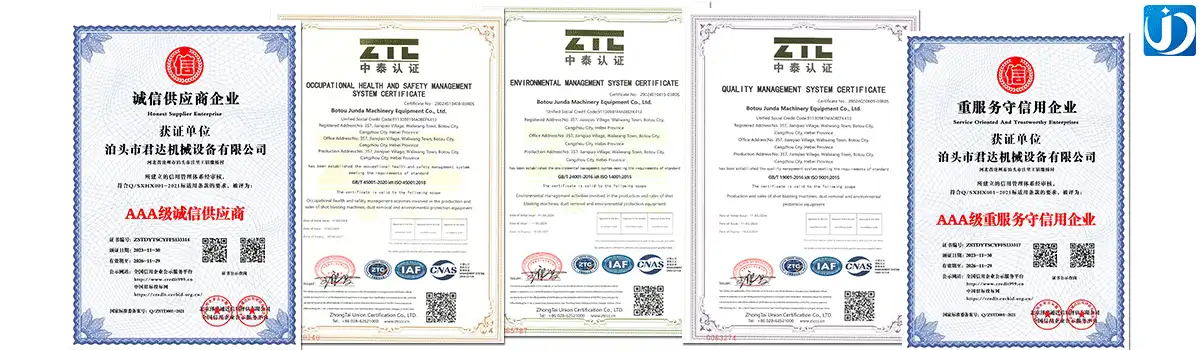
Junda Machinery is based in Botou, Hebei Province, which has been a hub for casting equipment and dust removal equipment in China for a long time. The company is certified by ISO 9001, ISO 14001, and ISO 45001, and they provide full technical paperwork to support export approval. Two utility model patents and seven software copyrights cover dust monitoring, intelligent control, and production data systems built into current machine lines. The company has been making hook pass-through shot blaster equipment for twenty years.
How to Plan and Install a Hook Pass-Through Line?Site and Layout Planning
Before deciding on the final length of the track, make a map of the whole process, from material coming in to loading, blasting, inspection, and storing finished goods. Make sure you know early on about the building's height, base load capacity, crane access, ventilation, power supply, and dust release route. Changing any of these things after the fact will cost more money and take more time. Make sure there is clear access for replacing turbines, changing liners, and servicing filters so that routine maintenance doesn't need to take apart nearby structures.
Common Installation Risks and How to Avoid Them
People who buy something without first trying it often find that the final product doesn't meet the title figure once production starts. The most common risks we see and how to stop them before they cause downtime are shown below.
| Risk or Pitfall | Potential Effect | Mitigation |
|---|---|---|
| Capacity based only on nameplate data | Missed production target | Require representative trial testing |
| Incorrect hook loading | Poor coverage or overload | Approve loading diagrams and load limits |
| Insufficient dust extraction | Safety and compliance issues | Validate airflow and filtration design |
| Poor abrasive separation | Faster wear, inconsistent cleaning | Monitor separator settings regularly |
| Inadequate maintenance access | Longer downtime | Review service clearances before fabrication |
| Unclear installation scope | Cost and schedule disputes | Define responsibilities in the contract |
Junda Machinery sends regular customized machines about 15 days after an order is confirmed. For teams setting up equipment without an on-site engineer, the company offers online installation help, English instructions, and training videos.
Conclusion
It's hard for a single-station hook shot blaster to work when loading, shooting, and removing happen one after the other instead of all at once. A hook pass-through shot blaster is best for factories that make the same kinds of parts every day and have a measured takt time goal. Not a single spec sheet number can tell you which one is best. What matters are the confirmed hook load, chamber size, surface grade needs, work cost, and total floor space. It may still be better for companies with mixed, low-volume, or very fragile work to use a batch hanger, tumble, roller conveyor, or mesh belt system instead of a pass-through line.
FAQ
What is a hook pass-through shot blaster?
A "hook pass-through shot blaster" is an abrasive blasting machine that works continuously or partially continuously. The workpieces hang from hooks on a track and move through loading, blasting, and discharge zones without stopping the whole line for each cycle.
How does a hook pass-through shot blasting machine work?
Hanging parts from up to 10,000-kilogram hooks move through a roomy space where steel shot is thrown at a rotating workpiece by turbine wheels. Recovery systems, such as an air-wash separator and a bucket elevator, automatically collect and use abrasive again.
Is a pass-through shot blaster better than a hanger shot blasting machine?
Because loading and dumping happen at the same time instead of one after the other, it works better for repeatable, high-volume production. A regular hanger machine with one station can still work better for making few parts or parts that are very different from one another.
What products can a hook pass-through shot blaster process?
Parts of industrial tools, frame sections, big castings, structural steel, pipes, and forgings are all common uses. The right method to use relies on the part's weight, shape, fragility, and the level of cleaning needed on the surface.
How is hook pass-through shot blaster production capacity calculated?
Hook spacing, conveyor speed, the number of parts per hook, blast time, and how well the hooks are loaded all affect the capacity. To get a theoretical rate, divide 60 by the time it takes to pitch a hook in minutes. Then, increase that number by a real-life employment rate of 65% to 85%.
What abrasive media works with a pass-through shot blaster?
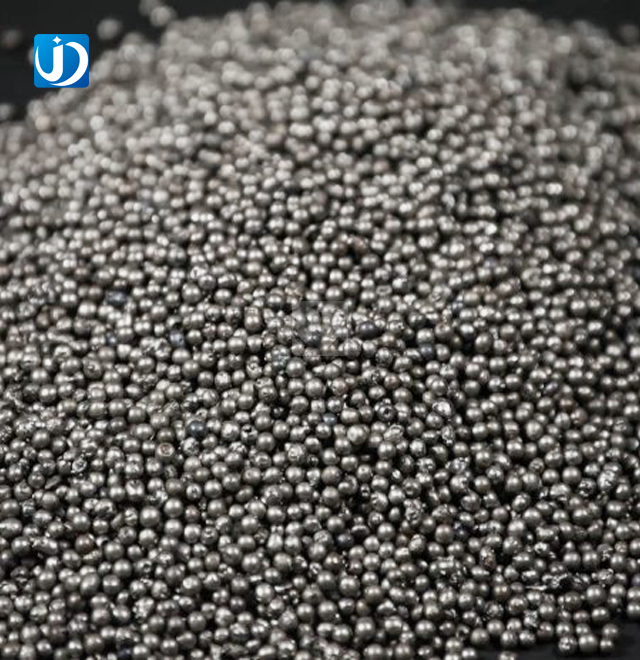
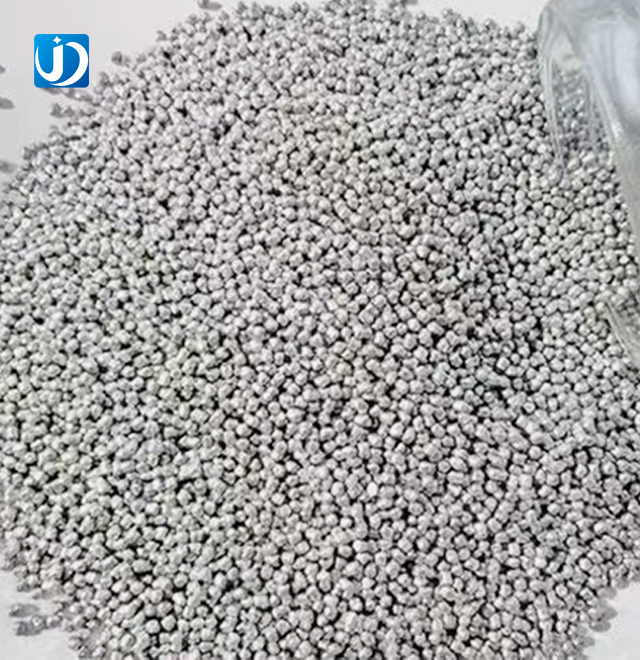
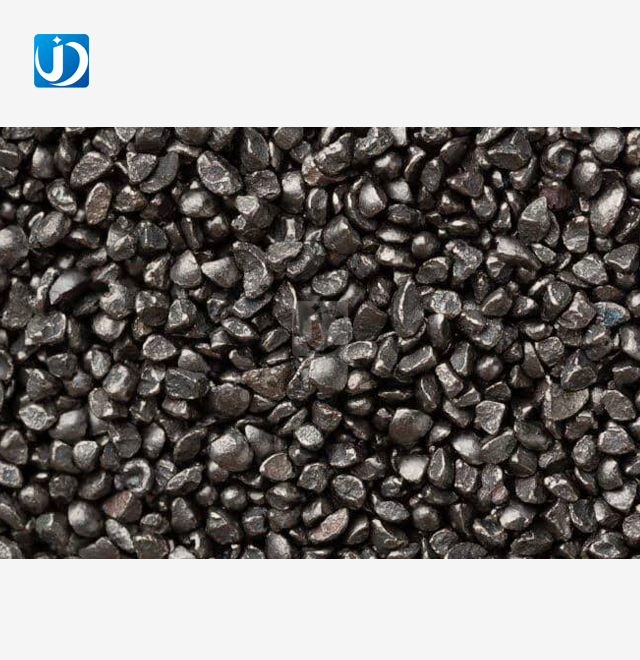
Most of the time, steel grit and cast steel shot are used to clean up structural steel and castings. Which media to use depends on how hard the base is, what kind of surface shape is needed, and what coating or painting process will come next.
What maintenance does a hook pass-through shot blaster need?
The manganese liners, hooks, conveyor bearings, filters, and abrasive separator settings are all checked regularly. Regular preventive maintenance checks keep wear rates under control and make sure that dust emissions and blast spread are the same between shifts.
Talk to Our Engineering Team About Your Line
When manufacturers switch from single-station to continuous flow, they usually start by asking themselves if this machine will fit their largest and heaviest part and the building they already have. We will size the hook load, chamber dimensions, and track length based on your real production data after you send us your part drawings, the amount of work you want to get done each shift, and the length of the floor that you have available. Technical questions are answered within 6 to 8 hours by Junda Machinery, a company based in Botou, Hebei that makes "hook pass-through shot blasters." For help with your review, email our tech team at junda001@jundablast.com.
References
1. International Organization for Standardization, ISO 8501-1:2007 — Preparation of Steel Substrates Before Application of Paints and Related Products, 2007. Referenced in the surface cleanliness discussion under "Key Features to Look for Before You Buy."
2. International Organization for Standardization, ISO 8502 series — Tests for the Assessment of Surface Cleanliness, ISO. Referenced alongside surface preparation grading requirements.
3. International Organization for Standardization, ISO 8503 series — Surface Roughness Characteristics of Blast-Cleaned Steel Substrates, ISO. Referenced in supplier documentation requirements.
4. European Commission, Machinery Regulation (EU) 2023/1230, 2023. Referenced in the CE marking discussion for EU-bound equipment.
5. U.S. Occupational Safety and Health Administration, Abrasive Blasting Guidance and Machine Guarding Standards, OSHA. Referenced in the compliance section for US-bound machines.
6. AMPP (Association for Materials Protection and Performance, formerly SSPC/NACE), Surface Preparation Standards and Guidance for Industrial Coatings, AMPP. Referenced in surface preparation grade discussions throughout the article.
About the Author
James Li is a Surface Preparation Equipment Engineer with a background in shot blasting machine design, hook load engineering, and abrasive recovery systems. He has worked directly with foundry, forging, and structural steel plants across Southeast Asia and South Asia on line layout, commissioning, and throughput troubleshooting. His work focuses on matching machine specifications to real floor conditions rather than nameplate ratings alone.

USER EVALUATE
Real feedback and practical experience shared by worldwide partners who purchased our machinery and environmental treatment devices.