_1786959752558.webp)
How to Unveiling the Right Type for Your Blasting Needs—Steel Shot
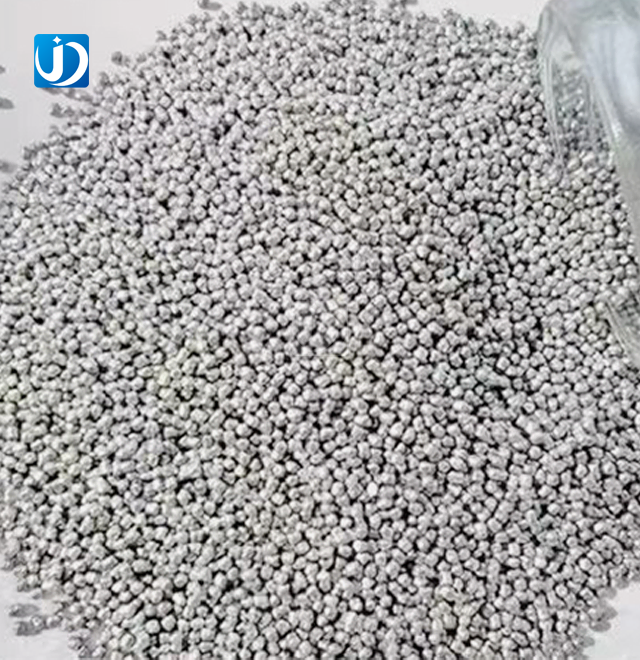
Choosing the correct abrasive media for industrial surface treatment can determine whether your production line runs smoothly or grinds to a costly halt. Steel Shot stands out as a premium spherical abrasive specifically engineered for efficient rust removal, surface preparation, and shot peening across foundry, automotive, aerospace, and structural steel applications. Its spherical geometry ensures uniform impact distribution, maximizing cleaning efficiency while minimizing substrate damage. Unlike angular abrasives such as steel grit or slag, Steel Shot delivers consistent surface profiles and can endure thousands of recycling cycles, directly reducing operational costs. Understanding how to match shot properties—hardness, size, and composition—with your specific blasting objectives is essential for procurement managers who demand reliability, cost control, and quality consistency across every production batch.

Understanding Steel Shot: Composition, Types, and Manufacturing Process
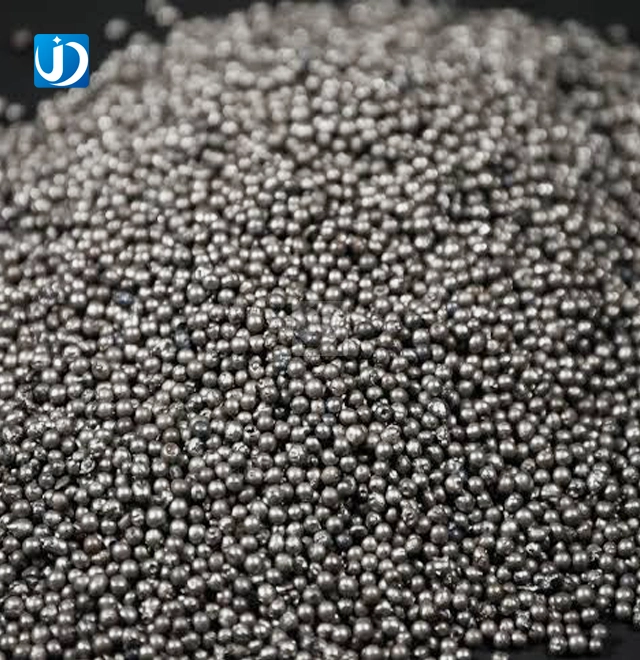
Steel Shot is produced by carefully atomizing liquid high-carbon steel, then heat-treating it to improve its texture. This method makes dense, spherical objects whose hardness and longevity can be predicted. Controlled manufacturing makes sure that the physical properties of each batch stay the same, which is important for getting consistent surface finishes.
Production Methods and Microstructure
Modern Steel Shot is made using atomization technology, in which molten steel is sprayed through high-pressure nozzles to make uniform droplets that harden in the air into sphere-shaped particles. Once the particles have cooled, they are tempered to get them to the right hardness range, which is usually between HRC 40 and 62 but can be higher or lower depending on the need. This heat treatment creates a tempered martensitic structure that strikes a good balance between toughness and hardness. This keeps the metal from breaking too soon when it hits something at high speed. The abrasive's thick metallographic structure makes sure that it keeps its useful kinetic energy when it hits workpieces. This means that it removes rust and changes the texture of surfaces without breaking too easily.
Size Specifications and Hardness Grades
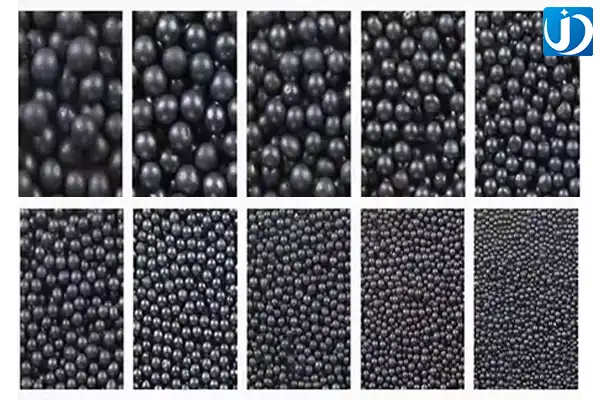
Standard Steel Shot sizes run from 0.2 mm to 3.0 mm and are broken down into 12 different types that meet SAE J444 requirements. Some common names are S280 and S330, which are used a lot in foundries and steel fabrication shops. Smaller particle sizes, like S170, give surfaces that are better for sensitive parts a smoother finish, while larger grades, like S550, remove scales quickly from highly oxidized castings. There are also different hardness ranges. General-purpose grades have an HRC of 40 to 50, while high-hardness variants have an HRC of 55 to 62 and are used for tough peening jobs in the aerospace and automotive industries. Specialty choices, such as stainless steel, zinc, and aluminum shot, protect surfaces that are easily corroded and cannot have metal contamination.
Differentiating Steel Shot from Alternative Media
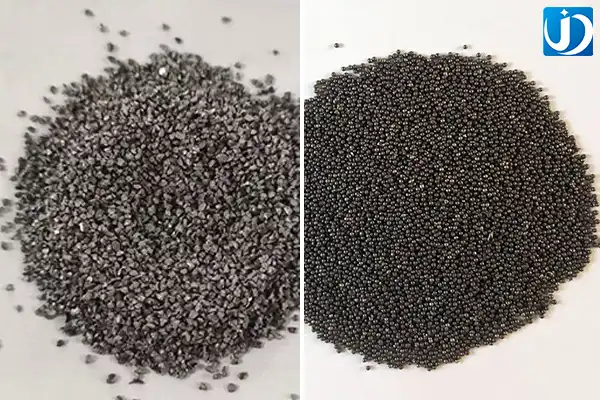
Steel Shot is very different from steel grit, which is made up of sharp bits that are meant to cut quickly. Steel grit is great at getting rid of heavy mill scale and getting surfaces ready for coats, but Steel Shot gives better finishes and is easier to recycle. Steel Shot has more impact energy and lasts longer than glass beads, but glass beads are still better for cleaning soft metals like aluminum that need to be free of ferrous contamination. Media made of garnet and slag can only be used once. Steel Shot , on the other hand, can be recovered 3,000 to 5,000 times, which greatly reduces the long-term costs of consumables. This ability to be recycled is in line with sustainability goals and makes getting rid of waste easier, which makes Steel Shot the best choice for businesses that make a lot of products.
Matching Steel Shot Properties to Your Blasting Needs
To choose the right abrasive, you must first be clear about what you want to achieve with the surface treatment. Whether you want to get rid of stubborn rust, get surfaces ready for coatings to stick, or create compressive stress through shot peening, each job calls for a different type of shot. When media aren't matched correctly, it can cause uneven surface profiles, too much damage to the substrate, or faster abrasive breakdown.
Defining Your Blasting Objectives
Cleaning processes focus on getting rid of rust and metal without changing the shape of the material too much. Peening is a method of intentionally causing controlled plastic deformation to improve the fatigue resistance of important parts like turbine blades and transmission gears. To get a surface ready for coating, it needs to reach a certain level of roughness, measured in micrometers. This makes sure that the protected layers stick to the base mechanically. Once you know your main goal, you can narrow down the range of shot sizes and hardnesses that will work best, getting rid of options that don't do their job or cost too much.
Selecting Size and Hardness Based on Substrate
The best shot selection is directly affected by the substrate material and the shape of the parts. Higher hardness grades (HRC 55–62) are needed to clean hard substrates like tool steel or heat-treated castings without too much abrasive breakdown. On the other hand, middling hardness (HRC 40–50) keeps the surface of softer materials like mild steel or aluminum from getting damaged. Coverage density and contact energy are affected by the size of the particles. Smaller shots have higher coverage rates, which are great for surfaces with complicated shapes, while larger particles clean more deeply on heavily scaled surfaces. Rates of consumption are usually between 0.1 and 0.3 kg per square meter, but can change depending on the size of the shot and how hard it is blasted.
Environmental and Safety Considerations
Recycling that is done efficiently has a big effect on both prices and the earth. The round form of Steel Shot makes it easy to separate broken particles through air classifiers and screening devices. This allows for closed-loop recycling that reduces trash. If you keep your recycling systems in good shape, shots can last up to 3,000 to 5,000 impact cycles, which means you can buy up to 70% fewer consumables each year than with single-use media. As part of safety rules, dust containment systems must be used correctly because metallic particles can be harmful to the lungs. Complete dust collection built into shot blasting equipment makes sure that OSHA rules are followed and that the workplace stays clean.
Procurement Strategies for Industrial Steel Shot: What Buyers Should Know
Finding providers who always deliver quality goods, clear pricing, and reliable transportation is key to successful procurement. For factories that need five to thirty tons a month, supply problems or differences in quality from batch to batch that throw off production parameters are not an option.
Evaluating Supplier Quality Standards
Manufacturers with a good reputation keep certificates like ISO 9001, ISO 14001, and ISO 45001, which show they care about quality control, being good to the environment, and keeping workers safe. Third-party testing services make sure that the product meets the requirements of SAE J444, which includes checking the particle size distribution, hardness ranges, and microstructural integrity. Before committing to large orders, ask for proof of certification and test results. If there are problems with the quality, you can connect batch numbers to specific production runs from sources that have been around for a while. This openness lowers danger and speeds up the process of solving problems.
Pricing Models and Inventory Management
Steel Shot prices depend on how much the raw materials cost, how hard the production is, and how many orders are placed. Bulk buying deals usually have discounts at 50-ton, 100-ton, and 500-ton levels, which let customers who buy a lot of goods save a lot of money per ton. Different types of packaging affect how well they can be handled. For example, 25 kg woven bags are good for loading by hand, while 1,000 kg ton bags (1000 x 1000 x 1200 mm) work perfectly with automated feed systems. To find the right balance between inventory levels and lead times, you have to figure out monthly consumption rates. Keeping 30–60 days of safety stock on hand keeps production going during supply problems and keeps too much capital from getting stuck in inventory.
Customization and Lead Time Planning
In some cases, specialty uses need particle sizes or hardness grades that aren't normal. Talk to the supplier early on about the ability to customize, making sure that you understand the minimum order quantities and production schedules. Standard sizes like S280 and S330 usually ship within 15 days, but wait times for special orders can go up to four weeks. Emergency orders that need to be delivered within 48 hours cost more, but they give companies important flexibility when production suddenly goes up. Set up deals that lock in prices for three or twelve months at a time. This will protect your budget from changes in the prices of raw materials.
Best Practices for Using and Recycling Steel Shot in Industrial Applications
To get the most out of Steel Shot , you need to follow strict operating procedures for handling media, cleaning, and safety. With the right care, abrasives last longer, cost less, and the quality of the surface treatment stays the same.
Recycling Techniques and Lifespan Extension
For recycling to work, it needs to start with air separation and screening systems that separate broken particles from whole shots. Regular upkeep of the system keeps the sorting efficiency high and keeps small pieces from getting into the working mix. Sieve analysis should be used once a week to check the particle size distribution. The best working mixes have equal amounts of large, medium, and small particles. Instead of waiting for media to completely break down, replace it in small pieces as it wears out. This will keep blasting performance stable. High fatigue resistance lets each particle go through 3,000 to 5,000 impact cycles, but rust scale or foreign debris speeds up the breakdown. Use pre-blast cleaning procedures to get rid of small contaminants before shot blasting to protect the quality of the media.
Safety Protocols and Personal Protection
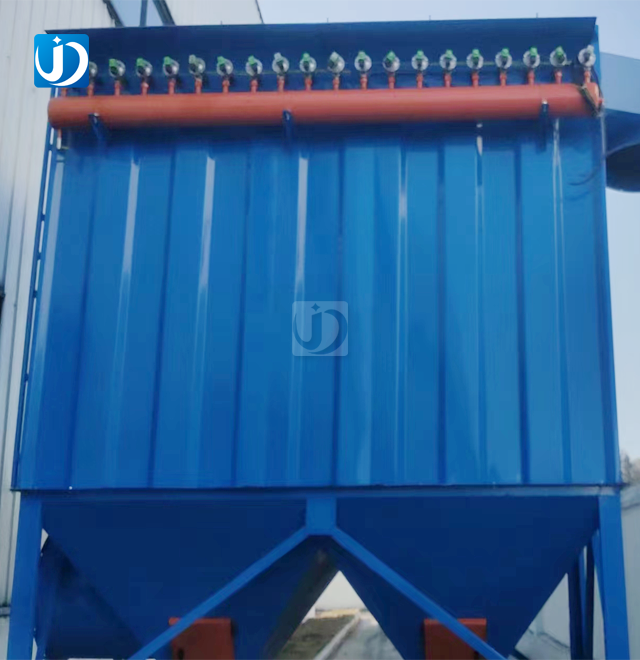
Metal dust, noise, and high-speed particles are all dangers that come from abrasive blasting, so it's important to take extra safety precautions. Operators must wear the right safety gear, such as respirators, hearing protection, face shields, and clothes that won't tear easily. Enclosed blast cabinets and automated systems keep operators safer and make the process more consistent. To follow air quality rules and keep workers healthy, dust collection systems need to be able to filter out 99.5% of the dust they collect. Check the blast nozzles, hoses, and pressure tank safety valves for wear and damage on a frequent basis. Safety training and danger ratings that are written down show that you are following the rules and lower your risk of being sued.
Industry Case Studies and Performance Validation
Foundries that use Steel Shot S330 to clean engine blocks say they use 40% less abrasive than those that use cast iron shot. This is because Steel Shot S330 is better at recycling. Companies in the aerospace industry that use high-hardness shot (HRC 58–62) for peening turbine blades report uniform compressive stress patterns that increase the fatigue life of parts by 50%. When structural steel makers are getting ready to build a bridge, they use S280 shot to meet the ISO 8501-1 SA 2.5 cleanliness standards. This makes sure that the coating sticks well and the steel doesn't rust over time. These real-world uses prove Steel Shot's technical benefits in a wide range of industries, giving procurement leaders peace of mind as they consider other media options.
Conclusion
If you choose the right type of Steel Shot , surface cleaning can go from being expensive to being a competitive edge. Procurement managers make sure that production costs and quality stay stable by understanding the basics of composition, matching properties to application needs, enforcing strict procurement strategies, and following best practices for recycling and safety. Steel Shot is the best abrasive for foundries, automakers, aerospace companies, and structural steel producers around the world because it can be recycled easily, performs consistently, and works with a wide range of surfaces. When you work with certified providers who offer expert support, clear quality paperwork, and quick logistics, you can be sure that your operations will keep up the speed and dependability that competitive industrial markets require.
FAQ
1. What distinguishes Steel Shot from steel grit in practical applications?
In real life, what makes Steel Shot different from steel grit? Steel Shot's circular shape makes it perfect for cleaning and peening without removing the base too quickly, which results in smoother finishes. Steel grit is made up of sharp bits that are meant to cut. They get rid of heavy mill scale and make anchor profiles for coats. Choose steel grit when you need to remove material quickly and aggressively, and Steel Shot when you want a smooth, recyclable surface.
2. How do I determine the optimal shot size for my specific application?
The best size relies on the shape of the part, the finish you want on the surface, and how hard the base is. Smaller sizes (0.2–0.6mm) give finer finishes that are good for precision parts, while larger sizes (1.5–3.0mm) give high-energy impacts that are good for heavy descaling. Before buying in bulk, look at particle size charts that are in line with SAE J444 standards and do some test runs to make sure they work.
3. Can Steel Shot be recycled indefinitely without performance loss?
Even tho Steel Shot is very easy to recycle, it does break down over time when it is hit over and over again. If you recycle properly, the particles will last for 3,000 to 5,000 rounds, but they will break down over time and need to be replaced. Regularly check the distribution of working mix particles and replace worn-out media to keep blasting working well and save money.
Partner with Junda Machinery for Superior Steel Shot Solutions
Junda Machinery has been shot blasting for twenty years and can help procurement managers who need a trusted source of abrasives and professional support. In line with SAE J444, our Standard Cast Steel Shot S280/S330 has a mild hardness and great impact performance thanks to its dense metallographic structure and proven toughness. We have 12 types of particles ranging in size from 0.2 mm to 3.0 mm, and their hardness levels run from HRC 40 to 62 to meet the needs of a wide range of applications. A longer recycling service life means you don't have to replace consumables as often, which directly lowers your total production costs. As a reliable Steel Shot provider, we keep a lot of stock on hand to ensure fast shipping. Most orders are filled within 15 days. Our ISO 9001, ISO 14001, and ISO 45001 certifications promise consistent quality and come with a lot of technical information to back it up. Get in touch with us at junda001@jundablast.com to talk about buying in bulk, making custom orders, and how our smart tracking tools can help you get the most out of your surface treatment work.
References
1. Society of Automotive Engineers. (2019). Surface Hardness Testing of Metallic Blast Media – SAE J444 Standard. SAE International Technical Publications.
2. International Organization for Standardization. (2018). Preparation of Steel Substrates Before Application of Paints and Related Products – ISO 8501-1. ISO Standards Catalogue.
3. American Foundry Society. (2020). Metallic Abrasives for Blast Cleaning and Surface Preparation: Selection and Quality Control. AFS Technical Publications.
4. National Institute for Occupational Safety and Health. (2021). Abrasive Blasting Operations: Engineering Control and Work Practices Manual. NIOSH Publication Series.
5. Metal Finishing Association. (2017). Shot Peening Applications in Aerospace and Automotive Manufacturing. MFA Technical Handbook Series.
6. Industrial Supply Association. (2022). Procurement Best Practices for High-Volume Consumables in Manufacturing Operations. ISA Market Research Report.

USER EVALUATE
Real feedback and practical experience shared by worldwide partners who purchased our machinery and environmental treatment devices.