How to Choose a Rotary Hanging Shot Blaster for Metal Parts
You should look at the part itself, not the catalog, if you want to buy a rotary hanging shot blaster for metal parts. For each part, write down its size, weight, material, finish, and damage level. Then pick a layout with a rotary hook, a table, or several hooks that let the blast stream hit all the surfaces without touching any of them. Check how big the blast wheel works, what kind of abrasive is used, how well it gathers dust, and how simple it is to reach the worn parts. Last, look at different quotes for the same work and test your own samples. So that mistakes that cost a lot of money don't happen, this guide was written to help purchasing teams and process engineers match a machine to real parts.
Understand the Machine and Your Parts
What a Rotary Hanging Shot Blaster Does
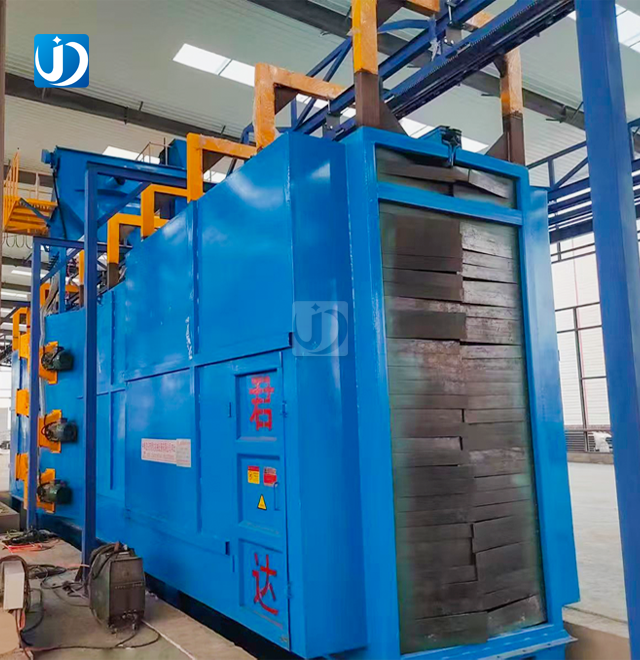
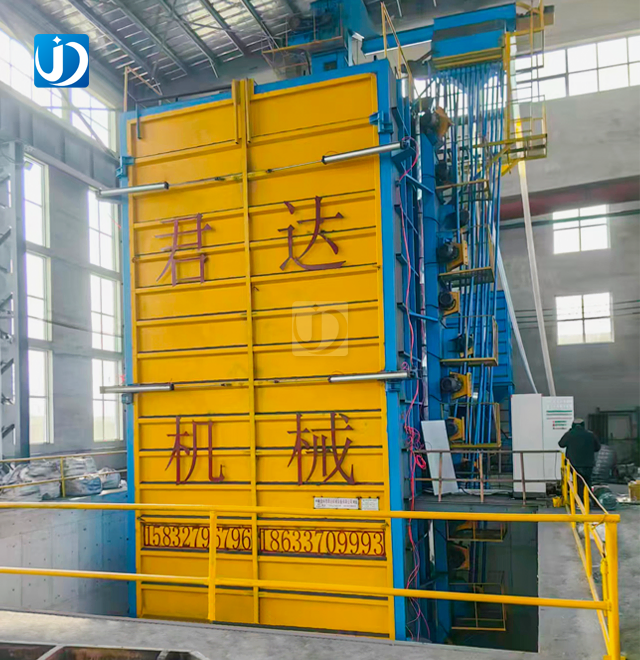
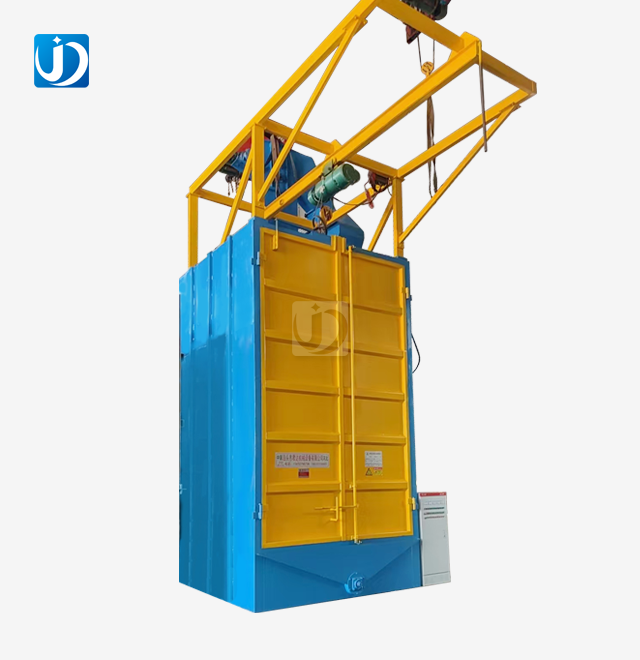
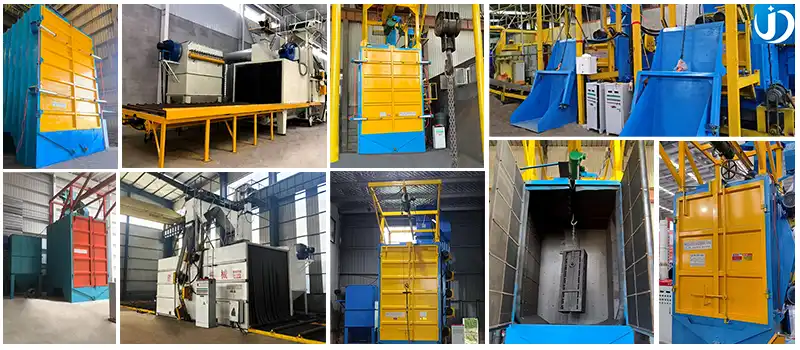
A rotary hanging shot blaster can hang metal parts from hooks, shelves, or a table that spins. Blast wheels quickly throw steel shot or grit. More surfaces can be reached by the stream of rough material since the load turns. Also, parts don't run into each other. It is possible for thin-wall castings, valve bodies, pump housings, and impellers to dent or scratch in a tumbling machine. You should know this. A full system includes the blast chamber, wear liners, blast wheels, rotary drive, abrasive recovery, separator, dust collector, and control cabinet. You can either load by hand or fully or partially automatically. I check every part to make sure it is safe, simple to clean, and easy to get to for repairs.
Document Your Metal Parts
Start with the parts to choose. Write down the biggest and smallest sizes, the center of gravity, the holes, the ribs, the threads, and the machined faces. Also write down how much each piece and the whole batch weighs. It's important to mark shadow zones, such as deep pockets or internal passages, because that's where the hooks and blast wheels will go. It's also important to think about material and contamination. The power of the blast needs to be changed for rust, mill scale, foundry sand, old paint, and heat-treatment residue. More work goes into setting up thin sections than heavy forgings. Picture and drawing help the supplier figure out how the part hangs and turns. I ask about hanging points right away because a part that tilts or swings when it's full cleans unevenly.
Set Production and Site Requirements
Next, give a number to your output goal. Write down the expected batch size, cycle time, daily output, loading time, and growth. Then check the site: floor space, ceiling height, crane access, power supply, ventilation, and noise limits. OSHA's noise standard in the US says that workers can only be exposed to 90 decibels of noise during an eight-hour shift. 29 CFR 1910.94 talks about how to make sure that abrasive blasting enclosures have enough air flow. Look to see if the machine can feed a line that is being used to coat, machine, or put things together. Once you agree on these things, all the suppliers will have the same job to do when you ask them for quotes.

Select a Configuration and Compare AlternativesMatch the Hanging Layout to the Part
Rotary hanging machines come with table tops that turn, single hooks, multi-hook carriers, monorail systems, and long lines of hangers. For groups of small parts, a rotary table works well. A strong single hook works well for making big castings or forges. Multi-hook carriers make the process go faster if the parts are the same. In plants with a lot of work, monorails or continuous lines work well with conveyors. You have more choices when you load by hand, and the cost is lower at first, but automatic handling is more reliable and saves you time. You can choose between running in batches or all the time. Over time, you should also find out if the machine can handle a wider range of goods. The real output is often limited more by the time it takes to load the hook than by the time it takes to blast.
Rotary Hanging vs. Tumble Belt
On a tumble belt machine, parts are turned over in a belt as they move through a blast stream. Small parts that last a long time and can handle contact get a lot of power from it. Parts that are big, fragile, or look important shouldn't be used with this method because it can damage and mark them. There is less contact and better control of the blast pattern with a rotary hanging shot blaster because it holds the part in place. I would choose the tumble belt for a lot of fasteners or small forged items. If the parts are valve bodies, have thin walls, or are an odd shape, I would choose suspended rotation. Not only speed should you be considered, but also part protection, cleaning quality, labor, energy use, maintenance, and the total cost of ownership.
Rotary Hanging vs. Air Blast and Hanger Types
When you use an air blast cabinet, you can finetune the nozzle. This is helpful for small jobs or cleaning up small areas, but it's very hard to use because the operator has to aim every pass. Blasters that are on wheels can cover more ground and work faster and more consistently. The word "Hanger-type" doesn't really do it justice. Check to see how the part fits in the space. Some suppliers use it for hangers that stay in place, while others use it for hooks, tables, or monorail trolleys that can turn. Ask for a drawing that shows the direction of rotation, the angle of the blast wheel, and the distance between the hooks. The picture tells you more about the item than its name, and it keeps you from having different ideas when you quote.
Evaluate Specifications, Abrasive, and Process SettingsRead Core Specs as a System
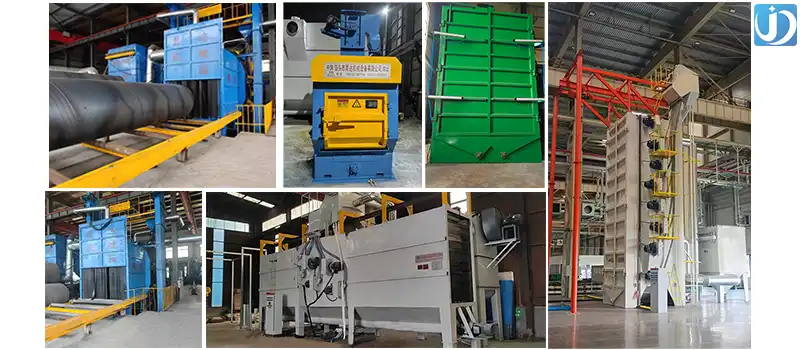
Read through the specs as a whole, not as a bunch of separate numbers. How much area is cleaned and how much is made depends on the number of blast wheels, their position, the motor's power, the flow of abrasive, and the pattern of their throws. The chamber should be big enough to hold the heaviest load plus some extra space. Hooks and carriers should have clear safety margins, load ratings, and rotation speeds. Check the abrasive recovery system, the separator, the dust collector, the filtration, and how easy it is to get to the wear parts. This makes it easier to do the same thing over and over again when a plant has more than one part family. PLC controls that store recipes, sound fault alarms, and maintenance reminders make this possible. In the United States, there are rules called NFPA 79 that explain how to design electrical parts for heavy machinery. I also want to know how long it takes to change the liner.
Choose the Right Abrasive
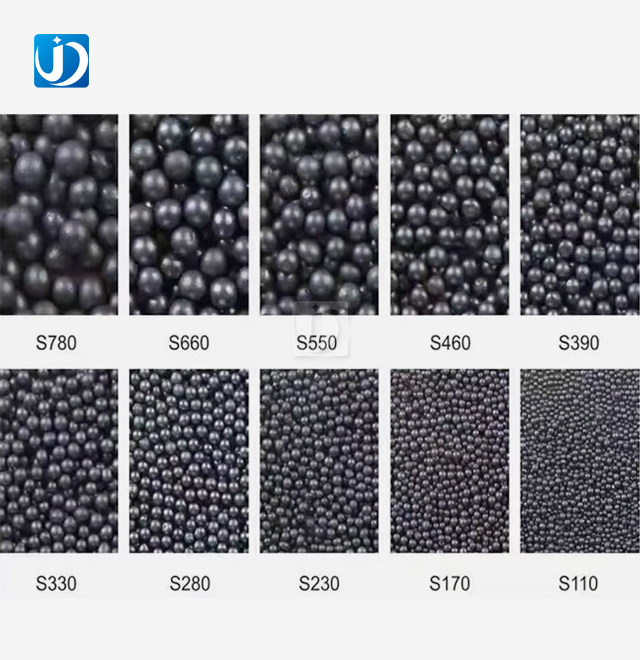
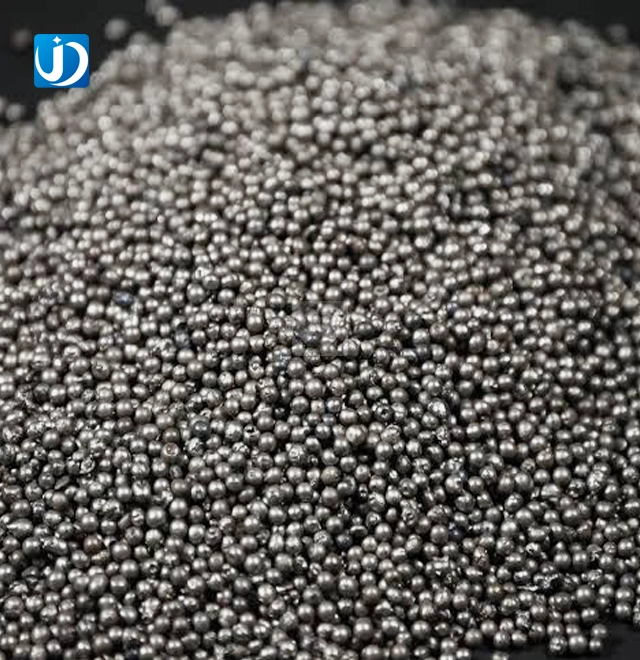
It changes how fast, smoothly, well, and cheaply it runs. For small features and light contamination, the fine steel shot works best. When you use bigger shot or steel grit, scale, rust, sand, and coatings come off more quickly and easily. Shot cuts things and leaves a round shape, while grit cuts things and leaves a sharp shape. It depends on how hard the material is, how thick the walls are, how rough the surface can get, how sensitive the edges are, and the profile of the coating. Size groups are based on SAE J444, and ISO 8503-1 talks about how rough steel is after it has been blasted. An ISO 8501-1 Sa 2.5 finish is often the same as an SSPC-SP 10 near-white metal finish. Request that the supplier show you how their examples worked.
Set Process Parameters by Testing
You should not guess about the rotation speed and blast time. Instead, you should test samples. A good recipe can modify the size of the media, the flow of abrasives, the length of the cycle, and the speed of the rotation. It's possible for thin walls to bend or break faster if you blast too hard. When you use too little, it leaves behind gunk in the cracks. Run test parts and then look for signs of deformation or collision, as well as unevenness, roughness, cycle time, and any signs of being run. In the PLC, the settings that work best can be saved so that every operator can use them again. Training is also important because if the settings are off and people hang badly, they can avoid making a lot of mistakes. I believe the last recipe should be written in the letter of acceptance.
Weigh Capacity, Cost, Quality, and Safety
Calculate Practical Capacity
Most of the time, "catalog capacity" means the heaviest load that the item can support, not how much weight your floor can support. In order to find the real output, you need to know the batch weight, the blast cycle, the changeover time, and the expected uptime. If it takes the same amount of time to load and blast, the chamber is empty for half of that time unless a second station or carrier takes over every so often. They should do the math with your parts. You should also talk about the next volume, since adding a station at a later time usually costs more than planning for it now. Being honest with the numbers will help you stick to your delivery schedule.
Look at Total Cost of Ownership
The price quote is a part of how much it will cost all together. Do not forget to add up the elevator's power use, the dust collector, the abrasive mix, the filters and liners, the work, the spare parts, the downtime, and the service. In a full quote, the necessary equipment is separated from the options. The quote also includes information about shipping, installation, training, and suggested spares. It might be a better deal to buy a more expensive machine that lasts longer, uses less media, is more automated, and gets technical support faster. Get a list of parts that wear out and how often they need to be replaced so that you can make an operating budget for the whole year.
Verify Quality and Safety Before Purchase
Ask the seller to show you proof that the machine can clean well enough for you and won't break any parts. Check the roundness, roughness, cycle time, abrasive settings, and deformation of test pieces that are like the whole piece. As for the foundation, electrical documents, manuals, wear-part lists, and safety information, you should ask for them. The electrical requirements for the final market should be checked, and the door interlocks, emergency stops, guarding, and dust control should also be looked over. The next step is to make a list of the requirements for the final performance test, noise, dust, output, and surface condition. When everyone agrees on the test method before shipping, there are no issues when it is put in place.
Choose a Supplier and Plan the Purchase
Evaluate the Manufacturer
If you want to find a rotary hanging shot blaster manufacturer you can trust, you should look at their engineering skills, production quality, experience exporting, knowledge of applications, and dedication to providing long-term service. Find out if the factory has made castings, forgings, or precision parts like the ones you want before and if it does application testing. Check the instructions, electrical standards, shipping instructions, packaging, and conformity documents for your market. You can change the size of the chamber, the hook systems, the layout of the blast wheels, the controls, the conveyors, and even the labeling that you put on it. Then look at the terms and conditions that come after the sale. These include setup, training for operators, remote support, spare parts, warranty, response time, and so on. When getting quotes, a supplier who quickly answers technical questions is likely to keep the machine running for a long time.
What Junda Machinery Offers
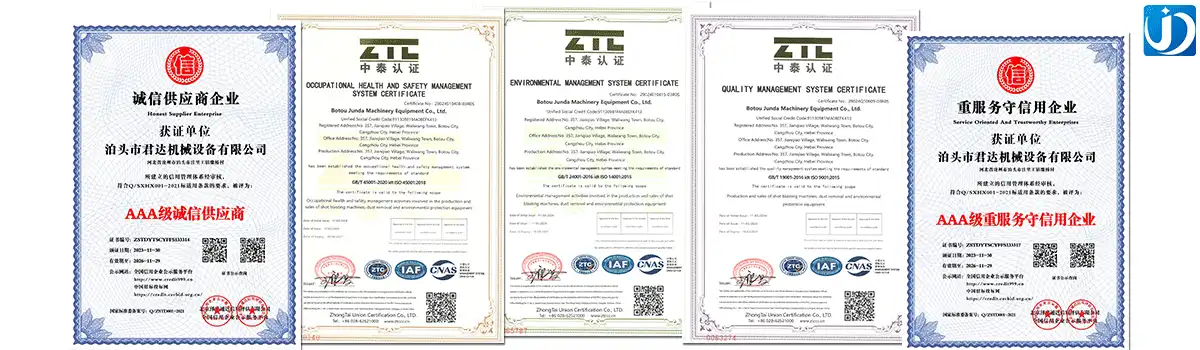
Junda Machinery has been making tools for shot blasting and getting rid of dust for 20 years. They are based in Botou, Hebei. We have ISO 9001, ISO 14001, and ISO 45001 certificates, and we can send technical documents and test reports outside the country. To make the machine work with the factory's voltage and conditions, we can change its size, how it paints, how it collects dust, how it is automatically controlled, and how it is private labeled. Customized standard equipment can be made in about 15 days, but this depends on the specifics. We answer questions within 6–8 hours. Part of the support is remote installation help, commissioning, operator training, English manuals, maintenance videos, and original spare parts that will last for a long time.
Build the RFQ and Implementation Plan
By making the RFQ clear, you can avoid technical confusion. Describe the materials, contamination, cleaning standards, production goals, preferred automation, utilities, available space, and needs for the final destination. Include pictures and numbers. Look at several quotes that cover the same things, such as getting rid of dust, separating abrasives, tools, controls, setup, training, warranty, delivery, and more. Plan the base, power, air flow, access routes, shipping the container, and starting up the machine before it gets there. Keep an eye on the machine's output, cleaning quality, abrasive use, energy use, downtime, and maintenance schedule to make sure it meets the needs.
Match the Machine to Your Application
For batch work and quick changes, rotary tables or multi-hook systems work best most of the time. When making heavy forgings and castings, you need stronger hooks, liners that last, strong blast wheels, and abrasive recovery that you can count on. Auto or continuous hanger systems that are linked to coating lines or conveyors work better with lines that do a lot of work. Low- to medium-volume plants that can be changed may do better with manual or semi-automatic machines that have recipes that can be changed. OEM projects should have written performance terms, application testing, custom tooling, and integration engineering.
Use a Final Decision Checklist
Check to see if the machine can handle all of your shapes, sizes, weights, and contamination before you sign. You can use tests or written calculations to find out the useful capacity, how well it cleans, how much energy it needs, how easy it is to maintain, and how well it protects parts. On the quote, it should say about the equipment, options, shipping, installation, training, warranty, and spare parts. The last bid isn't always the best choice. It's the system that has the best mix of service, safety, process results, output, and cost over time.
Conclusion
The parts of a rotary hanging shot blaster are the most important thing to look at. Some of these are the output and the conditions at the job site, as well as the parts' size, weight, shape, material, and contamination. The way a machine hangs is what makes it good for batch and handling work. It could be a table, a hook, several hooks, or a continuous line. The surface area that suspended rotation machines cover is bigger, and they protect fragile or uneven parts better than tumble belt and air blast machines. As a whole, the specs, abrasive choice, and process settings should work. Sample tests should be used to make sure of this. Catalog numbers and price quotes don't always show how much a product will cost over its entire life. There is less risk when there are written acceptance criteria, safety checks, and clear paperwork from the supplier. It's best to find a machine that can do everything you need it to do, including finish, flow, and service.
FAQ
Which parts suit a rotary hanging shot blaster?
It works well with heavy-duty parts that won't dent or scratch, like impellers, valve bodies, pump housings, thin-wall castings, and irregular forgings.
How does it differ from a tumble belt machine?
Parts don't break; they just hang there, so they don't touch much. Small things that last a long time can be put through tumble belt machines.
Can it clean castings to Sa 2.5?
It might work if the part and the contamination are the right size, shape, and speed of rotation. A sample is tested to make sure of the result.
What maintenance should I plan?
Regularly check the rotary drive, the separator, the hooks, the liners, the filters, the parts of the blast wheel, and the rotary drive. Always have extra wear parts on hand.
Request a Rotary Hanging Shot Blaster Recommendation from Junda Machinery
Send your part drawings, weights, materials, cleaning standard, and output goal to junda001@jundablast.com to get in touch with Junda Machinery. Our company has been making rotary hanging shot blasters for 20 years and is ISO 9001, ISO 14001, and ISO 45001 certified. Customization for OEM and ODM, English manuals, and responses in 6–8 hours are what we offer. You can find out more at jundablast.com.
References
1. ISO 8501-1: Preparation of Steel Substrates Before Application of Paints and Related Products, 2007
2. ISO 8503-1: Surface Roughness Characteristics of Blast-Cleaned Steel Substrates, 2012
3. SSPC-SP 10/NACE No. 2: Near-White Metal Blast Cleaning, 2007
4. SAE J444: Cast Shot and Grit Size Specifications for Peening and Cleaning, 2005
5. NFPA 79: Electrical Standard for Industrial Machinery, 2021
6. ASM Handbook, Volume 5: Surface Engineering, 1994

USER EVALUATE
Real feedback and practical experience shared by worldwide partners who purchased our machinery and environmental treatment devices.