How Does a Steel Shot Blasting Machine Achieve Consistent Surface Finishing?
What Is a Steel Shot Blasting Machine?
There is a machine called a steel shot blasting machine that quickly throws metal shot at a piece of work to clean, descale, deburr, or get the surface ready for covering. It takes place a lot on lines that make steel buildings, moulds, car parts, and construction equipment parts. The cost of running the equipment is less than with open-air blasting over the course of a full year because most of the grit is recycled and used again.
Definition, Scope, and What the Machine Is Not
People often mix up words that mean the same thing, so making lines clear helps. If you sandblast by hand, you don't use a blast wheel but instead use compressed air and a hand-held gun. This makes it different from steel shot blasting machines. Though shot peening doesn't clean, it does use controlled compression stress to make things last longer. Water is added to wet abrasive blasting to cut down on dust, and acid or alkaline baths are used to clean with chemicals instead of contact. It takes time and money to choose the wrong method because they are not all the same.
Steel Shot Blasting Machine Working Principle
You can do the steps in the process more than once. The work is first put on a table, a belt that moves, or a system of hooks. Then, an engine and an impeller power a blast wheel, which shoots steel shot at 60 to 85 meters per second. It hits the part, bounces off, and falls in a return hopper. Screens keep dust, broken pieces, and scale away from used shot. It is sent back to the hopper so that it can be used again. An air cleaner takes in dirty air from the room and out of the work area at the same time.
Main Steel Shot Blasting Machine Components
Different units have different sized parts, but they all have the same set of parts. The method is mostly made up of the things below:
- The throw pattern across the part surface is set by blast wheels, motors, and control cages. This is the single most important factor in making sure coverage is consistent.
- The chamber, wear plates, and conveyor systems keep the part in place, stop abrasive wear, and move the parts through the blast zone at a steady pace.
- The recycling loop is made up of an abrasive hopper, an elevator, and a separator. The separator screens out the fines so that only usable shot goes back to the wheels.
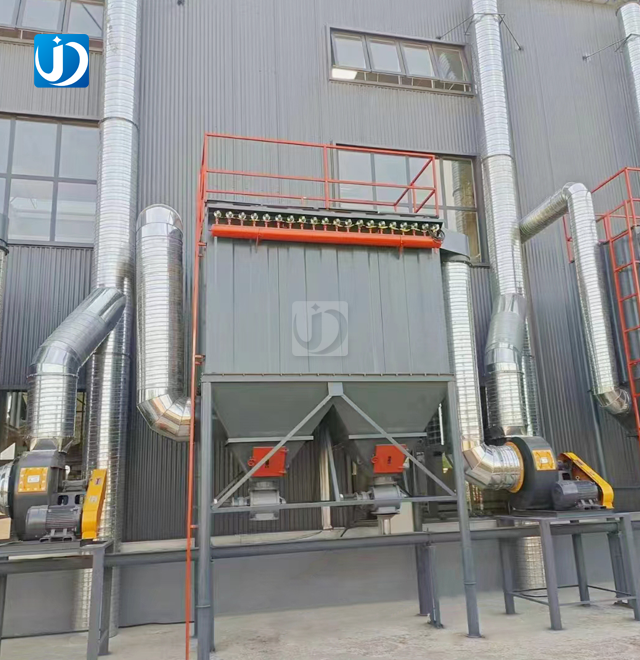
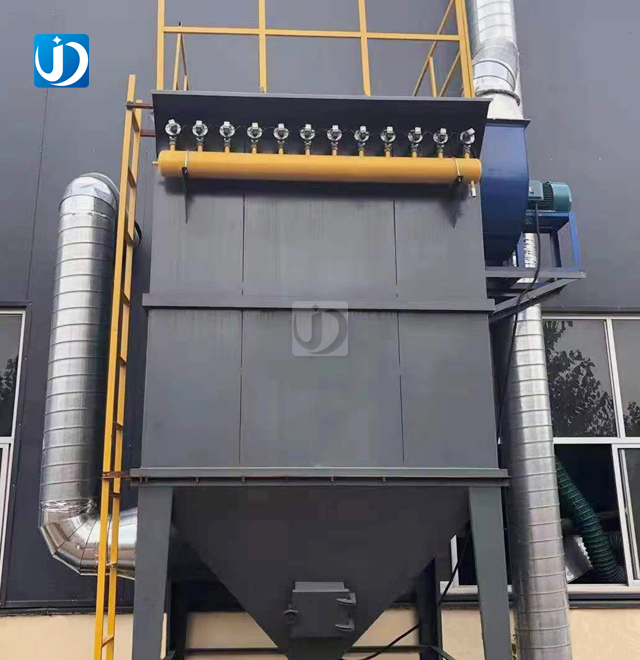
- The electrical control panel and dust collector keep the air clean and give workers a single place to change the speed, flow, and cycle time.
All of these parts work together. If, say, the barrier isn't strong enough, a well-tuned blast wheel won't help because dirty shot loses its cutting power quickly.
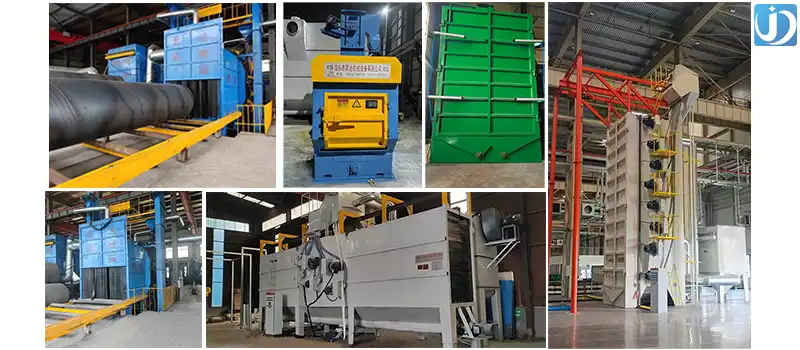
How Steel Shot Blasting Creates a Uniform Surface Finish?
It’s not one setting that will give you a uniform finish. The correct impact energy, abrasive coverage and exposure duration in a steel shot blasting machine ensures uniform surface preparation on the workpiece, even in hard to reach places. The precise results rely on the machine setup, abrasive medium and component shape
Impact Energy and Abrasive Coverage
The level of cleaning is determined by the wheel speed, shot mass, grit flow rate, and impact angle. Coverage is the amount of the surface that actually gets abrasive touch, not just the amount that can be seen. An adhesion test can fail even if 70% of the paint film is covered and the part looks clean. This is because the remaining 30% holds mill scale that lifts the paint film later. Too much impact energy also leads to trouble. When heavy shot loads hit thin steel profiles, they can bend. Also, areas that were over-blasted sometimes need to be fixed because the profile turned out rougher than what the coating specification allowed.
Part Positioning and Exposure Time
Batch systems, like table or tumble belt machines, hit every surface of the part with an abrasive for a set amount of time and depend on rotation to do it. Continuous systems, such as roller conveyors, move parts through the blast zone at a steady speed. This means that the exposure time is set by the speed of the conveyor rather than a timer. There are dead zones when parts fit together poorly, cross over on a hook line or are not aligned with the wheel pattern. If a quality manager checks a batch that was turned down, they should first look at the loading density and then blame the machine.
Steel Shot Blasting Process Explained
A consistent steel shot blasting machine cleaning cycle follows a defined sequence. Skipping a step or changing settings without proper control can lead to inconsistent surface preparation.
- Check the workpiece's shape, coating, and rust grade as you inspect and load it.
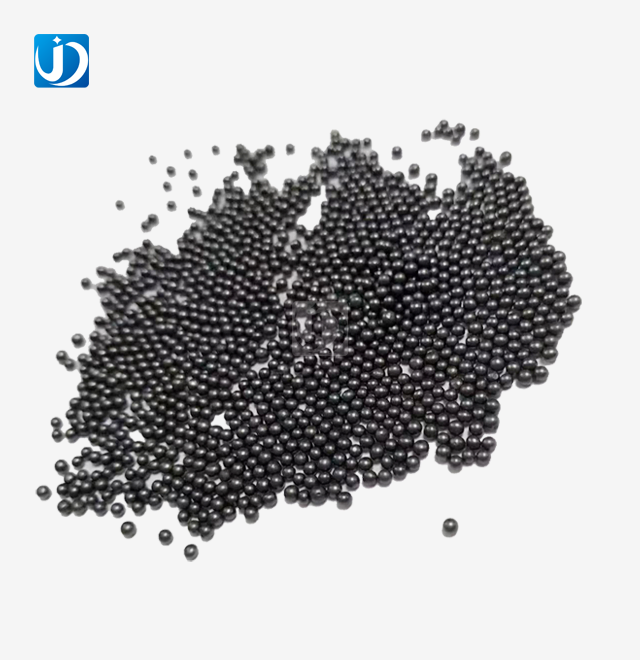
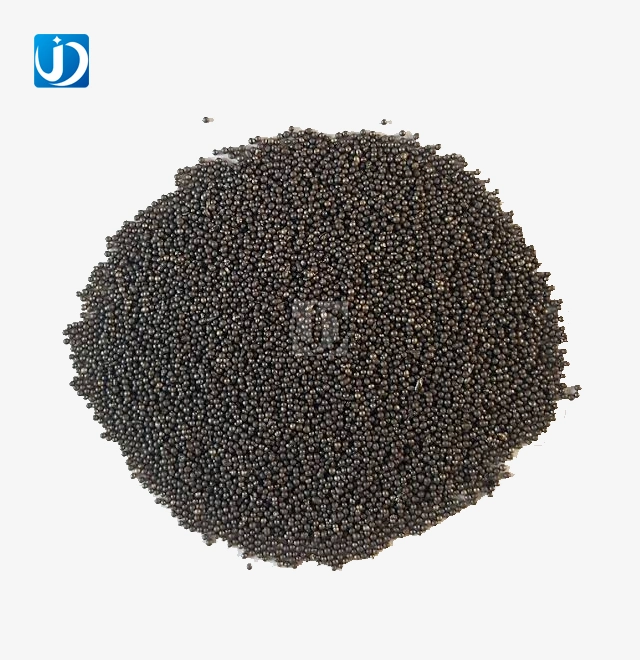
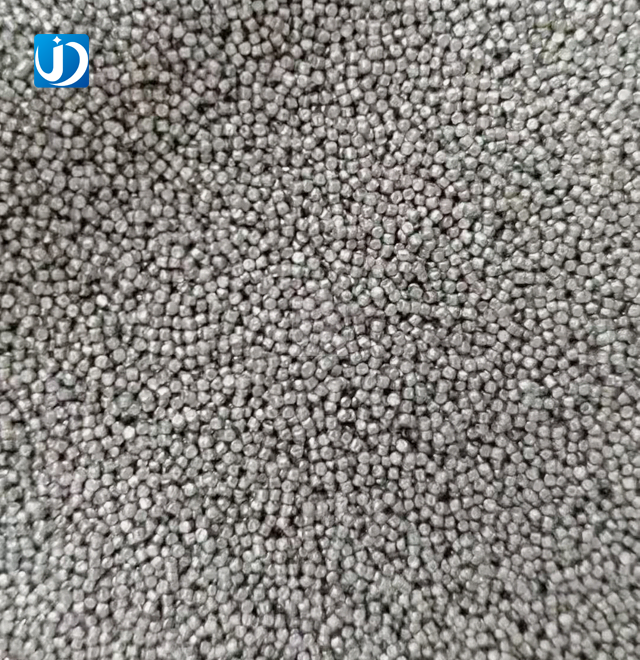
- Pick the grade and size of steel shot based on what you need to clean and how hard the material is.
- Follow a proven recipe to set the conveyor or cycle time, wheel speed, and grit flow.
- Blast under the conditions that were logged, with no changes in the middle of the cycle.
- In the recovery process, separate the shot that can be used again from the fines and contamination.
- Check the spec for cleanliness, roughness, coverage, and the state of the dimensions.
- Write down the results so that the same method is used for the next batch of the same part.
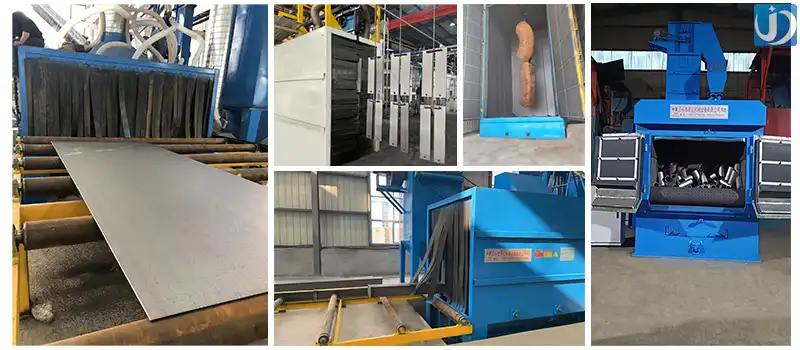
Steel Shot vs Steel Grit: Which Gives What Finish?
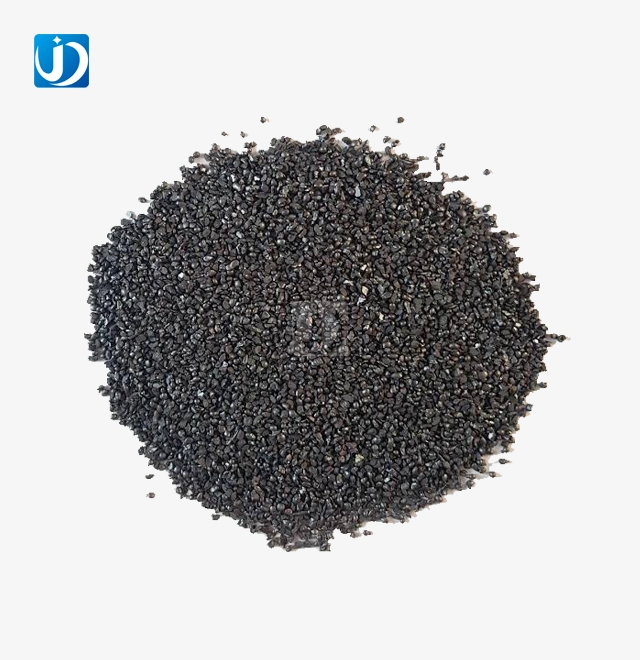
Shot and grit are both made of the same type of cast steel, but when they hit something, they react differently. This difference determines how the surface looks in the end.
Steel Shot and Steel Grit Comparison
| Criterion | Steel Shot | Steel Grit |
|---|---|---|
| Shape | Spherical | Angular |
| Typical action | Peening, cleaning, smoothing | Cutting, profiling, aggressive cleaning |
| Surface result | Uniform, less sharp | Sharper, deeper profile |
| Typical applications | Castings, forgings, general descaling | Heavy rust, coating removal |
| Media life | Long with proper recycling | Shorter, breaks down faster |
| Risk | Weak on deep coating removal | Can over-profile thin material |
Steel Shot Blasting Machine vs Sandblasting Machine
Natural or man-made abrasives that have to be thrown away cost more per tonne over time than steel media that can be recycled. This is because a steel shot blasting machine can reuse most of its media by separating it, while sandblasting needs new abrasive for each pass. Also, dust is made in a different way. Most of the particles are stuck inside shot blasting tanks that are closed off. Open sandblasting, on the other hand, makes it more likely for workers to breathe in dust if there isn't good local exit ventilation. To choose the best one, you need to look at the part type, the coating, and the facility's floor room.
Steel Shot Blasting Machine vs Shot Peening Machine
When you blast something, it gets clean and ready for the next step, which could be painting or inspecting. During peening, the metal is given extra compressive stress on purpose to make it last longer. However, better control tools, such as Almen strips, are needed to make sure that the intensity and coverage percentage are correct. A company doesn't need peening-grade controls if all it wants to do is get rid of rust. But a company that makes parts for heavy tools might need to do both steps at different times on the same part.
How to Control Surface Roughness (Ra) Precisely?
When it comes to buyers, roughness control can be hard to understand because a part that looks clean might not always meet a written roughness spec.
Ra, Surface Profile, and Cleanliness Are Different Measurements
It is a single number that shows how the height of the surface pattern changes. Ra stands for "arithmetic average roughness." It's not the same as how clean a part is, how it looks in a shop light, or how it looks in a peak-to-valley blast picture. It is possible for a surface to pass the ISO 8501-1 test for cleanliness but still not reach a certain Ra goal. Due to this, coating failures are sometimes due to wrong measurements instead of the blasting machine itself (ISO, 2007).
Process Variables That Affect Roughness
An end roughness reading from a steel shot blasting machine is based on many things. If you change one without checking the others, the reading will change over time.
- The size, hardness, and shape of the steel shot decide how deeply each impact goes into the base metal. Higher Ra values are usually caused by bigger or harder shots.
- Total impact energy delivered per square inch of surface can go up or down depending on the speed and dwell time of the blast wheel. This changes the roughness curve directly, going up or down.
- The same shot setting acts differently depending on the hardness of the workpiece and the state of the coating. For example, soft castings profile faster than hardened structural steel when the settings are the same.
- Over time, fines and media pollution make the cutting action less sharp. This is why ageing abrasive without makeup shot tends to make the surface rougher but less consistently so.
They need to be tracked together, not just the wheel speed, so that the roughness stays in a tight range from batch to batch.
Roughness Inspection and Verification
To make sure, you should use tools that have been calibrated and match the customer's drawing or coating specification. These tools could be ISO 8503 series profile comparator panels, roughness testers, or copy tape (ISO, 2012). Along with the number of readings, the location, direction, and status of the instrument's calibration should be written next to each measurement. This is because a spot check doesn't show the whole batch.
Blast Wheel Speed, Amperage, and Coverage Settings
The settings of a steel shot blasting machine are only useful when considered as a whole, rather than as a series of separate controls.
How Blast Wheel Speed Affects Finishing?
The abrasive moves faster and has more contact energy when the wheel speed is higher. This cleans faster but makes more dust and wear. It will get too rough if you go faster than the part or finish can handle. In thin-gauge materials, you will be able to see the distortion. The wheel speed should always be based on the thickness of the piece being worked on and the type of abrasive being used. Don't ever say "faster is better."
Using Motor Amperage as a Process Indicator
The motor amperage goes up and down when there is worn wheels, abrasive loads, and mechanical resistance inside the chamber. Most of the time, a sudden rise in amperage means that a lift is stuck or a separator is clogged before an operator notices a problem. An amperage reading should be compared to a normal range that has been shown to work in real life. It's not a strict pass or fail number by itself.
Coverage, Conveyor Speed, and Abrasive Flow
It is the speed of the belt or table that sets the exposure time, and it needs to be long enough to cover the part in question. To check the flow of abrasive, a hopper level gauge is not a good idea. Instead, gates that have been calibrated or readings of mass flow should be used. In order to keep the wheel alignment and blast pattern in good shape, test panels should be used on a regular basis. This is because control bars that are worn out can change the throw pattern slowly without setting off any alarms.
Check list for settings before starting a new part:
- Required cleanliness grade and target roughness range from the customer drawing.
- Part dimensions, wall thickness, and loading density on the conveyor or table.
- Material hardness, since cast iron and mild steel respond differently to the same wheel speed.
- Permitted dimensional change, especially for thin sheet or precision-machined surfaces.
- Dust and noise limits set by local factory regulations or worker safety rules.
- Maintenance capability on-site, since higher automation needs more consistent upkeep to hold settings steady.
This list works best as a pre-run form for a steel shot blasting machine that is filled out before the machine runs the first part of a new job.
Which Steel Shot Size Should You Use?
Choosing the right shot size affects both the finish and the rate of wear on machine parts, so getting it right the first time will save you time and effort in the long run.
Steel Shot Size Selection Guide
| Requirement | Typical selection logic |
|---|---|
| Light cleaning or thin parts | Smaller shot with controlled energy |
| General casting and forging cleaning | Medium-size steel shot |
| Heavy scale or structural steel | Larger shot or mixed-size blend |
| Narrow cavities and detailed geometry | Smaller shot with careful flow control |
| Smooth, consistent finish | Correct size distribution, low fines content |
| Deep coating removal | Angular steel grit or a validated alternative |
Steel Shot Abrasive Media Quality Requirements
It is usually best to do a test with your steel shot blasting machine to determine the most appropriate abrasive size rather to depend on a supplier’s catalogue. Well-known categories like SAE J444 or ISO 11124-3 may also help in comparing specifications of various vendors, provided that standards are relevant to the kind of abrasive (SAE International, 2019). Quality documentation that should be requested include a batch certificate of conformity, chemical composition, hardness test findings, sieve analysis, bulk density and fracture-rate data. Before you place a purchase order, check with the supplier that they can provide the required test results and batch paperwork to ensure that the abrasive fits your criteria.
Matching Machine Type to the Workpiece
Choosing the wrong machine format is a common reason why coverage problems happen. This is because different part sizes need different machine formats.
| Workpiece or application | Suitable machine types |
|---|---|
| Small castings and mixed parts | Tumble belt or table type |
| Long steel plates and profiles | Roller conveyor type |
| Structural steel and fabricated frames | Pass-through or roller conveyor |
| Heavy components | Hook or hanger type |
| High-volume standardized parts | Continuous automatic system |
| Low-volume or varied parts | Batch or manual-loading system |
Common Causes of Uneven Finishing and Their Fixes
Most complaints about surfaces that don't work right can be traced back to a short list of common problems. Figuring out the pattern makes fixing the problem faster.
Uneven Cleaning or Roughness
| Cause | Typical symptom | Corrective action |
|---|---|---|
| Incorrect loading | Shadowed or untreated areas | Reduce nesting, adjust part orientation |
| Worn blast wheel parts | Weak or irregular blast pattern | Inspect impeller, control cage, liners |
| Poor abrasive flow | Stripes or inconsistent coverage | Check gates, hopper, elevator, feed system |
| Excessive fines | Dust, weak impact, dull finish | Adjust separator, replace degraded media |
| Incorrect shot size | Over-profiled or under-cleaned surface | Validate size with trial runs |
| Variable conveyor speed | Batch-to-batch variation | Calibrate drive, verify speed control |
Steel Shot Blasting Machine Troubleshooting Guide
When a lot doesn't work right on a steel shot blasting machine, check the amount of abrasive and the state of the media first. Then, check the wheel parts, wear liners, and bearings. Finally, check the settings on the control panel. You should also check the airflow and condition of the filters in the dust collector. A clogged filter can change the air pressure inside the chamber, which can change how dust and fines settle out of the recovery loop.
Risks and How to Manage Them
Over-blasting is usually caused by going over approved energy limits. To fix this, lock the wheel speed to a tried-and-true recipe for each part family. It's important to keep flow gages calibrated because coverage or coarse flow can drop below specification without anyone realizing if they aren't cleaned well enough. Impact energy needs to be lowered, and the way the part sits or hangs during the cycle needs to be looked at again. If a job moves to a different base metal, clean the machine and separate the media stocks to stop cross-contamination between material families.
Abrasive Consumption and Operating Costs
Buyers often only look at the price of a machine, but over the course of several years of use, the real cost is shown by how much it wears out and how much it breaks down.
Main Cost Drivers Over the Machine's Life
The cost of purchasing and installing a steel shot blasting machine is just the beginning. A blast wheel's motor power, a dust collector's energy use, the rate at which steel shot is made up, the cost of replacing worn parts, labor, and unplanned downtime for maintenance are all ongoing costs. The reject rate and repair cost should also be on this list. This is because a cheap machine that finishes inconsistently puts costs in the quality department instead of the maintenance budget.
Abrasive Consumption Comparison
| Cost factor | Steel shot system | Expendable abrasive system |
|---|---|---|
| Media reuse | High with good separation | Often limited |
| Media replacement | Make-up shot only | Frequent full replacement |
| Dust load | Depends on fines content | Often higher with friable media |
| Recovery equipment | Required | Simpler for open blasting |
| Best cost scenario | High-volume enclosed production | Low-volume or hard-to-reach work |
It is more accurate to compare suppliers who offer different grades of shot by looking at the cost per ton processed instead of the price per bag of abrasive.
Procurement and Quotation Checklist
A clear request for a quote cuts down on weeks of back-and-forth during the buying process and keeps everyone from having unrealistic expectations.
- Machine specifications, including type, capacity, part dimensions, and preferred loading method for your specific workpiece range.
- Abrasive and dust details, including shot specification, dust collector capacity, and blast wheel configuration matched to your production volume.
- Commercial terms, including lead time, installation scope, commissioning support, operator training, payment terms, and warranty coverage length.
- Documentation requests, including export packing details, manuals, electrical drawings, inspection reports, and material certificates for customs and audit purposes.
How to Build a Repeatable Blasting Standard?
What one skilled operator knows about a steel shot blasting machine by heart can be written down so that the whole team can use it, even if some staff members leave.
Create a Controlled Process Specification
The specification should list the material, size, loading pattern, and starting surface condition of the workpiece before it is blasted. It should also list the abrasive grade, size, maximum sharpness, and how often to change media that is getting old. The speed of the wheels, the range of amps, the flow of abrasives, the speed of the conveyor, and the cycle time should all be in the same document. They should all be linked to the standards for cleanliness and sharpness.
Quality Verification, Traceability, and Documentation
Before a shot goes into the hopper, it should be compared to its certificate. Also, the machine settings should be checked again after any repair. A plant is safe when a customer audits it or when a guarantee claim is made thanks to calibration records, inspection reports, and batch tracking files. When new parts are approved for first article and there are regular internal checks, drift is caught before it becomes a shipped flaw.
Supplier Capability and Evaluation
Picking a manufacturer is just as important as picking a machine model, because after the first year, consistency depends on how well the manufacturer supports the machine.
- Relevant experience with your part category, whether castings, structural steel, plates, or automotive components, shows the supplier understands your failure modes already.
- Engineering sizing ability for blast wheels, conveyors, and dust collectors should match your actual production volume, not a generic catalog configuration.
- Factory quality controls, including weld quality and electrical documentation, tend to predict how the machine holds up after 10,000 operating hours.
- After-sales support, including commissioning, training, warranty terms, and spare-parts lead time, decides how fast you recover from a breakdown.
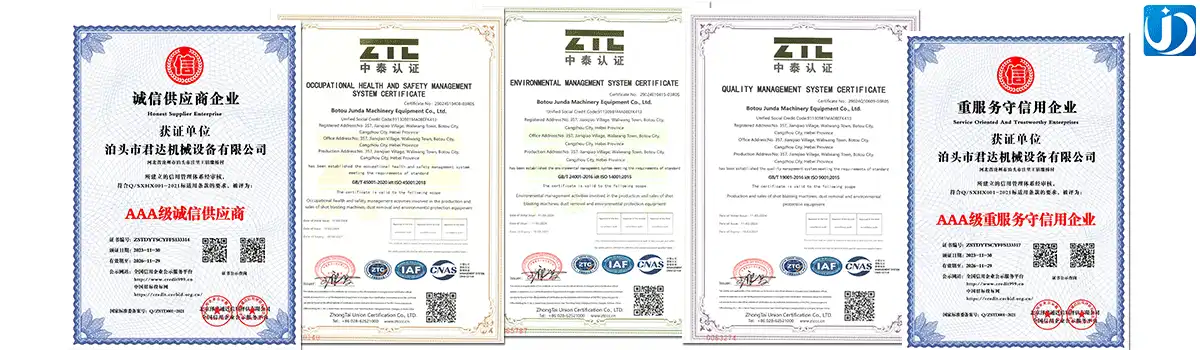
Botou Junda Machinery Equipment Co., Ltd. bases its line of steel shot blasting machines on this kind of responsibility. Junda has been making shot blasting cleaning equipment and industrial dust and waste gas treatment systems for 20 years. The company is based in Botou, Hebei Province, which has a long history of making foundry and dust removal equipment in China. The business is certified by ISO 9001, ISO 14001, and ISO 45001, and it can help buyers who are selling to controlled markets get CE certification. Junda also has two utility model patents and seven software copyrights for its smart tracking and control systems. These systems keep track of how well dust is removed and get output data directly from the blast chamber.
EU and US Compliance Considerations
When buyers from outside the EU want to bring goods into the EU, they need to make sure that the goods they are sending meet the safety standards set by the European Commission (2023). These standards cover things like electricity safety, noise output, EMC requirements, and guarding systems. US buyers should check the OSHA safety rules for abrasive blasting jobs, which include rules for controlling dust and safety guards (OSHA, n.d.). RoHS and REACH statements are mostly important for electrical parts and coatings. FDA rules are mostly only important for equipment that comes into touch with food or medicine. Before shipping, you should always confirm the final compliance scope with the importer or a qualified compliance specialist.
Conclusion
A steel shot blasting machine finishes surfaces consistently when the abrasive properties, impact energy, coverage, part presentation, and media recovery are all managed as a single process, rather than as different settings that can be changed by hand. The best machine for your plant will depend on the shape of the parts, the amount of work that needs to be done, the level of cleanliness needed, the level of roughness needed, and how much automation your maintenance team can handle. You should look at more than just the price when comparing suppliers. Before you sign anything, make sure you have written down your test methods, abrasive data, and the lead time for spare parts.
FAQ
What is a steel shot blasting machine?
A steel shot blasting machine moves round steel abrasive against metal parts to get rid of rust, paint, burrs, mill scale, and casting residue. The abrasive is usually recovered, separated, and used again inside a room that is closed off. This keeps the cost of operation lower than ways that use consumable blasting.
How does a steel shot blasting machine work?
A motor drives a blast wheel that sends steel shot at a speed of 60 to 85 meters per second toward the workpiece. The machine then sorts the shot that can be used again from the dust, fines, and broken pieces. It then sends the clean media back for another run.
What is the difference between steel shot and steel grit?
Steel shot is round and makes a finish that is peened and more even. As a result of its sharper, deeper cutting edges, steel grit is better for removing heavy coatings from thicker structural steel.
Which steel shot blasting machine is best for castings?
A tumble belt, table, or hook-type machine can handle most casts well. The best pick relies on the size and weight of the casting, the shape of the part, the amount of production, and whether the parts can safely touch during the cycle.
How can surface roughness be controlled in shot blasting?
To control roughness, the abrasive size, wheel speed, abrasive flow, and contact time must be matched to the part's material and coating specifications. The product must then be checked using a measured roughness or profile test method.
How much does a steel shot blasting machine cost?
Costs depend on the type of machine, the power of the blast wheels, the size of the room, the level of automation, the amount of dust that can be collected, and the design of the conveyor. Along with the base price, a fair quote should also include the costs of running the machine, replacement parts, shipping terms, and guarantee coverage.
What maintenance does a steel shot blasting machine need?
Blast wheels, liners, bearings, lifts, separators, dust screens, belts, and safety interlocks are all things that need regular upkeep. Also, the roughness and consistency of the flow should be checked regularly, since used media acts differently than new shot.
Get a Configuration Recommendation for Your Application
People who ask for a general price list take longer to get quotes than people who send a clear sheet of specifications. Include the material, size, necessary level of cleanliness, desired level of roughness, production rate, and workplace space that is available for the item. The steel shot blasting machine seller Junda Machinery is based in Botou, Hebei, and works with clients in foundry, structural steel, and car parts. They answer all emails sent to junda001@jundablast.com within 6 to 8 hours, and you can request a trial-blast video before you place an order.
References
1. International Organization for Standardization. (2007). ISO 8501-1:2007 — Preparation of steel substrates before application of paints and related products. Referenced in the Ra and cleanliness discussion.
2. International Organization for Standardization. (2012). ISO 8503 series — Surface roughness characteristics of blast-cleaned steel substrates. Referenced in the roughness verification section.
3. International Organization for Standardization. (1993). ISO 11124-3 — Metallic blast-cleaning abrasives, high-carbon cast-steel shot and grit. Referenced in the abrasive quality section.
4. ASTM International. (2019). ASTM D4417-19 — Standard Test Methods for Field Measurement of Surface Profile of Blast Cleaned Steel. Referenced in the roughness inspection section.
About the Author
Michael Chen is a Shot Blasting Equipment Engineer with over a decade of hands-on experience configuring surface preparation lines for steel structure, casting, and automotive parts manufacturers across Asia. He works directly with production teams to troubleshoot roughness inconsistency, abrasive consumption, and dust control issues on active blasting lines, and he writes technical guides based on real commissioning and maintenance records rather than catalog data alone.

USER EVALUATE
Real feedback and practical experience shared by worldwide partners who purchased our machinery and environmental treatment devices.