Different Types, Working & Applications of Steel Shots
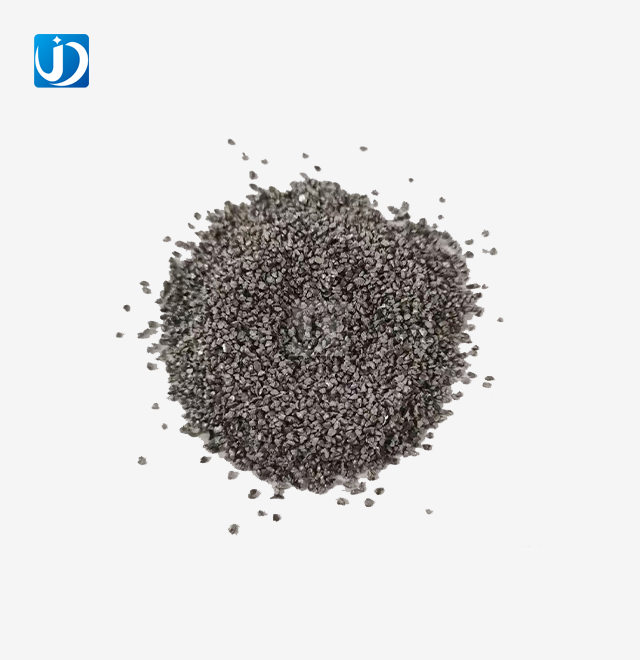
Steel shot is a round metal abrasive that cleans, descales, and strengthens metal parts by striking them at high speed. The main types are cast carbon steel shot in grades such as S280 and S330, high-hardness shot, and stainless, zinc, or aluminum shot for special jobs. In a blasting machine, a spinning wheel throws the shot at the workpiece, and the impact removes rust, scale, and sand. A screening system then returns the good shot for reuse. Below, I explain each type, how it works, and how to choose.
Understanding Different Types of Steel Shots
Cast Carbon Steel Shot: The Standard Choice
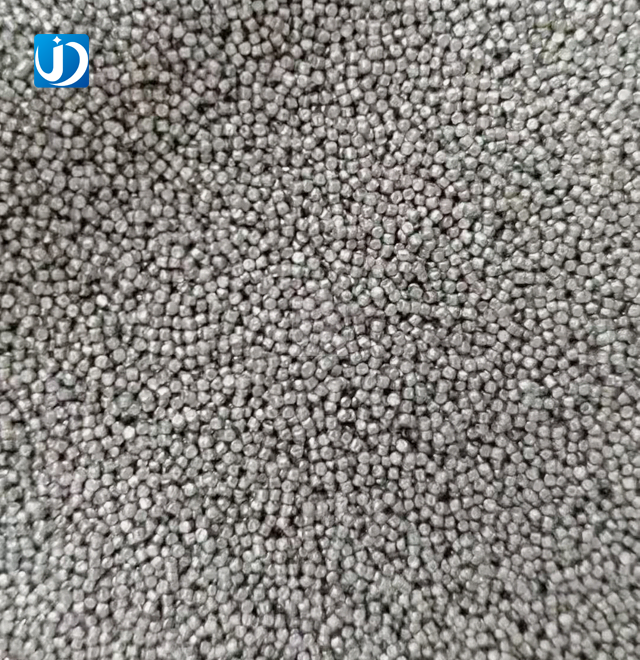
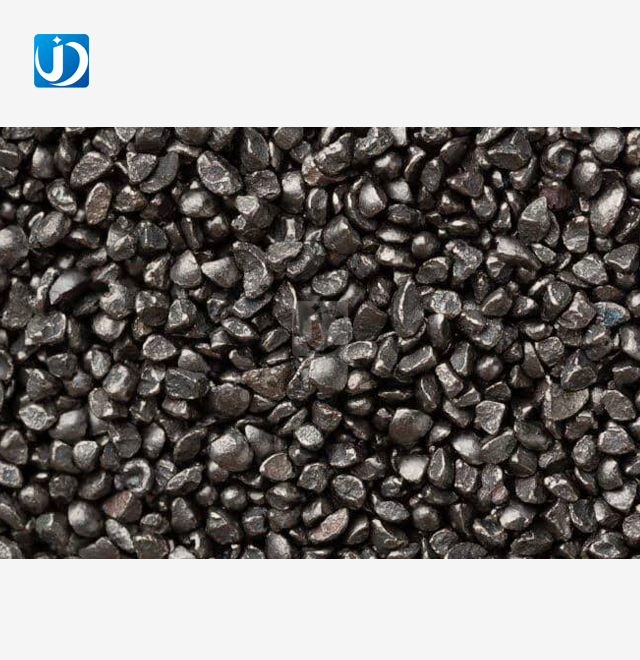
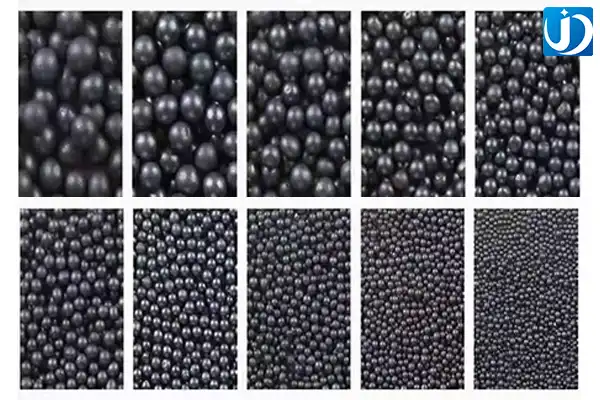
Cast carbon steel shot is what most people start with. Our standard product comes in two sizes, S280 and S330, and it meets SAE J444, which is a size standard for cast shot and grit. In general, it is between HRC 40 and 50 hard, and a high-hard form is between HRC 55 and 62 hard.
Because the metallographic structure is thick and tough, the shot doesn't break often when it hits a piece of work. Because it is tough, the kinetic energy stays the same from the first cycle to the thousandth. This makes it possible to remove rust and texture the surface consistently.
We have 12 different size grades, ranging from 0.2 mm to 3.0 mm, so you can get everything you need from a single source. Three thousand to five thousand impacts are possible with a single shot, and about 0.1 to 0.3 kg per square meter is used up. Your exact numbers will depend on your machine and the piece you're working on, so I always recommend doing a test run before you place a big order.
Steel Shot vs. Steel Grit, Glass Beads, and Aluminum Oxide
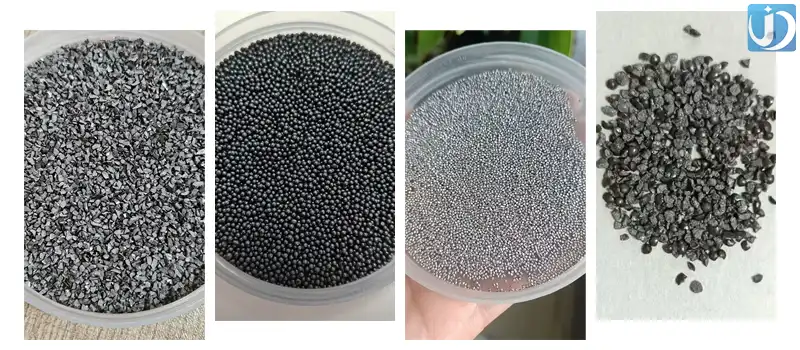
The biggest change is the shape. Steel shot is round, so it flattens the surface and makes it smooth with bumps. The angles in steel grit make it better at cutting and leaving a sharper edge. A lot of shops mix the two when they need to make the surface rougher for a finish. Standards like ISO 8501-1 talk about levels of cleanliness like Sa 2½. The right mix of media can help you hit those levels.
It's better to use light cosmetic finishing with glass beads instead of heavy scale. Because it is hard and sharp, aluminum oxide works well for engraving, but it wears out faster than steel wire. When a lot of work needs to be done, steel shot costs less to run because the same pieces go through the machine thousands of times.
Round steel shot is generally the best choice if your parts need to be peened or cleaned in general. Adding grit will give them a deep anchor profile if they need one.
Specialty Options: Stainless, Zinc, and Aluminum Shot
Heavy carbon steel shot can leave metal marks on a surface. Galvanic rusting can happen on stainless steel parts that have that residue on them. Stainless steel shot keeps the surface clean for those jobs.
It's easier to work with zinc and aluminum shot. They are used when a part can't handle the heat or contamination of carbon steel. You can't switch between these options; each has its own cost and wear rate.
Along with our regular line of cast steel, we also offer shot made of stainless steel, zinc, and aluminum. Don't know which one fits your material? Send us a picture of the part or the grade of the material. It's better to check the media before you buy it than to find a problem on the surface after blasting.
How Steel Shots Work: The Blasting and Cleaning Process ExplainedImpact Energy: How Cleaning, Descaling, and Texturing Happen
A centrifugal wheel spins very fast in a steel shot blast unit. The shot goes into the wheel and flies off the blades toward the piece being worked on. Each particle's energy is based on how fast and how much it weighs. Because a bigger shot has more energy, it breaks off heavy scale. Each hit from a smaller shot has less power, but it covers more ground.
Scale that is easy to break, rust, and sand from casts are all broken when the shot hits them. The round shape also helps the shot bounce back, so it can reach places a flat spray might miss. One reason shot blasting makes less dust than many open sandblasting ways is the return effect.
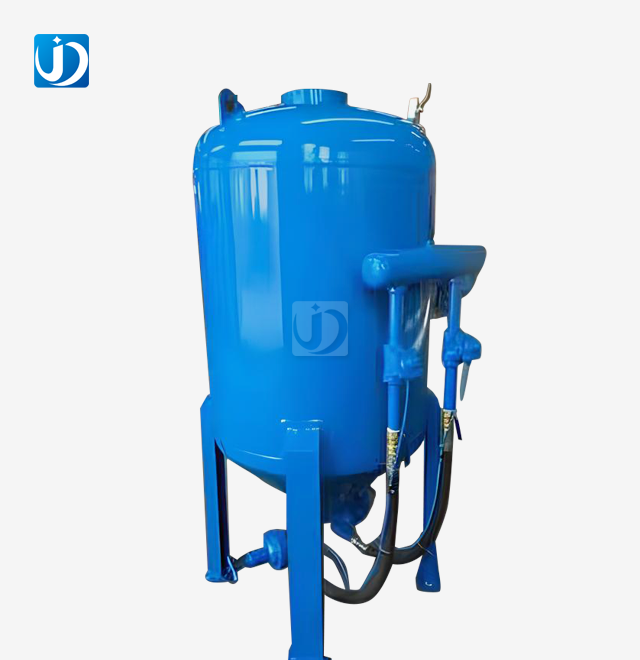
Shot blasters, rotary table shot blasters, and small shot blasters can all use the same shot. You choose the size based on how rough you want the surface to be and how much rust you need to remove.
Hardness, Size, and Grade: What Drives Performance
Most cast steel shot is made of high-carbon steel that has been heated to make it tough. The choice between speed and life is controlled by how hard it is. Harder shot cuts through things faster, but it can break more easily. Shots that are softer last longer but move more slowly. Most jobs are good with HRC 40–50, but tougher jobs are better with HRC 55–62.
The SAE number system is used to show size. As an example, S280 is about 0.7 mm and S330 is about 0.8 mm. The S number tells you the nominal diameter in ten-thousandths of an inch. When you mix big, medium, and small particles together, you get both impact and full coverage.
The spec is just as important as batch consistency. If the hardness or size of different lots changes, the surface roughness changes too, and you have to change the settings on your machine again. Your process parameters will stay the same with steady lots.
Screening and Recycling: Closed-Loop Operation
When something hits, the shot, dust, and scale fall to the bottom of the machine. A lift moves the mix to a separator and screens for air. The air flow gets rid of dust and small pieces, and the screens get rid of bigger pieces. Our shot has a uniform particle shape, so broken pieces easily separate from whole shot, and the good shot goes back into the hopper.
Then, small amounts of new shot are added to keep the working mix balanced. Cost savings come from this closed loop. Most of the time, silica sand is only used once. Because it is harmful to health, OSHA controls respirable crystalline silica.
Take a look at this easy case. About 1 to 3 tons of shot are used to clean 10,000 square meters of surface area at 0.1 to 0.3 kg per square meter. That number stays close to the bottom because of low loss.
Applications of Steel Shots in Industry
Foundry and Casting Operations
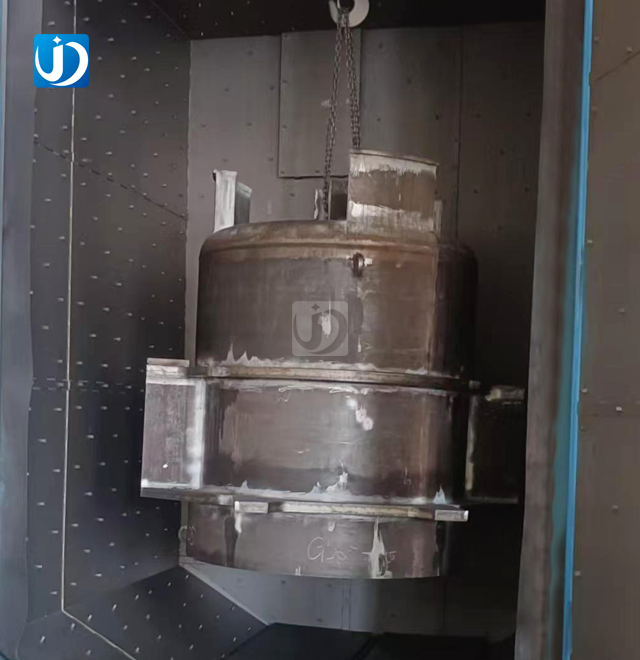
After the castings have been shaken out, steel shot is used to get rid of the sand, scale, and surface oxide. This step is done to engine blocks, valve bodies, pump housings, and forged parts. A smooth, clean surface makes it easier to machine and check, and it shows up surface flaws early.
Larger tumble or hanger systems can handle a lot of castings, while rotary table machines are better for medium-sized ones. The shot has to stay the same no matter what. Randomly hard or too big of particles can make the surface rough from batch to batch, which needs to be fixed.
Shot life has a direct effect on yearly consumption because foundries use blast tools for long periods of time. If there isn't much breakage and the media recovers well after being screened, cut back on how much new shot you add each week. That's why buyers in foundries often keep an eye on how much is used per square meter.
Steel Structure, Vessel, and Heavy Fabrication
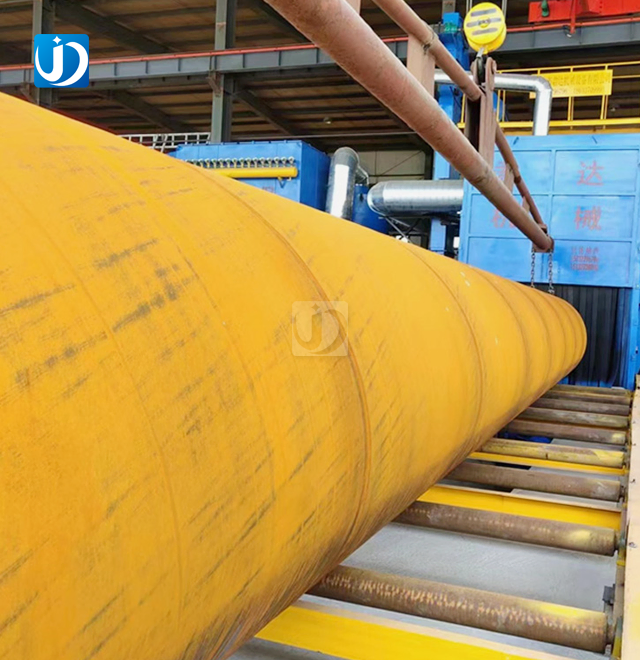
They blast beams, plates, pipes, and tanks to get rid of mill scale and rust before painting them. If you clean the area well, coats will stick better and last longer. Standards like ISO 8501-1 rate how clean it is, and Sa 2½ is a common goal for coatings that protect.
Shot cleans and peens, but a coating system may also need a clear roughness profile. That's where shop owners add some grit. Roller conveyor blast cabinets are often used to cut ship hull plates and big structural sections. The effects are the same all the way across the plate because the shots are always the same size.
I always suggest that you first ask your coating supplier what their surface profile requirements are. Don't guess and re-blast later; instead, pick the shot size and mix to match it.
Automotive and Aerospace Shot Peening
Controlled shot impacts are used in shot peening to add a layer of compressive stress to the surface of metal. Stress cracks start and grow more slowly because of that layer. The ASM Handbook says that peening is a common way to make springs, gears, shafts, and other similar things last longer.
Plants that make cars peen transmission gears, connecting rods, and springs. Shops that work with airplanes peen landing gear and turbine parts. For aircraft work, standards like AMS 2431 cover peening media, so you should make sure that your media meets the level your customer wants.
Repeatability is important for peening. A round, even shot with a stable mix of sizes gives the same level of area and force every time. Send us your specs if you run a peening line, and we'll talk about which of our size grades and hardness ranges fits.
How to Choose the Best Steel Shot for Your Business?Match Hardness and Size to the Job
Start with the thing you want to do and your goal. For thick castings with a lot of scale, you need bigger steel shot that is hard enough to break the scale. To keep the parts from distorting, light rust on thin parts needs a smaller shot and a reasonable amount of strength. To peen, you need to keep the size very small.
Next, look over your machine. Which grades work best depend on the cabinet size, wheel speed, and wheel type. Our range of 12 grades, from 0.2 mm to 3.0 mm, works with small shot blasters, rotary table shot blasters, and shot blasting machines.
Then look over your system for recovery. It's not good for your screens and air separator to have broken shot in the mix if you choose the wrong size. This wears down machine parts. Before you decide to make a regular order, I think you should try a small amount first and then keep track of the results and how much you use for a few weeks.
Why Our Standard Shot Fits Bulk Buyers?
All of our standard cast steel shot is great for foundries, wholesalers, and shippers because of the following:
• Steady impact performance: The dense structure and high hardness keep breaking low. This means that the useful kinetic energy stays steady, and the surface texture and ability to remove rust stay the same over long production runs.
• Long recycling life: High resistance to wear and tear lets 3000–5000 impacts per shot. Less refills mean less use of consumables, which means your shop can make more with less money.
• Easy recovery: Because the particles are all the same shape, air filters and screens can tell the difference between broken shot and whole shot. This means that your current system can support closed-loop recycling.
These benefits solve the most common problems in production, like uneven surface quality, high usage, and trouble with recovery.
Compare Suppliers and Plan Your Orders
Names like Navstar, Valve Steel Shot, and HOH show up when you look for providers. I think that all candidates, including us, should be graded using the same list of criteria: SAE J444 compliance, hardness and size reports for each lot, available size range, packaging, after-sales support, and delivery time.
When handling, packaging is important. We put shot in 25 kg woven bags so it's easy to move around the shop floor, or we put it in 1000 kg ton bags (1000 x 1000 x 1200 mm) for automatic feeding systems and bigger amounts.
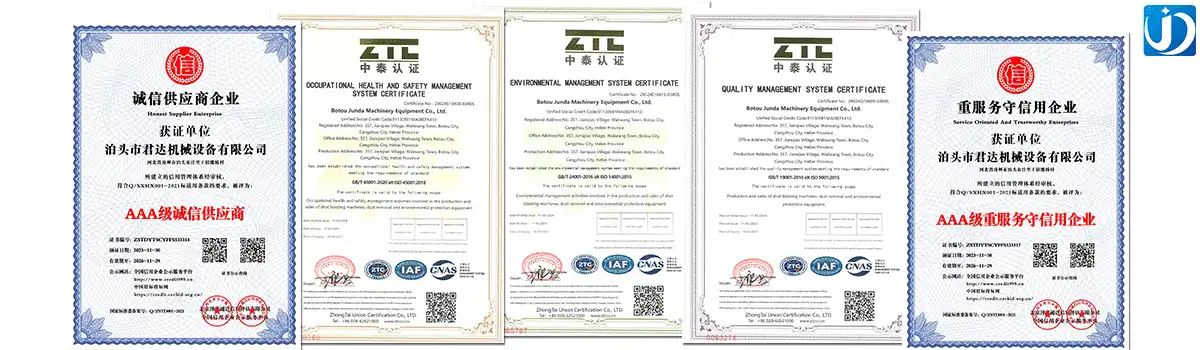
To plan, you should compare your safety stock to the cash that is locked up in inventory. For large users, it is common to set up an annual supply agreement with releases every month or three months. Junda Machinery is certified by ISO 9001, ISO 14001, and ISO 45001, has 20 years of experience with shot blasting tools, and keeps a lot of stock on hand so that orders can be filled quickly.
Conclusion
Standard cast carbon steel shot grades like S280 and S330 are one type of steel shot. Other types include high-hardness shot and shot made of stainless steel, zinc, or aluminum for use with specific materials. Because it is round, it is different from sharp grit, glass beads, and aluminum oxide, which wears down faster. A blast wheel turns speed and force into impact energy, which smooths surfaces, removes rust and scale, and peens parts. How well it works and how long it lasts depend on its hardness, size, and batch stability. The same shot can be used thousands of times thanks to screening and air separation, which cuts down on waste. This is why it is used in foundries, steel fabrication, the auto industry, and space travel. When you match the shot to the workpiece, the machine, and the recovery system, the surface quality stays the same and the running costs are easy to handle.
FAQ
What is the difference between steel shot and steel grit?
Steel shot is round and pokes holes in the surface, making it smooth. When steel grit cuts through the surface, it leaves a sharper outline. A lot of shops mix them to get a certain level of roughness.
How do I choose the right shot size and grade?
Size should fit the job. A bigger shot gets rid of big scale, and a smaller shot covers more finely. Check your machine and restore system after that. A working mix of different sizes usually works best, and a test run makes sure of that.
Can steel shot be used again?
Yes. Dust and broken pieces are taken out by air separators and screens, and the whole shot goes back to the machine. Our shot lasts between 3000 and 5000 impacts, so recycling reduces waste and the amount of materials used.
Contact Junda Machinery for Steel Shot Supply
Looking for a steel shot supplier that will get back to you in 6–8 hours? Junda Machinery in Botou, Hebei, has a lot of standard S280/S330 steel shot in 12 different sizes and 25 kg or 1000 kg packaging. We will suggest a grade based on the type of machine, the piece being worked on, and the monthly volume you send to junda001@jundablast.com. For more information, go to jundablast.com.
References
1. SAE International. SAE J444: Cast Shot and Grit Size Specifications for Peening and Cleaning. 2005.
2. ASM International. ASM Handbook, Volume 5: Surface Engineering. 1994.
3. Metal Improvement Company. Shot Peening Applications, 9th Edition. 2005.
4. International Organization for Standardization. ISO 8501-1: Preparation of Steel Substrates Before Application of Paints and Related Products. 2007.
5. Occupational Safety and Health Administration. Respirable Crystalline Silica Standard, 29 CFR 1926.1153. 2016.
6. ASM International. Handbook of Residual Stress and Deformation of Steel. 2002.

USER EVALUATE
Real feedback and practical experience shared by worldwide partners who purchased our machinery and environmental treatment devices.