What Is a Mesh Belt Pass-Through Shot Blasting Machine and How Does It Work?
What Is a Mesh Belt Pass-Through Shot Blasting Machine?
Definition and Operating Scope
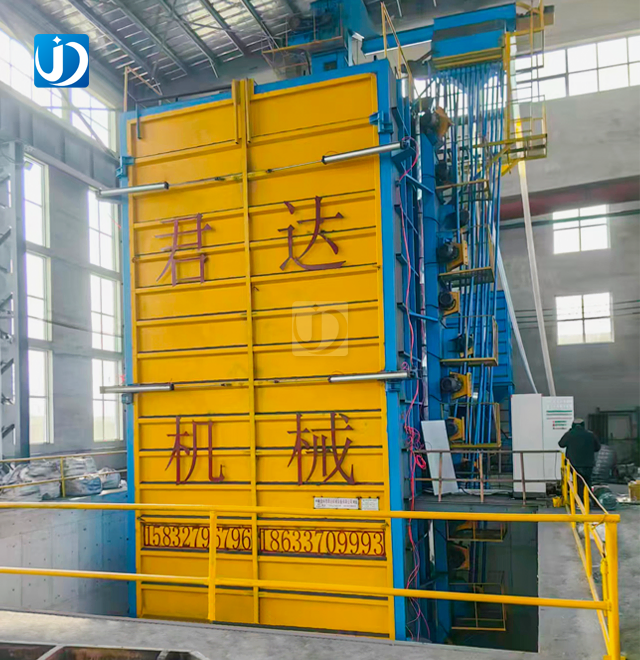
Instead of a rotating drum or roller table, a mesh belt pass-through shot blasting machine is based on a moving woven belt that cleans all the time. As parts go through the blast zone, they ride flat across the belt and out the other side without stopping. They get in through a rubber-flap screen. No wheel or roller does the belt touch in the cleaning zone, so nothing presses down hard enough to bend a thin printing.
This design is not the same as three related processes that people often get mixed up:
- Steel or mineral abrasive is thrown at a surface by a spinning wheel or compressed air. This removes scale, sand, rust, or light burrs. The way this machine cleans is what it does.
- The goal of shot peening is to put under stress on metal in a way that stops fatigue cracking. A mesh belt cleaning line isn't made for that job unless the wheels and abrasive are both tested separately for peening strength. It needs tight control over the size, angle, and coverage of the abrasive.
- The term "abrasive blasting" refers to the use of sand, grit, glass beads, and shots in a wide range of machine types, such as cabinet blasters, tumble belts, and pass-through lines.
It's also helpful to say what this machine is not. Since it's not a kiln, it won't change the way the metal is made on the inside. Since it's not a paint booth, coating still takes place afterward. Heavy machining burrs won't come off reliably unless the layout of the wheel and the size of the abrasive are matched to the burr size in a sample use.
Main Functions and Output
A mesh belt pass-through shot blasting machine's main job is to clean the surface of anything that needs to be coated, plated, or inspected. This generally means that there is still release agent, a light oxide film, and flash marks from the mould on aluminium die-cast parts. When it comes to steel stampings, it means mill scale, light rust, and oil left over from the drawing process.
Any part of the belt gets close to the same amount of blast exposure time because its speed is fixed but can be changed. Quality teams that keep an eye on Sa2.5 surface cleanliness need to know about this consistency. Sa2.5 is a standard grade used in coating specs to describe a nearly white metal finish with only light shadowing.
Key Terminology for Buyers
People who want to buy this tools come across terms that aren't always explained well. Before you talk about quotes, it's helpful to know this short list of words and phrases:
- Mesh belt — a woven wire conveyor belt, often 304 stainless steel, that carries parts through the blast zone while letting spent abrasive and dust fall through the openings.
- Blast wheel — a motor-driven wheel with fins that flings abrasive at high speed toward the part surface; most pass-through machines use four to eight wheels depending on belt width.
- Abrasive recovery — the screw conveyor, bucket elevator, or pneumatic system that collects used shot from under the belt and lifts it back to the hopper for reuse.
- Air wash separator — a chamber that uses a controlled air stream to pull dust and broken abrasive fragments away from good, reusable shot before it recirculates.
- Belt loading — the practical limit on how many parts or how much weight per square meter the belt can carry without sagging or shifting.
- Throughput — the realistic parts-per-hour or kilograms-per-hour rate the machine can sustain, which is always lower than the theoretical maximum based on belt speed alone.
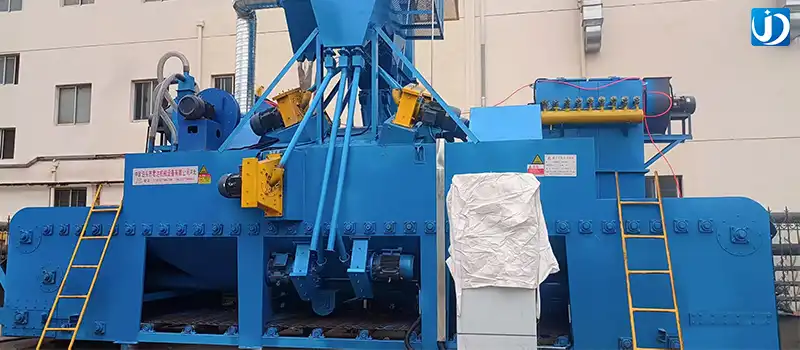
How a Mesh Belt Blasting Machine Works Step by StepPart Loading and Continuous Conveyance
Parts can be put on the mesh belt by hand, by a vibratory feeder, or straight from the pressing press upstream when there is a short transfer conveyor. The belt moves them through a rubber screen at a set speed when they are filled. On most Junda units, this speed is between 0.5 and 3 meters per minute.
Space is important here more than most people think. The abrasive stream might get blocked if two or more parts are too close to each other. This would make one side less clean than the other. People who work with thin metal frames often have to put parts on the infeed table by hand for the first few production runs until they find a pattern that always works.
Abrasive Acceleration and Blast Coverage
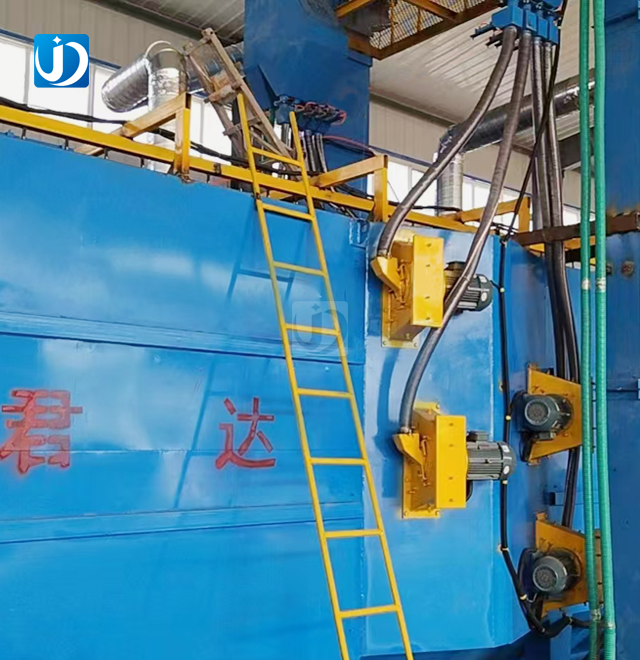
Five blast wheels inside the cylinder, two above the belt and two below it, throw abrasive at the part from all four sides. A mesh belt pass-through shot blasting machine cleans both sides of a flat part in one pass, so the part doesn't have to go through the machine again. This is different from a single-sided tumble unit.
Because the belt is moving forward, each point on the part moves across the whole pattern instead of staying in one place. The wheels are set up in a fan-shaped throw pattern. For gears or ribbed die-cast housings with some surface relief, this wheel angle and belt travel gives good coverage on the sides that are out in the open. It might be necessary to slow down the belt speed for deep pockets on the bottom, though, so that they are fully covered.
Abrasive Recovery, Separation, and Exhaust
Under the belt, there is a collection box that can't be opened at all. Grit, dust, and small pieces of trash that move through the mesh holes are caught in this hopper. A screw hoist or bucket elevator brings this mix back up to a divider.
A controlled flow of air through the divider separates good shot that can be used again from broken pieces, dust, and light contamination. Small pieces are stopped from flying around by a dust collector, and the clean abrasive falls back into the storage bin so that the blast wheels can use it again. An older roller-conveyor machine with open-floor recovery pits lost a lot more abrasive than Junda's covered hopper because it didn't have a closed loop.
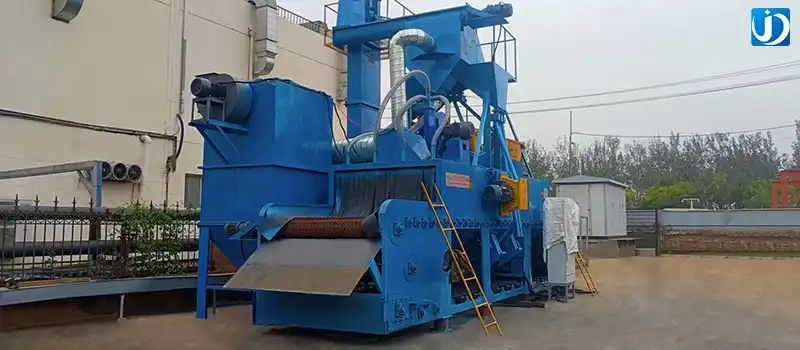
Main Components: Belt, Blast Wheels, and SeparatorMesh Belt and Conveyor Assembly
When you order a belt, it's a good idea to look at a few different types to see which one will work best for your needs.
| Belt type | Typical strengths | Typical limitations | Suitable applications |
|---|---|---|---|
| Wire mesh belt | Good drainage, part visibility, exposure from multiple angles | Lower resistance to sharp or heavy concentrated loads | Small castings, aluminum sheet, light stampings |
| Steel plate belt | High load capacity and impact resistance | Blocks abrasive drainage; heavier to maintain | Heavy steel castings, heat-treated parts |
| Reinforced mesh belt | Higher load rating while keeping open mesh | Higher cost, more complex tensioning | Mixed-part production runs |
When someone wants to buy die-casting or stamping parts, they need to know three things about a quote: the belt's maximum spread load in kilograms per square metre; the mesh hole size; and the width of the belt. The width of the belt should match the size of the part and the range output. Ask the seller to write down all three, not just how wide the belt is.
Blast Wheels and Wear Components
There are different kinds of wheels that can clean better and cost less to run. For each wheel setting, providers should be able to give you the diameter of the wheel, the motor power in kilowatts, and the pattern of abrasive throw. All of Junda's 300mm pass-through types come with four-wheel setups. They don't have to add a second machine because they can cover both the top and bottom at the same time.
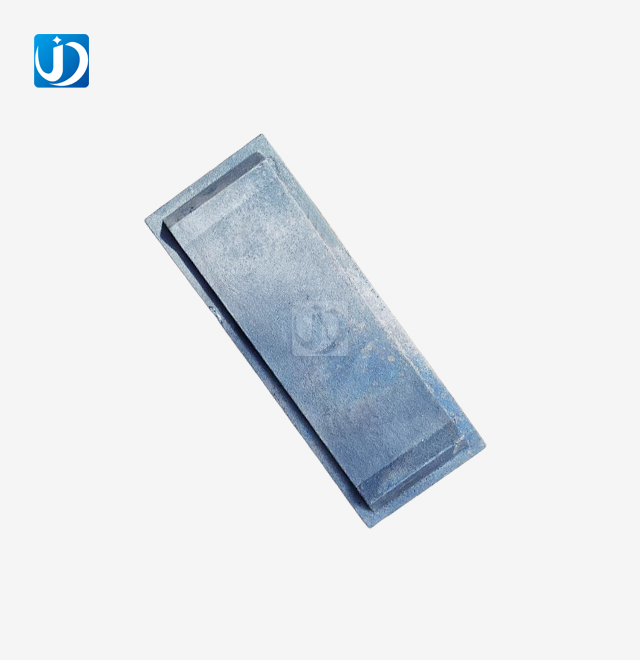
Blades, guards, and the control cage of a mesh belt pass-through shot blasting machine wear out more quickly when the grit is rougher or the wheel speed is higher. During a normal two-shift work schedule, blades should be changed every 300 to 500 hours when cleaning aluminium parts. However, the exact number depends on how hard the abrasive is and how tightly the parts are packed together.
Separator, Dust Collector, and Controls
The air-wash separator and dust collector work together. The divider gets rid of fines and broken shot before they go back into the machine and make the finish less smooth. This keeps the grit quality high. The dust collector removes dust from the air before it gets to the shop floor, which makes the work area safe. It's important to know this for places where the air quality is being checked.
A programmable logic controller (PLC) with an HMI touchscreen handles the warning conditions, the speed of the belt, and the state of the wheels from a single panel. For safety reasons, if an access door opens while the machine is running, the belt and wheels will stop on their own. That keeps the workers safe and meets the needs of most machine safety inspections in the region.
Mesh Belt vs Tumble Belt vs Overhead Chain Design
Equipment Comparison Table
Which of these three designs to use depends on the shape of the part and how much contact it can handle.
| Criterion | Mesh belt machine | Tumble belt machine | Overhead chain machine |
|---|---|---|---|
| Part handling | Continuous conveying, flat orientation | Batch tumbling in a rotating drum | Continuous hanging or indexed movement |
| Typical parts | Flat, thin, or fragile parts | Robust small-to-medium parts | Parts with lifting or hanging points |
| Part-to-part contact | Low to moderate, controllable by spacing | High, by design | Low, since parts hang separately |
| Production mode | Continuous line | Batch cycle | Continuous line |
| Main limitation | Shadowing risk if parts crowd together | Damages fragile or thin parts | Needs fixtures or drilled hanging points |
Mesh Belt Versus Roller Conveyor Shot Blasting
Roller conveyors use spinning rollers to hold things in place. The rollers can leave marks or bend the edges of thin aluminium sheets and precision stampings when they press against soft metal. This is great for rigid steel castings but a big problem for those things. A mesh belt pass-through shot blasting machine doesn't do this because it holds the part across a flat surface instead of a few bumpy spots.
But for a Vietnamese die-casting plant that uses housings with 1.2 mm walls, this difference doesn't matter. That's the whole point of switching machine types, as the case study below shows.
Best Applications for Mesh Belt Shot Blasting
Case Study: Vietnamese Aluminum Die-Casting Plant
Some 1.4 mm-wall aluminium housing parts from a medium-sized die-casting plant in Bac Ninh Province, Vietnam, were sent to us at the start of 2024. They failed quality checks after being cleaned on a rubber roller-belt machine. If they did a sample run of 500 pieces with their old process, 4.2% of them would bend and 6.8% would clearly scratch. Most of the damage was done by roller pinch points and rolling parts against each other.
A 1000mm-wide "mesh belt pass-through shot blasting machine" with cast steel shot media moving at 1.2 m/min was used on the same set of parts. For the same sample size, the rate of bending dropped to 0.3% and the rate of scratching dropped to 0.5% during the test. Instead of taking 22 minutes for two separate roller-machine runs, it only took 14 minutes to clean both sides of 200 parts in one pass.
As we were starting up the plant, the process engineer told us, "We no longer have to worry about spinning parts." The belt just moves them along, and they're clean on both sides. Based on their own cost tracking, which they shared with our team after six months of production, the plant paid for its equipment in about 14 months just by cutting down on waste.
Castings, Forgings, and Heat-Treated Components
This kind of machine can do more than just thin die-cast mounts, as long as the belt width and blast strength are right for the job. For aluminium moulds, it's best to set up soft abrasives that get rid of any sand that's still on the surface without making it darker. Higher wheel speeds can be used on steel stampings to get rid of scale faster. Fasteners that have been heat-treated and forged for cars can both go through the same line, but the media and speed should be changed between batches. Before production starts in full, a short test run should be done with each mix of materials.
OEM Production-Line Scenario
For an OEM making a full pressing or die-casting line, the mesh belt unit connects the press or die-cast cell to the coating booth. When you plan takt time, you should think about more than just how fast the belt should go. Buyer's quality system can use the PLC to record batch data if the traceability system needs it. The surface should always be cleaned to make sure that the blast power doesn't leave marks on machined mating faces or threaded holes.
Distributor and End-User Plant Scenarios
A company that sells hardware or stamping equipment should make sure that all standard mesh belt pass-through shot blasting machines they offer have consistent performance data. This should include the range of belt speeds, the output at a certain part weight, and lists of spare parts that have been written down. This way, quotes are always the same and can be used on different projects.
End-user plant case study A plant engineer should check the floor space and make sure the door is clear so maintenance workers can get in and out. They should also make sure that the ventilation ducts lead to the dust collector and that the standard 600mm, 1000mm or 1500mm belt width fits their current stamping line output width without a problem at the infeed.
Deburring, Descaling, and Surface Preparation Limits
Get rid of light burrs, clean up casting sand, get rid of mill scale, and get a surface ready for pre-coating with this machine. Because this one isn't made for heavy machine burrs from milling or drilling, you'll need a different one to get rid of them. Your wheel angle may need to be changed or you may need to finish by hand one more time if you have deep blind holes or narrow slots. If you want more than just a clean finish, you should try a sample first before you place your order.
Throughput, Belt Width, and Speed Options
Specification Table for Capacity Comparison
| Parameter | What to specify | Why it matters |
|---|---|---|
| Usable belt width | 600 / 1000 / 1500mm | Sets maximum loading area per pass |
| Belt speed range | 0.5–3 m/min, variable frequency | Controls blast exposure time per part |
| Pass-through height | 300mm standard | Confirms part clearance under blast wheels |
| Maximum part weight | Individual and distributed load | Protects belt tension and drive motor |
| Target throughput | Parts/hour or kg/hour | Supports realistic production planning |
| Blast-wheel count and power | Typically 4 wheels, kW each | Sets total cleaning intensity |
Automatic and Manual Loading Options
For smaller runs with a mix of part families, manual loading works, and workers can change the spacing by eye. When a lot of small, regular parts need to be moved, like screws or stamped nuts, vibratory feeders are the best choice for a mesh belt pass-through shot blasting machine. Direct conveyor integration from a stamping press gets rid of all the need for human handling. This method works best when the production volume is high enough to support a fixed line plan.
Advantages and Limits of Mesh Belt Blasting
Main Benefits
Lots of the time, plants switch to this form because it gives them a few clear benefits. Continuous belt travel makes cycle time consistent across shifts. This lets production planners set reasonable daily output goals without having to guess how much each batch will vary. Because the pass-through height is only 300 mm and the belt is flat, there is less mechanical contact than with tumble drums or rollers. This is the direct reason why deformation and scratch rates drop for thin parts. When you use four-wheel double-side cleaning, you don't have to flip parts by hand. This saves time and reduces the chance that a part will get dropped or scratched during the flip.
Technical and Operational Limitations
It's important for buyers to know what to expect before purchasing a mesh belt pass-through shot blasting machine. When there isn't enough space between the parts being loaded, shadowing can happen. This makes the cleaning uneven, which quality inspectors will notice during Sa2.5 checks. When sharp-edged parts drag across the surface over and over, mesh belts wear out faster. This means that the belt life rests in part on how clean the edges of the parts are before they are blasted. The ability to remove dust must meet the size and production rate of the blast chamber. If it doesn't, dust will settle in the chamber and contaminate the stream of abrasives over time.
Risks, Pitfalls, and Mitigation
People who buy something without first trying it out often have the same few issues after setting it up. The most common ones are shown below, along with what fixes them.
| Risk or pitfall | Likely effect | Mitigation |
|---|---|---|
| Incorrect belt loading spacing | Shadowing, inconsistent cleaning | Set a documented loading pattern during commissioning |
| Undersized dust collector | Dust buildup, poor chamber visibility | Size extraction to actual chamber airflow, not machine footprint |
| Wheel intensity too high for thin parts | Surface pitting, part warping | Confirm intensity through a sample trial before full-rate production |
| Poor abrasive separation settings | Contaminated media, dull finish | Check separator airflow weekly against a media sample |
| No acceptance criteria in the order | Disputes after delivery | Define test parts and cleanliness targets in the contract before payment |
Cost Factors Behind Mesh Belt Machine Pricing
Main Cost Drivers
The prices given for a mesh belt pass-through shot blasting machine are very different because the base cost is closely related to the chamber size, belt width, and wheel count. For small stampings, a 600mm-wide, four-wheel unit costs a lot less than a 1500mm-wide unit with a longer chamber length for bigger parts. Adding automation like robotic filling, integrating a conveyor belt, or extra PLC recipe storing costs money but often pays off by reducing the need for workers on lines with more than one shift. Stainless steel internal tubes are more expensive than mild steel ones at first, but they last longer in high-volume settings where they are worn down by rough use.
Total Cost of Ownership
Cost is more than just the price you pay for something. Using abrasives, electricity, replacing worn parts, and planned maintenance work all add up over the service life of a machine, which is usually eight to twelve years with regular maintenance. Shipping, duties, and installation work add extra costs that change depending on the country of location. Buyers in Vietnam, Malaysia, and Indonesia should ask sellers for an estimate of the landed cost instead of just the ex-factory price.
Quotation and Commercial Checklist
When purchasing a mesh belt pass-through shot blasting machine, buyers should confirm a clear set of commercial and technical terms in the quotation and purchase contract to avoid disagreements later.
- Machine configuration and accessories, spelling out belt width, wheel count, dust collector model, and control panel type, so nothing gets substituted after order confirmation without written agreement.
- Trial-test conditions and acceptance criteria, naming the sample parts, target belt speed, and cleanliness grade that both sides agree defines a passing result before final payment releases.
- Delivery time and payment terms, including Incoterms such as FOB or CIF, packaging method, and who carries insurance responsibility during ocean or land transport to the destination port.
- Warranty scope and after-sales support, covering response time for technical questions, remote commissioning support, and how long original spare parts stay available after the warranty period ends.
Preventive Maintenance for Mesh Belt Systems
Daily and Weekly Inspection Points
At the start of each shift, operators who work two shifts should check the tracking of the belt and the state of the mesh. This is because it is much easier to fix a belt that is moving off-center early than one that has already worn unevenly. You should also quickly check the motor temperature and blast-wheel noise, since a bearing that is starting to fail will usually make noise before it fails completely.
Planned Maintenance Schedule
A planned schedule finds wear and tear before it turns into free time.
| Interval | Recommended checks |
|---|---|
| Each shift | Belt condition, abrasive level, visible leaks, alarm status |
| Weekly | Belt tracking, wheel inspection, separator airflow, filter pressure |
| Monthly | Bearings, drive components, liner wear, electrical connections |
| Quarterly | Wheel balance, motor alignment, dust system performance check |
| Annual | Full safety review, control-system inspection, documented overhaul |
Troubleshooting Guide
Most of the time, uneven cleaning in a mesh belt pass-through shot blasting machine is caused by parts that are too close together, an abrasive flow gate that is blocked, or worn wheel blades that need to be replaced. Too much abrasive use could mean that the separator isn't set up correctly or that there is a leak in the recovery ducting. Damage to the belt is usually caused by overloading, sharp edges on the parts, or a mesh specification that wasn't big enough for the weight of the parts in the first place. This is something that should be checked again against the original order specification.
Buyer's Guide: How to Specify a Mesh Belt Machine?
Application and Technical Specification Checklist
Write down the part's material, size, weight, and daily production number before you ask for a price. Write down how clean the surface needs to be and how much cosmetic change the part can handle. Instead of rounding up to a standard size for ease of use, check the belt width, mesh opening size, and speed range against the real measurements of your part.
Supplier Capability and Evaluation
If you want to order from a good provider, they should have experience with the type of material you're using, give you drawings and wiring diagrams before they ship, and let you try out a sample part before you buy the whole thing.
Jinda Machinery makes continuous mesh belt pass-through shot blasting machines for making light hardware, die-casting aluminum, and stamping with great accuracy. We say that we can make custom belt widths from 600mm to 1500mm, test sample parts before confirming an order, help with remote commissioning, and provide export paperwork for Vietnam, Malaysia, Indonesia, India, and South Korea. Before making a final payment, buyers should check these promises with practice tests, reference projects, and written acceptance results.
Compliance, Quality Verification, and Acceptance Testing
Most target markets use ISO 12100:2010 risk-assessment rules for machine safety (ISO, 2010). The current Machinery Regulation (European Commission, 2023) says that buyers sending goods to the European Union should check the CE paperwork. According to OSHA (2023), the United States has an abrasive-blasting ventilation standard under 29 CFR 1910.94. This standard covers managing the air quality in the workplace around blasting equipment. When installing electrical equipment, NFPA 70 guidelines should be followed (NFPA, 2023).
Before making the final payment, here are some steps you should take to make sure everything is correct: approve the general arrangement drawings, ask for material certificates for the belt and wear parts, test a sample part with your own parts, and write down the results of the throughput, dust performance, and surface tests before the factory acceptance testing ends.
Conclusion
A mesh belt pass-through shot blasting machine cleans both sides of a flat, thin, or fragile part in a single pass. It does this by using a weave belt instead of a drum or roller table, which can damage soft metal at pinch points. The best setup relies on the type of part, the width of the belt, the level of cleanliness you want, and how the machine will connect to your current die-casting or pressing line. The most accurate way to confirm deformation and scratch rates before committing to a buy is to test samples before the order is confirmed.
FAQ
What is the difference between a mesh belt and tumble belt shot blasting machine?
A mesh belt machine conveys parts continuously with low part-to-part contact, protecting thin and fragile parts. A tumble belt machine processes batches by rotating parts inside a drum, which suits sturdier components that tolerate repeated contact.
How is mesh belt shot blasting machine capacity calculated?
Capacity depends on usable belt width, belt speed, part loading density, and required blast intensity. A supplier should confirm real throughput using a sample-part trial rather than belt dimensions alone, since actual output is almost always lower than the theoretical maximum.
What abrasive media works best in a mesh belt machine?
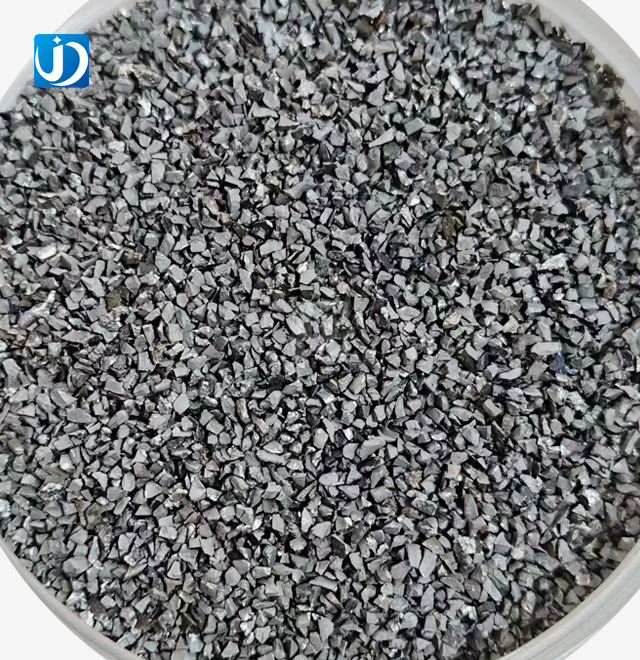
Cast steel shot suits most aluminum and steel parts needing general cleaning. Cut wire shot and stainless steel media suit applications sensitive to surface contamination. Media size and hardness should match part thickness to avoid warping thin sections.
What affects mesh belt shot blasting machine price?
Belt width, wheel count and power, chamber size, automation level, and internal wear-part material all affect quoted price. Total cost of ownership should also account for abrasive consumption, electricity, wear-part replacement, and shipping to the destination country.
Let Us Confirm Your Deformation and Scratch Rate Before You Order
A sample trial is the fastest way to find out if thin parts are failing quality checks after being cleaned. Our mesh belt pass-through shot blasting machine line is used by pressing and die-casting plants in Vietnam, Malaysia, Indonesia, and India to test sample parts. Send examples of the parts you want to blast along with the goal sizes to junda001@jundablast.com. Before you place an order, our engineering team will send you trial data on the rate of deformation, the rate of scratching, and the cycle time.
References
1. European Commission. Machinery Regulation (EU) 2023/1230. 2023.
2. National Fire Protection Association. NFPA 70 — National Electrical Code. 2023.
3. European Chemicals Agency. Understanding REACH. 2024.
4. ASTM International. Standards for abrasive media and Surface Preparation. 2024.
About the Author
As a Shot Blasting Equipment Engineer, Robert Wang has worked with foundries, pressing shops, and die-casting companies across Asia for more than ten years, developing and setting up continuous blasting lines. He has been in charge of testing equipment and samples for companies that make aluminum and steel parts, with the main goals of controlling deformation and making sure the surface is clean. Robert works with the engineers at Junda Machinery to design custom mesh belt and roller conveyor systems.

USER EVALUATE
Real feedback and practical experience shared by worldwide partners who purchased our machinery and environmental treatment devices.