Worried about inconsistent surface roughness of pipe outer walls? Steel pipe shot blaster ensures uniform pretreatment
A steel pipe shot blasting machine solves uneven outer-wall roughness by hitting every part of the pipe with the same abrasive stream. Rotating rollers turn the pipe while it moves forward, so multi-angle blast wheels reach the full 360° surface without shadow zones. The result is a consistent finish up to Sa 2.5 and an even anchor profile for epoxy and polyurethane coatings. In this article, I explain why roughness varies, how our rotary through-feed design controls it, how to maintain it, how to choose the right unit, and how to verify results on your own line.
Why Pipe Outer Walls End Up With Uneven Surface Roughness?
Why Uniform Roughness Matters for Coating Adhesion?
That's why coatings stick to steel; they do so by physically sticking to it. When you blast, you leave behind small hills and valleys. This is known as the anchor profile, and epoxy or polyurethane goes over it before it sets. This is because the pipe is not flat all the way through, so the bond strength changes in some places. Some thin films on top of tall peaks can cause rust spots to show up early, and places that haven't been cleaned can get blisters or peel off. This is why pipe makers care about the cleanliness grade just as much as the roughness consistency grade. Not the paint room, but the blasting step is often where things go wrong when your finishing line has to make a lot of changes.
Common Causes of Inconsistent Blasting
There are a few places where most problems with hardness can be found. When blasting by hand, the effects vary from shift to shift because of the angle, distance, and how tired the user is. The abrasive goes to the wrong place and leaves lines if the orientation settings are off or the blast wheel blades are worn. It shows different parts for longer periods of time when the pipe turns unevenly. Abrasive that is too broken up also doesn't cut as well, and steel that is wet can flash rust before it is covered. While each cause can be fixed on its own, most of the work is done automatically by a steel pipe shot blasting machine that can change the speed, shape of the wheels, and quality of the abrasive.
What Sa 2.5 Requires, and What It Does Not?
According to ISO 8501-1, Sa 2½ is a very thorough blast cleaning. On the surface, there can't be any mill scale, rust, or old paint. If there are any, they might only show up as spots or stripes of light stains. Many places in the US follow SSPC-SP 10/NACE No. 2, which is also known as "near-white metal blast cleaning." It's not clear from the cleaning grade how rough something is. You can find out what the profile range is on the paint's data sheet. Some ways to measure it are ISO 8503 and ASTM D4417. You should have a good pretreatment plan that controls both how clean the material is and how it looks.

How a Steel Pipe Shot Blasting Machine Creates a Uniform Finish?The Basic Principle Behind Wheel Blasting
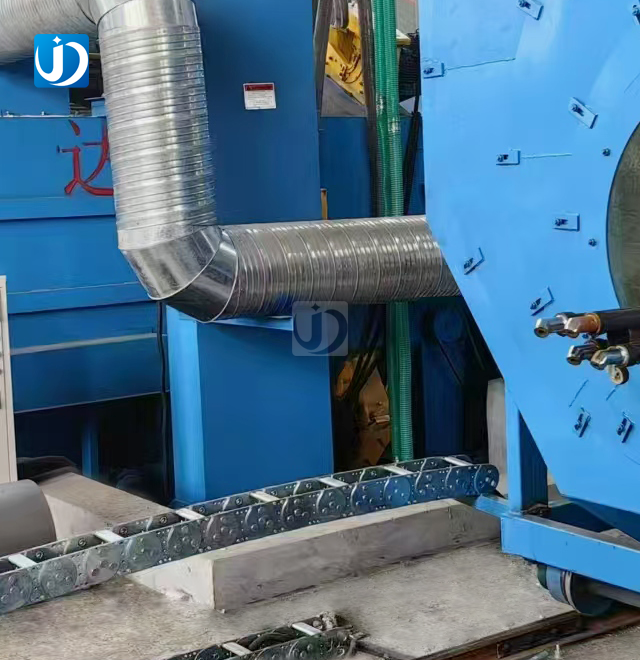
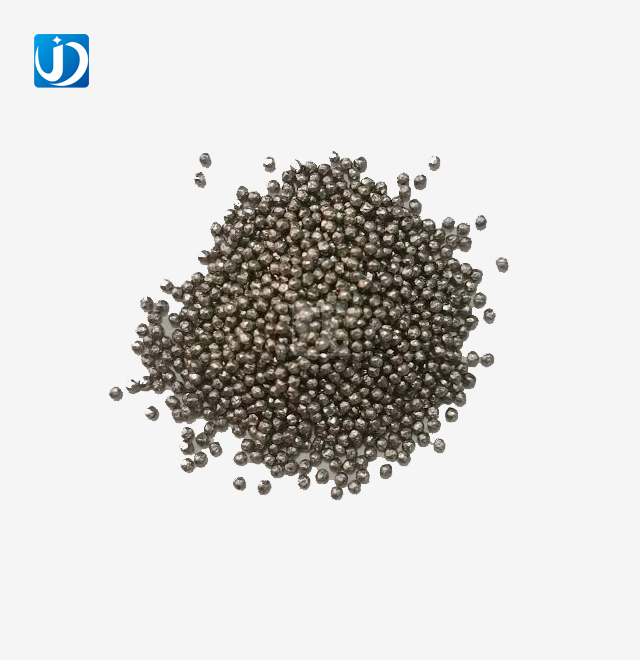
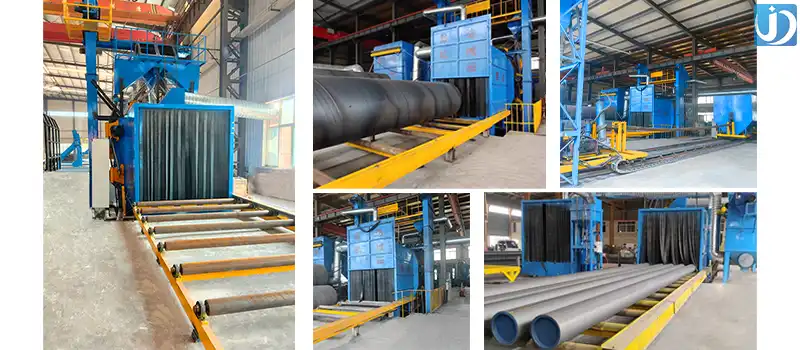
A steel pipe shot blasting machine has wheels that spin and are used for blasting. Each wheel is turned by a motor, and the steel chips that it throws at the pipe hit it very quickly. When the steel hits something, it sheds its scale and rust and is pressed into the shape of the anchor. Each pass has the same amount of power when the wheel speed and abrasive flow are set. This is hard to do when air blasting by hand. Steel shot and grit can be used over and over, but silica sand breaks down quickly. It is possible for people who do sand blasting to breathe in crystalline silica. This chemical is closely regulated by OSHA.
Rotary Forward Conveying and Multi-Angle Wheels
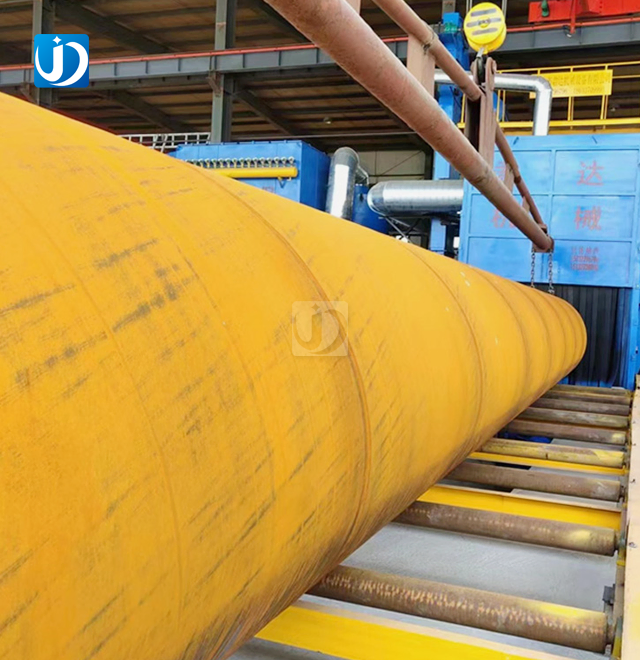
The blind-spot problem is solved directly by our rotary design. The pipe goes forward on wheels that are shaped like a V and turn it. This makes sure that the wall goes through the stream of abrasive material at different angles. There are no dark spots on the multi-angle blast wheel because of how it is set up. There are no blind spots because abrasive is sent to the outside wall from all sides. This means that the quality of the surface is always the same up to Sa 2.5 grade.
Continuous Through-Feed for Automatic Production Lines
Pipes are always going in and out of the machine, and the speed at which they move can be changed. If the rust is bad, you can slow down the feed. If it's only a little scaled, you can speed it up. You can match the series to the flow of your line so that the machine doesn't get in the way. It can handle up to 12 t/h of work. From the output end, you can also paint, stop rusting, and protect against heat. This helps make a lot of pipes. Cast steel shot, cast steel grit, and mixes of shot and grit can all be used in the machine. It also works when there are shorter breaks between blasting and coating. This is because the steel that has just been blasted has less time to oxidize.
Adjustable Anchor Profile and Closed-Loop Abrasive Recycling
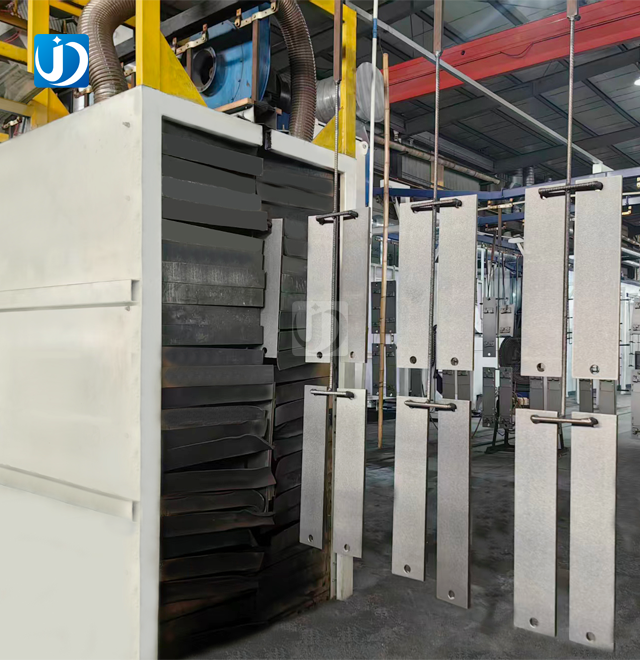
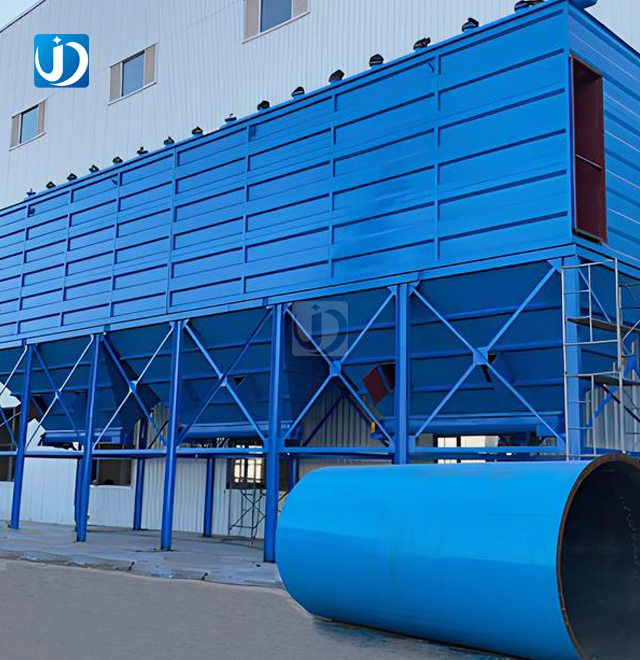
You can change the roughness to fit the needs of your coating by mixing round shot and angular grit. A round shot tends to smooth and peen, while an angular grit cuts more deeply. Epoxy and polyurethane coats don't peel off because of the steady micro anchor design, and pipes last longer. A screw conveyor, a bucket lift, and an air filter all get back the whole grit right away in terms of cost. There is a different way for dust and pieces to leave, which uses less media and keeps the working mix more stable.
Maintenance and Safety for Steady PerformanceDaily and Weekly Checks That Protect Consistency
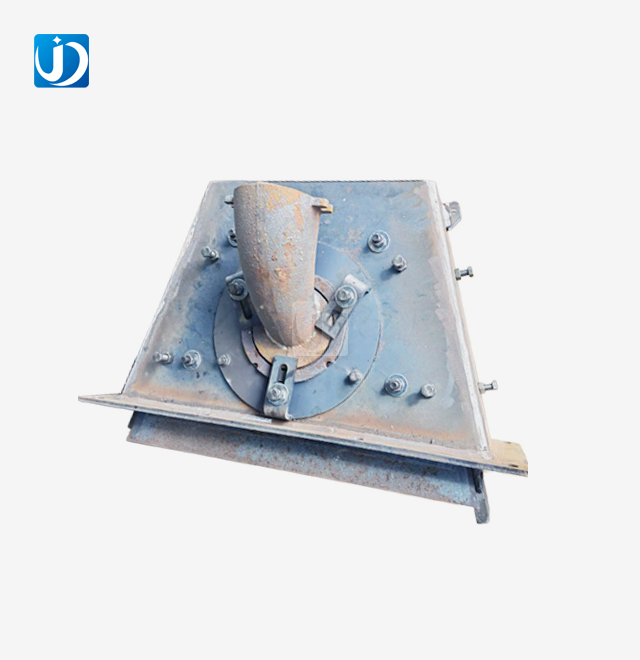
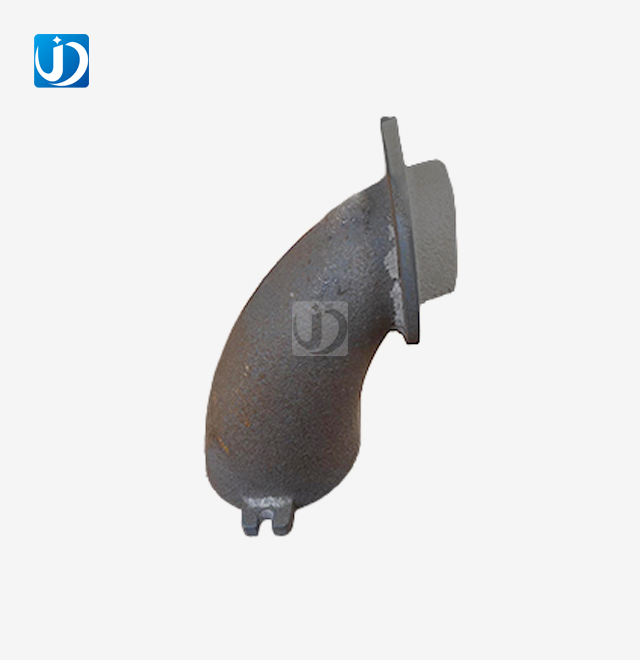
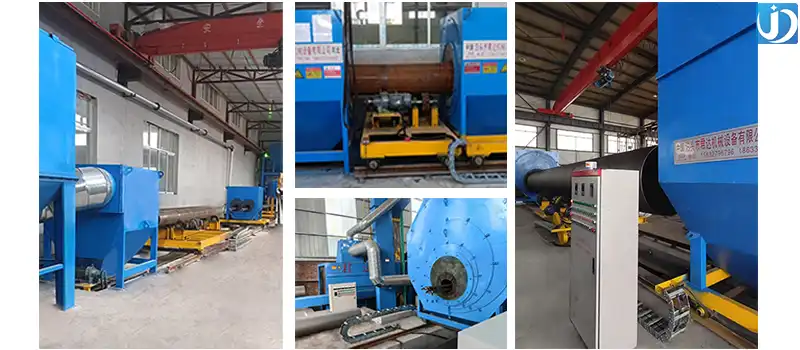
For the end to be even, the parts have to stay in good shape. Before each shift, the blast wheel's blades, liners, and rollers should be checked. The grit changes its shape when the blades get worn down. Check the working mix and the amount of grit. Also, remove any packed dust from the hoppers and screens. Listen to see if the wheels and slides are making any new noises or shaking. You should also write down the roughness number once a shift. A slow change in profile can often show wear before it breaks. You can find an English operation manual and repair movies that show you how to do these checks step by step.
Scheduled Service and Spare Parts Planning
A review every once in a while, along with daily checks, keeps small problems from turning into line stops. An awful lot of factories check the bearings, wear parts, and abrasive recycling system once a month. They then change the abrasive mix as directed. You should write down what parts are broken and fix them based on that, not guess how long they will last. Long-term, we offer original spare parts, maintenance advice, remote troubleshooting, and help with setting up. That helps your group get more clothes before they run out.
Operator Safety and Dust Control
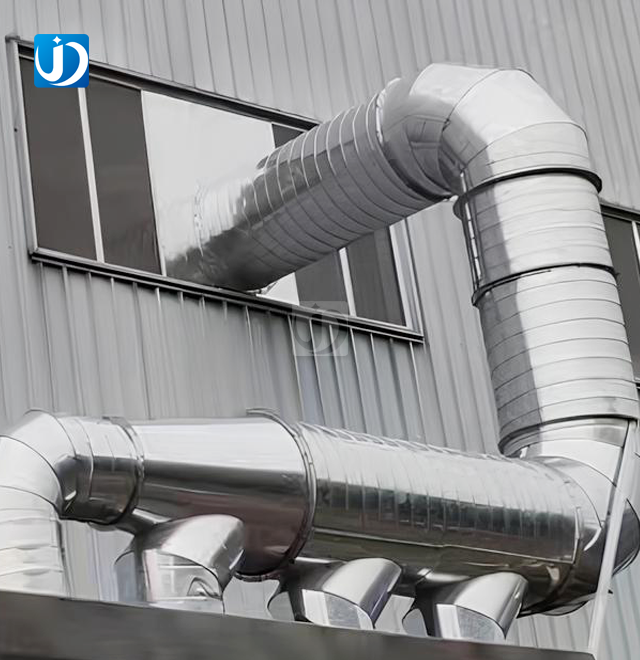
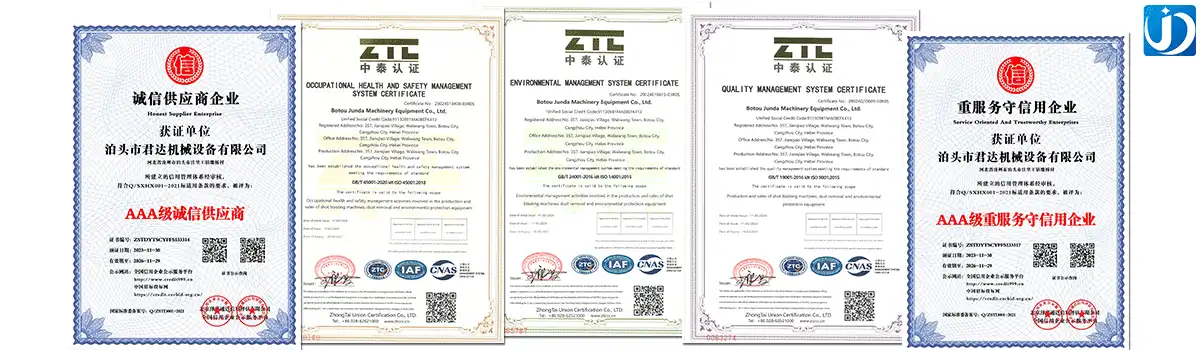
When you blast, the high-speed grit, noise, and tiny dust make it important to have clear safety rules. For the job, operators need to have the right eye, hearing, and respiratory protection. They also need to be trained on how to use the controls and the lockout procedures before they can open any access doors. The 29 CFR 1910.94 rule for abrasive blasting talks about air flow, and the 29 CFR 1910.95 rule for working noise tells you what to do when you're exposed to too much noise. There is a fully sealed dust control system on our steel pipe shot blasting machine, and we can make sure that the system works with the rules in your area. As a way to manage health and safety at work, Junda Machinery has ISO 45001 approval.
Selecting the Right Steel Pipe Shot Blasting Machine
Match Capacity and Pipe Size to Your Line
Start by figuring out what size pipes you need and how many tons per hour they need to move. It's not good for business to have steel pipe shot blasting machines that are too big or too slow for the finishing line. Bigger machines waste power and floor space. You can change the size of the machine to fit your pipe range. Our line can handle 1 to 12 t/h. Let us know the diameter range, length, wall thickness, and line speed you want to reach, and our engineers will set up the rollers and wheels. Also, tell us how bad the rust is now, because stronger scale needs a slower feed.
Compare Machine Types and Automation Levels
Tumble blasters are best for loose, small parts. They're not good for long pipes. Hanger types are used for large castings and welded parts. In the field or for one-time jobs, hand blast rooms or machines that can be moved are used. A fixed through-feed rotary steel pipe shot blasting machine can keep going over the same area with little help from the operator. This is good for steady pipe production. It's also important to use automation. Refilling the abrasives automatically and changing the speed of the conveying cut down on mistakes made by people. Our own tracking systems keep an eye on production data, process control, and how well the dust is being removed.
Check the Supplier: Support, Spare Parts, and Customization
Something has to hold up a machine for it to be useful. Find out about the warranty, how long it lasts, how to get training, and how to get spare parts. For 20 years, Junda Machinery has been making tools for shot blasting. They back up the whole machine with a warranty and answer questions within 6–8 hours. According to the details, standard customized equipment can be made in about 15 days. We can paint, private label, make power, dust collection, and control systems, among other things. We can do both ODM and OEM work. We can also give you technical papers and test results and help you get CE certification.
Real-World Impact: Evidence and Performance Verification
What Corrosion Cost Data Tells Us?
The first step in a long cost chain is to prepare the surface. NACE International and FHWA did a study in 2002 that used data from 1998 to say that rust costs the US $276 billion a year, which is 3.1% of GDP. Coatings that stick well are the only way to stop that loss, which brings us back to uniform pretreatment. The picture makes a pipe plant remember that fixing things and paint that doesn't last long enough costs a lot more than the paint itself.
How to Verify Surface Quality on Your Line
Checks should be done regularly and be recorded. Compare the blasted pipe to the ISO 8501-1 rules for photos to see how clean it is. ASTM D4417 says to use a depth measure, a compare or copy tape, or both to find out how rough something is. Taste the head, middle, and tail of a pipe, as well as a few different spots on its outside. This is because the goal is not just one good reading, but a regular profile. You can figure out why some results are different by writing down the grit mix, feed speed, and results by batch from the steel pipe shot blasting machine.
Measuring Your Own Return After Installation
This is important because every plant is different. You should record your numbers before and after adding a new machine. The number of remade pieces at the coating line, the number of discarded pipes per hundred, the amount of abrasive used per ton of pipe, and the number of hours of unscheduled downtime can all be useful. The abrasive figure should show recycling in a closed loop, and readings of constant sharpness should lower the need for extra work. This is something we can help you set during commissioning and user training. You can also keep records all the time with our system for collecting and reviewing data.
Conclusion
Changes made by hand, old parts, uneven spinning, or bad abrasive control can all lead to uneven roughness on the outside wall. The machine will not last as long and coatings will not stick as well. Standards like ISO 8501-1, ISO 8503, and ASTM D4417 need to be used to make sure that two different goals are met: a controlled anchor profile and Sa 2.5 cleaning. These issues can be fixed by a rotary through-feed steel pipe shot blasting machine, which keeps the feed steady and turns the pipe while multi-angle wheels blast it from different directions. It also gets rid of the grit that has been used. That regularity lasts for a long time because it is well-kept, follows safety rules, and is the right size. When you keep track of rework, abrasive use, and downtime in a plant, you can see what the real result is.
FAQHow often should I maintain the machine?
Check the rollers, blades, and seals every shift. In the instructions, it says to check the wear parts and the abrasive recycle device once a month for the steel pipe shot blasting machine.
Can the machine handle different pipe sizes?
Yes. We changed the size of the machine and how its rollers and wheels are set up so that it can work with your range of pipes. Tell us the sizes and what you want to happen.
What causes uneven cleaning on a pipe?
Usually, it's because the blades are worn, the wheel settings are off, the pipe is turning in an odd way, or there are too many pieces of grit.
What safety equipment do operators need?
People who work on machines need to be trained on how to use the controls and wear eye, hearing, and respiratory protection. They also need to know how to lock out the machine.
Request a Steel Pipe Shot Blasting Machine Quote From Junda Machinery
For 20 years, Junda Machinery in Botou, Hebei, has been making steel pipe shot blasting machines. You can choose between ODM and OEM, and they have English directions and extra parts. Send your pipe lengths, the amount of output you want, and the finishing needs to junda001@jundablast.com. Within 6–8 hours, our engineers will get back to you with a good design. Scroll down to read more at jundablast.com.
References
1. ISO 8501-1, Preparation of Steel Substrates Before Application of Paints and Related Products: Visual Assessment of Surface Cleanliness, 2007
2. ISO 8503-1, Surface Roughness Characteristics of Blast-Cleaned Steel Substrates: Specifications and Definitions for ISO Surface Profile Comparators, 2012
3. SSPC-SP 10/NACE No. 2, Near-White Metal Blast Cleaning, 2007
4. ASTM D4417, Standard Test Methods for Field Measurement of Surface Profile of Blast Cleaned Steel, 2014
5. NACE International and Federal Highway Administration, Corrosion Costs and Preventive Strategies in the United States, 2002
6. Occupational Safety and Health Administration, Respirable Crystalline Silica Standard (29 CFR 1910.1053 and 1926.1153), 2016

USER EVALUATE
Real feedback and practical experience shared by worldwide partners who purchased our machinery and environmental treatment devices.