


_1786959752558.webp)
Steel Plate Shot Blasting Treatment: Process, Benefits, and Applications
Steel plate shot blasting treatment is a high-velocity surface preparation process where steel abrasives — shot or grit — are propelled by centrifugal wheels onto plate surfaces, stripping mill scale, rust, and contaminants to achieve cleanliness grades of Sa 2.0 through Sa 2.5 per ISO 8501-1. At Junda Machinery, we design roller-conveyor shot blasting lines handling 3–28 t/h throughput with blast velocities of 65–85 m/s, serving shipbuilding, bridge fabrication, and structural steel facilities worldwide. This article walks through the full process, key advantages, and real-world applications so you can make a well-informed procurement decision.
Understanding Steel Plate Shot Blasting Treatment
What Shot Blasting Actually Does
When you shot blast, steel shot or jagged grit is thrown at the plate surface at speeds between 65 and 85 m/s. This process removes mill scale and rust, leaving behind a controlled anchor profile (usually 40–80 microns Rz) that protects coatings in a way they can't do on smooth, bare steel. Studies in the journal Corrosion Science confirm that a properly blasted surface makes coatings last about 400% longer than a plate that hasn't been treated.
How It Differs from Sandblasting and Grinding
When you sandblast, you use compressed air and silica sand, which creates fine dust that you can breathe in and uses up abrasives that can't be replaced. Grinding is slow and depends on the person doing it, so the surface patterns aren't always the same. Acid pickling uses chemicals to get rid of scale, but it also creates dangerous waste streams. Roller-conveyor shot blasting, on the other hand, reuses steel abrasives in a closed loop, makes an anchor pattern that can be used again and again, and moves a continuous plate at production speeds. This makes it the only realistic choice for preparing large amounts of industrial parts.
Abrasive Selection and Its Effect on Finish
Steel shot makes a profile that is peened and mostly smooth, which is good for thick protective coats in naval settings. When used with thin-film epoxy primers on bridge beams or structural sections, angular steel grit makes a pattern that is sharper and thicker. You can't just guess what abrasive mix to use; it's based on the coating manufacturer's surface profile specification and the plate's final use, like in a shipyard, on a bridge deck, or as the base ring of a wind turbine.

The Steel Plate Shot Blasting Process Explained
Pre-Treatment Preparation and Inspection
Before putting plates into the machine, workers check the sizes, look for weld slag or too many pits, and confirm the thickness of the plates. Plates that aren't within the limit are directed to be pre-ground. This inbound quality check stops equipment wear from weld beads that are too big and makes sure that every plate that leaves the line meets the cleanliness goal on the first pass.
Machine Operation and Key Process Parameters
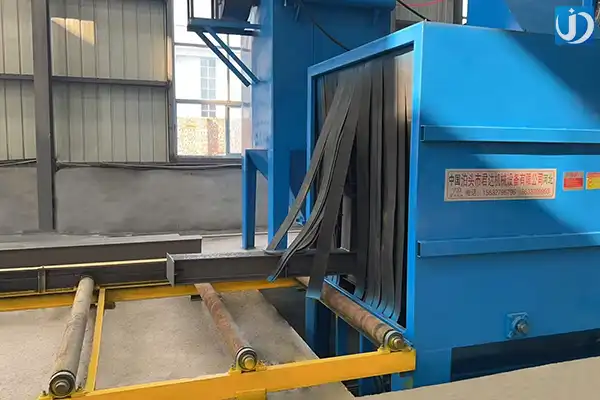
Plates move on rollers covered in rubber through a blast room that is completely sealed off. Abrasives are spread evenly across the whole width of the surface, up to 5 meters on Junda lines, by multiple turbine wheels that are set up to cover all directions. The PLC control panel lets you set the speed of the abrasive, the angle of the wheels, and the speed of the conveyor. Our Intelligent steel plate shot blasting treatment Machine Management and Control System keeps track of these factors in real time, so quality records for dock and bridge projects can be tracked.
Post-Treatment Quality Control
After the plates come out of the blast room, they are inspected using four different methods. Comparators from ISO 8501-1 are used to check the cleanliness of the surface. A digital gauge or Testex replica tape can be used to measure the depth of a profile. ISO 8502-3 is used to measure dust contamination. The Bresle method is used to measure salt contamination. For marine-grade work, soluble chlorides must be less than 20 mg/m². Through a combined conveyor link, plates that pass go straight to the coating or primer line further down the line.
Comparing Shot Blasting with Alternative Surface Treatments
Efficiency and Surface Finish Quality
Automated roller-conveyor blasting can move a continuous plate stream at up to 28 t/h, which is much faster than grinding or sandblasting by hand. This makes the Sa 2.5 finish the same across the whole width of the plate, which is hard for human workers to do, especially on wide structural plates like those used in bridge girders or ship hull sections.
Cost and Environmental Considerations
The cost of materials and trash management goes up with traditional sandblasting because the grit is thrown away after only one pass. Shot blasting lines collect and re-circulate steel abrasives through a lift and separator system. This saves a lot of money on consumables over the life of the equipment. When combined with a high-efficiency dust-collection unit, the enclosed line keeps the level of particles in the workplace below what is considered safe for workers' health. This means that workers outside the chamber don't need to wear any special respirators.
Automated vs. Manual Shot Blasting
Manual blast cabinets are good for small groups or shapes with lots of corners. For large amounts of flat plate processing, like hot-rolled sheets, wide-flange H-sections, or shipbuilding panels, automatic roller-conveyor machines offer speed and uniformity that can't be matched by human methods. Buying a full conveyor line is worth it because it cuts down on labor costs, ensures stable quality acceptance rates, and keeps painting or coating systems fed without interruption.
Procurement and Partnering with Steel Plate Shot Blasting Service Providers
Evaluating Equipment Quality and Certifications
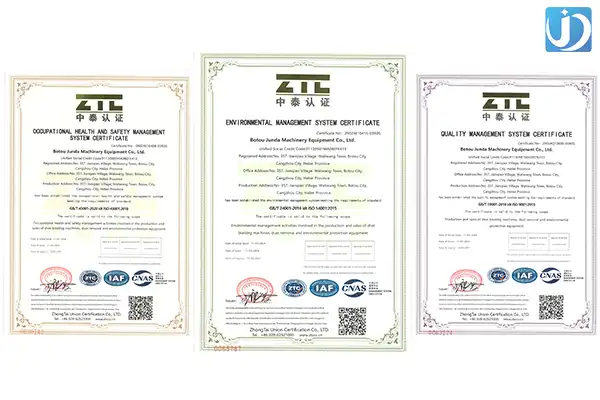
When looking for a Steel Plate Shot Blasting Treatment line, make sure the seller has ISO 9001 quality management records, CE paperwork, and cleanliness test results from real production runs that were done by a third party. Junda Machinery is certified by ISO 9001, ISO 14001, and ISO 45001, and they can provide full technical documentation packages to help you meet import compliance and project owner approval requirements. They can also help with LR, BV, and KR classification society submissions when shipyard applications need it.
Pricing Determinants and Service Models
What is the line investment? It depends on the width of the conveyor, the installed blast power (our range is 45–220 kW), the level of automation, and the after-sales service. This is what makes up the total cost of a project:
- Conveyor width and plate capacity: normal widths are 1.5–3.5 m; custom widths up to 5 m cost more for the tools, but they save your building money on plate rerouting costs.
- Installed power and throughput: configurations with higher throughput cut down on cycle time and bottlenecks when feeding a high-speed coating line.
- Spare-parts package: Blasting wheels, liners, and conveyor rollers wear out over time. Bundling a multi-year deal for consumables locks in supply and keeps production from stopping because of late orders.
Installation and commissioning scope: Junda provides on-site setup, PLC commissioning, and operator training. They also provide English-language manuals and free remote troubleshooting support.
These things add up to the total cost of ownership over the machine's useful life, which is usually 15–20 years with regular upkeep.
Procurement Workflow and Lead Times
Standard customized equipment leaves our factory about 45 days after the order is confirmed. It takes an extra 20 to 30 days to ship goods by sea to places in Southeast Asia or South Asia. Installation and commissioning on-site take 30 to 60 days, based on how ready the building is. We answer expert questions within 6–8 hours, which keeps your project on track from the first touch to the final acceptance.
Applications and Future Outlook of Steel Plate Shot Blasting
Shipbuilding, Bridge, and Structural Steel
In three high-stakes areas, shot blasting is the standard method of work. When making ships, anti-corrosion paint stays on deck plates that have been blasted to Sa 2.5 for years. In the building of bridges, blasted plates provide structural adhesion and coat the clean, shaped surface they need to last for 50 years. When making pressure vessels and wind turbines, blasting gets rid of surface dirt that could hide weld flaws during ultrasonic testing. This is an important safety step that inspectors further down the line depend on.
Automation, Smart Controls, and Sustainability
Our unique shot blasting machine Dust Removal Efficiency Monitoring System and Data Acquisition and Analysis System let facility managers keep an eye on how much grit is used, how much area is blasted, and how well the dust collection is working from one place. Larger steel mills or shipyards with fully automated preprocessing lines can connect to MES platforms further down the line. On the environmental side, closed-loop abrasive recovery and effective bag-filter dust collection cut down on both waste materials and air pollution. This is in line with Southeast Asian and South Asian governments' efforts to improve environmental rules.
Conclusion
For preparing plate surfaces for coating, welding inspection, or structural assembly, Steel Plate Shot Blasting Treatment is the industry standard. It gives a consistent Sa 2.5 cleanliness grade, a controlled anchor profile, and throughput rates that allow production to go on all the time. When looking for a supplier of equipment, it's important to make sure they have the right certifications, confirmed throughput data, the ability to make changes, and a realistic plan for spare parts and on-site support after the sale. Junda Machinery has been making machines for 20 years, has its own smart control systems, and offers full export services, from loading in the plant to setting up on-site. This means that we can help you with your next preparation line project from the planning stages to its long-term use.
FAQ
1. What is the difference between shot blasting and sandblasting for steel plates?
Shot blasting uses steel abrasives that can be recycled and spinning wheels to get more done in less time than sandblasting, which uses silica sand and makes fine dust that is hard to control in tight spaces.
2. How does abrasive choice affect the finished surface?
For thick protective coatings, large steel shot makes a deeper, peened profile. Fine angular grit makes a design that is thicker and crisper, which is best for thin-film primers on structural and bridge-grade plate.
3. How long can a blasted plate stay uncoated?
Blasted plate usually stays clean for 4 to 24 hours before flash rust shows up in a controlled setting with relative humidity below 50%. A shop primer is usually put on right away after blasting on most production lines.
4. Does shot blasting make plates thinner?
The amount of material removed is measured in microns, which is very small for structural reasons. However, the process increases the surface area by a large amount through the anchor profile, which is exactly what is needed for the coating to stick.
5. What level of cleanliness do most business projects need?
According to ISO 8501-1, Sa 2.5 (Near-White Metal Blast Cleaning), which is the same as SSPC-SP10, meets about 90% of industry coating requirements. This includes making ships, bridges, and pressure vessels.
Get Your Custom Shot Blasting Line Quote from Junda Machinery
With 20 years of full-line export experience, ISO 9001/14001/45001 certifications, and its own clever control technology, Junda Machinery is a renowned company that makes Steel Plate Shot Blasting Treatments. Our roller-conveyor lines can move 3–28 t/h, can handle plate widths up to 5 m, and connect directly to your coating line further down the line. You can email our engineering team at junda001@jundablast.com to get a technical plan that is specifically made for your plate requirements and output goals.
References
1. ISO 8501-1:2007 — Preparation of Steel Substrates Before Application of Paints and Related Products: Visual Assessment of Surface Cleanliness. International Organization for Standardization, 2007.
2. SSPC-SP10/NACE No. 2 — Near-White Blast Cleaning. SSPC: The Society for Protective Coatings, 2007.
3. ISO 8502-3:2017 — Assessment of Dust on Steel Surfaces Prepared for Painting. International Organization for Standardization, 2017.
4. Appleman, B.R. — Painting Over Contaminated Steel: A Review of Literature and Practice. Journal of Protective Coatings & Linings, 1987.
5. Momber, A.W. & Kovacevic, R. — Principles of Abrasive Water Jet Machining. Springer, 1998.
6. Keane, J.D., Bruno, J.A., & Weaver, R.E.F. — Surface Profile for Anti-Corrosion Paints. SSPC: The Society for Protective Coatings, 1976.

USER EVALUATE
Real feedback and practical experience shared by worldwide partners who purchased our machinery and environmental treatment devices.