Mesh Belt Shot Blaster for Small Metal Parts and Components
A mesh belt shot blaster is the best way to clean small metal parts and pieces that need to be done all the time without running into each other. This is a blast chamber. A metal belt with holes in it moves thin sheets, aluminum die castings, precision stampings, and light hardware through it. In the blast chamber, blast wheels rub rough materials over all the areas that can be seen. With this, the base is smooth and free of flash, oxide scale, and parting-line marks. It is now ready to be coated or anodized. This guide tells you what to look for, how the machine works, and where it fits.
What Is a Mesh Belt Shot Blaster for Small Metal Parts?
Definition and Basic Function
A mesh belt shot blaster is a closed system that cleans and always works. Parts move through a blast chamber that is closed off and has holes in it on a metal belt. Their way is blocked by centrifugal blast wheels that throw steel or other rough objects at them. A smooth, matte finish is left behind after it hits the surface and gets rid of scale, rust, casting sand, burrs, and oxide. People can put parts on one end and clean parts on the other because the belt doesn't stop like a batch closet does. We at Junda Machinery have been making shot blasting equipment for 20 years. This design can be used as a stand-alone unit or as a station in an automated production line.
Why a Mesh Belt Suits Small and Thin Components?
Thin pieces bend, scratch, or dent when they hit each other. A mesh belt moves them in a flat, controlled layer instead of a drum that rolls them around. The parts won't run into each other this way. This is important for things like 0.5–3 mm sheet, aluminum die castings, and decorative hardware where a mark on the surface can't be fixed later. Sand and other particles can fall through the belt because the weave is open. Shot can get to the bottom of each part this way, and the belt won't get dirty. If the process engineer knows how thick the part is, they can match the amount of cleaning to the exposure time set by the speed of the belt.
Typical Industries and Parts Served
Before painting or anodizing, this tool is used in aluminum die-casting plants to get rid of flash, oxide scale, and parting-line marks. Shops that stamp metal make simple tools and parts that are clean and well-formed. Auto parts suppliers get brackets, housings, and covers that are all ready to be put together and finished. In foundries and heat treatment lines, molding sand and scale are removed from small, strong parts. Both architects and people who make hardware for homes like the uniform finish. There should be a test review of a new part family before it is put on the belt. This is because the shape, thickness, and material of the part determine the best belt speed and blast intensity.
How Does a Mesh Belt Shot Blasting Machine Work?
Loading and Continuous Transport
Parts can enter the machine through a feeder, a hopper, a conveyor belt, or a robot-controlled automated loading station. They are spread out on the belt in a thin layer so that they don't pile up on top of each other. This way, they can protect each other from the rough surface. After that, the belt takes them through the blast chamber at a speed that can be changed. Operators can adjust the belt drives and the blast wheels manually. Then, when they switch between parts, they can set operating parameters according to each part thickness. It is important for a plant to be able to use the same machine to make more than one kind of part.
Abrasive Projection, Recovery, and Separation
Blast wheels inside the mesh belt shot blaster throw grit from above and below the belt at set angles. This lets small parts of both sides of the open mesh show through. The belt lets grit, scale, and other waste fall through it and into a bin below. An elevator takes the mix to a separator that cleans the air. The separator gets rid of the dust and fines, then sends the shot that can be used back to the wheels. The blast strength stays the same from the first hour of a shift to the last. This is because the abrasive mix stays stable. The wheels will wear out faster and clean unevenly if you don't separate them well.
Dust Collection, Controls, and Clean Discharge
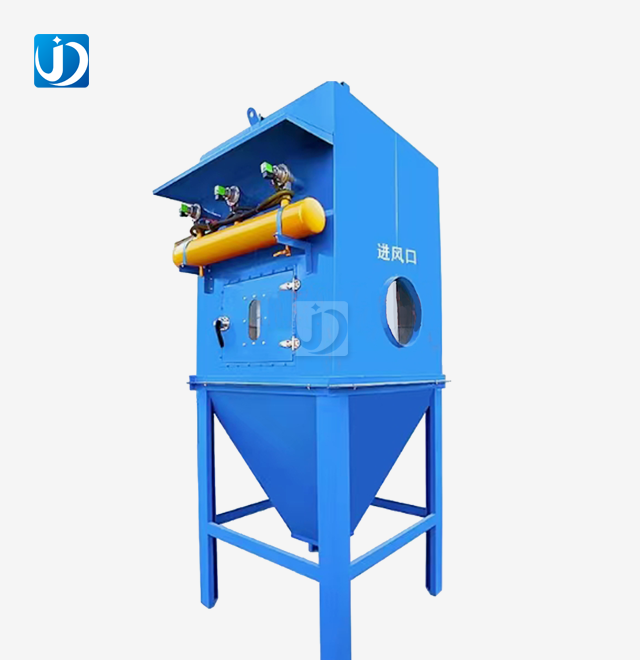
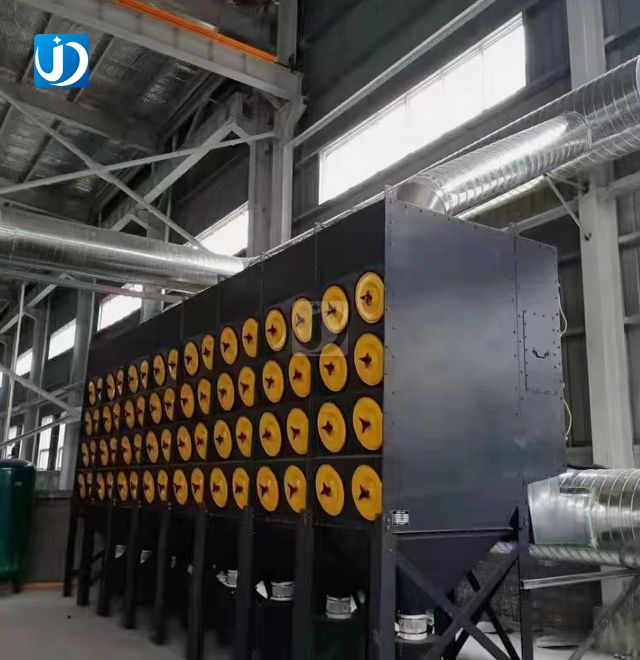
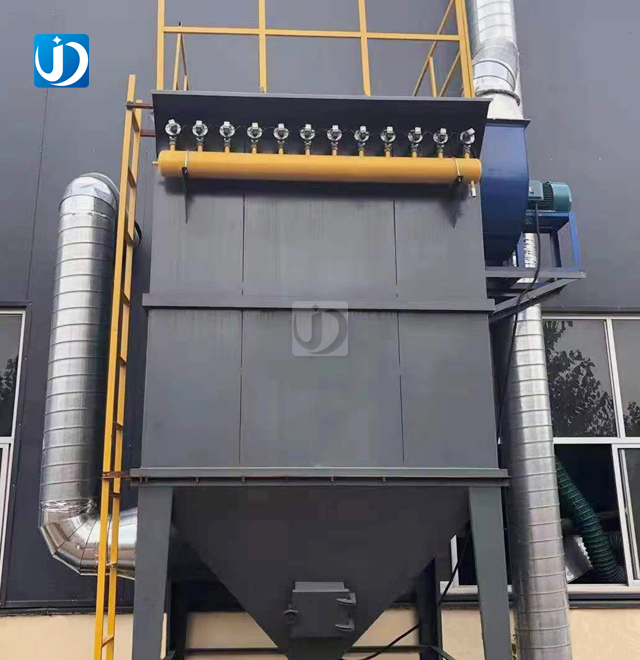
A dust collector moves the air through the chamber and separator, filtering it before letting it go. The work area stays clean, and dust doesn't get on the belt. When the parts are taken out at the end, the clean ones are sent to be checked, covered, put together, or to the next robot station. The blast wheels stop every time someone opens a panel on an access door. The PLC keeps track of the settings that are used for every group of parts. In the US, plants should also look at OSHA's rule for crystalline silica that can be breathed in. When parts still have sand on them after 8 hours, this standard says that the amount can't be more than 50 micrograms per cubic meter.
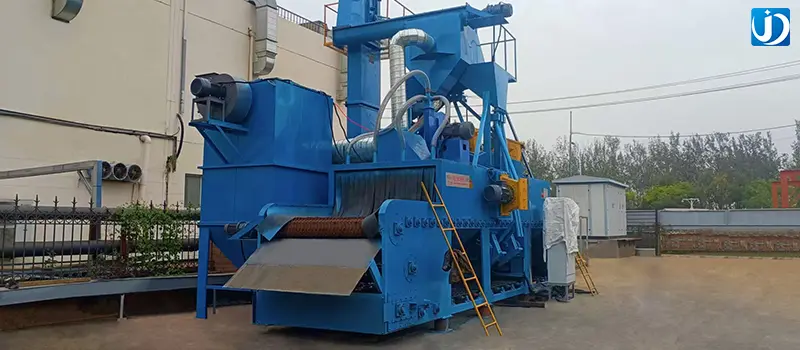

Mesh Belt Shot Blaster Applications for Small Metal PartsAluminum Die Castings
It's light and soft, and die-cast metal doesn't like it when the surface is scratched. Flash, oxide scale, and parting-line marks can be removed with a mesh belt shot blaster. With the belt, the castings don't run into each other. It makes a smooth surface that can be painted or anodized later. It also saves time because you don't have to wipe and grind it by hand as much. The blast power needs to be able to be changed because aluminum is soft. Real casts are used to tune the belt speed and wheel power for this. Thin-walled engine covers and housings can crack or warp when they tumble, but a flat belt doesn't.
Stamped Parts, Hardware, and Fasteners
A lot of the time, edge scales or sharp burrs are present on precision stampings and light hardware. Sheets that are between 0.5 mm and 3 mm thick are easy to bend, and the belt can carry them without damaging anything. To make decorative hardware look good, the finish must be even, so using the right amount of force is more important than how clean it is. Parts don't fall through or pile up on top of small fasteners that have side guide rails and dense mesh. I always check the belt opening against the smallest part before I offer a set-up. After being cleaned, steel tools and bolts can be given plates or powder coating.
Automotive Lines with Robot Loading
So that each part can be made in 30 to 60 seconds, the blaster needs to be able to work with a robot and a belt. As agreed upon during the design phase, our shot blasting machine with a mesh belt can connect to an automated line. In this way, a robot can load parts, and stations further down the line can accept them. For new energy vehicle projects, more aluminum die-cast parts are needed, and each one needs a smooth surface before it is coated. Early on in this project, you should share your cycle time, part drawings, and interface needs. These will help us figure out the length of the belt, the number of blast wheels, and the control logic.
Mesh Belt Shot Blaster Performance and Comparison with Other Machines
Abrasive Media Choices
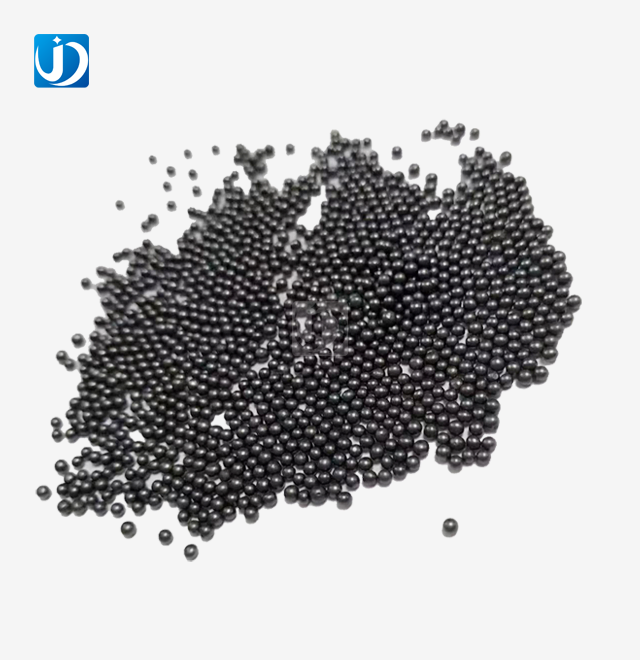
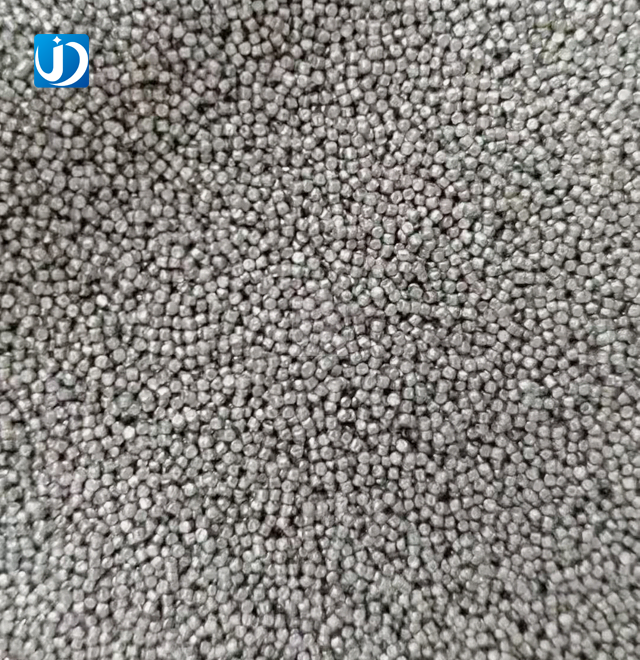
The choice of abrasive determines how well it cleans, how the surface looks, and how much it wears. For general cleaning of steel parts, round steel shot works well. Steel grit, on the other hand, cuts more deeply through heavy scale or corrosion. SAE J444 gives buyers information about shot and grit size, which helps them choose the right media for the job. For aluminum, it is common to use a lower intensity and a specific abrasive, with a full changeover to keep things from getting dirty. Because aluminum dust can catch fire, the design of the dust collector should follow the rules in NFPA 484 and NFPA 660. The safest way to make sure of the finish before production is to blast representative samples.
Capacity per Hour
This is not just based on belt width. The real output of a mesh belt shot blaster is based on the speed of the belt, the size, weight, orientation, and amount of time needed for each surface to be exposed. Theoretical capacity is based on the idea of a perfect single layer, but in real life, output has to account for part overlap, changes, maintenance, and rejects. As a simple method, I guess how much of the belt goes through the chamber every hour, use a realistic loading density that I've learned from tests, and compare the result to the level of cleanliness that is needed. ISO 8501-1 lists grades of how clean steel surfaces look, like Sa 2½, so both the buyer and the seller know what they need to do.
Mesh Belt vs. Tumble Belt and Spinner Hanger Machines
To get a full coverage, tumble belt machines turn parts over. However, parts hit each other, so they work best for strong castings rather than thin or cosmetic pieces. Spinner hanger machines are good at handling large or complicated single parts, but they only work in groups and need people to hang the parts. A mesh belt system lets things move continuously, is easier to handle, and can be automated more easily. In exchange, you have to deal with floor space, dust collection, belt maintenance, and tuning for each part. For even coverage, the parts have to lie in a thin layer.
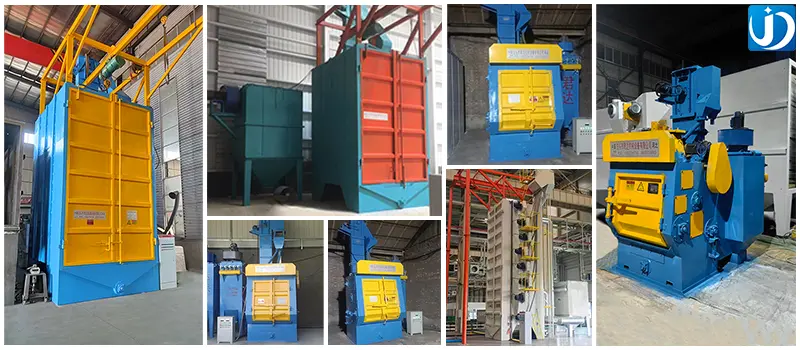
How to Choose, Install, and Buy a Mesh Belt Shot Blaster?Selecting the Right Configuration
First, make a list of the parts, the material, the level of contamination, the output goal, and the standard for cleanliness. Before you compare quotes, make sure you look at these three things.
- Belt and opening: Match belt width, mesh density, and load rating to your smallest and largest parts, so nothing falls through, snags, or stacks. Side guide rails and wire diameter matter for tiny pieces, and belt tracking should stay stable under full load.
- Blast wheels and power: Choose wheel count and motor power from the coverage your parts need, not from headline capacity claims. Light aluminum parts need adjustable intensity, and wheels above and below the belt expose both faces without turning the parts over.
- Separation and dust control: Confirm that the air-wash separator keeps the abrasive mix consistent, that the collector fits the airflow, and that filters and belt areas stay accessible for cleaning. Blocked mesh and uneven wheel wear often trace back to these systems.
The most common reasons for part damage, uneven cleaning, and unplanned downtime are taken care of by these checks.
Installation, Maintenance, and Safety
Make sure the foundation, power supply, dust duct route, and access space are all correct before the delivery. When you commission a machine, you should test the interlocks, track the belt, load abrasives, and do a test run with your own parts. Every day, operators should check the belt tension, snags, blast wheel blades, and impellers. They should also replace high-wear parts based on the abrasive hardness and the number of hours they have been used. Hearing protection is also important because 85 decibels over 8 hours is the level that OSHA says should be used for hearing conservation. We offer English operation manuals and maintenance videos, as well as remote installation help and training for operators.
RFQ Preparation and Lifetime Cost
Price alone doesn't show how much it really costs to own something. Using a lot of energy, abrasives, replacing filters, belt and liner wear, work, and downtime all add up over the life of the machine. Include part drawings or photos, material, dimensions, weight, contamination type, cleaning standard, hourly output, voltage, and any automation interfaces in a full RFQ so that all suppliers can quote on the same terms. We have ISO 9001, ISO 14001, and ISO 45001 certifications for Junda Machinery, and we do both ODM and OEM work, as well as private labeling. We can set up voltage and dust collection to meet local needs, and we'll get back to you within 6–8 hours if you have any questions.

Conclusion
A mesh belt shot blaster is good for small, thin, and sensitive parts because it moves them through the blast chamber in a controlled layer, so they don't hit each other when they tumble. Its cycle of feeding, abrasive projection, recovery, separation, and dust collection cleans aluminum die castings, stampings, hardware, and auto parts continuously. The results depend on matching the abrasive, blast intensity, and belt speed to each part. Also, belt width alone is not enough to judge capacity; real-world loading conditions must also be taken into account. It gives up more floor space and better dust control than tumble and hanger machines in exchange for continuous, gentler handling. The best results come from careful choice, proper installation, regular upkeep, and counting the cost over the whole service life.
FAQ
What is the best shot blasting machine for small metal parts?
A mesh belt unit is often a good choice for thin or sensitive parts because the parts don't touch each other. A tumble belt machine might work with strong castings.
Can a mesh belt shot blaster process aluminum parts?
Yes. Lower the intensity, use a separate abrasive to keep things from getting dirty, and make sure the dust collection system is made for aluminum dust that can catch fire.
How do I prevent small parts from falling through the mesh?
It is possible to change the weave pattern and mesh density, and small fasteners can be kept on the belt by adding side guide rails.
How is belt speed matched to blasting intensity?
Different frequency drives on the belt and blast wheels are controlled by the PLC, and operators can save recipes for each thickness of material.
What should I send for a quotation?
Send pictures or drawings of the material, its size, weight, type of contamination, cleaning standard, hourly output, utilities, and automation needs.
Request a Mesh Belt Shot Blaster Quotation from Junda Machinery
Junda Machinery customizes each mesh belt shot blaster to meet your needs for parts, voltage, and dust control. Send drawings, information about the materials, and output targets to junda001@jundablast.com if you want to compare mesh belt shot blaster manufacturers. Our engineers will get back to you within 6–8 hours with a configuration suggestion. For information on the product, go to jundablast.com.
References
1. NFPA 660, Standard for Combustible Dusts and Particulate Solids, 2022
2. NFPA 484, Standard for Combustible Metals, 2022
3. SAE J444, Cast Shot and Grit Size Specifications for Peening and Cleaning, 2005
4. ISO 8501-1, Preparation of Steel Substrates Before Application of Paints and Related Products, 2007
5. OSHA, Respirable Crystalline Silica Standard, 29 CFR 1910.1053, 2016
6. OSHA, Occupational Noise Exposure, 29 CFR 1910.95, 1983

USER EVALUATE
Real feedback and practical experience shared by worldwide partners who purchased our machinery and environmental treatment devices.