


_1786959752558.webp)
How to Choose the Right Shot Blasting Unit for Your Production Line
Choosing the right shot blasting unit for your production line is one of the most consequential equipment decisions you will make as a procurement engineer or plant manager. The right unit directly affects your throughput rate, surface finish consistency, compliance with standards like IATF 16949, and your cost per processed part. With single-module capacities ranging from 80 to 600 parts per hour and power configurations between 7.5 and 55 kW, today's modular blasting systems offer far more flexibility than earlier generations. This guide walks you through every factor that matters before you sign a purchase order.
Understanding Shot Blasting Units and Their Industrial Role
Before you compare specs, it's helpful to know how these machines work and where each type works best.
How the Process Works
A shot blasting unit uses rotating fans or compressed air to move abrasive media like steel shot, cut wire, or grit at a very high speed. The impact gets rid of mill scale, rust, and other surface contaminants while also making a controlled anchor profile. Society for Protective Coatings (SSPC) says that a properly prepared surface to Sa 2.5 or Sa 3.0 can increase the service life of a coating by more than 300% compared to a base that is not properly prepared.
Wheelblast vs. Airblast Systems
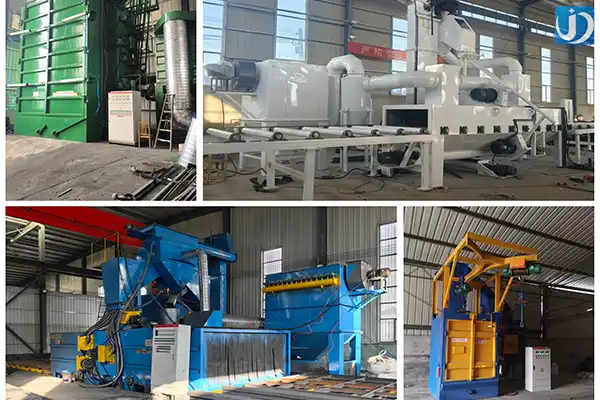
Wheelblast machines have a motor-driven fan that can handle a lot of work at once. They work well for molds, bolts, and bearing parts for cars. Airblast systems are great for precise work, fragile substrates, or complex shapes because they use compressed air to move media. Wheelblast modular units usually offer the best mix of energy economy and throughput for embedded production line uses.
Batch, Continuous, and Inline Configurations
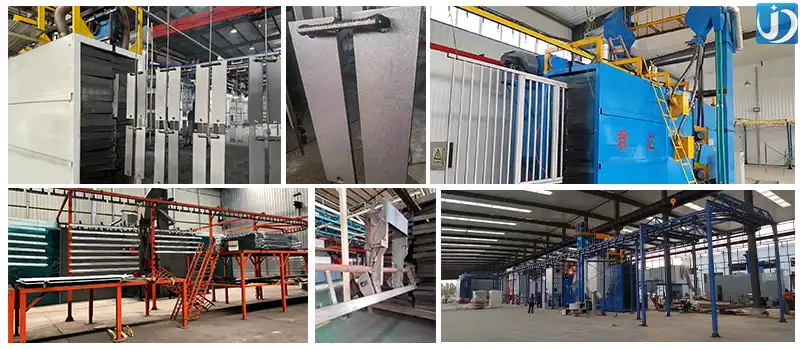
Batch systems work best for low to medium volume tasks because they handle a set amount per cycle. Modern Tier-1 car suppliers need the right architecture to get cycle times of more than 120 parts per hour from the manual or outsourced blasting processes they currently have. This architecture includes continuous or inline systems that connect directly to conveyor-fed or robot-cell production flows.
Key Criteria to Consider When Selecting a Shot Blasting Unit
Once you know the different kinds of machines, the process of choosing one turns into an organized engineering practice. Here are the most important things a buyer should think about before asking for a quote.
- Throughput and cycle time match: Confirm the unit's rated capacity aligns with your line takt time. A mismatch of even 15% creates a bottleneck or idle time that compounds across shifts.
- PLC communication protocol compatibility: For automated lines, Profinet, EtherCAT, or Modbus compatibility is non-negotiable. Protocol mismatches force costly middleware solutions or complete re-engineering of the control cabinet.
- Power configuration and footprint: Modular blasting cells with top, side, and bottom wheel layouts in a 7.5–55 kW range allow placement in constrained floor plans typical of retrofit installations.
- Abrasive media compatibility: Steel shot blasting unit produces compressive stress beneficial for fatigue-prone parts like transmission gears and brake components. Grit is preferred for aggressive scale removal on cast parts. Match the media type to your substrate.
- Regulatory and quality documentation: Buyers operating under IATF 16949 need First Article Inspection (FAI) reports, process capability studies, and full technical dossiers from the supplier. Confirm these documents are available before shortlisting a vendor.
Your RFQ specification sheet is built around these criteria. Skipping any of them makes it more likely that you will have to pay a lot of money to fix things after installation.
Comparing Shot Blasting Units with Alternative Surface Preparation Solutions
People don't always think of shot blasting as the first tool they want to buy. There are people who like grinding, wire cleaning, chemical pickling, and sanding. Here's an honest look at how they differ.
Sandblasting
Sandblasting, also known as "open-air abrasive blasting," cleans surfaces just as well, but it makes a lot of dust that can't be stopped, is illegal under OSHA 29 CFR 1910.1053, and is less effective at recovering media. In a work setting, these factors lead to higher prices for consumables and more regulatory risk. Both problems can be solved with a closed-structure wheelblast module.
Grinding and Wire Brushing
Mechanical grinding consistently takes material from flat or simple curved surfaces, but it has trouble with complicated shapes like bearing races or threaded screws. Wire brushing creates directed scratch patterns that don't work with the needs of precision coating bonding. Shooting a projectile at an uneven surface gives a smooth, even surface that neither of the other methods can match.
Chemical Pickling
Chemical processes can be used on some alloys, but they require more work to clean up wastewater, take longer, and pose safety risks when working with chemicals. Chemical-based cleaning rarely beats automatic blasting when it comes to total cost for Tier-1 automakers trying to cut costs per part by 30% or more.
When producing large quantities of ferrous metal components, shot blasting units consistently perform better in terms of throughput, repeatability, media recirculation efficiency, and environmental containment.
Practical Procurement Considerations for B2B Buyers
Technical fit is important, but it's not enough. There are risks in the buying process itself that are carefully managed by experienced buyers.
Total Cost of Ownership
The price of the item is only one factor. Think about the costs of installation, changes to the electrical infrastructure, media usage rates, filter cartridge refill times, and the work that needs to be done every year for upkeep. It will cost more in 18 months for a unit that cost less to buy but uses 20% more media per cycle.
Supplier Qualification and Documentation
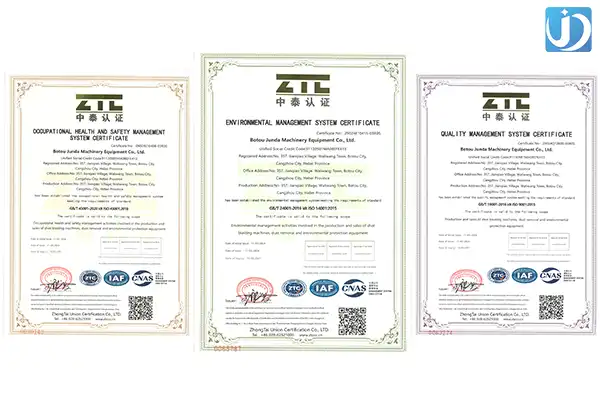
In businesses that are controlled, vendor qualification checks usually last at least 16 weeks. Before you buy from a seller, make sure you know if they are certified to ISO 9001, ISO 14001, and ISO 45001, and if they can meet the standards for FAI paperwork and IATF 16949 traceability. If suppliers can't provide these papers during the RFQ stage, they usually can't meet production start dates.
OEM and ODM Flexibility
OEM and ODM manufacturing partnerships are important from a business point of view if your production line has its own brand or needs to be integrated in a way that is specific to a protocol. When suppliers offer private labeling, small-batch prototype runs, and open interface design, they lower the technical and business risks of projects that are being integrated for the first time. Before committing to a full buy order, make sure you know the minimum order amounts for the test run.
Final Decision-Making Framework to Choose the Best Shot Blasting Unit
A structured scoring grid keeps choices from being made based only on price once criteria have been set and source options have been narrowed down.
Build a Weighted Scoring Matrix
Based on your production priorities, give each criterion a weight. A normal Tier-1 buyer in the car industry might put 25% of their weight on protocol compatibility, 25% on throughput match, 20% on paperwork accuracy, 15% on after-sales response time, and 15% on total cost of ownership. In that order. Use these weights to give each chosen provider a score.
Run a Controlled Sample Test
Before you send a purchase order, ask for a sample test to be done with your real parts in 4–8 weeks. Compare the cycle time to your production takt and the surface roughness (Ra/Rz) to ISO 4287. Also, check how clean the surface is according to ISO 8501-1. Data from controlled tests clears up any confusion about which provider to choose.
Plan for Scalability
The amount of production changes. Choose a modular design that lets you add more blast wheels, better turbines, or bigger conveyor interfaces without having to buy a whole new machine. Designs that can be retrofitted protect your capital investment as your business grows.
Conclusion
Choosing the right surface shot blasting unit equipment involves many factors, such as output, protocol compatibility, paperwork standards, and the dependability of the seller. Buyers who use a structured evaluation process—from choosing the type of product to comparing vendors based on scores and testing controlled samples—always end up with better results than buyers who only look at price. Today's flexible, inline blasting designs give production engineers the freedom to easily add new blasting systems to automated lines that are already in use, all while meeting the strictest quality and traceability standards.
FAQ
1. How often should I schedule maintenance on a shot blasting unit?
Depending on the type of media, turbine blades usually need to be inspected every 200 to 400 hours of use. Steel grit wears down blades faster than rounded steel shot. Between 500 and 1,000 hours, the whole set of blades usually needs to be replaced. When the dust collection system is running all the time, the filter refills should be checked once a month.
2. Can a modular blasting unit handle delicate parts like thin-walled automotive castings?
Yes, you can change the blast position, media size, and speed of the compressor. The impact energy can be set to be exactly enough for parts with thin walls. Before setting the parameters for production, you should always do a controlled sample test with real parts.
3. What communication protocols do modern inline blasting systems support?
Profinet, EtherCAT, and Modbus can all be used with most industrial-grade modular units. Check that the protocol works with the PLC design you already have during the RFQ stage to avoid having to do extra work to integrate.
4. What surface finish standard can a shot blasting unit achieve?
Wheelblast systems that are set up correctly can regularly achieve cleanliness levels of 2.5 or 3.0 according to ISO 8501-1. The surface has a roughness profile of Ra that is good for high-performance industrial finishes and glue bonding.
5. Does automation in shot blasting actually reduce operating costs?
Yes. A study published in the Journal of Manufacturing Processes in 2022 found that automated blasting cells cut the cost of labor for each part by 28–40% compared to manual operations. They also made the surface finish more consistent across production batches.
Partner With Junda Machinery for Your Next Shot Blasting Unit Project
Junda Machinery has been developing and making modular shot blasting units for car Tier-1 suppliers, automation integrators, and OEM partners around the world for 20 years. Our units work with Profinet, EtherCAT, and Modbus protocols. They also come with full paperwork that is compatible with IATF 16949 and help with setting them up on-site. We answer questions within 6–8 hours because we are a reliable shot blasting unit maker. To get a technical consultation right away, email us at junda001@jundablast.com.
References
1. Society for Protective Coatings (SSPC). Surface Preparation Standards for Coating Steel Structures. SSPC, 2020.
2. International Organization for Standardization. ISO 8501-1: Preparation of Steel Substrates Before Application of Paints and Related Products. ISO, 2007.
3. International Organization for Standardization. ISO 4287: Geometrical Product Specifications — Surface Texture: Profile Method. ISO, 1997.
4. Occupational Safety and Health Administration (OSHA). Occupational Exposure to Respirable Crystalline Silica — 29 CFR 1910.1053. U.S. Department of Labor, 2016.
5. Journal of Manufacturing Processes. "Cost and Quality Analysis of Automated vs. Manual Abrasive Blasting in Automotive Component Production." Elsevier, 2022.
6. Automotive Industry Action Group (AIAG). IATF 16949:2016 — Quality Management System Requirements for Automotive Production and Relevant Service Parts Organizations. AIAG, 2016.

USER EVALUATE
Real feedback and practical experience shared by worldwide partners who purchased our machinery and environmental treatment devices.