


_1786959752558.webp)
How Does a Cyclone Dust Separator Work?
Industrial PM risks equipment, worker health, and environmental compliance. It needs reliable separation technology that combines performance and efficiency to handle dust. Environmental engineers and equipment producers in regulated areas must understand Cyclone Dust Separators to design effective dust control systems.
Without filters, Cyclone Dust Separators remove gas stream particles by centrifugal force. Dust-laden air entering the cylindrical container tangentially at high velocity creates a vortex. Friction slows heavier particles as centrifugal acceleration drives them toward chamber walls. Air is purified by a top vortex finder that spirals particles into a hopper. Mechanical separation recovers medium- to large-sized particles with over 95% efficiency, making it a vital pre-separation step in multi-stage dust control systems for shot blasting, metalworking, and material processing.
Understanding Cyclone Dust Separators: Basics and Working Principle
In the field of industrial air quality management, Cyclone Dust Separators are a proven, yet constantly improving, technology. Aerodynamic forces are used by Cyclone Dust Separators to physically separate contaminants from airstreams, while filter-based systems trap particles in porous media. This difference makes a big difference in how things work in challenging industry settings.
Core Design Components and Airflow Dynamics
Only correct geometric connections between Cyclone Dust Separator parts work. The spinning starts when the tangential intake pulls dusty air at 15–27 m/s. The cylinder-shaped top continues spinning. The cone-shaped bottom increases the vortex as the width diminishes. It increases the particle's centrifugal force.
A tube from the cylinder, the vortex finder, discharges clean air in the middle. Particle sizes around separator cut points capture 50% of particles. Diameter and position are important. High-efficiency Industrial Cyclone Dust Separators may cut as low as 2 microns for best performance.
Two vortex patterns move particles into the collecting bin and clean air out of the box. These spirals' separation border is dynamically balanced. Dual-vortex behavior helps engineers calculate dust intake rates and chamber sizes.
Application Contexts in Industrial Processes
Cyclone Dust Separators are often the first step in two-tier dust control systems that environmental engineering firms recommend. The particles that come out of shot blasting operations are a mix of large metal shot fragments, fine dust, and mill scale. A Cyclone Dust Separator that is the right size can catch 85 to 95% of this mass load, mostly the rough, heavy particles that would quickly damage fabric filters further down the line. This pre-separation makes the baghouse filter last three to five times longer while using less compressed air for pulse cleaning.
The problems that metal manufacturing shops face are similar. Hot sparks and fine metal fumes are made when grinding, cutting, and soldering. Cyclone Dust Separators take care of the coarse fraction and stop sparks, which protects the temperature-sensitive cartridge filters further down the line. The dry separation method gets back metal bits in a form that can be recycled as scrap. This turns trash into a source of income instead of a cost of disposal.
Types and Efficiency of Cyclone Dust Separators
Cyclone Dust Separator designs have changed over time to meet the needs of different industries, different particle types, and limited room. To choose the right configuration, you have to make sure that the design factors meet the working conditions.
Standard Single-Cyclone Configurations
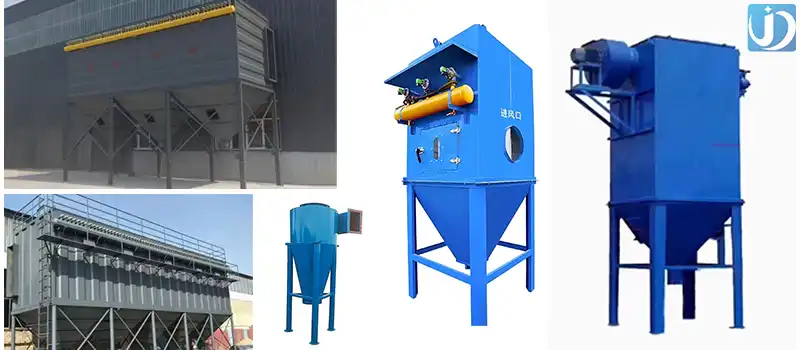
Standard Cyclone Dust Separators have cylinder-to-cone ratios that work best for controlling dust in general industrial settings. The airflow rates for these units range from 1,500 to 15,000 cubic meters per hour, which is enough for most equipment-attached uses. The simple design with an intake volute, a circular body, a conical section, and a dust bin makes it easier to make and gives reliable performance.
When the dust load is mild to heavy and the particle size distribution centers are above 10 microns, single Cyclone Dust Separators work best. When broken steel shot (about 50–200 microns) makes up most of the material collected, a shot blasting system integration is the best use case. The efficiency of collecting these particles is close to 99%, and pressure drops are usually between 500 and 1,500 Pascals, depending on the speed of the particles coming in and the size of the chamber.
Multi-Cyclone and High-Efficiency Variants
When smaller particles need to be removed, multi-cyclone systems use several small-diameter tubes connected in a row. When you make the Cyclone Dust Separator smaller, the rotating speed goes up for the same input speed. This makes the centrifugal force on the smaller particles stronger. A multi-cyclone bank with tubes that are 150 mm in diameter can catch 90% of particles as small as 3–5 microns, but the pressure drop is higher, and there is a greater chance that sticky dust will get stuck.
Long-cone Cyclone Dust Separators make the conical section longer, which gives particles more time to stay in the separator and more chances to separate. When compared to standard designs with similar inlet conditions, this change makes fine particle capture 5–10% better. Manufacturers of equipment use these variations when the type of dust calls for better performance, but the cost of switching to wet scrubbers or electrostatic precipitators is too high.
Comparative Analysis With Alternative Technologies
Baghouse filters are more effective across the whole range of particle sizes; they can catch 99.9% of submicron particles that Cyclone Dust Separators can't. But this performance comes with high costs for running the business: replacing the fabric filter, cleaning it with compressed air, and being sensitive to moisture and high temperatures. Cyclone Dust Separator pre-separation cuts the amount of dust in a baghouse by 80–90%, which in turn increases the filter's life and lowers its energy use.
Electrostatic precipitators work just as well as baghouses, even when the gases are very hot or have unusual compositions. The trade-off is that they require a lot of money, electricity, and time to set up, so they can only be reasonably used for large-scale activities. A Cyclone Dust Separator and a simple baghouse work best for small- to medium-sized factories because they are the most cost-effective and still meet emission standards.
Maintenance, Troubleshooting, and Longevity Tips
Cyclone Dust Separators are known for being reliable because they don't have any moving parts. However, they still need to be properly maintained to keep working well and last a long time in rough service settings.
Routine Inspection and Preventive Care
Visually inspect the interior walls every three months, particularly in the cone-shaped area where particle impacts are most likely. Wear-resistant ceramic tile or manganese steel liners prolong hard duties like foundry dust collection. Progressive wall thinning indicates when the liner has to be changed, generally every 18–36 months, depending on wear and particle hardness.
Watch the dust release contact. Rotary valves or double-dump gates maintain the vortex-forming air seal. An air-leaking discharge valve modifies the lower vortex pattern, re-entrains dust, and reduces efficiency. Checking seals and valves monthly and testing their turn helps prevent this typical failure scenario.
Inlet and exit connections should be tested for gasket and structural fatigue. Fan or pipe vibrations may progressively loosen or damage cyclone flanges. Check the torque of every fastened joint during scheduled repairs.
Diagnosing Performance Degradation
As collection efficiency decreases, dust builds up on downstream filters, resulting in shorter cleaning intervals or increased baghouse pressure drop. Systematic troubleshooting begins with measuring pressure at the Cyclone Dust Separator's entrance and exit to determine the pressure decrease. The findings are then compared to design standards and baselines for accuracy.
Pressure lowers too much, indicating internal accumulation, such as dust on the walls or a partial dust outlet stoppage. When the pressure drop is low, air seeps around the separation process. In smoke-filled areas like welded seams and entrance sites, visual examination may not identify leaks.
Upstream activities might potentially impact Cyclone Dust Separator performance. When output rates rise, intake speeds exceed optimum; this may cause particle re-entrainment. However, less wind might lower the minimum separation speed. Monitoring and recording actual airflow rates helps distinguish Cyclone Dust Separator issues from system issues.
Maximizing Equipment Service Life
Quality of installation affects longevity and performance stability. Foundations must be firm to avoid vibration damage, particularly for large Cyclone Dust Separators that handle a lot of dust. Expanding joints prevent heat from moving and tension from building up at ducting flanges.
Wear-resistant liners are good for severe settings. Ceramic tile plates, however expensive, may make a Cyclone Dust Separator body survive 5–20 years in foundry work. The investment study should compare the cost of a liner to replacing the complete unit, taking into account installation time and output losses.
Professional field service checks everything and trains operators on how to maintain and correct issues during commissioning. Engineers who have worked with Cyclone Dust Separators may discover installation errors like not enough dust-collecting area or faulty ductwork design that cause uneven intake flow distribution before they become costly problems.
Procurement Guide: How to Choose and Buy the Right Cyclone Dust Separator
To buy a Cyclone Dust Separator successfully, you need to make sure that the equipment specs match the working needs while also looking at the supplier's skills to make sure the project will be successful in the long run.
Defining Technical Requirements
The important size consideration is the dust-making machine output-dependent air handling capacity. Depending on blast box size and complexity, shot blasting equipment needs 1,500 to 8,000 cubic meters of air per hour. Undersizing lowers dust source capture velocity, whereas oversizing increases capital and energy costs without performance benefits.
Design relies on density, abrasiveness, and particle size. Standard Cyclone Dust Separators gather thick, massive metal shot pieces. Mixed dust streams with coarse and fine particles may need long cone designs or many separation stages. Final settling velocity relies on material density. Similar-sized heavy dusts separate more easily than light, fluffy dusts.
Material demands depend on temperature and chemistry. Carbon steel is suitable for most room-temperature applications. High-temperature metals or refractory linings are needed above 200°C. Protective coatings or stainless steel may prevent dust or gas component deterioration.
Evaluating Manufacturers and Suppliers
Catalogue and solution sellers customize differently. Environment planners must change the Cyclone Dust Separator's input, output, direction, and flanges. Check component sizes and manufacturing plans before quoting.
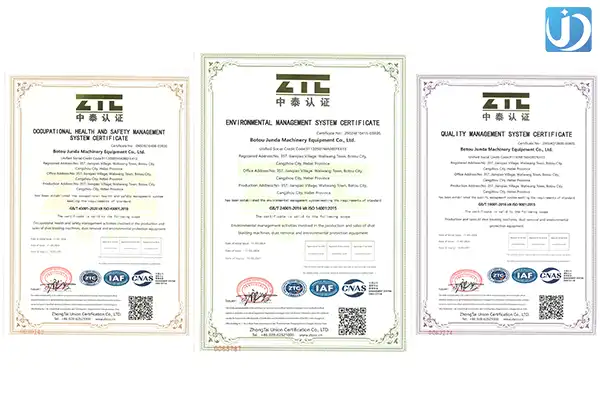
Objective quality documentation verifies production standards. 9001 and 14001 signify quality and environmental responsibility. Eco-friendly enterprises require both. Lack of separation efficiency graphs and pressure drop data contradicts performance claims.
Lead time reliability impacts project timelines. Capable manufacturers can make custom devices in 15–25 days. With tight deadlines and equipment delays costing penalties and opportunities, this strategy helps environmental engineering organizations.
Tech assistance goes beyond product delivery. Cyclone Dust Separator companies offer remote setup, installation, and operator training for international and first-time customers. Equipment lasts longer with English manuals, maintenance instructions, and troubleshooting.
Strategic Sourcing Considerations
Distributors cannot match manufacturer-direct advantages. Customized engineering is simplified by direct communication between design engineers and buyers. Technical enquiries receive expert answers, not censorship. Long-term support, replacement parts, and warranty management operate better without intermediaries.
OEM collaboration benefits Cyclone Dust Separator shot blasting and surface finishing systems. We appreciate Cyclone Dust Separator suppliers that stock parts, ship quickly, and adapt designs when equipment changes. Job guarantees boost pricing and capacity allocation.
Ownership costs more than purchasing. Setup, usage, upkeep, and replacement costs. Systems with minimal consumables and simple maintenance have lower lifespan costs than more efficient but harder-to-maintain systems. The purchase study should duplicate these factors during 15–20 years of equipment usage.
Real-World Applications and Case Studies
Understanding how Cyclone Dust Separators work in real-world settings gives you useful information that goes beyond theory specs and lab test results.
Shot Blasting System Integration
A structural beam steel manufacturing company implemented a two-stage dust control system with a Cyclone Dust Separator pre-separator and a pulse-jet baghouse. Steel shot, metal scale, and fine dust make about 150 tonnes of shotblasting trash each hour. The Cyclone Dust Separator retains 92% of the mass load and 800 Pascals of pressure at 6,000 cubic meters per hour.
Screening contaminated but structurally sound recovered steel shot before blasting saves 35% abrasive. Heavy particles don't harm the downstream baghouse; therefore, filter bags last 18 months vs 6–8 months in direct collection. Using 60% less compressed air to clean the bags saved energy and compressor life.
Environmental compliance tests showed particle emissions of 8 mg/m³, much below the 20 mg/m³ standard. The installation was approved without wet scrubbing or cartridge filtration. This kept construction and operating costs within the environmental compliance budget.
Foundry Dust Collection Challenges
A grey iron foundry's shakeout and grinding areas wore out baghouse filters quickly. Abrasive fine silica dust and metallic particles destroyed filter bags in 90 days. This caused ongoing costs and maintenance shutdowns. Bag changes generated emission changes, prompting regulatory attention and fines.
Performance enhanced using high-efficiency long-cone Cyclone Dust Separators as pre-separators. Separators catch 88% of particles above 10 microns before the baghouse. Most rough metal pieces are this size. Extended filter bag lifespan to 14 months, cut yearly replacement expenses by 75%, and avoided emergency bag replacements.
Pressure dip stability enhanced. A full production load required pulse-cleaning the first direct-baghouse system every 45 seconds and cycling pressure decrease between 1,200 and 2,200 Pascals. The Cyclone Dust Separator pre-separation lowered the baghouse load enough to clean for 3 minutes and sustain a pressure drop at 1,100–1,400 Pascals. This uniformity simplifies fan operation and cuts peak power.
Equipment Manufacturer Standardization
Shot blasting equipment makers wanted common dust collection. This would streamline construction and acquisition. A Cyclone Dust Separator maker helped them create three basic versions for small, medium, and big machine platforms. Outlet connector, inlet size, and mounting footprint were standardized for easier installation and replacement.
Joint frameworks ensured part availability and assembly line-friendly supply dates. Monthly rolling projections help Cyclone Dust Separator providers avoid overstocking. Quality checks guarantee that entering separators pass size tolerances and leak tests with 99.2% first-pass approval.
This standardization strategy cut buying time from 6 weeks to 12 days and unit costs by 18% by pledging to buy more. Importantly, the equipment manufacturer's field service network only has to store parts for three Cyclone Dust Separator types, not for each machine configuration. Logistics for aftermarket support are simplified.
Conclusion
Cyclone Dust Separators are the building blocks of effective industrial dust control strategies. They provide strong pre-separation that safeguards later filtration equipment while collecting useful materials. They work by using basic aerodynamic principles, like rotational force to separate particles from airflows, and they don't need any edible media. This technical simplicity means that it doesn't need much upkeep, doesn't cost much to run, and works reliably in a wide range of difficult situations.
When environmental engineers design complete dust management systems, they need to know how Cyclone Dust Separators work, how to make them more efficient, and how to integrate them with other systems. Equipment makers can stay ahead of the competition by working with skilled Cyclone Dust Separator providers who offer standard parts, the ability to be customized, and dependable delivery. With the right choice, installation, and upkeep, these industrial air quality control workhorses will give you years of cost-effective service while helping you follow the rules and protect your workers' health.
FAQ
1. What particle size range do cyclone separators handle effectively?
Standard Cyclone Dust Separators work best with particles bigger than 10 microns, and they can catch 85 to 95% of these particles. High-efficiency and multi-cyclone designs can separate things down to 3–5 microns, but they have a bigger pressure drop. For effective capture, particles smaller than 2 microns need extra filtration technologies such as baghouses or cartridge filters.
2. Can cyclones handle explosive or combustible dust safely?
Cyclone Dust Separators don't have any fire sources because they don't have any moving parts or electrical parts. But particles rubbing against walls can make static electricity. For uses involving flammable dusts like aluminum or organic materials, the construction must be grounded, the ductwork connections must be bonded, and there may need to be explosion venting or suppression systems built into the overall design of the dust collection system.
3. How often do cyclone separators require maintenance service?
As part of routine maintenance, the dust bin of the Cyclone Dust Separator is usually emptied once a day to once a week, depending on how full it is of dust. Checking for wear and making sure release valves work properly is done every three months. Every year, thorough inspections check the state of the internal liner and the structure's strength. Baghouse systems need to change the filter every 12 to 18 months, but Cyclone Dust Separators don't need as much maintenance and have lower costs over their lifetime.
Partner With Junda Machinery for Your Industrial Dust Control Solutions
For twenty years, Junda Machinery has been making dust collection equipment and has worked with environmental engineering firms and equipment OEMs all over the world. Our Cyclone Dust Separator systems work well with shot blasting equipment and industrial processing lines, making it easy for your projects to get the pre-separation they need. Every unit goes through strict quality checks that are in line with ISO 9001 standards. This makes sure that the dimensions are correct, which is important for system interaction and performance stability.
When you work directly with our engineering team, you'll get custom configurations that are perfectly matched to your airflow needs, particle characteristics, and installation limitations. If you need a Cyclone Dust Separator source for a current project or a development partner to help you integrate OEM equipment, we can help. We offer expert partnership, reliable delivery, and aftermarket support to make sure you keep your promises to end customers. Get in touch with us at junda001@jundablast.com to talk about your specific needs and find out how our tried-and-true solutions can help you get the most out of your next dust control system installation.
References
1. Cooper, C. David, and F. C. Alley. "Air Pollution Control: A Design Approach." Fourth Edition, Waveland Press, 2010.
2. Svarovsky, Ladislav. "Hydrocyclones: Analysis and Applications." Developments in Chemical Engineering and Mineral Processing, Volume 3, 1992.
3. Hoffmann, Alex C., and Louis E. Stein. "Gas Cyclones and Swirl Tubes: Principles, Design, and Operation." Second Edition, Springer-Verlag, 2008.
4. United States Environmental Protection Agency. "Cyclones." Section 6, EPA Air Pollution Control Cost Manual, Sixth Edition, 2002.
5. Theodore, Louis, and Anthony J. Buonicore. "Air Pollution Control Equipment: Selection, Design, Operation, and Maintenance." Industrial Ventilation: A Manual of Recommended Practice, American Conference of Governmental Industrial Hygienists, 2019.
6. Katz, Joseph, and Ramon Clift. "Cyclone Performance." Chemical Engineering Progress, Volume 85, Number 8, 1989.

USER EVALUATE
Real feedback and practical experience shared by worldwide partners who purchased our machinery and environmental treatment devices.